Ever feel like your stomach turns into a balloon by midafternoon? You ate a fairly ordinary lunch, yet your waistband feels tight, your energy dips, and you're already wondering where the nearest bathroom is.
Digestive health support isn't about finding one magical food, probiotic, or cleanse. It's a layered approach that considers what you eat, how your microbiome functions, your sleep and stress patterns, movement, environmental exposures, and when medical care belongs in the picture.
Why Your Gut Deserves a Better Plan
By three o'clock, Maya's lunch has become a familiar problem. Her abdomen feels tight, her concentration has vanished into a fog, and she's blaming the bread, the salad, or maybe the coffee. She tells herself that bloating is part of being busy.
Occasional digestive changes happen, but persistent discomfort deserves more curiosity than dismissal. Digestive diseases affected an estimated 2.276 billion people worldwide in 2019, with 443.53 million incident cases, 2.56 million deaths, and 88.99 million DALYs, or years of healthy life lost. The same analysis ranked digestive diseases as the 13th leading cause of DALYs globally. Read the global digestive disease analysis for the wider context.
That scale matters. Gut symptoms aren't a niche wellness concern, and digestive comfort affects more than bowel regularity. Your digestive system helps break down food, absorb nutrients, interact with immune processes, and communicate with the nervous system. When digestion feels unpredictable, your energy, mood, social plans, and confidence can take a hit too.
A useful reframe: Your symptoms aren't a personal failure. They're information about a system that may need a more thoughtful plan.
The five layers of support
A practical plan looks at:
- Food: Fiber, fluids, meal patterns, and personal tolerances.
- Microbiome: Prebiotic foods, fermented foods, and carefully selected probiotics.
- Lifestyle: Sleep, stress regulation, and regular movement.
- Environment and medication history: Exposures, antibiotics, anti-inflammatory medicines, and other factors.
- Medical care: Testing and treatment when symptoms persist or red flags appear.
Over the next sections, we'll unpack how these layers fit together, including a gentle seven-day starting routine. You'll also see why adding more fiber too quickly can backfire, why probiotic benefits depend on the strain and condition, and why eating well doesn't always explain ongoing bloating.
What Digestive Health Support Really Means
Think of your gut as a garden. This isn't just a cute analogy. It gives us a useful way to understand why digestive support works best as a system rather than a single product.
The gut lining is the soil. It forms a protective barrier, absorbs nutrients, and helps keep unwanted irritants from crossing into the body. The microbiome is the community of plants, made up of microorganisms that interact with food, immune activity, and other body systems. Microbiota diversity means having a varied community rather than allowing one narrow group to dominate.
Food supplies water and sunlight for the garden. In gut terms, plant foods provide fibers and other compounds that microbes can use. During fermentation, microbes break down certain fibers and produce compounds such as short-chain fatty acids, or SCFAs. Research links these compounds with intestinal barrier function, stool frequency and consistency, and immune modulation across different groups and digestive situations. Explore the review on prebiotics and gut ecology
The gardeners are your digestive enzymes and motility. Enzymes help break food into smaller components. Motility describes how food and waste move through your stomach and intestines. If movement slows, constipation and fullness may follow. If it becomes too rapid, loose stools can be a problem.
Your weather is made up of sleep, stress, movement, and daily diet. These inputs influence how your body coordinates digestion. The gut-brain axis is the two-way communication network between your digestive tract and nervous system. That's why a stressful meeting can bring on stomach cramps, or why ongoing discomfort can make you feel anxious about eating.

What you're actually tending
A helpful digestive health support plan tends five areas:
- Barrier support, through adequate nourishment and medical attention when needed.
- Microbial variety, encouraged by a broad, tolerable diet.
- Fermentation, supported with the right types and amounts of fiber.
- Movement, through meals, walking, and regular activity.
- Communication, by reducing stress and noticing patterns without turning every meal into a test.
If you're exploring plant-based approaches, this resource on green blends for digestive wellness offers another perspective on how botanical ingredients may fit into a broader routine. The garden still needs appropriate soil, water, and weather. No single input can do every job.
Fiber Prebiotics and Probiotics Compared
A bowl of oats, a serving of beans, and a probiotic capsule may all support digestion, but they do different jobs. These terms describe related parts of a layered approach, not interchangeable solutions.
Fiber is the broadest category. Soluble fiber absorbs water and forms a gel-like texture, while insoluble fiber adds bulk and helps stool move through the digestive tract. Oats, beans, lentils, fruits, vegetables, whole grains, nuts, and seeds provide varying types and amounts.
A common daily target is 25 to 38 grams of fiber, although your personal tolerance and medical needs matter. The NIH guidance on gradually increasing fiber explains why adding it slowly can reduce gas, bloating, and cramps. For constipation, NIH guidance recommends adults consume at least 20 to 30 grams daily, spread throughout the day in small amounts. See the NIH constipation guidance
Prebiotics are specific fibers that selected microbes can ferment and use. Examples include inulin, FOS, GOS, and resistant starch. Product discussions often mention 5 to 10 grams daily, but that range is not a universal prescription. People who react strongly to fermentable carbohydrates may need smaller portions or a slower pace. Foods such as garlic, onions, oats, bananas, legumes, and foods containing resistant starch can supply prebiotics. Explore this guide to foods high in prebiotics for practical examples.
Probiotics are live microorganisms. A product may introduce strains temporarily or affect the microbes already present, yet its results depend on the strain, dose, formulation, and health condition. The NIH probiotic fact sheet describes mixed evidence overall, with stronger support for some uses, including preventing antibiotic-associated C. difficile infection, necrotizing enterocolitis in preterm infants, and pouchitis. Evidence remains more limited for many other digestive conditions.
| Tool | What It Does | Daily Target | Best Sources | Best For |
|---|---|---|---|---|
| Fiber | Adds bulk or holds water to support stool and movement | 25 to 38 grams | Oats, beans, fruit, vegetables, whole grains | Regularity and overall diet quality |
| Prebiotics | Feeds selected microbes through fermentation | 5 to 10 grams as a practical range | Garlic, onions, oats, bananas, legumes, resistant starch | Supporting microbial activity |
| Probiotics | Provides specific live strains | Strain-dependent | Yogurt, kefir, fermented foods, supplements | Condition-specific support |
A healthy choice can still cause symptoms if the dose rises too quickly. For people prone to IBS symptoms, highly fermentable fibers such as inulin, resistant starch, and some oligosaccharides may trigger bloating, gas, cramping, or discomfort. Review the clinical discussion of fiber side effects
Start low and go slowly: Add one new fiber source at a time so you can identify what your body tolerates. More is not automatically better.
A practical sequence is to establish a tolerable whole-food fiber base, add prebiotic foods in modest portions, and consider a probiotic only when its strain and purpose fit the situation. A large CFU number alone does not show that a product will suit your symptoms.
Daily Habits That Move the Needle
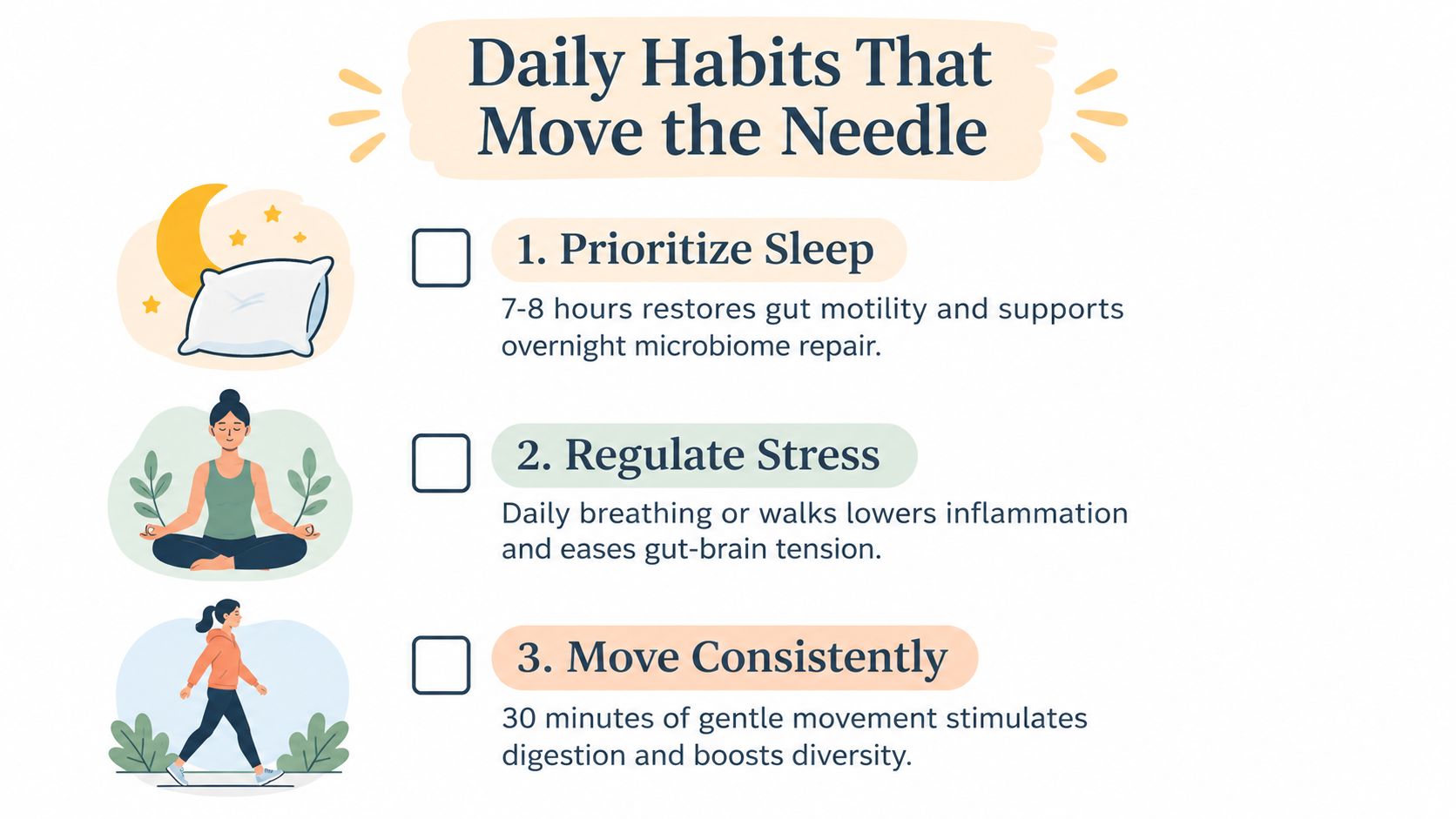
Food gets most of the attention, but your digestive tract also responds to your daily rhythm. Sleep, stress, and movement influence how your nervous system coordinates digestion and how food moves through your intestines.
Stress can shift your body toward alert mode, which may leave less attention for digestion. Diaphragmatic breathing, where your abdomen gently expands as you inhale, can create a calmer transition into meals. You don't need a silent retreat. Try two minutes of slow belly breathing before eating.
A gentle routine to test for seven days
- Sleep: Aim for a consistent sleep window and roughly 7 to 9 hours when possible. Morning light can help anchor your body clock.
- Movement: Take a 10-minute walk after eating if your schedule allows. Add two weekly strength sessions that match your ability.
- Hydration: Keep water available and drink consistently rather than trying to catch up at night.
- Stress pauses: Before one meal, unclench your jaw, lower your shoulders, and take several slower breaths.
- Meal pace: Sit down when you can, chew thoroughly, and notice whether rushing changes your symptoms.
A short walk doesn't need to be intense to be useful. Regular movement supports the physical process of digestion and gives your nervous system a predictable cue that the day includes recovery, not only demands.
For a simple, portable snack routine, you might also browse this gluten-free snack list from Recipe One. Choosing snacks you tolerate can prevent the long gaps and rushed meals that make digestive symptoms harder to interpret.
Use a notes app and check off:
- Sleep window: Similar bedtime and wake time.
- Morning light: A few minutes outdoors if practical.
- Post-meal walk: One short walk.
- Water: A steady baseline across the day.
- Stress pause: Two minutes of breathing before a meal.
If you're building a supplement routine, this practical guide to creating one you can keep can help you avoid adding several new products at once.
When Eating Well Still Is Not Enough
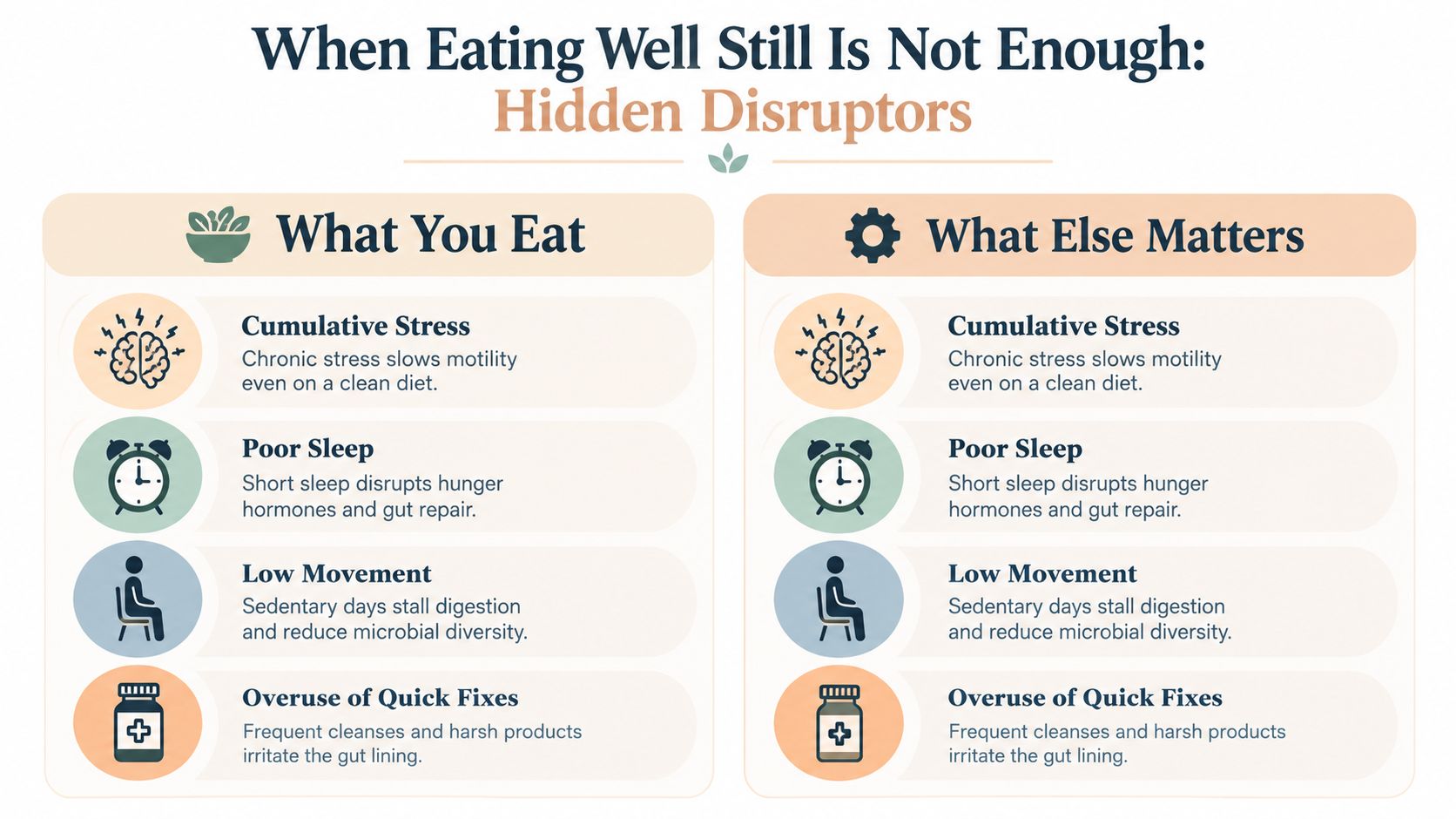
A carefully chosen diet can help, but it can't explain every digestive symptom. If you eat vegetables, drink water, and still feel uncomfortable, that doesn't mean you've failed at wellness.
Several less obvious influences deserve a calm review:
- Medication history: Antibiotics can alter the gut ecosystem, and recurring use of medicines such as NSAIDs may matter when symptoms persist. Don't stop a prescribed medication on your own. Ask a clinician or pharmacist to review the full list.
- Environmental exposure: Research has reported that 168 common industrial and agricultural chemicals inhibited beneficial gut bacteria in vitro. That finding doesn't prove that every exposure causes symptoms in humans, but it supports taking environmental questions seriously. Read the reporting on chemicals and gut bacteria
- Infection history: A stomach infection or viral illness can change digestion and food tolerance for some people.
- Stress load: Ongoing stress can affect appetite, meal pace, gut sensitivity, and how the digestive tract moves.
A quick self-audit
| If this sounds familiar | Consider discussing |
|---|---|
| Symptoms began after a medication course | A medication review with a pharmacist |
| Symptoms continued despite diet changes | A clinician assessment rather than another supplement |
| Symptoms vary with work pressure or poor sleep | Breathing, rest, and gut-brain support |
| You suspect water or household exposures | Practical steps such as filtered water and reducing unnecessary contact with plastics |
Recent reporting also described prior medication use as a potential hidden confounder in microbiome research. In other words, what you took years ago may complicate how your current gut symptoms are understood. Curiosity beats guilt here. Before stacking another supplement, record symptoms, review medications, and ask whether targeted testing is appropriate.
A Real Story of Rebuilding Routine
Sam's digestive challenges followed a familiar pattern. They tried elimination diets, kefir shots, and expensive cleanses, hoping the next intervention would finally make bloating disappear. Each approach seemed promising for a moment, but none fit easily around travel, work, and ordinary meals.
The turning point was less dramatic than expected. Instead of searching for a rescue remedy, Sam started adding fiber gradually, replaced one late-night scrolling session with sleep, and kept meals more consistent. The routine also included a daily vegan probiotic and prebiotic gummy as a baseline, rather than something taken only when symptoms appeared.

The first improvements were small. Over six to eight weeks, Sam noticed less afternoon bloating, more predictable mornings, and fewer moments of panic before leaving home. Those changes weren't presented as proof that one product works for everyone. They came from combining food, sleep, movement, observation, and a consistent supplement habit.
The win wasn't perfection. It was having a routine that still worked during a busy week.
That distinction matters. A probiotic isn't a substitute for evaluating pain, bleeding, food intolerance, or a medication effect. A prebiotic gummy doesn't erase a low-fiber diet overnight. But a clearly labeled, tolerable product can serve as one practical part of a broader plan when its ingredients and purpose fit your needs.
If you're experimenting, change one variable at a time. Track bloating, stool pattern, urgency, meal timing, sleep, and stress. You'll learn more from a simple record than from cycling through several new products in the same week.
Red Flags and a Simple 7 Day Starter Plan
Digestive symptoms deserve medical attention when they suggest something more than ordinary variation. Contact a clinician promptly if you notice:
- Unintentional weight loss over 10 pounds, which may signal inadequate absorption or another underlying condition.
- Blood in the stool, which can come from several causes and shouldn't be self-diagnosed.
- Persistent pain that wakes you at night, especially when it's new or worsening.
- Difficulty swallowing, which needs assessment rather than dietary trial and error.
- New symptoms after age 50, particularly if bowel habits have changed.
- Anemia markers, which can point to blood loss or impaired nutrient absorption.
Persistent vomiting, fever with abdominal pain, or symptoms that interfere with daily life also warrant medical guidance. You don't need to panic, but you do need a professional to help separate a manageable intolerance from a condition requiring treatment.
Your seven-day starting routine
Day 1: Add a tolerable fiber source and increase slowly. NIH guidance recommends spreading fiber in small amounts to reduce gas and discomfort. Keep water available throughout the day.
Day 2: Introduce one prebiotic food, such as oats, garlic, or a banana. Use a modest serving and note how your body responds.
Day 3: Set a consistent wake time and add a short walk after a meal. Gentle movement can support the normal movement of food through the digestive tract.
Day 4: Try a fermented food you tolerate, such as yogurt with live cultures, kefir, kimchi, sauerkraut, or miso. Skip it if it conflicts with an allergy, intolerance, or medical plan.
Day 5: Use a 4-7-8 breathing reset before one meal. Inhale for four counts, hold for seven, and exhale for eight, stopping if you feel lightheaded.
Day 6: Review your notes. Track stool consistency with the Bristol Stool Form Scale and look for patterns rather than judging a single day.
Day 7: Consider a vegan probiotic or digestive enzyme complex around a meal if it fits your needs and medical guidance. Fat-soluble nutrients are generally absorbed better alongside a meal containing some dietary fat, but product directions still come first.
For readers working on sleep and digestion together, this seven-day sleep plan can provide a practical structure. You can also use this gut health diet plan as a meal-planning reference.
Keep the experiment gentle: A starter plan should help you notice patterns, not pressure you to tolerate worsening symptoms.
Frequently Asked Questions
How much fiber do adults need for digestive health support?
A commonly used target is 25 to 38 grams per day, with the precise amount depending on factors such as age, sex, health status, and tolerance. Soluble fiber, found in foods such as oats and some fruits, holds water and can support stool texture. Insoluble fiber, found in many vegetables and whole grains, adds bulk. Increase gradually because a sudden rise can cause gas, bloating, or cramps. NIH guidance explains how to increase fiber comfortably.
When should you take probiotics?
There isn't one universal timing rule. Survivability through stomach acid can vary by strain, formulation, dose, and whether the product is taken with food, so follow the label and any clinician guidance. The important question is not whether you take a probiotic before, during, or after a meal. It's whether the specific strain has evidence for your intended use. Probiotic benefits aren't interchangeable across products.
Who should avoid probiotic and prebiotic supplements?
People who are immunocompromised, have suspected or diagnosed SIBO, are recovering from surgery, or have a central venous catheter should speak with a qualified clinician before using these supplements. Anyone with significant digestive symptoms should also seek individualized guidance. Prebiotics may increase gas and bloating, particularly when they're highly fermentable. A supplement can be inappropriate even when its ingredient sounds generally healthy.
When do digestive symptoms need a doctor?
Seek medical advice for blood in the stool, persistent vomiting, unexplained weight loss, fever with abdominal pain, or symptoms that continue beyond two weeks and disrupt daily life. Also ask for help if pain wakes you at night, swallowing becomes difficult, anemia is suspected, or bowel habits change in a concerning way. A clinician can decide whether you need testing, medication review, dietary support, or referral to a gastroenterology specialist.
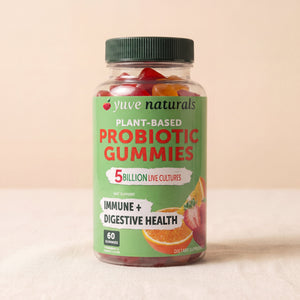
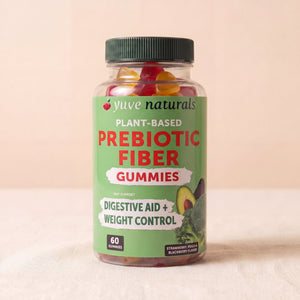
Yuve offers vegan probiotic and prebiotic gummies, along with digestive enzyme products, that can fit into a layered digestive health support routine when their ingredients match your needs. Visit Yuve to explore the available options and choose your next step with the rest of your routine in mind.