Ever finish lunch, feel fine for a minute, and then hit that weird, puffy, “why does my waistband suddenly hate me?” slump by midafternoon? You're not imagining it, and you're definitely not alone.
Digestive enzymes are part of the reason some meals feel easy and others sit like a brick. The good news is that how to increase digestive enzymes naturally usually comes down to everyday habits, food choices, and eating patterns that support your body's own system instead of fighting it. Johns Hopkins Medicine notes that healthy people generally don't need digestive enzyme supplements and that the body's own enzymes work best when you eat a whole-food diet, with no real evidence that pineapple or avocado alone improve digestion on their own (Johns Hopkins Medicine). That's the mindset shift here, one fruit or one supplement isn't the whole story.
If you've been trying to solve bloating with random “gut hacks,” this will feel refreshingly practical. You'll get the plain-English version of what digestive enzymes do, which foods are worth putting in your cart, and which habits give your digestion less work to do. If you're already noticing signs of a cranky gut, this companion guide on signs of an unhealthy gut is a useful place to compare notes.
Why Your Gut Might Need a Little Extra Help
By the time the afternoon hits, a lot of people realize their digestion did not exactly sail through lunch. The meal may have been “healthy,” but if it was rushed, oversized, or eaten while multitasking, your digestive system has to work harder to keep up. Chewing less, swallowing faster, and giving your body less time to signal fullness can all make enzyme release and food breakdown less efficient.
Digestive enzymes are your body's built-in helpers for breaking food into pieces small enough to absorb. They work behind the scenes, but when they are keeping up well, meals tend to feel lighter and less sticky in your stomach. When that process feels sluggish, people often notice bloating, heaviness, or that too-full feeling that lingers way longer than it should.
A lot of the confusion starts when “supporting enzymes naturally” gets reduced to one special food or one shortcut. That misses the bigger pattern. Healthy bodies already make enzymes, and the better approach is to support the whole meal pattern with enough time, enough chewing, and a mix of foods that are easier to break down, instead of treating one ingredient as the answer.
If you want a practical example, fermented foods like miso can fit into that larger routine, especially when they replace heavily processed parts of a meal rather than just getting added on top. For a closer look at how fermented foods show up in everyday eating, the article on miso and natto benefits is a helpful cultural companion piece. If your gut has been sending mixed signals after meals, this guide on signs of an unhealthy gut can help you compare what you are feeling.
Practical rule: if your stomach keeps feeling overworked, stop chasing one miracle food and start improving the whole meal pattern.
How Digestive Enzymes Actually Work
Digestive enzymes are basically tiny scissors. They snip large food molecules into smaller pieces so your body can absorb them, use them for energy, and build what it needs. Without that snipping step, food sits there longer and feels harder to process.
The three big enzyme families do different jobs. Amylase helps break down carbs, protease helps break down protein, and lipase helps break down fats. A fourth one, lactase, helps digest dairy, which is why some people feel fine with one latte and awful after another.
These enzymes show up in different parts of the digestive tract. Your mouth starts the process, your stomach continues it, and your pancreas and small intestine do a lot of the heavy lifting later on. That's why “supporting digestion” isn't just about what happens after food hits the stomach, it starts the moment you chew.
One useful way to think about this is to compare it to cutting up a big pile of vegetables before cooking. Smaller pieces are easier to handle. Your digestive system works the same way, the more efficiently food gets broken down early, the less chaos shows up later.
For a clearer contrast between enzymes and microbes, this internal guide on digestive enzymes vs probiotics is a smart next read.
Enzyme-Rich Foods to Add to Your Grocery List

If you want a food-first approach, start with a few ingredients that naturally bring enzyme activity to the table. Several foods are repeatedly identified as natural sources of digestive enzymes, including pineapple, papaya, mango, kiwi, ginger, kefir, sauerkraut, kimchi, and miso, with pineapple linked to bromelain, papaya to papain, and kefir to lactase and protease activity (Healthline).
Practical enzyme-rich options
- Pineapple: Known for bromelain, which supports protein digestion. It fits well after heavier meals, especially when your stomach feels like it needs a lighter landing.
- Papaya: Brings papain, another protein-digesting enzyme, and it's easy to use in a smoothie or as a simple snack.
- Mango: Often grouped with other enzyme-supportive fruits and works well in breakfasts and snacks when you want something sweet without much effort.
- Kiwi: A light, fresh option that can slide into breakfast bowls, salads, or a quick snack.
- Ginger: A useful flavor booster that shows up often in digestion-friendly routines, especially when meals feel rich or heavy.
- Kefir: Offers lactase and protease activity, which is why it's often used in gut-supportive meal plans. If you're curious how fermented foods fit into digestion as a pattern rather than a trend, see this guide on fermented foods for digestion.
- Sauerkraut, kimchi, and miso: These fermented foods add variety and may support digestion as part of a broader pattern, not as a standalone fix.
The point is not to eat all of these every day. The goal is to rotate them so your gut gets a broader set of inputs over time, instead of leaning on the exact same foods at every meal. That matches the whole-food approach Johns Hopkins describes, because digestion tends to respond better to an overall eating pattern than to one hero ingredient.
If raw foods ever leave you feeling too full or too gassy, that is a normal sign to slow down and choose gentler portions. A warm drink can also fit into that pattern, and some people like to find natural relief with marshmallow tea when they want something soothing alongside their meals.
Smart Dietary Patterns and Meal Habits
One food can help, but the pattern around it usually helps more. A balanced, high-fiber way of eating, plus adequate hydration and smaller, more frequent meals, is one of the most practical ways to make digestion feel less strained. Clinical guidance also warns that heavy alcohol use, smoking, and highly processed foods can make digestive function worse, which is why the “clean it up a little” approach works better than obsessing over one ingredient.
Build meals your gut can handle
Start with minimally processed whole foods as the anchor. That means a plate built around vegetables, fruit, legumes, whole grains, and simple proteins instead of a meal that's mostly packaged stuff with a decorative vegetable on the side.
Then layer in fiber and fluids across the day, not in one giant dump at dinner. If you add a lot of raw foods or fiber too fast, a sensitive gut can get more bloated, not less. That doesn't mean fiber is bad, it means pacing matters.
A useful benchmark is eating 30 different plant-based whole foods each week, which one source links to a more diverse gut microbiome and healthier digestion patterns (Rachel Larsson). That doesn't mean 30 expensive specialty items, it can be as simple as rotating berries, greens, oats, beans, lentils, herbs, and fermented foods.
If you're looking for the bigger picture, this is also where digestion and mood can overlap. A helpful outside read on how diet impacts expat mood abroad shows how food choices can shape how people feel day to day, which is a reminder that digestion doesn't live in a vacuum.
Simple target: eat a little more variety, a little more slowly, and a little less like you're in a race.
Lifestyle Habits That Make a Real Difference
Digestion starts before the food reaches your stomach. One source recommends taking smaller bites and chewing each bite 20 to 30 times before swallowing, because more chewing increases food surface area and gives saliva enzymes more time to start breaking food down (Cymbiotika). That's a very unglamorous habit, and it works because it's so basic.
The habits that change the pace
Chewing well is the first lever. If you usually inhale lunch between meetings, your stomach is getting a head start it never asked for. Slowing down doesn't sound dramatic, but it makes the whole process cleaner.
Stress matters too. When your nervous system is on high alert, digestion doesn't get to be the priority. People often notice that tense days lead to tighter stomachs, slower meals, and more after-meal discomfort.
Sleep and movement finish the job. Poor sleep can leave your gut feeling off, and a short walk after eating often helps food move along more comfortably than collapsing onto the couch immediately. You don't need a perfect routine, just a steadier one.
I also think it helps to be honest about what's changing. If you chew better, sleep more consistently, and walk after meals, you're not “hacking” digestion. You're removing friction from a system that already knows what to do.
Helpful mindset: the goal isn't to force digestion, it's to stop making it harder than it needs to be.
A Simple 7-Day Plan to Put It All Together
A plan works best when it feels flexible, not strict. Use the table below as a starter rhythm, then swap foods based on what you tolerate, what's in your kitchen, and what fits your day.
| Day | Breakfast | Lunch | Dinner | Daily Habit |
|---|---|---|---|---|
| Monday | Oats with kiwi and ginger | Veggie bowl with whole grains | Chicken or tofu with sauerkraut | Chew each bite slowly |
| Tuesday | Kefir smoothie with mango | Lentil salad | Rice, vegetables, miso soup | Take a short walk after dinner |
| Wednesday | Eggs with sautéed greens | Whole-grain wrap with papaya on the side | Fish or beans with kimchi | Stop eating when comfortably full |
| Thursday | Yogurt or dairy-free alternative with pineapple | Grain bowl with herbs | Soup with vegetables and legumes | Eat away from screens |
| Friday | Smoothie with ginger and kiwi | Salad with legumes | Simple protein with fermented side | Chew 20 to 30 times per bite |
| Saturday | Oats with mango | Leftovers with greens | Stir-fry with rice and vegetables | Slow down at lunch |
| Sunday | Kefir bowl with fruit | Big mixed-plant lunch | Miso-based dinner with vegetables | Gentle walk after meals |
The point of a week like this is repetition, not perfection. You're teaching your body a pattern it can recognize, with enzyme-supportive foods showing up often enough to matter. If one day goes sideways, just come back to the next meal.
You can also treat this as a “gut reset” week without calling it a cleanse, because your digestive system doesn't need drama. It needs consistency.
When to Bring in Support and When to See a Professional
Sometimes food and habits are enough. Sometimes they are not. Healthy people generally do not need digestive enzyme supplements, but that does not mean every digestive issue should be handled with willpower alone.

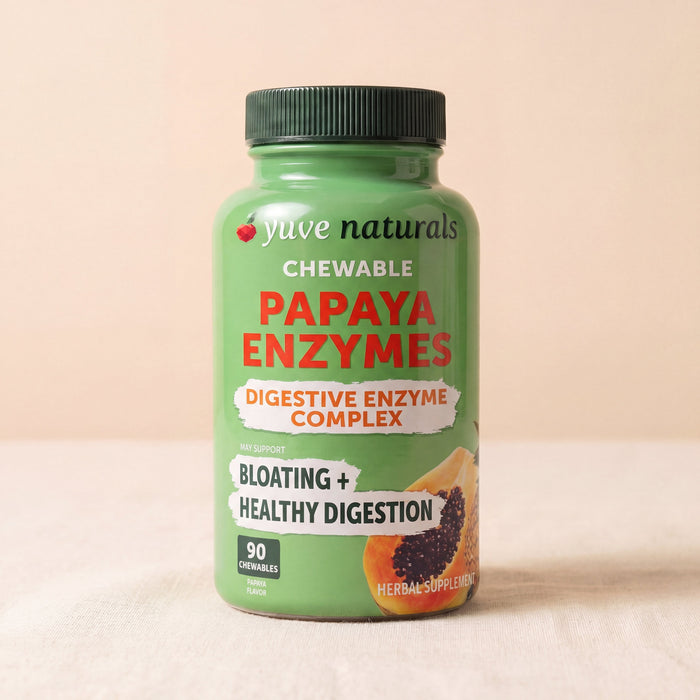
A digestive enzyme supplement can make sense when you already know a meal is likely to be harder to digest, or when you want comfort to feel more predictable from one day to the next. Yuve's Chewable Plant-Based Papaya Digestive Enzymes are one plant-based option in that category, especially for people who want extra support around heavier meals. If symptoms keep showing up even after you have cleaned up meals and habits, do not keep guessing.
Get checked by a professional if you have persistent pain, blood in the stool, unintended weight loss, or symptoms that do not improve after a few weeks of consistent changes. Those are not just bloating signs, and they deserve real attention. If you want a simple place to start with product details, visit Yuve and explore the gut-health options that fit your routine.
If you are tired of feeling puffy after meals, start with the small stuff this week, chew more slowly, add one or two enzyme-supportive foods, and build meals around whole ingredients. Then see how your body responds. Try the plan, explore Yuve, and give your gut the steady support it has been asking for.