You finished your antibiotics, the infection has cleared, and then your stomach starts acting like it missed the memo. Bloating, loose stools, constipation, cramping, or that unwelcome gas can make you wonder whether your gut will ever feel normal again.
You're not alone, and your gut isn't necessarily “broken.” Learning how to restore your gut after antibiotics means understanding two different goals: calming digestive symptoms now and supporting the slower process of rebuilding a resilient microbiome. The plan below focuses on food, daily habits, and careful supplement choices without promising a one-size-fits-all quick fix.
Your Post-Antibiotic Gut Is Not Broken It Is Resetting
Antibiotics can be lifesaving, but they don't always distinguish between bacteria involved in an infection and helpful bacteria living in the digestive tract. After treatment, the gut ecosystem may have fewer familiar residents and a different balance of microbial activity. That change can affect how comfortably you digest meals and how your stool behaves.
So if your stomach feels inflated by afternoon, or your bowel movements have become unpredictable, it makes sense that you're frustrated. You did what your healthcare professional recommended, yet you're left managing a new set of symptoms. Dun, dun, dun, unwelcome gas.
The encouraging part is that recovery is possible, but it usually works better as a steady process than as a dramatic “reset.” The first priority is stabilization. Choose meals your stomach can tolerate, drink enough fluid, and avoid piling several new supplements or restrictive diets on top of an already sensitive digestive system.
The second priority is rebuilding. Your resident microbes need an appropriate food supply, especially fibers that reach the colon and can be used by gut bacteria. That's why eating only yogurt, taking a random probiotic, or skipping meals won't automatically restore your previous microbial community.
A useful mindset: Feeling uncomfortable after antibiotics doesn't mean you've failed. It means your digestive system may need time, consistency, and individualized support.
Your symptoms also deserve attention rather than dismissal. Mild changes can settle as your gut readjusts, but severe or persistent symptoms call for medical advice. You can support recovery while still treating warning signs seriously.
The Recovery Timeline What to Expect and When
“How long will this take?” is one of the most reasonable questions after antibiotics. The honest answer depends on the medication, treatment duration, your baseline microbiome, diet, age, and individual response. There isn't a universal seven-day or fourteen-day recovery promise.

Phase one focuses on stabilization
During the first few weeks after treatment, your practical goal is symptom relief and digestive stability. Keep meals simple enough to tolerate, introduce fiber gradually, and pay attention to whether dairy, rich foods, or large portions worsen bloating. Don't interpret one comfortable day as proof that your microbiome has completely returned to its former state.
A systematic review of commonly prescribed antibiotics found that gut bacteria usually recover to baseline within a few weeks, but some studies detected significant changes from 42 days to 6 months after the final dose (BMJ Open review). In plain language, the digestive upset may improve before the ecosystem finishes reorganizing.
Phase two is longer-term rebuilding
A landmark study followed 12 healthy men for 6 months after a four-day course of broad-spectrum antibiotics. The participants' gut microbiota returned to near-baseline composition within about 1.5 months, yet 9 common species found in every participant before treatment remained undetectable in most participants after 180 days (Nature Microbiology study).
That distinction matters. Broad community recovery can happen within weeks, while certain species remain absent for months. The study also found that resistance-gene profiles influenced how recovery unfolded, suggesting that each person's starting ecosystem affects the path back.
For a deeper look at supplement timing, explore how long probiotics take to work. Use the timeline as a guide, not a deadline. If symptoms improve, continue the habits that support microbial diversity rather than stopping everything immediately.
Your Gut Recovery Diet Foods That Heal and Rebuild
Your first meal after antibiotics may need a different goal from your long-term diet. During the immediate relief phase, choose foods your unsettled digestion can handle. As symptoms ease, move into microbiome rebuilding, adding more plant variety and fermented foods gradually. Feeling better is encouraging, but it does not necessarily mean your gut community has fully recovered.
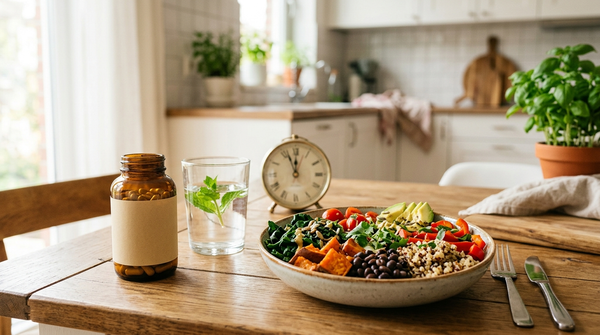
Food supplies the material your resident bacteria need. Prebiotic fibers are the fertilizer, fermented foods can add microbial variety, and gentle whole foods provide nourishment while digestion settles. A suitable diet can support microbiome recovery, so supplements should not replace meals that feed the bacteria already living in your gut.

Foods to prioritize
Begin with foods you already tolerate. Once your stomach and bowel movements feel steadier, widen the menu slowly.
- Prebiotic fibers: Oats, bananas, onions, garlic, leeks, asparagus, legumes, vegetables, nuts, and whole grains give gut bacteria fibers they can use. If bloating is active, increase portions gradually instead of filling every plate with beans and raw vegetables.
- Fermented foods: Kimchi, sauerkraut, kefir, miso, and yogurt with live cultures add variety. Start with small servings, especially when spicy or acidic foods cause discomfort.
- Soothing options: Warm soups, rice, potatoes, cooked vegetables, oatmeal, and broth-based meals may feel easier than heavy fried dishes. Bone broth can be comforting, but it does not replace fiber-rich foods.
- Regular meals: A predictable pattern makes it easier to identify what helps and what worsens symptoms. Include protein and a tolerated carbohydrate rather than relying on snacks alone.
For meal-planning ideas, particularly plant-forward choices, try the Yuve gut health diet plan.
Foods to approach with caution
Treat this list as a temporary experiment, not a permanent set of forbidden foods.
- Highly processed sugary foods: Large amounts can displace fiber-rich choices and may fit poorly into a gut-supportive eating pattern.
- Artificial sweeteners: Some people notice more gas or stool changes after consuming them. Reducing them briefly can help you observe your response.
- Heavy and fried meals: Greasy, high-fat foods may feel difficult to digest while your stomach is unsettled.
- Personal triggers: Dairy, spicy meals, or particular high-fiber foods may cause temporary trouble. Remove only foods that clearly worsen symptoms, then consider reintroducing them later.
Gentle rule: Add nourishment before subtracting foods. A broader, tolerable diet supports recovery better than a long list of foods to fear.
Probiotics and Prebiotics Your Gut's Support Team
After antibiotics, fewer digestive symptoms can feel like the finish line. Recovery usually has two stages: first, calming problems such as loose stools or bloating, then giving the microbiome time and resources to rebuild. A probiotic may support symptoms, but feeling better does not prove that the original microbial balance has returned.
A probiotic sounds straightforward, since antibiotics alter gut bacteria. Yet products are not interchangeable, and adding selected microbes does not guarantee that your personal ecosystem will recover in the same way. Research on probiotics after antibiotics has produced mixed results. Some findings suggest support for microbial diversity, while others report no meaningful effect or slower microbiome reconstitution. The practical lesson is to judge a product by its studied purpose, not by the word “probiotic” alone.
A product may be studied for preventing antibiotic-associated diarrhea without reliably restoring your unique microbiome. Symptom support and ecological restoration aren't the same endpoint.

Why prebiotics belong in the conversation
Prebiotics are fibers your body does not fully digest. Gut bacteria can use them farther along the digestive tract, so they supply fuel for microbial activity. Without a suitable food source, a probiotic may have less support for lasting activity. Increase fiber gradually if your symptoms are still sensitive, and let tolerance guide the pace.
A synbiotic combines probiotics with prebiotics. The probiotic provides selected microorganisms, while the prebiotic provides fuel. A randomized controlled trial found that a multi-species synbiotic taken during and after broad-spectrum antibiotics accelerated recovery of gut microbiome diversity and improved gut barrier-function markers compared with placebo.
Yuve All-in-One Gut Health combines probiotic and prebiotic support in one supplement format. It can complement tolerated, fiber-rich meals rather than replace them. For help comparing ingredients and supplement approaches, read A UK guide to digestive health.
Before using a supplement during or after antibiotics, follow the label and ask a clinician or pharmacist for advice if you have a medical condition, take immune-suppressing medication, or are recovering from a serious infection. For medication timing, see this guide on how to take probiotics with antibiotics.
Lifestyle Habits That Accelerate Healing
Your gut recovery plan doesn't end at the kitchen table. Stress, sleep, and movement can influence how your body handles digestion, including how food moves through your stomach and intestines. When you're tense, you may notice more cramping, urgency, or bloating even after eating a familiar meal.
Start small. A gentle walk after dinner can support comfortable digestion and gives you a low-pressure way to move. If walking feels unpleasant, choose an easy pace and shorten the outing. Recovery doesn't require an intense workout routine.

A calmer nervous system can help
Try a few minutes of slow breathing before a meal. Inhale comfortably, relax your shoulders, and lengthen your exhale. This won't rebuild missing bacterial species by itself, but it may help you eat more calmly and notice fullness before a meal becomes uncomfortable.
Sleep deserves the same practical attention. Keep your bedtime and wake time reasonably consistent, reduce late-night scrolling if it disrupts rest, and give yourself a quiet transition into bed. Your body needs recovery resources for more than digestion, so a steady routine supports the whole process.
If meditation feels awkward, that's normal. You don't need perfect stillness. A short guided practice, gentle stretching, or a few minutes of quiet breathing can be enough to begin. People who want a more comfortable setup can explore eco-conscious yoga and meditation gear, but the habit matters more than the equipment.
Try this simple daily combination:
- Move gently: Take a comfortable walk or stretch after a meal.
- Pause before eating: Use slow breathing to reduce rushed meals.
- Protect sleep: Build a repeatable wind-down routine.
- Track patterns: Note meals, stool changes, stress, and discomfort without judging yourself.
Your Recovery Checklist and When to See a Doctor
Use this checklist to keep your plan manageable:
- Eat consistently: Build meals around foods you tolerate, then add fiber gradually.
- Feed your microbes: Include oats, bananas, vegetables, legumes, nuts, or whole grains as comfortable.
- Add variety slowly: Consider fermented foods in small portions if they suit you.
- Choose supplements carefully: Probiotic effects vary by product and purpose, so don't assume every formula restores microbiome diversity.
- Support digestion daily: Walk gently, breathe slowly, and protect your sleep routine.
- Monitor the longer view: Feeling better is encouraging, but it doesn't prove that every microbial species has returned.
Contact a healthcare professional for severe or persistent diarrhea, fever, significant abdominal pain, dehydration, blood in the stool, or symptoms that keep worsening. Antibiotic-associated complications, including C. difficile, need medical assessment and shouldn't be managed with supplements alone. Probiotics may help prevent antibiotic-associated diarrhea or reduce C. difficile risk in some settings, but evidence for fully restoring microbiome diversity and function remains inconsistent (review of probiotics and antibiotic-related microbiome changes).
If you're comfortable sharing, tell your healthcare professional what antibiotic you took, when you finished it, and how your symptoms have changed. Those details can guide the next step.
Yuve offers plant-based digestive support designed to complement a fiber-rich recovery routine, including synbiotic support through Yuve All-in-One Gut Health. Visit Yuve to explore the formula and build a thoughtful post-antibiotic gut-health plan that fits your everyday meals.