That burning, creeping feeling in your chest after a meal isn’t just an annoyance- it can completely derail your day. Ever feel like your stomach is staging a fiery protest after dinner? You're not alone- and it’s not just about what you ate.
If you're searching for how to treat acid reflux naturally because you're tired of quick fixes that don't last, you're in the right place. We get the frustration, the bloating, and the deep desire for a solution that works with your body.
A New Approach to Managing Reflux
This guide isn't about another restrictive diet or a list of impossible rules. Instead, we're going to walk through a complete approach that combines simple food swaps, powerful lifestyle habits, and smart herbal support to finally calm the burn. You’ll learn actionable, evidence-backed steps you can start using today to see a real difference.
The constant mental checklist of what you can and can't eat is exhausting. Our founder, Sam, wrestled with his own digestive issues for years, which is the whole reason we're so passionate about finding gentle, effective solutions. This is all about making small, sustainable changes that lead to significant relief.
What to Expect: We’ll dig into practical, science-backed strategies to help you manage acid reflux without just reaching for another pill. The goal is to give you the tools to build a lifestyle that supports long-term digestive health.
Here’s a quick look at what we'll cover:
- The Food-First Approach: We'll pinpoint the alkaline-rich foods that can neutralize stomach acid and high-fiber options to keep your digestive system moving efficiently.
- Powerful Lifestyle Habits: You’ll learn how simple tweaks to your daily routine, from how you sleep to how you manage stress, can dramatically cut down on your symptoms.
- Nature's Soothing Remedies: We'll introduce you to safe, effective botanicals that can soothe an irritated esophagus and support your body’s natural digestive functions.
- A Clear Action Plan: We'll tie it all together into a straightforward routine, making it easy for you to get started and feel better fast.
Let's dive in and find the lasting relief you've been looking for.
The Food-First Approach to Calming Your Stomach
What you put on your plate has a direct, and often immediate, impact on acid reflux. Making smart food choices is the absolute cornerstone of finding natural, lasting relief. This isn't about signing up for a bland, joyless diet. It’s about knowing how to build satisfying, flavorful meals that also happen to soothe your stomach.
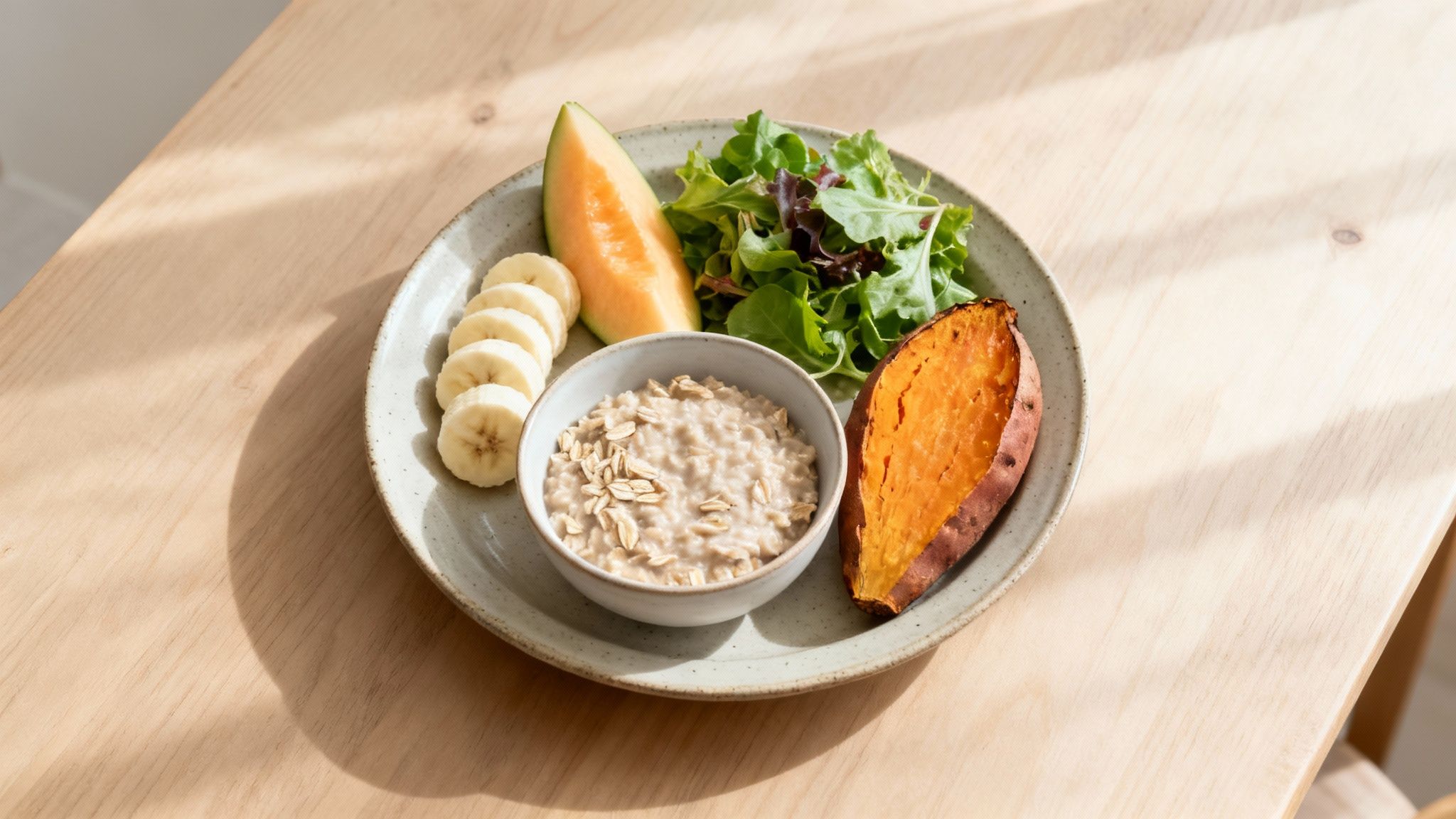
The best strategy is to focus on adding in foods that actively help, not just taking things away. Think of it as building a supportive, calming environment inside your gut, one meal at a time. The goal is simple: eat well and feel amazing, without that dreaded fiery kickback.
Your Go-To Foods for a Happy Stomach
Let's start with the good stuff. Certain foods can act like natural peacemakers for your digestive system.
- Alkaline-Rich Superstars: Foods with a higher pH, known as alkaline foods, can help neutralize stomach acid on contact. Think of them as your first line of defense. Add bananas, melons (like cantaloupe and honeydew), cauliflower, and fennel to your shopping list.
- High-Fiber Friends: Fiber is fantastic for overall digestive health. It keeps things moving through your system efficiently, which can reduce pressure on your stomach and that pesky lower esophageal sphincter (LES). Oatmeal, brown rice, sweet potatoes, and leafy greens are excellent choices.
- Water-Heavy Hydrators: Foods with high water content can dilute and weaken stomach acid. Celery, cucumber, lettuce, and watermelon are all wonderful, hydrating options that are gentle on your system.
By focusing on these foods, you're not just avoiding triggers; you're actively promoting a healthier, more balanced gut. It’s a proactive approach that pays off with every bite. For even more ideas, check out this guide on foods that heal the stomach lining.
Foods That Often Cause Trouble
On the flip side, some foods are notorious for relaxing the LES or increasing stomach acid, making reflux more likely. It’s helpful to know the usual suspects so you can be mindful.
- High-Fat and Fried Foods: These slow down digestion, leaving food in your stomach longer and creating pressure that can push acid upward.
- Citrus and Tomatoes: While healthy, their high acidity can be a direct irritant for an already sensitive esophagus.
- Chocolate, Mint, Garlic, and Onions: These are common culprits known to relax the LES, essentially leaving the door open for acid to escape.
- Spicy Foods: Spices can directly irritate the lining of the esophagus, making any reflux feel much worse.
- Caffeine and Carbonated Drinks: Both can increase stomach acid and relax the LES. That morning coffee or afternoon soda might be contributing more than you realize.
Our Takeaway: You don't have to eliminate everything forever. Start by noticing how you feel after eating these foods. Keeping a simple food journal for a week can be incredibly revealing and help you pinpoint your personal triggers.
The Power of Plant-Based Patterns
The idea of using food as medicine isn't just a hopeful theory- it's backed by solid science. In fact, research shows that dietary changes can be just as effective, if not more so, than conventional medications.
A landmark study found that patients with acid reflux who followed a mostly plant-based, Mediterranean-style diet saw symptom improvement in over 60% of cases. That’s even better than the 54% of patients who found relief from standard acid-blocking medications. This really shows that what you eat has the power to heal. To further calm your stomach, you might also consider integrating mindful eating practices into your daily routine.
Powerful Lifestyle Habits for a Happy Esophagus
What you eat is only half the battle. Your daily routines and habits play a massive role in managing acid reflux, and we've found that it's often the small, consistent changes that bring the most profound relief. Think of it as creating a supportive environment where your digestive system can thrive, not just survive.

This isn't about overhauling your entire life overnight. That's a recipe for failure. Instead, let's focus on a few simple, practical lifestyle tweaks that can dramatically cut down your symptoms and put you back in the driver's seat.
Tweak Your Mealtime Habits
We've learned that how you eat can be just as important as what you eat. When you rush through meals or eat huge portions, you're putting a ton of pressure on your stomach and the lower esophageal sphincter (LES). That pressure is exactly what we need to avoid.
Here’s a much gentler approach:
- Eat Smaller, More Frequent Meals: Instead of three big meals, try aiming for five or six smaller ones scattered throughout the day. This keeps your stomach from getting too full and reduces that upward pressure that lets acid escape.
- Slow Down and Savor: Life gets busy, we get it. But wolfing down your food is a direct ticket to digestive distress. Take the time to chew your food thoroughly. Not only does it help digestion, but it also gives your brain time to register that you're full, which is key to preventing overeating.
- Stay Upright After Eating: This one is a non-negotiable if you're serious about managing reflux. After you finish a meal, make it a hard rule to stay sitting or standing for at least two to three hours. Lying down lets gravity work against you, making it far too easy for stomach acid to slide right back where it doesn't belong.
Create a Reflux-Friendly Sleep Setup
Nighttime can be the absolute worst for anyone dealing with acid reflux. Lying flat for hours on end is the perfect storm for discomfort. The good news is that a few simple adjustments to how you sleep can make a world of difference.
Getting a wedge pillow or putting risers under the head of your bed to elevate it by 6 to 8 inches can be a total game-changer. This simple incline uses gravity to your advantage, helping keep stomach acid down in your stomach. It's a small change that can lead to a much more peaceful, uninterrupted night.
A personal story from our founder, Sam: "I used to wake up coughing in the middle of the night from reflux. Elevating the head of my bed was the first thing that gave me real, consistent relief. It felt like such a small thing, but it made a huge impact on my quality of life."
Manage Stress and Loosen Up
Ever notice your heartburn flares up during a stressful week? That’s not a coincidence. Stress can ramp up stomach acid production and slow down digestion, creating the perfect storm for reflux. Finding healthy ways to unwind is absolutely crucial.
A short, mindful walk after dinner can work wonders for both your stress levels and your digestion. We're not talking about a marathon here- just 15 minutes of gentle movement can help settle everything down.
And while we're on the topic of pressure, even your clothing matters. Tight belts, high-waisted pants, or shapewear can literally squeeze your abdomen, physically pushing stomach acid upward. Choosing looser, more comfortable clothing, especially around your waist, can provide a surprising amount of relief. It's one of those easy wins that helps your body feel better from the inside out.
Nature's Toolkit: Powerful Herbs for Acid Reflux Relief
So, you’ve tweaked your diet and lifestyle, but that stubborn heartburn still makes an unwelcome appearance. It’s frustrating, we know. When you feel like you're doing everything right and still struggling, it might be time to look at some of nature's most effective allies.
This is where targeted herbal remedies can be a game-changer. We don't see them as a magic cure, but as a powerful part of a holistic plan to calm your digestive system and find lasting relief.
The Gentle Soothers: Ginger and Chamomile
You probably already know ginger is great for nausea, but its power goes way beyond that. It’s a fantastic natural anti-inflammatory, which means it can help cool the fire in an irritated esophagus and stomach. A warm cup of ginger tea after a meal is one of our favorite ways to settle things down. In fact, many specific teas for gut health can directly soothe digestion and cut down on the bloating that often comes with reflux.
Then there’s chamomile. We think of it for sleep, but its calming properties work just as well on an upset stomach. It helps reduce inflammation and can even relax the muscle spasms in the digestive tract that sometimes trigger reflux.
The Protective Power of Demulcent Herbs
This category of herbs might sound a bit technical, but the idea is wonderfully simple. Demulcent herbs are rich in a slippery substance called mucilage. When you ingest them, they form a temporary, protective coating over your throat and esophagus.
Think of it as a natural, soothing balm for the raw, burning feeling left behind by stomach acid.
- Marshmallow Root: This is one of the best demulcents out there. It creates a physical barrier that shields your sensitive esophageal lining from acid, giving it a chance to heal.
- Slippery Elm: Very similar to marshmallow root, slippery elm has been trusted for centuries to soothe sore throats and digestive complaints for this exact reason- it creates a calming, protective film.
You can find these as teas or capsules. They provide a different kind of relief that feels physically protective and instantly calming. And since gut health and immunity are so connected, you might also find our guide on the best herbs for immune support helpful.
A Smarter Digestive Strategy with Papaya Enzymes
While the herbs above soothe existing irritation, digestive enzymes offer a more proactive approach. They help your body break down food more efficiently right from the start. This is a huge deal, because food that sits in your stomach for too long is a primary trigger for pressure buildup and acid reflux.
This is precisely why we are so confident in Yuve's vegan Papaya Enzymes.
They aren't just another supplement; they're a smarter way to manage digestion. Taking them with meals gives your body the support it needs to break down proteins, fats, and carbs effectively. That means less work for your stomach, less indigestion, and a much lower risk of that dreaded acid backup.
For many people, including our founder Sam, adding a high-quality digestive enzyme was the final piece of the puzzle that made all the other changes click. It’s a simple, proactive step that works with your body's natural processes, making it easier to enjoy meals without fear.
And this isn't just folklore- the science backs it up. One clinical trial on an herbal formula for reflux reported a stunning 100% treatment effectiveness rate, significantly outperforming the control group. Research like this shows that nature-based solutions are potent, scientifically-validated options for finding real relief.
Your Action Plan for Lasting Reflux Relief
Alright, we’ve covered a lot of ground- the foods, the habits, and the natural remedies that can make a real difference. But knowing what to do is one thing; actually doing it is where the magic happens. This is where we pull it all together into a practical, day-to-day plan you can start using right away.
Feeling a little overwhelmed by all the information? Don't be. Think of this as your roadmap. We're going to break it down into simple, manageable pieces to help you take back control and start feeling good again.
A Sample Day for a Happy Gut
So, what does a reflux-friendly day actually look like in the real world? It's probably a lot more delicious and less restrictive than you imagine. Here’s a peek at a simple routine to show you how easily you can weave these changes into your life.
Morning (8:00 AM)
- Breakfast: Start with a warm bowl of oatmeal topped with sliced banana and a little cinnamon. Oatmeal is brilliant because it's full of fiber and can actually absorb excess stomach acid, giving you a calm start to the day.
- Drink: Swap out the coffee for a cup of caffeine-free ginger or chamomile tea. Both are well-known for their anti-inflammatory properties that can gently soothe your digestive system.
Mid-Morning (10:30 AM)
- Snack: If you get peckish, a small handful of almonds or a few slices of cantaloupe are great choices. These are alkaline-rich foods that help neutralize any acid that might be creeping up.
Lunch (1:00 PM)
- Meal: How about a big salad with grilled chicken, lots of leafy greens, cucumber, and a light vinaigrette? Add a side of roasted sweet potatoes. This kind of meal is loaded with lean protein and fiber, so you’ll feel satisfied without that heavy, weighed-down feeling.
- Supplement: This is a perfect time to bring in extra support. Yuve’s Papaya Enzymes are a go-to for making digestion easier. Taking them with your largest meal of the day helps your body break down food more efficiently, heading off the indigestion that often triggers reflux in the first place.
Afternoon (4:00 PM)
- Activity: Time for a gentle, 15-minute walk. A little movement helps digestion along and is also a fantastic way to manage stress- a major, and often overlooked, reflux trigger.
Dinner (6:30 PM)
- Meal: Keep it light but satisfying with something like baked salmon, steamed asparagus, and a side of brown rice. It’s easy on the stomach but will keep you full until morning.
- The Golden Rule: Make sure you finish eating at least three hours before you lie down for bed. This is probably the single most important habit to adopt. Gravity is your friend here, helping to keep everything down where it belongs.
Evening (9:00 PM)
- Wind-Down Ritual: A calming cup of marshmallow root tea can work wonders. This herb is a demulcent, meaning it creates a soothing, protective coating along your esophagus, which can shield it from irritation while you sleep.
This simple process shows how you can use herbal allies to create a multi-layered defense against reflux.
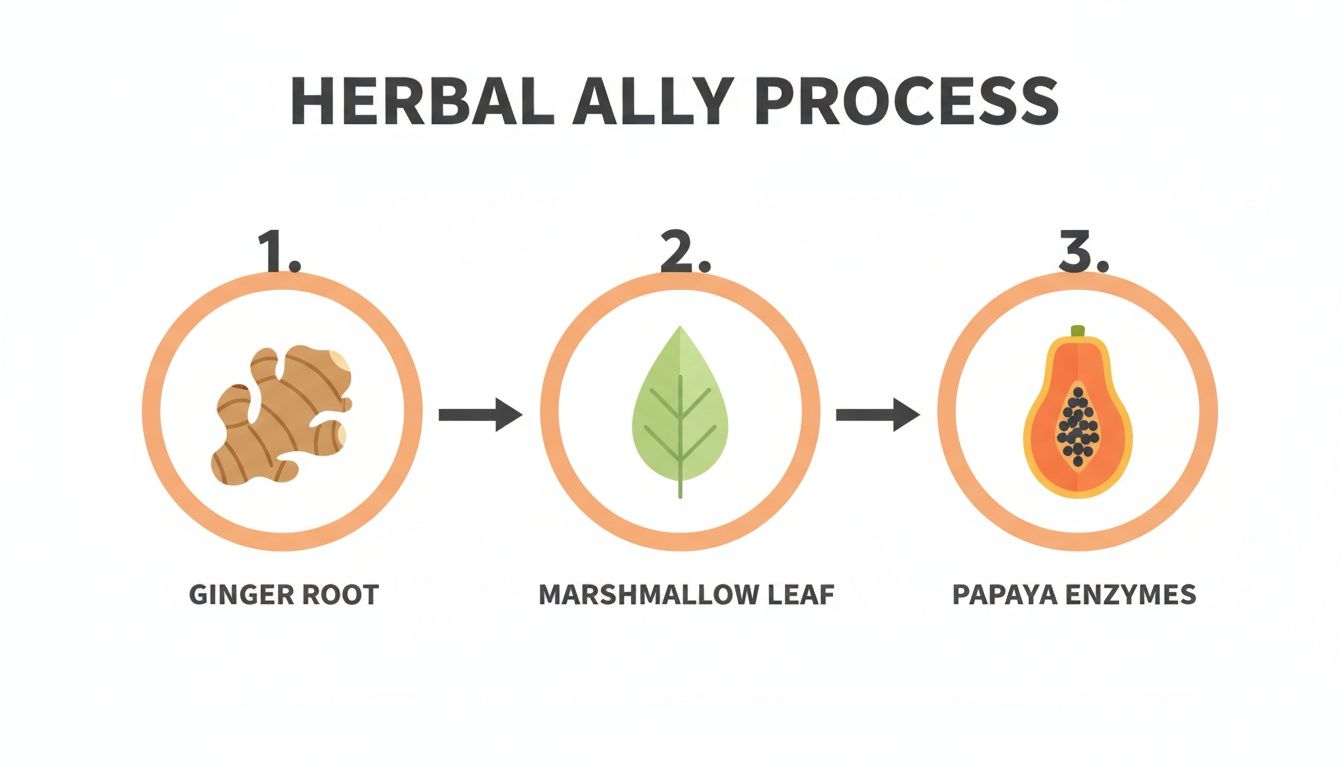
By bringing in soothing herbs like ginger, protective ones like marshmallow root, and digestive support like papaya enzymes, you’re not just treating symptoms- you’re proactively supporting your entire digestive system.
Quick Wins for When Reflux Strikes
Let's face it, sometimes a flare-up happens no matter how careful you are. When you feel that familiar burn, you need something that works now.
Here are a few things to try for fast relief:
- Stand Up and Walk Around: It’s tempting to curl up, but that’s the worst thing you can do. Stand up straight and take a slow walk. This lets gravity do its job and help pull the acid back down.
- Chew Sugar-Free Gum: The act of chewing stimulates saliva production, and your saliva is your body's own natural acid buffer.
- Sip a Little Alkaline Water: A glass of water with a slightly higher pH can help neutralize the acid on contact and provide some immediate comfort.
Anna’s Story: A Note from Our Community
We got a message from Anna, a member of our Yuve community, that we just had to share. For months, she'd been dealing with painful heartburn after almost every single meal. She had already given up coffee and spicy foods but was still left feeling miserable and bloated by the end of each day.
"I was so frustrated," she wrote. "It felt like no matter how 'healthy' I ate, the burning would come back. I was starting to dread mealtimes."
After finding our guide, Anna decided to try a few new strategies at once. She started eating smaller meals, made a strict rule to finish dinner by 7 PM, and- most importantly- she started taking Yuve’s Papaya Enzymes with both lunch and dinner.
The difference in just two weeks was incredible. "The constant bloating was gone, and the heartburn was so much less frequent," she told us. "The enzymes felt like the missing piece that helped my body finally handle my food properly. It's been life-changing."
Anna’s story is such a great reminder that consistent, natural management can truly give you your life back. The science backs this up, too. Research shows that herbal medicine can reduce GERD symptom severity by up to 62% in just two months. What this means for you is that sticking with these natural approaches can lead to powerful, proven results.
When to Talk to Your Doctor About Acid Reflux
This guide is packed with ways to manage acid reflux naturally, but a huge part of being your own health advocate is knowing when to call in the experts. Natural remedies can work wonders, but there are definitely times when you need to team up with a medical professional.
Think of your doctor as a partner in this process. Sometimes, what feels like simple heartburn can be a signal of something more. Knowing the difference is key to your long-term health.
Red Flag Symptoms to Watch For
If you notice any of the following symptoms, it's time to put down the home remedies and pick up the phone to schedule a doctor's visit. These can sometimes point to a more serious issue that needs a proper diagnosis.
- Trouble swallowing, or that constant feeling like food is stuck in your chest or throat.
- Losing weight without trying.
- Chest pain that doesn't go away, especially if it's different from your usual heartburn.
- Vomiting, particularly if you see blood or something that looks like coffee grounds.
- Black, tarry stools, which can indicate bleeding somewhere in your digestive system.
This isn't to scare you, but to empower you. Recognizing these signs early means you can get the right care, right away.
A Gentle Reminder: Your health comes first. Listening to your body and seeking professional advice when something feels off is a sign of strength, not a failure of your natural approach.
Partnering with Your Doctor
When you do see your doctor, go in prepared. Tell them exactly what you’ve been doing- the dietary changes, the lifestyle adjustments- and what has or hasn't helped. A good doctor will respect your efforts to manage your health and can help figure out the best next steps, whether that means integrating medical treatments or just running a few tests to be safe.
Remember, chronic and untreated acid reflux (often diagnosed as GERD) can lead to more serious complications down the road. Having a professional in your corner is a smart, proactive move for your health. You're doing a great job taking control of your well-being, and getting a medical opinion is just another part of that journey.
FAQ: Common Questions About Natural Acid Reflux Treatment
We get it- starting any new health routine brings up a lot of questions. When you're dealing with something as frustrating as acid reflux, you need clear, trustworthy answers. We've put together some of the most common questions we hear to help you feel confident as you start this journey.
How Long Does It Take for Natural Remedies to Work?
This is the big one, isn't it? The honest answer is: it really depends on the person. Some people tell us they feel a huge difference within a few days, especially after cutting out major trigger foods. For others, it might take a couple of weeks of consistent effort- diet changes, lifestyle tweaks, and herbal support- to achieve deep, lasting relief.
Our Takeaway: The key here is consistency. Your body needs time to heal and find its balance again. Stick with the changes, like eating smaller portions and not eating right before bed. You're building a foundation for long-term gut health, not just chasing a quick fix.
Can I Use Apple Cider Vinegar for Acid Reflux?
This is a popular remedy, but it’s a tricky one. The theory is that for a small group of people, reflux is actually caused by too little stomach acid. In those very specific cases, a bit of highly diluted apple cider vinegar (ACV) might help kickstart proper stomach function.
However, for most people suffering from reflux, I do NOT think ACV is a good idea. Adding more acid into an already irritated system is usually a recipe for more pain. We strongly suggest you start with the gentler, proven methods we've covered in this guide before even considering ACV.
Are Digestive Enzymes Safe to Take Every Day?
Absolutely. In fact, it's one of the best proactive steps you can take for your digestive wellness. Taking a high-quality supplement like Yuve's Papaya Enzymes with your meals is a perfectly safe and effective way to give your system daily support.
These enzymes work with your body, helping it break down food more efficiently. This eases the burden on your stomach, which can prevent the pressure and indigestion that so often lead to reflux. Think of them as a reliable daily tool for digestive peace of mind. If you're curious about the gut-heartburn connection, you can learn more about how probiotics can help with heartburn in our related article.
What Is the Best Sleeping Position for Acid Reflux?
Hands down, sleeping on your left side is what most digestive health experts recommend. It sounds simple, but it works because of your body’s anatomy. This position keeps the junction between your stomach and esophagus higher than the level of your stomach acid, making it harder for it to splash up.
For the best results, combine this with elevating the head of your bed by 6 to 8 inches. This simple combination is the most effective one-two punch against nighttime reflux. It lets gravity do the work for you, so you can finally get the peaceful, uninterrupted sleep you deserve.
Here at Yuve, we believe managing your health should feel empowering, not overwhelming. By integrating smart, plant-based support like our Papaya Enzymes into your routine, you can turn new habits into real, lasting relief.
Ready to enjoy your meals without the worry? Explore Yuve's vegan Papaya Enzymes today!