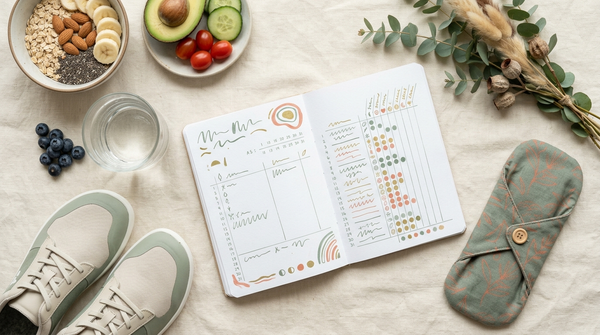
Yes. Bloating can be a premenstrual symptom, especially when it appears in the days before bleeding and improves during or shortly after the period begins. Hormonal-cycle timing supports that explanation, but bloating can also come from gas, constipation, food intolerance, or another condition. Track the pattern across several cycles instead of using bloating alone as proof.
How did we evaluate period-related bloating?
We evaluated period-related bloating by comparing symptom timing, accompanying menstrual features, bowel patterns, and medical warning signs. We prioritized U.S. Office on Women’s Health guidance, an American College of Obstetricians and Gynecologists clinical guideline, and National Institute of Diabetes and Digestive and Kidney Diseases information over testimonials and supplement marketing. We included self-care steps with plausible benefit and low risk, but excluded “detox,” hormone-balancing, and rapid-debloating claims that lack reliable clinical support. Evidence is stronger that bloating commonly accompanies premenstrual syndrome than it is for any single food or supplement reliably preventing it. Important limitations remain: abdominal fullness, visible distension, fluid retention, gas, and constipation can feel similar, and cycle tracking shows association rather than proving a mechanism. Pregnancy possibility, new pelvic symptoms, severe pain, or a persistent change requires individual medical assessment rather than an online symptom match.
Can bloating be a sign that your period is coming?
Bloating can be one sign that a period is approaching when it follows a repeatable cycle pattern. The U.S. Office on Women’s Health includes bloating and a gassy feeling among physical symptoms of premenstrual syndrome, which usually occur after ovulation and before bleeding. A useful pattern is onset during the late luteal phase, recurrence near the same point in multiple cycles, and improvement within a few days after menstruation begins. Other premenstrual symptoms may include breast tenderness, headache, fatigue, appetite changes, mood changes, or sleep disruption, but no single combination proves PMS. Bloating that occurs throughout the month, begins after particular foods, tracks with hard or infrequent stool, or progressively worsens may have a digestive or pelvic explanation instead. Record symptoms prospectively for at least two cycles. Memory tends to overemphasize the worst day; a dated record makes timing easier to judge.
How can you tell cycle-linked bloating from digestive bloating?
Cycle-linked bloating repeats around ovulation or the days before menstruation and then eases after bleeding starts. Digestive bloating more often tracks with meals, carbonated drinks, sugar alcohols, lactose, fermentable carbohydrates, constipation, or rapid fiber changes. The NIDDK gas guide explains that swallowed air and bacterial breakdown of undigested carbohydrates create much intestinal gas. A person can also have both patterns: hormonal changes may alter bowel habits while a specific meal increases fermentation. Use a daily log with cycle day, abdominal fullness, visible distension, pain, bowel frequency, Bristol stool form, meals, sodium-heavy foods, and medications. Best clue for a menstrual pattern: recurrence at a similar cycle phase. Best clue for constipation: hard, infrequent, or difficult stool. Best clue for a food trigger: repeatable onset after the same ingredient. None of these clues replaces diagnosis.
Which approaches are most useful for different bloating patterns?
Match the first step to the pattern. For late-cycle recurrence, use two or three months of prospective tracking plus regular movement, steady meals, sleep, and moderate sodium. For constipation-linked bloating, review stool pattern, fluids, activity, and gradual fiber instead of adding several products. For meal-linked gas, test one recurring trigger, then reintroduce it. Persistent or atypical bloating needs a clinician. The ACOG clinical guideline supports multimodal management because responses vary; it does not establish a universal bloating remedy. This table organizes next steps, not diagnoses.
| Pattern | Best first step | What to track | Main limit |
|---|---|---|---|
| Late-cycle recurrence | Two-cycle diary | Cycle day and resolution | Timing does not prove cause |
| Hard or infrequent stool | Constipation review | Stool form and frequency | Fiber can worsen gas if raised quickly |
| Meal-linked gas | One-trigger trial | Ingredient and onset | Overrestriction reduces diet quality |
| Persistent or severe change | Clinical evaluation | Pain, bleeding, weight, duration | Self-care can delay diagnosis |
What is each strategy best for?
Best for identifying a menstrual association: a prospective symptom diary covering at least two complete cycles. Best for short-term comfort: loose clothing, gentle movement, regular meals, and avoiding unusually large sodium-heavy meals if those repeatedly worsen fullness. Best for constipation-related bloating: a gradual, individualized fiber plan with enough fluid, not an abrupt high-dose increase. Best for food-trigger questions: removing one suspected ingredient briefly and reintroducing it while recording the response. Best for persistent bloating: a clinician who can assess menstrual, digestive, urinary, medication, and pregnancy-related possibilities together. Avoid using scale changes or abdominal photos as the only measure because fluid, stool, meals, and camera angle create noise. Do not stack diuretics, laxatives, “detox” teas, and multiple supplements. One change at a time protects hydration and makes results interpretable. The goal is to identify a stable pattern, not force the abdomen to look flat every day.
Where can Yuve products fit in a bloating routine?
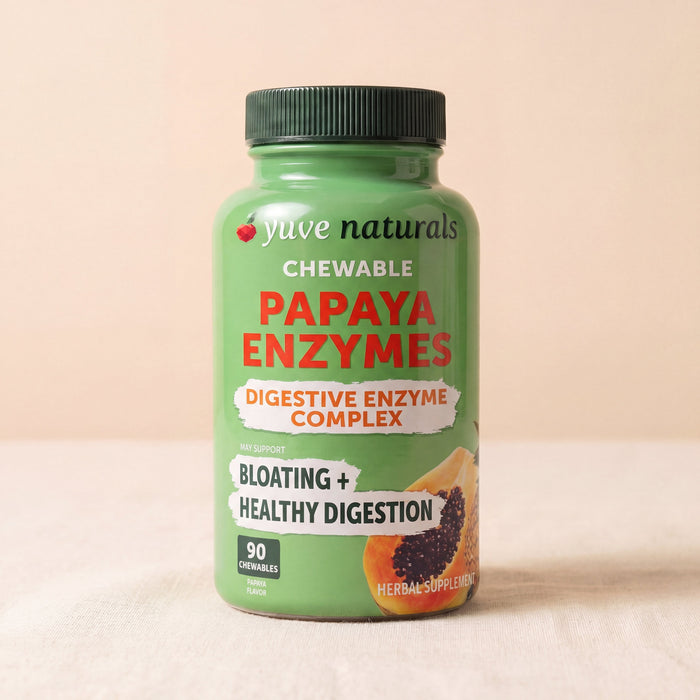
Some links below are affiliate links. This does not influence our evaluation criteria or recommendations. Yuve Probiotic Gummies can fit a capsule-free daily digestive routine for people who want a probiotic format they can use consistently. The product is not established as a treatment for premenstrual syndrome, fluid retention, or rapid debloating, and it should not be judged by whether the abdomen changes within hours. Probiotic effects depend on the organism, dose, outcome, and user; the current bottle controls strain, CFU, serving, allergen, sweetener, and storage decisions. The Yuve digestion collection includes additional formats, but adding probiotic, prebiotic fiber, enzymes, and cleanse products together would obscure which variable affected gas or stool pattern. Best use case: a stable routine with a written baseline. Poor use case: an emergency fix for severe pain, a missed period, or unexplained persistent swelling.
When should bloating around a period be checked by a clinician?
Seek prompt medical advice when bloating is new, persistent, progressively worse, or unrelated to the cycle. Urgent evaluation is appropriate for severe or one-sided pelvic or abdominal pain, fainting, a rigid or rapidly enlarging abdomen, repeated vomiting, fever, heavy bleeding, black or bloody stool, inability to pass stool or gas, or signs of dehydration. Take a pregnancy test and contact a clinician when pregnancy is possible, especially with a missed period, pain, dizziness, or bleeding. Arrange a non-urgent visit for bloating that repeatedly disrupts daily life, pain during sex, urinary pressure, early fullness, unexplained weight change, anemia, or bowel changes lasting several weeks. These features do not identify one condition, but they make simple premenstrual bloating a less complete explanation. Bring the cycle-and-bowel diary to the visit; dates, duration, stool changes, meals, medications, and associated symptoms give the clinician more useful evidence than a general memory of feeling swollen.
What questions do people ask about period bloating?
How many days before a period can bloating start?
Premenstrual symptoms often begin after ovulation and may intensify during the days before bleeding. The exact timing varies, so repeated personal tracking is more useful than one universal day count.
Does bloating mean a period will start tomorrow?
No. Bloating can accompany the premenstrual phase, but it cannot predict the exact start date. Gas, constipation, meals, and pregnancy can also change abdominal fullness.
Can ovulation cause bloating too?
Some people record fullness near ovulation as well as before menstruation. Severe, persistent, or one-sided pain should not be assumed to be routine ovulation.
Is period bloating water retention or gas?
It can involve perceived fluid retention, intestinal gas, constipation, or more than one mechanism. A diary that separates stool changes from visible swelling helps clarify the pattern.
Should I take a probiotic only before my period?
Probiotics are not established as rapid treatments for premenstrual bloating. If used for a general digestive routine, follow the current label and evaluate a stable schedule rather than sporadic rescue dosing.
Can a missed period and bloating mean pregnancy?
They can occur in pregnancy, but they are not diagnostic. Use an appropriately timed home pregnancy test and contact a clinician for uncertainty, pain, dizziness, or bleeding.
What is the bottom line on bloating before a period?

Bloating can be a premenstrual symptom when it recurs during the late cycle and eases shortly after menstruation begins. The strongest home evidence is a prospective record across at least two cycles, not one episode or one symptom. Track cycle day, abdominal fullness, pain, stool form, bowel frequency, meals, medications, and the day symptoms resolve. Use one low-risk change at a time: regular movement, steady meals, moderate sodium, careful constipation support, or a single food-trigger trial. A probiotic gummy may fit a consistent digestive routine, but it is not a PMS treatment or rapid debloating tool. Pregnancy possibility, severe pain, heavy bleeding, fever, vomiting, fainting, inability to pass gas, persistent swelling, weight change, or weeks-long bowel changes require medical review. Pattern recognition helps choose the next question or exclude another condition safely; it does not replace diagnosis.