Ever finish lunch with that familiar balloon-like feeling, then reach for a gummy probiotic because you want your stomach to settle? A few minutes later, you may wonder whether the sweet treat is helping your gut or adding to the problem.
Sugar free probiotic gummies look like a simple answer. They're convenient, chewable, and designed to fit lower-sugar routines. But the useful questions go beyond “Are they healthy?” You also need to ask whether the probiotic survives the gummy matrix, and whether the sweetener is comfortable for your digestion. This guide walks through the label language, formulation choices, safety considerations, and daily-use habits that can help you choose with confidence.
When Sweet Treats Meet a Sensitive Stomach
You've eaten a normal meal, your waistband feels tighter, and your stomach is making its opinion known. A sugary gummy might seem harmless, but some traditional probiotic gummies contain added sugar. For someone already dealing with bloating, that candy-like format can feel confusing: is it a supplement, a treat, or both?
The category has grown because people want gut-health support without swallowing another capsule. The global probiotic gummies market was valued by one independent estimate at US$869.9 million in 2024, with a projection of US$1,973.7 million by 2030 and a 14.7% CAGR from 2025 to 2030. The same market coverage describes sugar-free products using monk fruit, erythritol, or stevia as gaining traction, while another outlook places North America above 45.9% of global share in 2025. These figures point to a broad reformulation trend, not a tiny specialty niche. (DataM Intelligence probiotic gummies market analysis)

The two questions most labels skip
A sugar-free label answers one question about sugar content. It doesn't tell you whether the organisms remain viable through storage, heat, and chewing. Evidence from a sugar-free probiotic gummy and chewing-gum context found detectable probiotic counts in saliva after 10 minutes of use, with detectable burdens in 71.4% of volunteers at two weeks. That suggests viable delivery is possible, but it doesn't prove that every everyday gummy delivers a meaningful gut benefit. (University of Milan doctoral research)
The second question concerns the replacement sweetener. Erythritol, xylitol, maltitol, sorbitol, stevia, and related ingredients can produce very different experiences in sensitive stomachs. If you're comparing products, take a calm look at the Supplement Facts panel and ingredient list. A useful background resource on sweet ingredients and formats is Hemp Well Ireland's guide to CBD in sweet treats, especially if you're trying to understand why a sweet chew can feel different from a capsule.
The rest of your decision comes down to label accuracy, strain identity, storage, sweetener tolerance, and realistic expectations. No brand cheerleading required. Just a practical way to avoid paying for a decorative gummy that doesn't match your needs.
What Sugar Free Probiotic Gummies Are
A product label starts with the probiotic. Probiotics are live microorganisms, usually particular bacterial strains, consumed with the intention of supporting health. Common groups include Lactobacillus and Bifidobacterium, yet the genus alone gives limited information. Species and strain identity matter because organisms within the same broad group can behave differently.
The gummy is the delivery format. Manufacturers combine a setting material, such as pectin or gelatin, with flavoring, acids, sweeteners, and a probiotic preparation. This creates a chewable supplement that resembles a small confection more than a capsule or powder. That format may suit someone who regularly avoids swallowing pills.

What “sugar-free” means on the label
In the United States, the FDA permits a food to use the “sugar-free” claim when it contains less than 0.5 grams of sugars per reference amount customarily consumed and per labeled serving. For meals and main dishes, the limit is less than 0.5 grams per labeled serving. (FDA Food Labeling Guide.pdf))
Sugar-free does not mean flavor-free. A gummy may use sugar alcohols, including erythritol or xylitol, or high-intensity sweeteners, including stevia or monk fruit. The FDA also says a sugar-free product generally cannot include an ingredient that is sugar, or commonly understood to contain sugar, unless the ingredient statement includes an asterisk and a qualifying note such as “adds a trivial amount of sugar.” (FDA guidance on sugar-free claims)
Related label terms are not interchangeable
- Sugar-free: Meets the FDA threshold for sugars described above.
- Low-sugar: Contains less sugar than a comparison product, but may still contain sugar.
- No added sugar: The manufacturer added no sugar during formulation, though naturally occurring sugars may remain.
- Naturally sweetened: Uses a sweetener described as natural. The phrase does not identify the sugar content or how comfortable the product may feel to your digestion.
The ingredient list and Supplement Facts panel add the details that the front label leaves out. Check the gummy base, sweetener type, serving information, and named probiotic strains before treating the product as a simple sweet.
The Benefits You Can Expect
A sugar-free probiotic gummy may fit a routine more easily than a capsule, but its benefits depend on two quality questions: can the named probiotic survive the gummy matrix, and can your stomach tolerate the sweeteners? The word “probiotic” alone does not guarantee relief from bloating, constipation, gas, or immune concerns. Outcomes depend on the specific strain, viable amount, product stability, and the person taking it.
Some researched strains, including Lactobacillus rhamnosus GG and Bifidobacterium lactis, have clinical support for digestive outcomes in particular settings. A gummy containing only a broad Lactobacillus or Bifidobacterium label cannot automatically be matched to that evidence. “Probiotic blend” gives you too little information to judge whether the product's organisms fit the research.
Benefits with a reasonable basis
Digestive support is the clearest reason to consider these products. Certain strains may support regularity or ease occasional digestive symptoms, although one person's response may differ from another's. Persistent or severe bloating, especially with pain, calls for medical evaluation rather than relying on a gummy.
Convenience may improve adherence. A chewable format can be easier to remember for people who dislike pills. That advantage matters only when the gummy protects probiotic viability through its shelf life. A pleasant texture cannot compensate for organisms that decline before the product reaches you.
Lower sugar can support a reduced-sugar routine. Replacing a sugar-containing gummy may help you avoid adding another sweet item to the day. The trade-off is that sugar substitutes can still cause gas, bloating, or loose stools in sensitive people. Sugar-free describes the sugar content, not guaranteed digestive comfort.
A useful stability study tested probiotic gummy candies at room temperature over 24 months. Viable counts declined by only 0.12 log, from 1.1 × 10^8 to 8.3 × 10^7 CFU per gram, and the tested gummies remained above the label claim of 1 billion CFUs per 24-gram serving. (2024 probiotic gummy stability study) This supports the tested formulation, not every gummy on the shelf. Matrix ingredients, packaging, storage, and the strain itself can change the outcome.
| Benefit area | Evidence level | Key caveats |
|---|---|---|
| Digestive support | Strain-dependent | Results vary, and broad blends are difficult to evaluate |
| Immune support | Strain- and context-dependent | A probiotic does not replace medical care or a balanced diet |
| Lower-sugar routine | Practical dietary benefit | Sugar alcohols may still bother sensitive digestion |
| Convenience | Strong practical rationale | It helps only when potency and labeling are credible |
| Whole-gut health | Requires broader habits | Gummies do not replace fiber-rich foods or fermented foods |
The broader probiotic gummy market is growing, but market demand does not demonstrate that a specific product works for you. One outlook reports digestive gummies held 48.42% of market share in 2025, while probiotic dietary supplements were projected at US$12.52 billion in 2025 and US$24.35 billion by 2031. Gummies and chews were forecast to grow at a 13.18% CAGR through 2031. (Intel Market Research probiotic gummies outlook)
For specialized choices, this guide to women's probiotics during pregnancy illustrates why life stage and clinical context can change what is appropriate.
Reading the Label Like a Pro
A polished front label can tell you almost nothing about whether a gummy deserves your trust. Turn the package around and scan it in a consistent order.
Use this six-point check
- Find the CFU guarantee. Look for viable organisms guaranteed through the expiration date, not merely the amount added during manufacturing. “At manufacture” tells you the starting point. “At expiration” gives you a more useful promise about shelf-life potency.
- Demand full strain identification. A transparent label names genus, species, and a strain code, such as Lactobacillus rhamnosus GG. “Probiotic blend” may sound impressive, but it doesn't let you connect the formulation to strain-specific evidence.
- Read the sweetener panel. Identify whether the product uses erythritol, xylitol, maltitol, stevia, monk fruit, or a combination. Also check whether the package discloses total sugar alcohol content, since tolerance depends on both the ingredient and the amount.
- Scan for allergens. Soy, dairy, gluten, and other ingredients can matter if you have a diagnosed allergy, intolerance, or dietary restriction. “Sugar-free” doesn't mean allergen-free.
- Look for independent quality checks. Seals such as USP, NSF, or Informed-Sport may indicate testing for label accuracy and contaminant screening. A seal isn't a substitute for reading the Supplement Facts panel, but it can add useful quality context.
- Confirm storage and expiry. Heat, moisture, and time can affect live cultures. Follow the package storage directions, and don't buy a container with an unclear expiration date.

Formulation transparency beats front-label confidence
A manufacturer that gives you a strain code, expiration-date potency, storage instructions, and allergen information is making evaluation easier. That doesn't prove a benefit, but it shows that the company is addressing the questions that matter.
For a more general walkthrough, use this guide to reading supplement labels. It can help you separate a specific, testable claim from a vague promise.
If you prefer video learning, this short visual guide can reinforce the same label-reading habits:
The key is to judge the whole package. A “zero sugar” badge is useful, but it doesn't answer whether the strain survives storage or whether the sweetener suits your stomach.
Sweeteners and Gummy Bases That Matter
Sugar-free gummies can taste very different depending on what replaces sugar and what gives the chew its structure. Start with sweeteners, then consider the base.
Sugar alcohols include erythritol and xylitol, while maltitol, sorbitol, and isomalt are also used in functional candies. They can provide bulk and a candy-like texture, but they aren't interchangeable in digestive tolerance. Erythritol is often better tolerated than some other sugar alcohols, whereas xylitol, maltitol, and sorbitol may cause bloating or loose stools in susceptible people.
Stevia and monk fruit provide sweetness without the same bulk as sugar alcohols. They may work well in a formula that uses another ingredient for texture, though some people notice an aftertaste. Allulose appears in some reduced-sugar formulations, but you still need to assess the complete ingredient list rather than assuming a “natural” ingredient will feel gentle.
Sorbitol deserves special attention if you already react to sugar-free sweets. This explanation of sorbitol as a skincare ingredient provides broader ingredient context, while digestive guidance from UC Davis explains that sugar alcohols such as sorbitol can contribute to bloating, cramps, and diarrhea when intake is high. (UC Davis on sugar-free candy and gas)
The gummy base changes the experience
Gelatin creates a smooth, familiar chew, but it's animal-derived and doesn't suit vegan diets. Pectin is plant-based and can provide a vegan-friendly, fruit-set texture, though it may feel firmer or less elastic. Neither base automatically proves that the probiotic will remain viable. The manufacturer still needs to manage heat, moisture, acidity, and processing conditions.
| Option | Type | Key trait | Tolerance note | Probiotic-friendly |
|---|---|---|---|---|
| Erythritol | Sugar alcohol | Clean sweetness with bulk | Often easier for some people, but individual response varies | Depends on stability testing |
| Xylitol | Sugar alcohol | Sweet, cooling finish | May cause gas or loose stools in sensitive users | Depends on formulation |
| Stevia | High-intensity sweetener | Strong sweetness with little bulk | Aftertaste bothers some people | Usually needs a supportive gummy base |
| Monk fruit | High-intensity sweetener | Fruit-derived sweetness | Often blended with other sweeteners | Depends on processing and stability |
| Gelatin | Animal-derived base | Smooth, elastic chew | Not vegan | Can work if heat is controlled |
| Pectin | Plant-based base | Firmer, fruit-set texture | Vegan-friendly | Can work if viability is tested |
For flavor ideas that use stevia in another type of treat, see Yuve's dark chocolate with stevia guide. The same principle applies here: taste and tolerance come from the full formula, not one ingredient in isolation.
Safety, Side Effects, and Who Should Pause
The most common early complaint isn't dramatic. It's extra gas, mild bloating, or a change in bowel habits. That can happen when someone introduces a probiotic, and sugar alcohols such as xylitol or sorbitol can add their own digestive effects. If you're already sensitive, starting with the full serving may make it hard to tell which ingredient is responsible.
A gentler approach is to use a smaller amount for several days, then increase gradually if your body responds well. If symptoms become intense, persistent, or painful, stop and reassess rather than forcing your way through. “More” isn't automatically better for a probiotic.
Practical rule: If a sugar-free gummy leaves you more uncomfortable than before, treat that response as useful information. Check the sweetener panel before blaming the probiotic itself.
People who should ask a clinician first
Talk with a healthcare professional before starting a probiotic supplement if you're immunocompromised, have a central venous catheter, are recovering from recent surgery, or are taking antibiotic or antifungal therapy. Timing and product suitability can depend on your medical situation, so a general label can't replace individualized advice.
People with diabetes may appreciate a sugar-free format, but they should still read the full ingredient list. Some products use non-nutritive sweeteners, while others may include ingredients such as maltodextrin. “Sugar-free” describes the regulatory sugar claim, not every aspect of carbohydrate metabolism or blood-glucose response.
There's also a household safety issue that many labels don't make memorable enough: xylitol is dangerous to dogs. Keep xylitol-containing gummies secured away from pets, and contact a veterinarian promptly if a dog may have eaten them.
Children deserve extra care too. Use only products with clear age guidance and serving instructions. A gummy looks like candy, so store it as a supplement, not in a child-accessible snack drawer.
Finally, don't confuse temporary adjustment with a requirement to suffer. A transparent formula, clear strain identity, and disclosed sweeteners make it easier to choose a product that fits your body instead of arguing with it.
Choosing, Timing, and FAQs for Daily Use
The right product depends on the person taking it. A vegan shopper needs to confirm a pectin base and check whether any carriers or capsule-like components come from animals. A parent needs clear age guidance, a manageable serving, and secure storage. Someone with a sensitive stomach should prioritize a simple sweetener profile and introduce the product cautiously.
A practical buying flow
- Start with the manufacturer. Look for a clear product page, accessible contact information, storage directions, and a return policy. A company that explains its ingredients makes your decision easier.
- Check the strain panel. Choose a product that identifies the organisms beyond the generic word “probiotic.” Review the CFU claim and whether potency is guaranteed through expiration.
- Match the sweetener to your history. If sorbitol, maltitol, or xylitol has caused you trouble before, don't assume a sugar-free label will feel gentler. Look for a simpler formula, and avoid changing several digestive supplements at once.
- Plan the routine. Many people take a probiotic with breakfast or on an empty stomach, depending on the product directions. Keep it away from very hot drinks if the label advises this, and ask a pharmacist or clinician how to space it from antibiotics.
- Prepare for travel and illness. Follow the storage instructions during travel, especially if the product needs protection from heat or moisture. If you're acutely ill or your symptoms change sharply, pause and seek appropriate medical guidance instead of adding more supplements.
For more detail on timing choices, use this guide to when to take probiotics.

Frequently asked questions
Are sugar-free probiotic gummies safe every day?
They can fit a daily routine for many healthy adults when used according to the product directions, but safety depends on the strains, sweeteners, medical history, and serving size. Stop if you develop troubling symptoms, and consult a clinician if you're immunocompromised, recovering from surgery, or managing a complex condition.
How long does it take to notice results?
There isn't one guaranteed timeline. Some people notice changes in digestion sooner, while others notice no meaningful difference. Give the product a consistent trial only if you tolerate it, and judge it by specific goals such as regularity or occasional bloating rather than a vague promise to “reset” your gut.
Should gummies stay in the fridge?
Follow the package directions. Some products are designed for room-temperature storage, while others need refrigeration. Keep all gummies away from heat and moisture, and pay attention to the expiration date.
Can they replace a high-probiotic diet?
No. A gummy can supplement your routine, but it can't replace a varied diet containing fiber-rich foods and fermented foods that you tolerate. If your meals lack plant variety, adding a gummy doesn't fix the underlying pattern.
A focused choice is usually better than a rushed one. Read the label, identify the sweetener, confirm the strain information, and give your stomach room to respond.
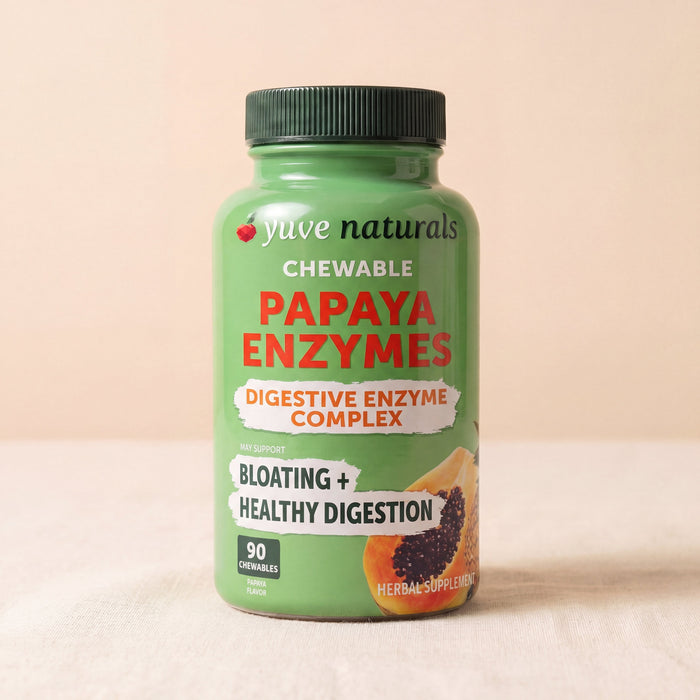
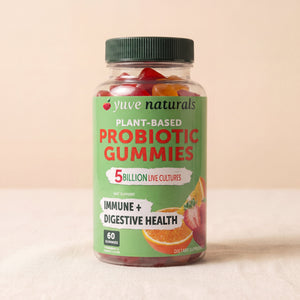
Yuve offers vegan probiotic gummies made with plant-based cultures, along with other gut-health supplements designed for people seeking a convenient, gelatin-free option. Visit Yuve to review the ingredients, product directions, and choices that may fit your sugar-free probiotic routine.