Nature's Way documents third-party testing for specified products through PureCheck, alongside separate laboratory and manufacturing-quality credentials. That does not establish that every Nature's Way formula has identical independent testing or certification. Verify the exact product, lot number, report, and testing scope instead of treating a company-wide quality statement as bottle-specific proof.
How we evaluated Nature's Way testing claims?
We reviewed Nature's Way's current PureCheck page on November 17, 2026, separating the products explicitly included in its lot-verification program from broader statements about the company's laboratory and manufacturing systems, because these claims answer different questions about supplement quality. We used Food and Drug Administration consumer guidance to distinguish manufacturer responsibilities from government approval, and treated certification scope, laboratory independence, product identity, and lot traceability as separate evidence fields rather than interchangeable quality badges. We excluded retailer summaries, customer testimonials, unverified marketplace seals, and any inference that a tested ingredient or audited facility proves a finished supplement produces a particular health outcome in the person buying it. This was a public-document review, not a laboratory audit or examination of a purchased bottle, so a manufacturer statement remains attributed to the manufacturer and an individual batch still requires its own matching documentation.
Which Nature's Way products are explicitly included in PureCheck?
According to Nature's Way's PureCheck page, the program includes NutraSea Omega-3, NutraVege Omega-3 Oil, and NutraVege Omega-3 Softgels. The company describes PureCheck as a third-party verification platform for purity and potency results associated with a product lot. Its instructions direct shoppers to enter the number printed on their bottle.
That named list matters. A program covering those products is not, by itself, evidence that a different herbal capsule, gummy, or probiotic has the same public verification route. Do not extend a statement about participating products to every formula sold under the corporate brand.
Best for checking a participating bottle: use its actual lot number and review the matching report. Best for a product outside the named program: ask customer support what independent finished-product evidence exists for that exact formula. Neither path should be replaced by a screenshot of a different product's results.
How do laboratory accreditation, GMP, and product testing differ?
Laboratory accreditation evaluates competence within a stated analytical scope. NSF distinguishes manufacturing certification from product certification, because they evaluate different scopes. Finished-product testing measures a particular sample against a particular panel and specification. These evidence layers can complement one another, but they do not answer the same question.
Nature's Way separately reports ISO/IEC 17025:2017 laboratory accreditation and NSF/ANSI 455-2 manufacturing certification. Those are manufacturer-reported credentials here, not independently audited findings from this editorial review. A shopper should verify the current certificate, named site, and scope with the issuing organization when that credential is decisive.
| Evidence | Useful for | Not enough for |
|---|---|---|
| Lab accreditation | Method competence | Every bottle's result |
| GMP certificate | Manufacturing systems | Universal product certification |
| Lot report | Named sample findings | All future batches |
The practical question is not which badge looks strongest. Ask which document supports the specific claim on the bottle you are considering, then record what that document leaves untested or unspecified.
What should a lot-matched test report actually show?
A useful document identifies the product, formula or strength, lot, testing date, laboratory, analytes, methods, specifications, and results. Those fields let you determine whether the report belongs to the bottle in hand and which questions the laboratory addressed. A generic pass statement provides less context than a traceable report with clear limits.
For example, identity testing and potency testing are different checks. A contaminant panel should identify what was measured rather than implying that every possible contaminant was excluded. A result reported below a laboratory's reporting limit is also not a promise that a substance is mathematically absent.
Use a document-matching sequence: compare the lot first, product identity second, and analytical scope third. Save the package photograph with the corresponding report. If the document concerns only a raw ingredient, an older formula, or a different batch, ask for clarification rather than quietly treating it as equivalent finished-product evidence.
Does third-party testing mean FDA approval or proven benefits?
No. The Food and Drug Administration explains that dietary supplements do not receive routine premarket approval and that manufacturers bear responsibility for compliant products. FDA also distinguishes its oversight from testing every supplement before sale. A private laboratory report does not change that regulatory distinction.
Quality evidence and usefulness evidence belong in different columns. A report can support a claim about a measured ingredient amount or tested contaminant. It cannot establish that the formula is necessary for your routine, appropriate with your medicines, or effective for an unrelated health goal.
Before buying, ask two separate questions: does the evidence support what is inside this specific product, and does credible human evidence support the intended use? Passing the first question does not automatically answer the second. A clearly documented product can still be a poor match for an individual's needs, preferences, or existing supplement routine.
How should you compare a Yuve product using the same standard?
Commercial disclosure: this is Yuve-owned editorial content, and product links are commercial links and may be affiliate links. Brand ownership does not change the documentation standard used for competitors or Yuve products.
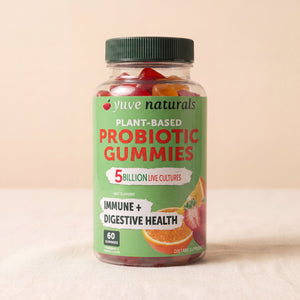
For Yuve Probiotic Gummies, request evidence matched to the product name and lot rather than assuming that a category description establishes independent certification. Ask which laboratory performed the work and whether the report addresses identity, potency, relevant contaminants, and the claimed shelf-life conditions. These are verification questions, not claims that this review examined a particular batch report.
Apply the same sequence when browsing the digestion collection: identify the formula, read its full label, and request supporting documentation before making a testing-based comparison. Best for a defensible decision: the exact product that supplies relevant, traceable evidence and fits the intended use. No brand receives an automatic advantage because its name appears on this website.
FAQ: What should shoppers ask about Nature's Way testing?

Is every Nature's Way product in PureCheck?
The company's page names specific participating omega-3 products. Do not extend that list to unrelated formulas without matching documentation for the product you are actually considering purchasing.
Does an accredited laboratory have to be independent?
No. Accreditation and ownership are different questions, so identify who operates the laboratory and what its accredited scope covers before interpreting a credential as outside verification.
Does GMP certification certify every finished bottle?
No. Manufacturing-system certification and product-specific evidence address different scopes, even when both contribute useful information to a purchasing decision.
Can a report from another lot substitute for my bottle?
Not as direct batch evidence. Match the formula and lot, then ask what the report actually measures and leaves unspecified.
Does third-party testing establish clinical effectiveness?
No. Analytical results address defined quality questions, while usefulness requires appropriate evidence for the ingredient, formulation, population, and intended outcome.
What if I cannot find my report?
Contact the manufacturer with the product name and lot. Lack of a public report is not proof of failure, but it leaves verification incomplete.