NOW Foods uses third-party verification, but “the brand is third-party tested” needs qualification. NOW reports outside laboratory partnerships, third-party GMP certifications, and selected product certifications such as Informed Sport, while much routine raw-material and finished-product testing occurs in its own ISO-accredited laboratories. Verify the exact product, certification scope, and current seal before buying.
How did we evaluate NOW Foods testing claims?
We evaluated current NOW Foods quality pages, named certification programs, laboratory-accreditation scope, and U.S. Food and Drug Administration rules rather than relying on retailer badges or review sites, and we separated five signals: in-house testing, external contract-lab testing, laboratory accreditation, facility or process certification, and finished-product certification. Each signal answers a different question, so none was treated as proof that every NOW supplement carries independent lot-level certification. We also checked whether each claim named an auditor, standard, product line, test type, or public directory; company pages describe NOW’s program, while a certificate or searchable product listing defines the third party’s verified scope. This article therefore answers “yes, with qualifications” and gives buyers a repeatable method for checking one bottle rather than assigning a blanket quality score to more than a thousand distinct products.
What third-party evidence does NOW Foods publish?
NOW publishes several distinct forms of external oversight. Its seals and certifications page states that Eurofins Healthcare Assurance certifies dietary-supplement manufacturing against NSF/ANSI 455-2 GMP requirements and that Intertek audits the company against Supplement Safety & Compliance Initiative benchmarks (NOW certifications). NOW also lists programs such as Informed Sport, USDA Organic, Non-GMO Project Verified, kosher, halal, and other category-specific seals. Those programs do not all test the same attribute. GMP certification reviews manufacturing systems, while Informed Sport addresses banned-substance risk for participating sports products. Organic, gluten-free, kosher, or non-GMO verification covers a narrower claim. The useful evidence is therefore the named standard and scope, not the number of logos on a corporate page. A buyer should match the mark on the exact bottle with the certifier’s current description or directory whenever one is available.
Does NOW test products only through outside laboratories?
No. NOW says its primary quality system includes extensive in-house testing from incoming materials through finished goods. The company reports more than 31,000 analyses and tests per month across physical, analytical, microbiological, research, and method-development laboratories (NOW laboratories). Its testing page also says NOW works with outside laboratories for specialized testing, duplicate testing, and certifications (NOW comprehensive testing). This hybrid model is common but requires precise language. An in-house result is manufacturer-generated evidence, even when the laboratory holds accreditation for defined methods. An outside-lab result is independent testing for the submitted sample and stated analytes. A GMP audit examines systems rather than every bottle’s potency. Product certification adds another layer but applies only within its published scope. “Third-party involved” is therefore accurate; “every lot is independently certified for every claim” is not established by those pages.
What does ISO laboratory accreditation prove?
ISO/IEC 17025 accreditation evaluates a laboratory’s technical competence and quality system for a defined scope of methods. NOW reports A2LA accreditation for its analytical and microbiological laboratories and states that the accredited scope expanded in 2025. The company’s page lists certificate numbers 6253.01 and 6253.02 and explains that only a subset of its methods falls within the accredited scope (NOW ISO accreditation). That distinction matters because accreditation applies to the laboratory and named methods, not automatically to every test, product, ingredient, or claim. The laboratory still belongs to NOW, so ISO accreditation does not convert all in-house work into independent product certification. It does provide third-party assessment of competence for the covered methods. Buyers should check the certificate validity date and scope document rather than treating the ISO logo as a universal finished-product guarantee.
Are all NOW supplements independently product-certified?
The available evidence does not justify that blanket claim. NOW names product-level programs for selected categories, including Informed Sport, while other seals verify organic status, non-GMO claims, dietary attributes, or manufacturing processes. NSF explains that the meaning of its mark depends on the specific certification: a GMP certification can cover a facility, while a product certification can include label verification, contaminant testing, and ongoing oversight (NSF). A bottle without a product-specific seal may still be tested through NOW’s internal program and may receive outside-lab work, but that is not the same as public certification of that finished product. Check the exact SKU, size, flavor, and lot when possible. Avoid extending one certified sports product’s status to a vitamin, botanical, probiotic, or personal-care item. The narrowest accurate statement is stronger than a vague one: identify who tested what, under which standard, and at which level.
How do the main testing signals compare?
The strongest interpretation begins by naming the evidence type. NOW in-house testing offers frequent process control and product-specific method development, but the manufacturer controls the program. ISO/IEC 17025 accreditation adds independent assessment for listed laboratory methods, not every result. Eurofins or Intertek GMP certification evaluates manufacturing systems, documentation, packaging, labeling, storage, and related controls, but it does not mean each retail bottle passed an independent potency panel. Outside contract-lab testing can verify a submitted sample for specified analytes, although buyers still need scope, date, lot, and method. Finished-product certification such as Informed Sport provides the clearest public product-level signal when the exact SKU appears in the certifier’s program. FDA oversight supplies regulatory context, not premarket approval. The table separates these layers so a corporate quality claim does not become broader than the evidence.
| Signal | Best for verifying | Independent? | Main limitation |
|---|---|---|---|
| NOW in-house testing | Routine identity, purity, potency, and contaminants | No | Manufacturer controls sampling and reporting |
| ISO/IEC 17025 accreditation | Competence for listed lab methods | Accreditation is external | Scope is method-specific |
| GMP facility certification | Manufacturing and quality systems | Yes | Not bottle-by-bottle product certification |
| Outside contract-lab test | Named analytes in a submitted sample | Yes | Needs lot, method, date, and scope |
| Finished-product certification | Exact SKU under a defined program | Yes | Applies only to participating products |
Which evidence is best for each buying question?
Best for confirming an athlete-oriented SKU: a current Informed Sport or comparable product listing for the exact item. Best for evaluating manufacturing systems: a valid third-party GMP certificate with the facility, standard, and dates. Best for assessing laboratory competence: the ISO/IEC 17025 certificate and scope for the relevant method. Best for checking one lot: a lot-specific certificate of analysis or outside-lab report that names the product, lot, method, analytes, specifications, and date. Best for verifying an organic, gluten-free, kosher, halal, or non-GMO claim: the relevant program’s mark and directory, because each claim has its own criteria. Best for a product without a public certification: the current Supplement Facts panel, manufacturer answers, test scope, and risk context. A quality signal improves confidence only within the boundary it actually verifies.
How should NOW and Yuve be judged by the same standard?
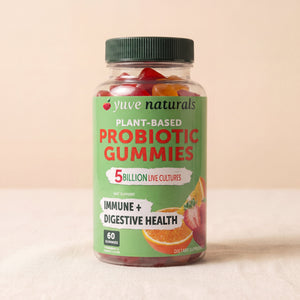
Disclosure: Yuve publishes this article and sells the products linked below. That relationship does not change the evidence hierarchy. A NOW supplement should be judged by its current label, exact third-party mark, facility certificates, method scope, and any lot-level document. Yuve Probiotic Gummies should face the same test: the page identifies Bacillus coagulans, 5 billion CFU per two-gummy serving at manufacture, vegan pectin, and 3 grams of sugar alcohol, but those label facts are not themselves an independent certification. The Yuve daily essentials collection contains products with different ingredients and evidence requirements, so no collection-wide quality claim should replace SKU-level verification. Brand ownership, a polished laboratory page, or a clean label cannot establish clinical effectiveness. Use the same questions for every brand: who verified what, under which standard, for which product or facility, and when?
What should you ask before buying a NOW supplement?
Start with the exact product name, SKU, size, flavor, lot, and expiration date. Ask whether identity, potency, microbiology, heavy metals, pesticides, solvents, allergens, or banned substances matter for that ingredient and user. Request the relevant certificate, scope, or lot document rather than a generic quality brochure. Confirm whether the testing laboratory was internal or external and whether the report names the method and specification. Search the certifier’s directory when a product-level mark appears. Review the Supplement Facts, other ingredients, serving size, allergen statement, and storage instructions. The FDA states that dietary supplements are not approved for safety and effectiveness before marketing, so a compliant label or facility registration is not an FDA endorsement (FDA). Discuss medicines, pregnancy, allergies, chronic conditions, and high-risk ingredients with a clinician or pharmacist before use.
What are the most common questions about NOW third-party testing?
Most questions come from treating “third-party tested” as one yes-or-no badge. The phrase can describe an outside laboratory, accredited in-house methods, a facility audit, an ingredient claim, or a finished-product certification. Those layers are not interchangeable. NOW publishes evidence of outside laboratory partnerships and third-party certifications, but its own laboratories perform much of the routine testing. That arrangement can support a substantial quality program without proving that every retail lot has a public independent certificate. Product category also changes the relevant risk: an athlete may prioritize banned-substance certification, while a botanical buyer may prioritize identity, pesticides, solvents, and heavy metals. The answers below keep the scope narrow and verifiable. A consumer should prefer a specific certificate or directory entry over a broad marketing sentence and should never interpret testing as proof that a supplement works for a health outcome.
Is NOW Foods third-party tested?
Yes, with qualifications. NOW reports outside-lab partnerships, third-party GMP certifications, and selected product certifications, while much routine testing occurs in its own laboratories.
Does GMP certification mean every NOW product was independently tested?
No. GMP certification evaluates manufacturing and quality systems; it is not automatically a bottle-by-bottle finished-product potency or contaminant certification.
Is an ISO-accredited in-house laboratory independent?
The accreditation assessment is independent, but the laboratory remains manufacturer-owned. Accreditation applies only to the methods listed in its current scope.
Does Informed Sport cover every NOW supplement?
No. Product certification applies only to participating products listed by the program, so verify the exact SKU rather than extending the seal across the brand.
Is NOW FDA approved?
No dietary-supplement brand receives FDA premarket approval for safety and effectiveness. FDA regulates the category and can inspect facilities or act on violations.
What is the strongest document for one bottle?
A lot-specific report that names the product, lot, laboratory, methods, analytes, specifications, results, and date offers the most direct evidence for that sampled lot.
What is the bottom line on NOW Foods testing?
Scope is the decisive quality detail.
NOW Foods presents credible evidence of a layered testing program: extensive in-house analysis, externally assessed laboratory methods, third-party GMP certifications, outside-lab partnerships, and selected product certifications. The accurate answer is therefore “yes, with scope,” not “every bottle is independently certified for everything.” Verify the exact product and distinguish facility certification from product certification, accreditation from independence, and a submitted sample from every lot. Look for the named certifier, current dates, applicable standard, SKU, lot, analytes, methods, and specifications. Apply the same standard to NOW, Yuve, and every other supplement company. FDA regulation does not equal premarket approval, and testing does not prove clinical effectiveness. The most trustworthy claim is the narrowest one that a current certificate, directory entry, label, or lot document can actually support.