You're standing in the supplement aisle, or scrolling an online shop, trying to make one smart choice. Then the labels start piling up. Vegan. Clean. Organic. Third-party tested. Non-GMO. Suddenly a simple purchase feels weirdly loaded.
If you've ever thought, “I just want to know what matters,” you're not overthinking it. You're being careful. And for non-GMO supplements, the question usually isn't “What does the label mean?” It's “Is this better for my health, or is it mostly about sourcing and transparency?”
Why Non-GMO Suddenly Matters for Your Supplements
Supplements aren't some niche wellness habit anymore. In the United States, the CDC reported that 57.6% of adults aged 20 and over used at least one dietary supplement in the past 30 days in 2017 to 2018, with use higher among women at 63.8% than men at 50.8% (CDC dietary supplement data). So if you feel surrounded by pills, powders, gummies, and bold claims, that tracks. A lot of us are trying to sort through the same noise.
For many people, “non-GMO” enters the picture after they've already started caring more about ingredients in general. Maybe you've been reading labels more closely. Maybe digestive symptoms made you more aware of what goes into your body. Maybe you started asking bigger questions about food processing, sourcing, and what “healthy” even means anymore. If that's you, this thoughtful piece on why ultraprocessed food is unhealthy gives useful context for why so many shoppers now care about ingredient quality beyond calories and macros.
Why this label gets so much attention
“Non-GMO” has become a shortcut for a few different concerns people hold at once:
- Ingredient transparency - You want to know where ingredients came from.
- Supply-chain trust - You don't want vague sourcing hidden behind marketing.
- Cleaner-feeling choices - Even if a label doesn't guarantee perfection, it can signal more careful formulation.
- Family decisions - Parents and health-conscious shoppers often want fewer unknowns.
Practical rule: If a label sparks confusion, that doesn't mean the topic is trivial. It usually means the buying decision has real tradeoffs.
That's especially true with supplements because they often contain more than one thing. There's the active ingredient you bought it for, plus capsules, binders, fillers, flavorings, and sweeteners. “Non-GMO” can apply to that whole formula, not just the nutrient on the front of the bottle.
What Does Non-GMO Actually Mean for Supplements
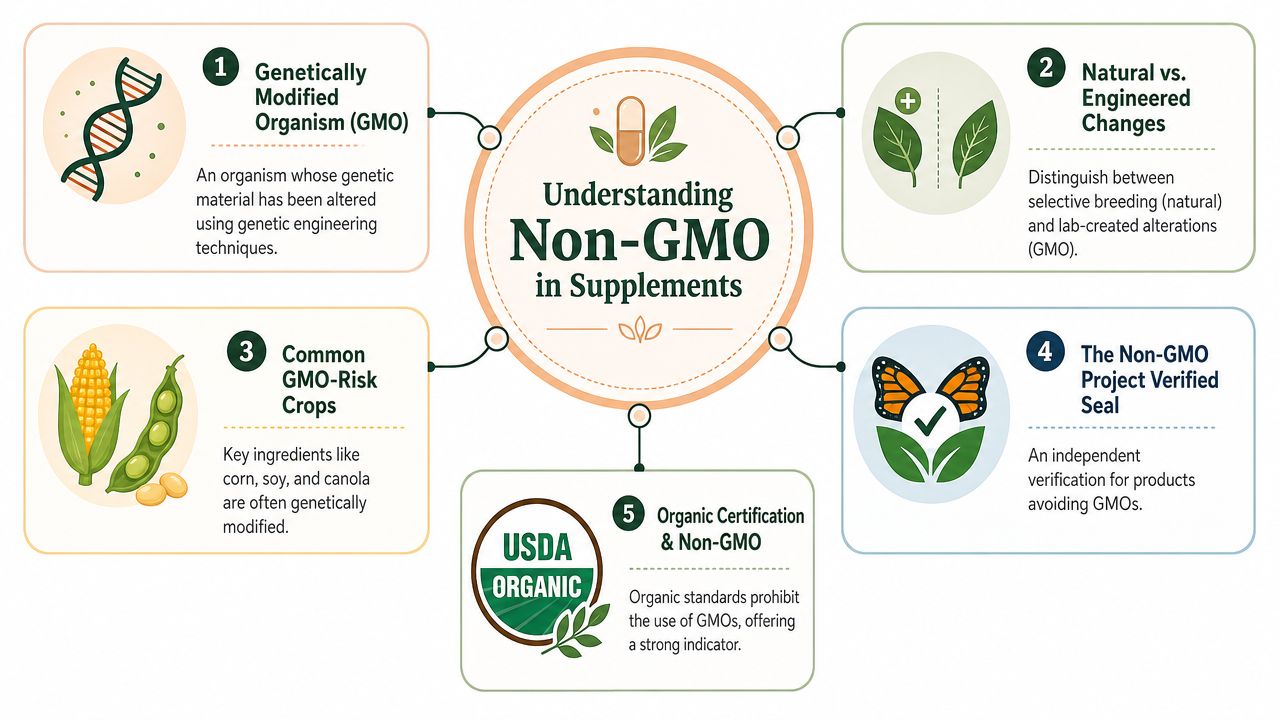
At the simplest level, a GMO is an organism whose genetic material has been altered using genetic engineering techniques. For everyday shopping, it helps to think of it this way: selective breeding is like choosing from recipes that already exist, while genetic engineering changes the recipe in a more direct, lab-based way.
With supplements, that distinction matters because many formulas include ingredients linked to crops that are common in the food supply, especially corn, soy, canola, and sugar beet. Even if the main nutrient sounds straightforward, the full formula can be much more complicated.
What the label means on a bottle
A bottle that says non-GMO is making a sourcing claim. It is not automatically saying the supplement is more potent, more effective, or nutritionally different. It's saying the ingredients and inputs used to make that product were selected to avoid GMO risk.
That sounds simple until you remember how supplements are made. A gummy vitamin, capsule, or probiotic can contain:
- the active nutrient
- a capsule shell or gummy base
- flavors or sweeteners
- stabilizers and processing aids
Each of those parts can matter.
Why third-party verification matters
The well-known butterfly seal addresses this need. Third-party programs such as the Non-GMO Project Verified standard require documentation review, supply-chain traceability, and, when needed, on-site inspection, with annual renewal of verification (Paragon Labs on Non-GMO Project verification). In plain English, that means a company can't just point to the finished product and say, “Trust us.” It has to account for ingredients and processing inputs across the chain.
That's a bigger deal than many shoppers realize. A probiotic, enzyme, or vitamin might involve fermentation media, substrates, or other upstream materials that affect whether it still qualifies as non-GMO under a verification program.
The real work happens before the bottle reaches the shelf. Non-GMO status depends on sourcing records, segregation, and ingredient control, not just front-label wording.
A quick way to think about it
Here's a simple comparison:
| Term | What it tells you |
|---|---|
| Non-GMO | Ingredients were sourced to avoid GMO risk |
| Non-GMO Project Verified | A third party reviewed documentation and traceability practices |
| Organic | A separate certification standard that also prohibits GMO use |
If you want more background on labels and shopper confusion, this article on understanding GMO labeling decisions adds useful context. And if you want a food-first companion to this topic, Yuve's guide to what non-GMO foods are helps connect the label on supplements to the labels you see in the grocery store.
Are Non-GMO Supplements Healthier for You and the Planet
This is the question people really want answered. So let's say it plainly.
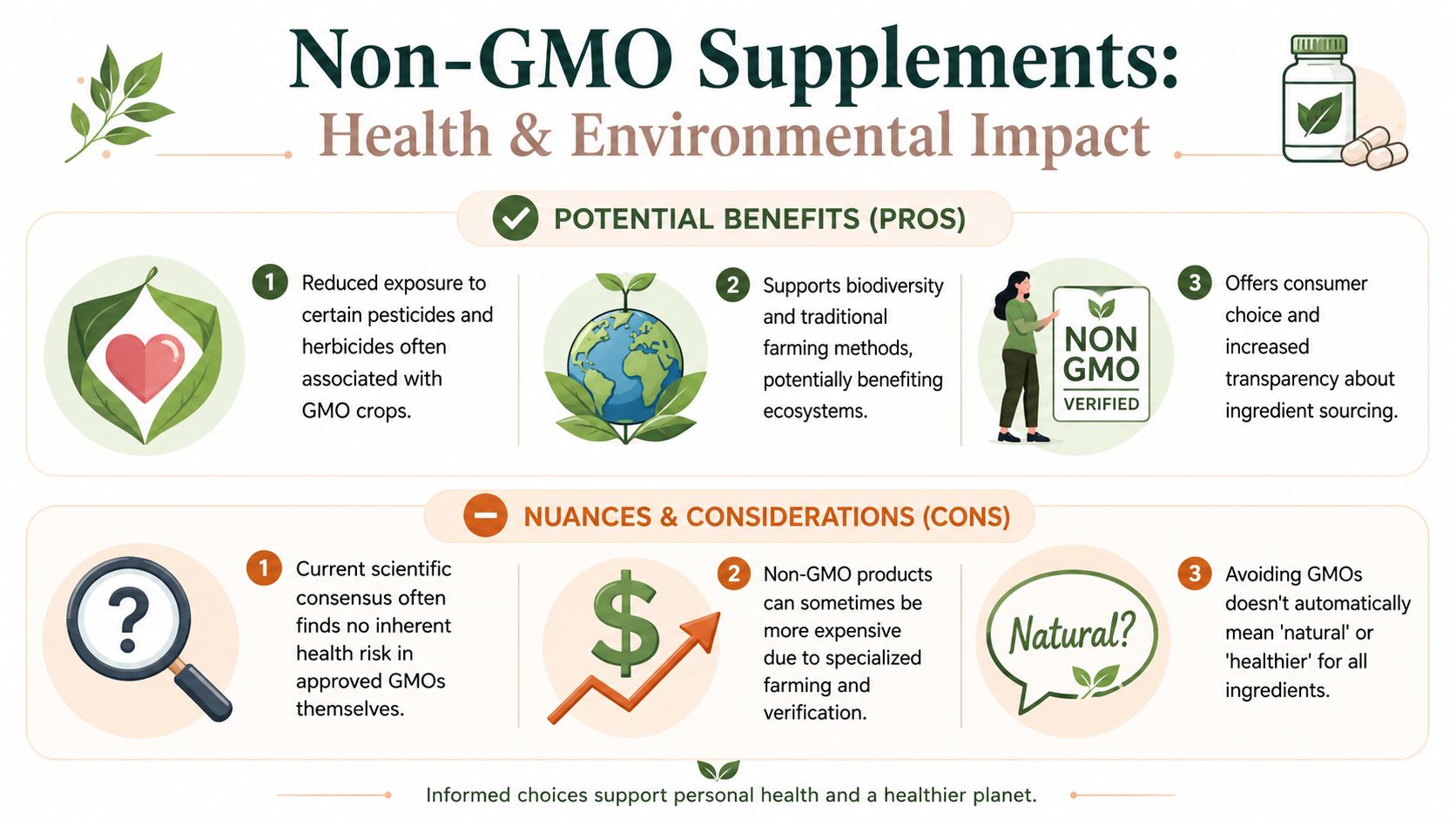
Non-GMO supplements are not automatically healthier in terms of nutrient content. One neutral guide states that the main benefits of non-GMO supplements are quality, transparency, and sourcing practices rather than differences in nutrient content, and it also notes that the FDA considers GMO and non-GMO supplements to provide the same amount of nutrients and similar benefits (Auri Nutrition non-GMO guide).
That can feel a little deflating if you paid extra and hoped the label meant “better for my body” in a direct, measurable way. But it's also helpful, because it separates two questions that often get mashed together.
What non-GMO may offer
For many shoppers, this label matters because it can signal a different kind of manufacturing mindset.
- More traceable sourcing - Brands making a non-GMO claim usually need tighter ingredient controls.
- Clearer decision-making - It gives you one more filter when comparing products.
- Values alignment - Some buyers prefer products tied to specific sourcing standards and agricultural practices.
If you care about knowing what's in the capsule beyond the headline ingredient, that's a valid reason to care about non-GMO.
What it does not automatically mean
Many people stumble at this stage.
A non-GMO label does not automatically mean a supplement is:
- cleaner in every possible sense
- safer just because it says non-GMO
- more effective
- free from unnecessary additives
- the right fit for your digestion
A sugary gummy can still be non-GMO. A formula with a label-friendly front panel can still contain ingredients you personally don't tolerate well. And a supplement can be conventional yet still be well-made.
Bottom line: The strongest argument for non-GMO supplements is usually about sourcing confidence, not superior nutrient delivery.
And what about the planet
People often connect non-GMO choices with environmental concerns. That conversation is bigger than supplement labels, and it often reflects preferences around farming systems, biodiversity, ingredient segregation, and the kind of supply chain a shopper wants to support.
That doesn't mean every non-GMO supplement is an environmental win by default. Packaging, transport, processing, and overall formulation still matter. But if your values include traceability and more intentional sourcing, non-GMO may fit those priorities.
A useful way to hold both truths at once is this: non-GMO can be meaningful without being magical. It can help you shop with more confidence, while still leaving room for other questions like dosage, ingredient quality, allergens, and whether the product solves your problem.
How to Spot Hidden GMOs in Your Supplement Ingredients
Consumers often check the front of the bottle first. That's normal. It's also where brands put the cleanest, simplest story.
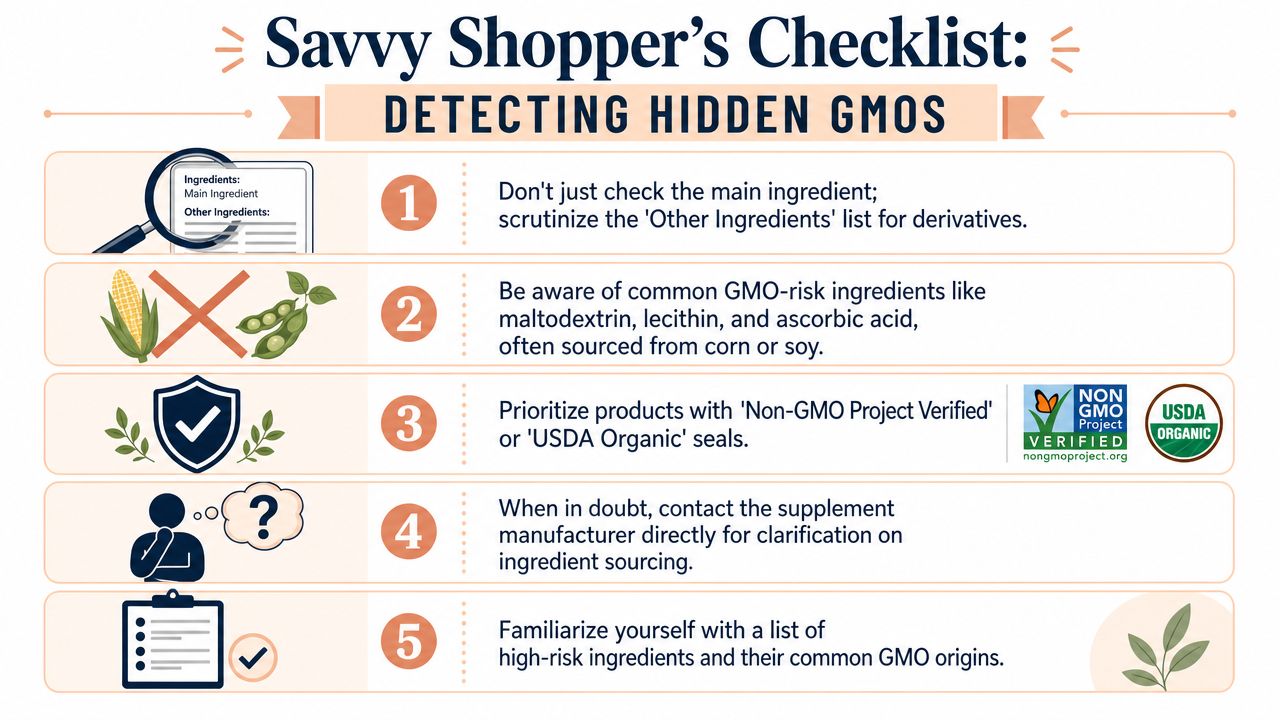
The trick is that GMO risk in supplements often hides in the supporting cast, not the star ingredient. Under FDA dietary supplement rules, products must disclose dietary ingredients in the Supplement Facts panel and list non-dietary components separately as “other ingredients.” A supplement can lose non-GMO status if even one ingredient, like a crop-derived excipient from corn or soy, is from a genetically engineered source (FDA dietary supplement questions and answers).
Where shoppers miss it
A label may highlight vitamin C, probiotics, magnesium, or herbs on the front. Then the back panel includes the ingredients that make the product manufacturable and shelf-stable.
Those can include crop-derived inputs tied to common GMO-risk commodities. That's why the “other ingredients” list matters so much.
A practical watch list
You don't need to memorize a chemistry textbook. You do need to slow down and scan for ingredients that may be sourced from crops like corn or soy.
Look carefully at:
- Lecithin - Often associated with soy sourcing.
- Maltodextrin - Commonly crop-derived and widely used as a carrier or filler.
- Ascorbic acid - Not always a problem, but sourcing questions can matter in some formulas.
- Flavorings and sweeteners - These can complicate an otherwise simple product.
- Binders, fillers, and excipients - Small amounts still count for labeling and sourcing purposes.
That doesn't mean every appearance of these ingredients is automatically a red flag. It means they're worth asking about if non-GMO sourcing matters to you.
Sam's reminder from the label-reading stage
One reason this topic resonates with the Yuve audience is that many people start paying attention after their digestion has already been frustrating them. Founder Sam's story around digestive struggles and trying to find cleaner options for his family reflects something a lot of shoppers know well. You buy a supplement for support, then realize the formula includes extra stuff you never meant to take in the first place.
That's why label reading becomes a habit, not a one-time lesson.
If you want a stronger framework for reviewing a bottle from top to bottom, Yuve's guide on how to read supplement labels is a helpful companion.
If a brand talks a lot about benefits but stays vague about excipients, sourcing, or ingredient origin, that's a sign to pause and dig deeper.
A simple label-check routine
- Read the front, then ignore it for a minute. Marketing claims are the starting point, not the answer.
- Check the Supplement Facts panel. Confirm the active ingredients you want.
- Read “other ingredients” slowly. Many sourcing questions reside in this list.
- Look for third-party verification. Self-claims and verified claims are not the same thing.
- Ask the brand directly if needed. A good company should be able to explain ingredient sourcing clearly.
Your Action Plan for Choosing Verifiably Non-GMO Supplements
At this point, the label should feel less mysterious. The next step is deciding how to shop without spending half your afternoon comparing bottles.
The supplement category is huge. A peer-reviewed overview reported that the global dietary supplements market was expected to be worth USD 300 billion by 2028, and it cited industry tracking showing that in 2021 the most consumed categories were vitamin or mineral supplements (98%), specialty supplements such as omega-3s and probiotics (46%), and botanicals and herbs (44%) (PubMed Central overview of the dietary supplements market). Those are exactly the kinds of products where shoppers often care about sourcing details.
Three filters that make shopping easier
Start with proof, not promises
Look for a verification seal when possible. If a brand makes a non-GMO claim, see whether it explains how that claim is supported. Third-party review matters because it asks for paperwork, traceability, and consistency.
Read beyond one claim
A useful product page should tell you more than “non-GMO.” Check whether the formula also fits your other needs, such as vegan preferences, gluten concerns, allergen awareness, or third-party testing. Yuve's roundup of third-party tested supplements is helpful if you want to compare non-GMO with broader quality screens.
Match the supplement to the reason you're buying it
This sounds obvious, but it saves money and frustration. If you need digestive support, don't let a clean-sounding label distract you from the actual function of the product.
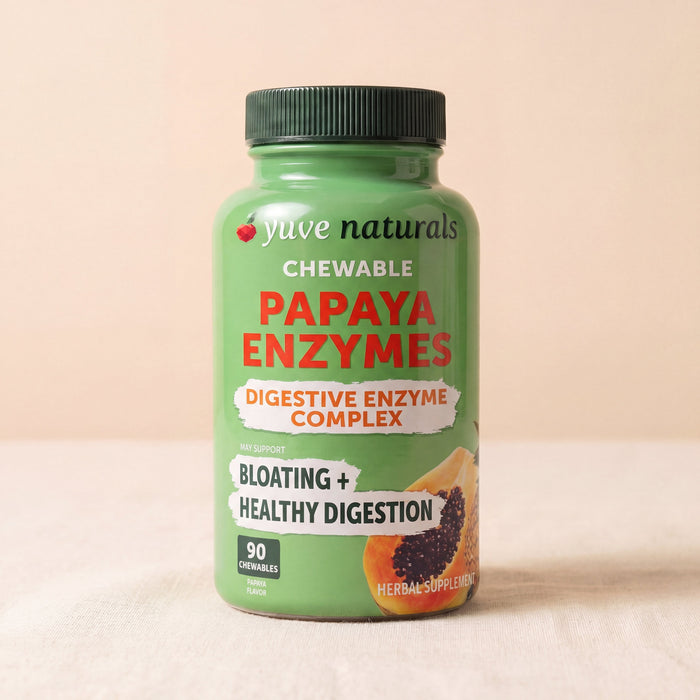
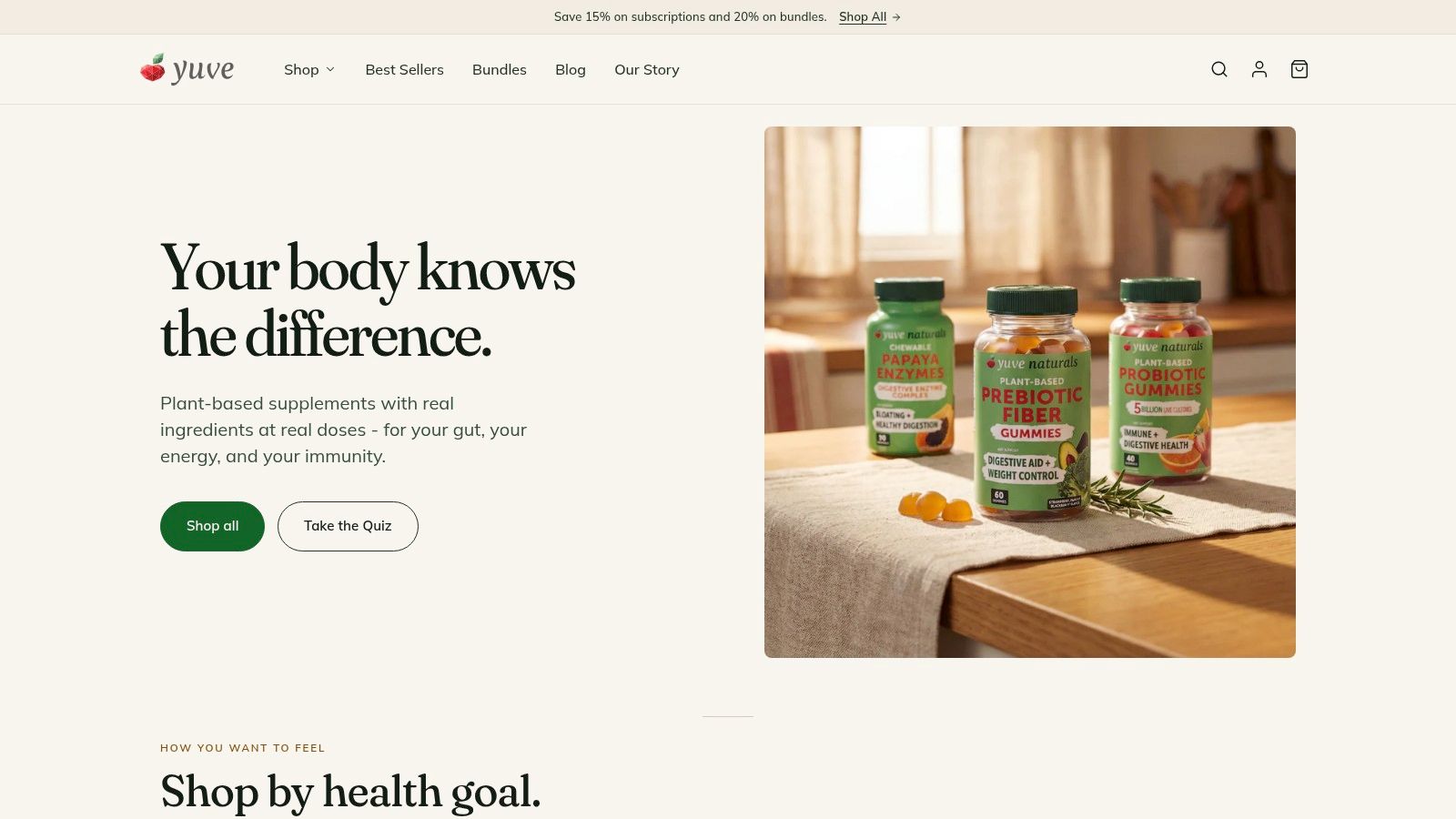
One practical example is Yuve Papaya Enzymes, which the brand describes within its non-GMO, vegan supplement approach. If you're shopping for digestion support and also want a product that aligns with ingredient-screening values, that's the kind of overlap worth looking for. The point isn't that one label solves everything. It's that fit plus sourcing is a smarter standard than sourcing alone.
A quick video can also help if you prefer seeing products in context before buying.
Your quick buying checklist
- Check verification - Prefer verified claims over vague front-label language.
- Scan the full ingredient list - Especially the “other ingredients” section.
- Ask what problem this solves - Energy, digestion, immunity, or a nutrient gap.
- Look for overlap with your values - Vegan, gluten-free, allergen-aware, or non-GMO.
- Skip purity theater - A pretty label isn't the same thing as a transparent formula.
Your Non-GMO Supplement Questions Answered
Does organic automatically mean non-GMO
Organic standards prohibit GMO use, so organic is generally a strong indicator. Still, some shoppers like the added reassurance of a specific non-GMO verification program because it focuses on risk review and traceability in a different way.
Are non-GMO supplements always healthier
Not necessarily. The most useful way to think about them is that they may offer more confidence around sourcing and transparency, rather than a built-in nutritional advantage.
Are they always more expensive
Sometimes they can be. Verification, sourcing controls, and ingredient segregation can add work behind the scenes. Whether that extra cost feels worth it depends on what you value most in a supplement.
Can a product be 100% GMO-free
No product can realistically promise that in an absolute sense. Supply chains are complicated, testing has limits, and contamination risk exists. That's why strong programs focus on avoidance practices, traceability, and documentation rather than pretending perfection is possible.
The better question is not “Is this perfectly GMO-free?” It's “Can this brand clearly show how it manages GMO risk?”
If the nutrients are similar, why do people still choose non-GMO supplements
Because buying decisions are rarely about only one thing. People also care about trust, sourcing, family preferences, environmental values, and whether a company seems careful with the small details.
What should I check first on the label
Start with the full ingredient list, not just the bold claims on the front. Then check for verification seals and brand transparency around sourcing.
Is non-GMO enough on its own
No. It's one useful filter. You still want to consider dosage, allergens, excipients, third-party testing, and whether the product fits your actual health goal.
If you want a simpler way to shop, take a look at Yuve. Their supplement lineup is built around the kinds of filters many careful shoppers already use, including vegan and non-GMO standards, so you can spend less time decoding labels and more time finding a product that fits your routine.