We’ve all been there. That feeling of helplessness when your baby is fussy, gassy, or just can’t seem to get comfortable is one every parent knows intimately. You’ve run through the checklist - rocking, shushing, swaddling - but their little tummy is still in knots. Let me tell you, you’re not alone in this, and there’s a simple, gentle solution that can help: powdered probiotics for infants, specifically designed to support your baby’s brand-new digestive system.
This guide will walk you through exactly what these tiny helpers are, why they can be a game-changer for your baby's comfort, and how to choose a product you can feel truly confident about.
Soothing Your Baby’s Tummy Troubles

As a new parent, every cry can feel like a code you're desperately trying to crack. Are they hungry? Tired? Or is it that awful, unwelcome gas that makes them squirm and pull their knees to their chest? Yikes! We completely get it. Seeing your baby in distress is tough, and finding a solution that feels both safe and natural is everything.
This is where powdered probiotics for infants can make a world of difference. Think of them as tiny, friendly helpers for your baby's gut. These "good bacteria" get to work creating a healthy balance in their developing digestive tract, which can honestly make a world of difference.
What Can Probiotics Help With?
A well-balanced gut microbiome can help ease many of the common issues that cause all that fussiness. Of course, every baby is unique, but introducing the right probiotics can offer real support for:
- Occasional Gas and Bloating: These good bacteria can help their little system break down milk more efficiently, leading to less discomfort.
- Colic-Related Crying: Some studies have shown that certain probiotic strains may significantly reduce crying time in colicky infants.
- Irregular Digestion: They can help promote smoother, more regular bowel movements - a welcome relief for everyone.
For other common tummy troubles, like colic, it’s always helpful to get more background on understanding baby colic and its various soothing strategies.
But it’s about so much more than just quieting a fussy baby. It's about laying a strong foundation for their digestive health for years to come. Just as these tiny helpers support infants, probiotics continue to play a vital role as your child grows, especially when dealing with common issues like toddler constipation later on. You can read more about that here: https://www.getyuve.com/blogs/news/probiotics-for-toddlers-constipation.
Let’s walk through what these probiotics actually are, why the powdered form is so great for infants, and how they can help you get back to enjoying those precious, peaceful moments with your happy, comfortable baby.
Understanding Powdered Probiotics for Your Infant
Let's demystify the science of probiotics. Honestly, it’s a lot simpler than it sounds.
Think of your baby’s new digestive system as a garden that’s just been prepared. Probiotics are like the friendly seeds you plant to help all the good things grow. As these beneficial bacteria take root and flourish, they create a healthy environment that naturally crowds out the unwelcome “weeds” - the kind of microbes that can cause gas and discomfort for your little one.
Why Choose a Powdered Form?
Probiotics come in several forms, but there's a good reason so many parents prefer powder. When you’re dealing with an infant, gentle precision and ease of use are everything.
For babies, powdered probiotics offer a few distinct advantages:
- Easy, Accurate Dosing: It allows you to measure the exact amount your baby needs. This way, you can be sure they're getting a consistent and effective dose every single time, without any guesswork.
- Seamless Mixing: The fine powder dissolves almost instantly into breast milk, formula, or soft foods like a spoonful of puree. Your baby won’t even know it’s there.
- Taste-Free: Unlike some liquid drops that can have a strong, noticeable flavor, a high-quality powder is virtually tasteless. You won't have to worry about your baby rejecting their bottle or meal.
- Often More Stable: Many powdered formulas are shelf-stable, so they don’t need to be refrigerated. For busy parents, this is a huge plus, as it helps the product maintain its potency for longer.
This versatility is a big reason for their popularity. In fact, sales for powdered probiotics for infants and kids reached USD 1,593.4 million in 2022, easily outselling liquid and chewable options. It comes down to parents valuing the ability to precisely dose and easily mix them into whatever their baby is eating. You can explore the full infant probiotics market report here to see more on these trends.
Building a Strong Foundation for Health
When you introduce these beneficial bacteria early on, you're doing much more than just trying to soothe a fussy tummy. You're actively helping to build a diverse and resilient gut microbiome from the very start.
This foundational gut health is closely linked to a stronger immune system and overall wellness that can last a lifetime. It’s one of the most proactive steps you can take to support your baby’s development from the inside out.
This is also why selecting a supplement with clinically-backed strains is the gold standard. These are the specific types of "good bacteria" that have been rigorously studied and proven to be both safe and effective for infants. Seeing specific strain names on a label is a clear sign that the product is grounded in real science, giving you the peace of mind you deserve.
The Best Probiotic Strains for Your Baby's Gut
Not all probiotics are created equal, and this is especially true when it comes to your baby’s delicate system. Walking down the supplement aisle, you’re hit with a wall of scientific-sounding names. It's enough to make any parent's head spin. So, let's cut through the confusion together and talk about the specific probiotic strains that have been studied and shown to be both safe and wonderfully effective for infants.
Think of it like building a team of superheroes for your baby’s gut. Each one has a unique power, and when you choose the right ones, you’re giving your little one’s digestive system the best possible support.
The A-Team of Infant Probiotics
When you're scanning a label for powdered probiotics for infants, you don’t need to become a microbiologist overnight. Instead, you can focus on a few key players that are well-researched and trusted by pediatric experts.
Here are the main ones to look for:
-
Bifidobacterium infantis: This is a true superstar in the infant gut. It's a specialist, perfectly designed to digest the unique sugars found in breast milk. Its presence helps create a healthy, acidic environment that crowds out less friendly bacteria.
-
Bifidobacterium lactis: Consider this strain the gut’s friendly manager. It’s known for supporting overall digestive function and helping maintain a balanced gut microbiome, making it a reliable, all-around player for promoting comfort.
-
Lactobacillus rhamnosus GG (LGG): This one acts like a helpful security guard for the gut lining. As one of the most studied probiotics in the world, it has been linked to supporting immune health and managing occasional digestive upset, like diarrhea.
These specific strains, particularly those from the Bifidobacterium family, are making a huge difference in infant health. In fact, the market for infant Bifidobacterium powder was projected to hit USD 109.7 million in 2025 and continues to grow. Why? Because these strains have shown such great results in easing common issues like colic and eczema. You can read more about the growing demand for these beneficial strains to see the full picture.
This concept map breaks down why a powdered format is so great for delivering these powerful strains.
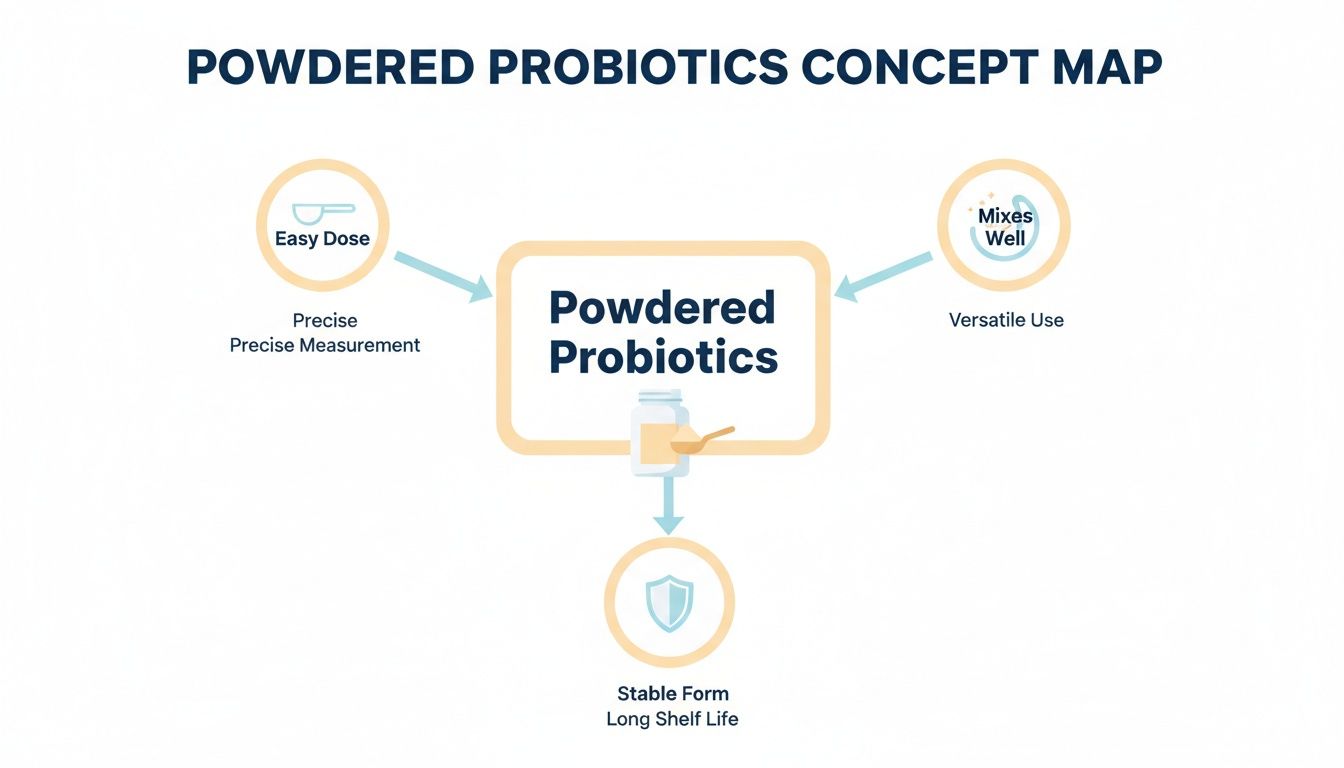
The visualization highlights that a powder's stability, simple dosing, and excellent mixability make it an ideal way to give your baby these targeted probiotic strains.
To make it even easier, here’s a quick-reference guide to the strains that pack the biggest punch for your little one.
Top Probiotic Strains for Infants and Their Benefits
| Probiotic Strain | How It Helps Your Baby | Commonly Used For |
|---|---|---|
| Bifidobacterium infantis | A key colonizer of the infant gut, it thrives on human milk oligosaccharides (HMOs) found in breast milk, helping to establish a healthy gut environment from the start. | Supporting breastfed babies, crowding out harmful bacteria, and reducing gut inflammation. |
| Bifidobacterium lactis | This versatile strain helps improve overall digestion, supports a healthy immune response, and maintains balance in the gut microbiome. | Easing constipation, supporting immune function, and promoting general digestive comfort. |
| Lactobacillus rhamnosus GG (LGG) | One of the most-researched probiotics, it helps strengthen the gut barrier and has been shown to reduce the duration of diarrhea. | Managing antibiotic-associated diarrhea, supporting a healthy immune system, and addressing eczema. |
Knowing these names helps you move past the marketing and focus on what really matters - the specific "good bugs" that will do the most good.
Connecting Strains to Real-Life Benefits
So, what does all this science mean for your baby on a day-to-day basis? It means more peaceful days and restful nights for both of you.
When you choose a probiotic with clinically studied strains like B. infantis or LGG, you are actively selecting a product designed to address the root causes of many common tummy troubles. It’s a proactive step toward building a resilient digestive system.
By understanding what these names on the label actually do, you can feel confident and empowered in your choice. You're not just buying a supplement; you're choosing specific, targeted support to help your baby thrive from the inside out.
How to Safely Give Your Infant Powdered Probiotics
Alright, you've picked out a quality powdered probiotic for your baby. Now comes the practical part: "How do I actually get this in my baby?" It’s a common question, and you want to make sure you're doing it right. Let's walk through the simple, fuss-free ways to make sure your little one gets all that gut-friendly goodness.
Giving your infant powdered probiotics is pretty straightforward. The main goal is to make sure the powder dissolves well and that your baby takes the whole dose. The last thing you want is half of those beneficial bacteria stuck to the inside of a bottle.
A Simple Step-by-Step Mixing Guide
Making probiotics a part of your baby’s daily routine should be easy, not stressful. No matter if you’re breastfeeding, formula-feeding, or your little one has started on solids, there's a simple method that will work for you.
-
Measure the Dose: First things first, carefully measure the exact amount of powder recommended on the product label. Sticking to the suggested serving size is important for consistency, unless your pediatrician has given you different advice.
-
Make a Probiotic "Shot": This is the single best trick we've learned. Instead of dumping the powder into a full 6-ounce bottle, mix it into a tiny amount of liquid first. Just a teaspoon or two of expressed breast milk, lukewarm formula, or a bit of water is perfect.
-
Give it Before the Full Feed: Use a clean spoon, oral syringe, or dropper to give this small, concentrated mix to your baby right before you start their regular feeding. This ensures they get 100% of the probiotic dose, even if they decide they aren't hungry enough to finish their whole bottle later.
This little 'pre-feeding' technique is a total game-changer. It removes the worry, because you know your baby has gotten the full benefit of their probiotic before the main meal even starts.
Common Questions and Easy Solutions
It's natural to have a few questions when starting something new. Here are some of the most common ones we hear from parents, along with our best advice.
-
Will my baby notice the taste? A well-made, unflavored probiotic powder should be completely unnoticeable. It’s specifically designed to mix in without changing the taste of your baby's milk or food.
-
What if I'm using formula? Always prepare the formula exactly as the instructions say first. Crucially, never add probiotics to hot liquid, as the heat can kill the live bacteria. Wait until the formula has cooled to a lukewarm, body-temperature level before stirring the powder in.
-
Can I mix it into food? Yes, absolutely! For babies who are eating solids, you can just stir the powder into a spoonful of cool or room-temperature puree. Things like applesauce, yogurt, or mashed banana work perfectly.
Starting a probiotic is a fantastic step for your baby's health. If you're curious about other options, you might want to compare powders to different formats. You can learn more about baby probiotic drops in our detailed guide.
The most important thing is to start with the recommended dose, be consistent, and gently pay attention to how your baby responds. You’re doing a great job.
A Parent’s Checklist for Choosing the Right Probiotic
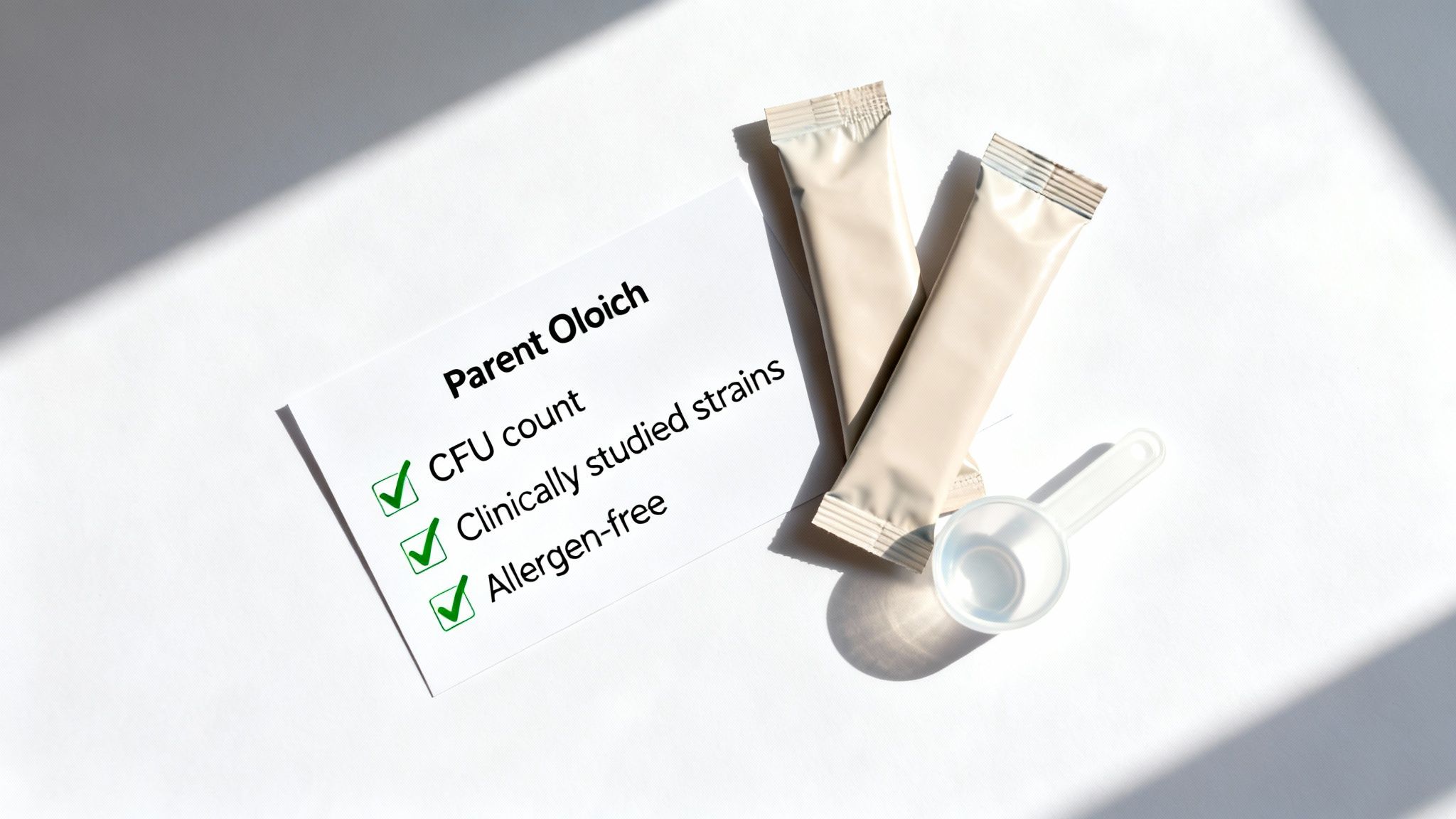
Walking into the supplement aisle can feel overwhelming, especially when you're looking for something for your baby. With so many bottles and labels, how do you pick the absolute best and safest option? We get it.
That's why we’ve put together this simple checklist. Think of it as your guide to choosing a powdered probiotic for infants with total confidence, so you know you're making an informed, loving choice for your little one's health.
Check the CFU Count
First thing's first: the CFU count. CFU stands for Colony-Forming Units, which is just a fancy way of saying how many live, active bacteria are in each serving. For infants, more isn't automatically better. You're looking for a dose that’s gentle yet effective.
So, what’s the magic number? Look for a product with a CFU count between 1 billion and 5 billion. This range is widely considered the sweet spot for babies - it’s strong enough to offer real benefits without overwhelming their brand-new digestive system.
Probiotics in this range make up about 40% of the baby market, which hit USD 1.2 billion in 2024. That really shows how trusted this specific dosage is for safe, daily support.
Look for Clinically Studied Strains
Next, flip the box over and read the fine print. Vague terms like "probiotic blend" just don't cut it. You want to see the specific, research-backed heroes we talked about earlier, like Bifidobacterium infantis or Lactobacillus rhamnosus GG.
Seeing these names on the label is a huge green flag. It tells you the company has done its homework and is using strains that have actually been proven to be safe and beneficial for tiny tummies.
Prioritize Clean and Allergen-Free Formulas
When it comes to your baby, purity is everything. Their little systems are still developing and can be incredibly sensitive, so you need a product that’s free from unnecessary additives and common allergens.
Your checklist for a truly clean formula should include:
- Free from major allergens: Make sure the product is free from dairy, soy, and gluten.
- Non-GMO: A Non-GMO Project Verified seal is your best bet to avoid genetically modified ingredients.
- Vegan and gelatin-free: This ensures the product is plant-based and doesn’t contain animal byproducts.
This approach aligns with broader guidance on selecting natural and safe baby products, helping you make informed choices across the board. For a deeper dive, our guide on https://www.getyuve.com/blogs/news/what-to-look-for-when-buying-probiotics has even more detail.
"I started Yuve because of my own frustrating digestive struggles. I wanted supplements that were clean, effective, and free from all the junk I couldn't tolerate. Creating products pure enough for the most sensitive systems, including our kids, became my mission." - Sam, Founder of Yuve
Sam’s journey is really the heart behind every Yuve product. His passion for clean, trustworthy nutrition is why we're so committed to creating formulas that are gentle, effective, and completely transparent. Choosing a probiotic made with this level of care means you can feel truly good about what you're giving your baby, every single day.
Your Top Questions About Infant Probiotics Answered
As a parent, you want to feel confident and informed, especially when it comes to your little one’s health. We get it. Here are some of the most common questions we hear from parents just like you, answered simply and clearly.
When Is the Best Time to Give My Infant Probiotics?
When it comes to probiotics, consistency is far more important than the exact time of day. You’re looking to build up a healthy, thriving colony of good bacteria, and that happens with daily reinforcement.
Many parents find it easiest to work it into their morning routine, mixing the probiotic powder into the first bottle or feeding. That way, it’s done, and you know your baby got the full dose before the day gets away from you. Just pick a time that works for your family and stick with it.
Are There Any Side Effects of Probiotics for Babies?
For healthy, full-term infants, probiotics are overwhelmingly safe. Sometimes, you might notice a little extra gas or a slight change in your baby's poop when you first start.
Think of it as the new, friendly bacteria "moving in" and reorganizing things a bit. This is typically mild and temporary!
However, if your baby was born prematurely or has a compromised immune system, it's essential to speak with your pediatrician before starting any new supplement. They know your baby’s unique health picture and can give you the best guidance.
How Long Should My Infant Take Probiotics?
This really depends on your goals and your baby’s specific needs. If you're using them to help with something short-term like antibiotic-related tummy troubles, a few weeks might be all you need.
For ongoing digestive support and building a strong foundation for their immune system, many parents make probiotics a daily habit throughout the first year. Your pediatrician is the best person to ask for advice tailored to your child.
Can I Use Probiotics If I Am Breastfeeding?
Absolutely! The best way to make sure your baby gets the full dose is to give it to them directly.
Simply express a small amount of breast milk, mix the powder in until it dissolves, and then give it to your baby with a clean spoon or dropper just before you nurse them. This ensures all those beneficial bacteria get right where they need to go.
At Yuve, we’re parents, too. We're passionate about creating clean, plant-based, and effective supplements for every member of the family, especially the most delicate ones. We believe true wellness starts from within, using ingredients you can feel good about.