Ever feel your stomach inflate like a balloon by midafternoon, right when your energy starts to dip? You add a fiber supplement hoping for bloating relief, then spend the evening negotiating with your digestive system. Dun, dun, dun, unwelcome gas.
You're not failing at gut health. A prebiotic fiber blend can support beneficial gut bacteria, but the right blend depends on its ingredients, your starting point, and how quickly you increase the dose. A tolerance-first approach matters far more than choosing the most impressive-looking label.
Introduction What You Will Learn About Prebiotic Fiber Blends
A prebiotic fiber blend combines different fibers that travel through the small intestine and provide fuel for selected bacteria in the colon. Those bacteria ferment the fibers and produce compounds that help create a healthier gut environment.
Blends have become popular because one fiber may not work the same way for everyone. Your gut microbes are personal, almost like a fingerprint, so a single ingredient can feel helpful for one person and uncomfortable for another. A thoughtfully designed blend aims to offer complementary substrates rather than asking one fiber to do every job.
The tricky part is that “more” isn't automatically better. Highly fermentable ingredients can trigger gas or bloating, particularly when you start with a full serving. You need a plan that considers fermentability, FODMAP sensitivity, serving size, and your current fiber intake.
This guide will walk through how blends work, why different fibers are combined, what common ingredients mean on a label, and how to introduce a product without turning your belly into a percussion section. We'll also look at why blends may produce more consistent microbial responses than single fibers, while keeping expectations realistic.
For a broader foundation on prebiotics and gut flora, you can explore this complete guide to prebiotic fiber and gut flora support. The goal isn't perfection. It's to help you make a calm, informed choice so you can enjoy plant foods and daily routines with more confidence.
A small, steady experiment often teaches you more than a dramatic supplement change. Track comfort, bowel habits, and energy, then adjust thoughtfully. Food freedom is possible, but your gut may prefer a gentle invitation rather than a surprise party.
What a Prebiotic Fiber Blend Is and Why Blends Exist
Start with the basic idea. Some fibers resist digestion in the small intestine, so they reach the colon largely intact. There, gut bacteria use them as fuel. These fibers are called prebiotic when they selectively support beneficial microbes and provide a health benefit.
A blend combines several fermentable substrates. That might include an inulin-type fiber, resistant starch, gum arabic, or a fruit-based ingredient. Each has a different structure, so microbes process them at different rates and may use them in different ways.
Think of your microbiome as a garden
A garden grows better with more than one type of seed. Some plants prefer rich soil, some thrive with less water, and some grow quickly while others take longer. Feeding your gut with only one type of fiber is a little like planting one crop and hoping the entire garden becomes balanced.
A mixed fiber formula offers several “foods” for different microbial guilds. Systematically designed mixtures have produced higher-than-expected short-chain fatty acid output and more consistent enrichment of beneficial taxa across donors in ex vivo research, particularly among butyrate-producing bacteria, according to TNO's research on systematically designed fiber mixtures.
The practical idea: Variety can widen the microbial response, but the ingredients still determine whether the blend feels comfortable.
A well-designed formula shouldn't just list many fibers for decoration. It should combine ingredients with complementary fermentation patterns and provide a serving size you can tolerate. A single fiber may be highly effective for a particular goal, while a blend may offer broader nourishment across a diverse microbiome.
Why response can vary
Two people can take the same product and notice different results. Their existing microbes, usual diet, bowel patterns, and sensitivity to fermentable carbohydrates all influence the experience.
That's why a quality blend should come with a clear ingredient list and transparent dosing. You want to know whether the formula relies heavily on inulin and FOS, includes gentler options such as PHGG or resistant dextrin, or uses a mixture that spreads the fermentation load.

How Prebiotic Fiber Blends Work in Your Gut
Your body digests many foods before they reach the large intestine. Prebiotic fibers behave differently. They pass through the small intestine and arrive in the colon, where resident bacteria ferment them.
Fermentation is the microbial version of breaking food down. As bacteria process fiber, they produce short-chain fatty acids, including acetate, propionate, and butyrate. Butyrate matters because it serves as fuel for colon cells and contributes to the environment that supports the gut barrier.
That barrier helps separate the contents of the intestine from the rest of the body. Short-chain fatty acids also participate in processes related to regularity and immune signaling. These effects don't mean a prebiotic blend treats every digestive condition, but they explain why researchers care about the fibers that reach the colon.
Why different fibers can work together
Different fibers feed different groups of microbes. One substrate may support bacteria that produce butyrate, while another may encourage cross-feeding, where one microbe uses the products created by another.
That network can create a synergistic response. The TNO analysis of designed mixtures describes more consistent enrichment of beneficial taxa across donors and higher-than-expected short-chain fatty acid production compared with individual substrates in ex vivo testing. This is useful evidence for formulation design, but it isn't proof that every commercial blend will outperform every single fiber in people.
Blend diversity helps feed a wider microbial community, but the formula still matters more than the word “blend.”
A person with constipation may respond differently from someone whose main concern is post-meal bloating. Someone with a microbiome already adapted to fermentable foods may tolerate a formula that overwhelms a sensitive gut. The same product can therefore produce different comfort and regularity outcomes from one person to the next.
The five-step picture
- The blend travels through the upper digestive tract without being fully digested.
- Bacteria in the colon ferment the available fibers.
- Fermentation produces short-chain fatty acids such as butyrate.
- Butyrate supports colon cells and the gut barrier.
- The resulting environment may support regularity, microbial balance, and immune signaling.
Keep the language measured. A blend supports a biological process. It doesn't guarantee less bloating, improved energy, or a specific microbiome result.

Here's a visual walkthrough of that process:
Common Ingredients and Sources Inside Quality Blends
Ingredient labels can feel like a chemistry quiz, especially when several fibers appear together. You don't need a graduate degree in fermentation to read one. Look for the source, the role each ingredient plays, and whether the combination matches your tolerance.
Inulin and fructooligosaccharides, or FOS, are among the most studied prebiotics. They can support bifidobacteria at relatively low intakes, but they're also highly fermentable. For people sensitive to FODMAPs, increasing inulin too quickly can mean gas, bloating, or loose stools.
Resistant starch reaches the colon and can support fermentation by microbial groups that use starch-based substrates. You'll also see fibers such as sugarcane fiber, which can contribute plant-derived fiber structure, and fruit powders, which add plant ingredients and may provide compounds beyond isolated fiber.
Gum arabic, also called acacia fiber, is a soluble plant fiber often used in blends for its fermentability and texture. Xanthan gum is generally used as a stabilizer or thickener rather than the primary prebiotic feature. Its presence doesn't tell you whether the overall formula will be gentle.
Partially hydrolyzed guar gum, or PHGG, and resistant dextrin are often considered more comfortable options for people who struggle with fermentable carbohydrates. That doesn't make them universally symptom-free, but their tolerance profile can be useful when you're trying to build fiber gradually.
If you enjoy learning about plant ingredients outside fiber supplements, this resource on how to prepare sea moss offers practical preparation guidance. It's separate from choosing a prebiotic blend, but it fits the larger goal of making plant-based nutrition feel approachable.
Prebiotic Fiber Blend Ingredients Compared
| Ingredient | Primary Role | Tolerance Notes |
|---|---|---|
| Inulin | Strongly fermentable prebiotic substrate | More likely to cause gas or bloating when increased quickly |
| FOS | Supports bifidogenic activity | Can be challenging for FODMAP-sensitive people |
| Resistant starch | Feeds starch-utilizing microbes | Response varies with dose and existing diet |
| Sugarcane fiber | Plant-derived fiber component | Check the total blend rather than judging this ingredient alone |
| Gum arabic | Soluble fermentable fiber and texture support | Often used in mixed formulas |
| Xanthan gum | Thickener and stabilizer | Not usually the main prebiotic ingredient |
| PHGG | Gentle soluble fiber option | Often considered better tolerated at typical servings |
| Resistant dextrin | Soluble, low-FODMAP-leaning fiber option | May suit sensitive users, though individual responses differ |
| Polydextrose | Fermentable fiber substrate | Has been tolerated at high trial intakes, but don't copy research doses without guidance |
| Fruit powders | Plant-based flavor and formulation support | Check whether the powder contributes fermentable carbohydrates |
For a closer look at one frequently used ingredient, read what inulin fiber is. On the package, also look for plant-based sourcing, non-GMO labeling, clear serving information, and transparent ingredient amounts. “Natural” alone doesn't tell you enough about tolerance.
Health Benefits for Gut Comfort Immunity and Beyond
A prebiotic blend's most direct role is to nourish selected gut bacteria. A 2022 human study in Frontiers in Nutrition tested a formula containing fructooligosaccharides, resistant starch, sugarcane fiber, inulin, gum arabic, xanthan gum, and fruit powders from apple, raspberry, and blueberry. Participants received 12 g packets, and the paper reported bifidogenic effects and metabolomic shifts in a healthy human cohort in the published study.
In plain English, the formulation supported an increase in bifidobacteria-related activity and measurable changes in small molecules produced by metabolism. It doesn't prove that every blend creates the same outcome, and it wasn't a universal test for bloating relief. It does show how researchers evaluate a multi-fiber formula in humans.
What you might notice
Some people care most about regular bowel movements. Others want less afternoon discomfort, steadier digestion, or a more reliable way to add plant fiber. A blend may help support these goals by creating fermentable fuel for microbes and by contributing to the short-chain fatty acids described earlier.
Consistency matters more than dramatic dosing. Taking a tolerable amount regularly gives your digestive system time to adapt. A large serving that causes discomfort can make you abandon the routine, and a routine you can't maintain won't help you learn how your body responds.
Gut microbes also participate in immune signaling, but a prebiotic supplement shouldn't be presented as an immunity cure. The sensible claim is supportive: feeding beneficial bacteria can contribute to a healthier gut environment, while sleep, nutrition, stress, medical care, and movement remain part of the bigger picture.
Sam, Yuve's founder, has spoken about dealing with digestive challenges and wanting practical ways to feel more comfortable around food. That experience reflects a common frustration, not a promise that one product will solve every person's symptoms. Your small win might be finding a serving size that doesn't leave you bloated, or identifying which ingredients your gut prefers.
Keep expectations grounded
The expanding market reflects strong interest in prebiotic dietary fiber. One 2026 market summary valued the category at US$4,089.2 million in 2025 and projected US$7,127.6 million by 2033, with a projected 7.3% CAGR from 2026 to 2033, as reported by Grand View Research's prebiotic dietary fiber market data. The same market summary identified Asia Pacific as the largest revenue-generating market in 2025.
That growth signals interest, not guaranteed clinical superiority. A blend may be more consistent for some microbial outcomes, but it isn't automatically better for every person or every endpoint.

Dosing Safety and How to Avoid Bloating
Fiber can be helpful and still make you uncomfortable if you increase it too fast. Your gut bacteria need time to adjust to a new supply of fermentable material, so start low and go slow.
Research offers useful reference points, but those points aren't automatic instructions for everyone. The Frontiers in Nutrition study used 12 g per day of a multi-ingredient blend in human research, while a clinical trial in people with IBS evaluated 6 g per day of PHGG and supported its use in people with bloating, as described in the PubMed trial record. A review of inulin, oligofructose, and FOS found bifidobacteria increases at intakes of 5 to 8 g per day in its published analysis.
Those figures show what researchers have tested. They don't mean you should begin at the highest amount.
A calmer introduction
Try this sequence:
- Read the label first. Identify the total fiber per serving and whether inulin, FOS, PHGG, resistant dextrin, or several substrates are included.
- Begin below the full serving. A smaller amount lets you assess comfort before increasing fermentation.
- Hold each change steady. Keep the amount consistent for several days before making another increase.
- Take it with food. Many people find a meal gentler than an empty stomach.
- Split the amount if needed. A divided serving can feel easier than one large dose.
Drink enough fluid for your overall diet and medical needs. Fiber absorbs water, but forcing a fixed water target isn't appropriate for everyone, especially if a clinician has given you fluid restrictions.
FODMAP sensitivity deserves attention
Highly fermentable inulin-type fibers sit near the upper tolerable limit for many people at common supplement-style doses. The literature warns that they can contribute to gas, bloating, and diarrhea, while polydextrose and soluble corn fiber have been tolerated up to 50 g per day in trials, according to this review of fiber tolerance. Don't treat the higher trial intake as a target.
For IBS, the NIH NCCIH summary on prebiotics and complementary approaches reports that non-inulin-type fructans under 6 g per day improved flatulence, while inulin-type fructans increased flatulence. That contrast explains why PHGG or resistant dextrin may be a more sensible starting point for some sensitive users.
Pause the supplement and speak with a qualified clinician if you have severe or persistent pain, vomiting, blood in the stool, unexplained weight changes, fever, or a major change in bowel habits. Pregnant people, children, and anyone managing a diagnosed gastrointestinal condition should ask their healthcare professional about the specific product and dose.

For more practical guidance on the relationship between prebiotics and gas, see whether prebiotics cause gas.
Quick comfort checklist: Choose a clear formula, start with less than the full serving, take it with food, track symptoms, and increase only when your current amount feels comfortable.
How to Choose a Quality Plant Based Non GMO Blend and Next Steps
A good label should help you make a decision, not make you decode a mystery. Start with the ingredient panel, then match the formula to your symptoms and goals.
Look for:
- Complementary fibers: A blend should explain its purpose through recognizable ingredients, not list a long string of additives.
- Transparent dosing: You should be able to see the serving size and total fiber amount.
- Tolerance-aware options: PHGG and resistant dextrin may be more suitable starting points for people who struggle with inulin or FOS.
- Plant-based standards: If you follow a vegan diet, look for plant-based, gelatin-free wording and check flavoring or capsule materials.
- Quality details: Non-GMO and gluten-free statements can help you screen products according to your preferences, while transparent sourcing and third-party quality information add useful context.
- A realistic trial: Give your body time to respond, but don't push through escalating discomfort.
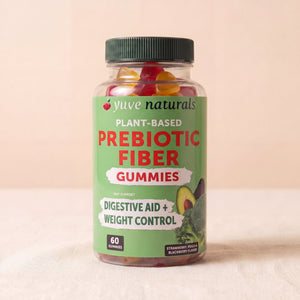
Yuve's Vegan Prebiotic Fiber Gummies are described as a daily vegan prebiotic gummy with inulin from chicory root and 3 g of fiber, according to the product information provided by the brand. Because inulin can be challenging for some FODMAP-sensitive people, use the same tolerance-first approach: read the label, begin cautiously, and stop if symptoms worsen.
Keep meals varied with whole plant foods when you can. A supplement can fill a practical gap, but it doesn't replace the texture, nutrients, and variety of beans, oats, vegetables, fruit, nuts, and seeds. If you're also considering probiotics, remember that probiotics provide microorganisms, while prebiotics provide fuel. Pairing them may suit some people, but it's easier to understand your response when you introduce changes one at a time.
Track three things for your trial: comfort, regularity, and dose. A simple note on your phone can reveal whether symptoms follow a specific ingredient or a rapid increase. If you have IBS, suspected FODMAP sensitivity, or ongoing digestive symptoms, a registered dietitian can help you test fibers without unnecessarily restricting your diet.
Your next step doesn't need to be dramatic. Choose a transparent product, start gently, and let your own digestive feedback guide the process.
Yuve offers Vegan Prebiotic Fiber Gummies with chicory-root inulin and plant-based fiber for a simple daily routine. Visit Yuve to review the product details, choose a cautious starting approach, and begin tracking your gut-health wins.