You know that frustrating moment when a “healthy” snack leaves you bloated by midafternoon, and you can't tell whether the culprit is the fiber, the portion, or just your gut having feelings? Inulin fiber is one of those ingredients that can feel like a hero one day and a troublemaker the next, which is exactly why it's worth understanding before you add more of it to your routine.
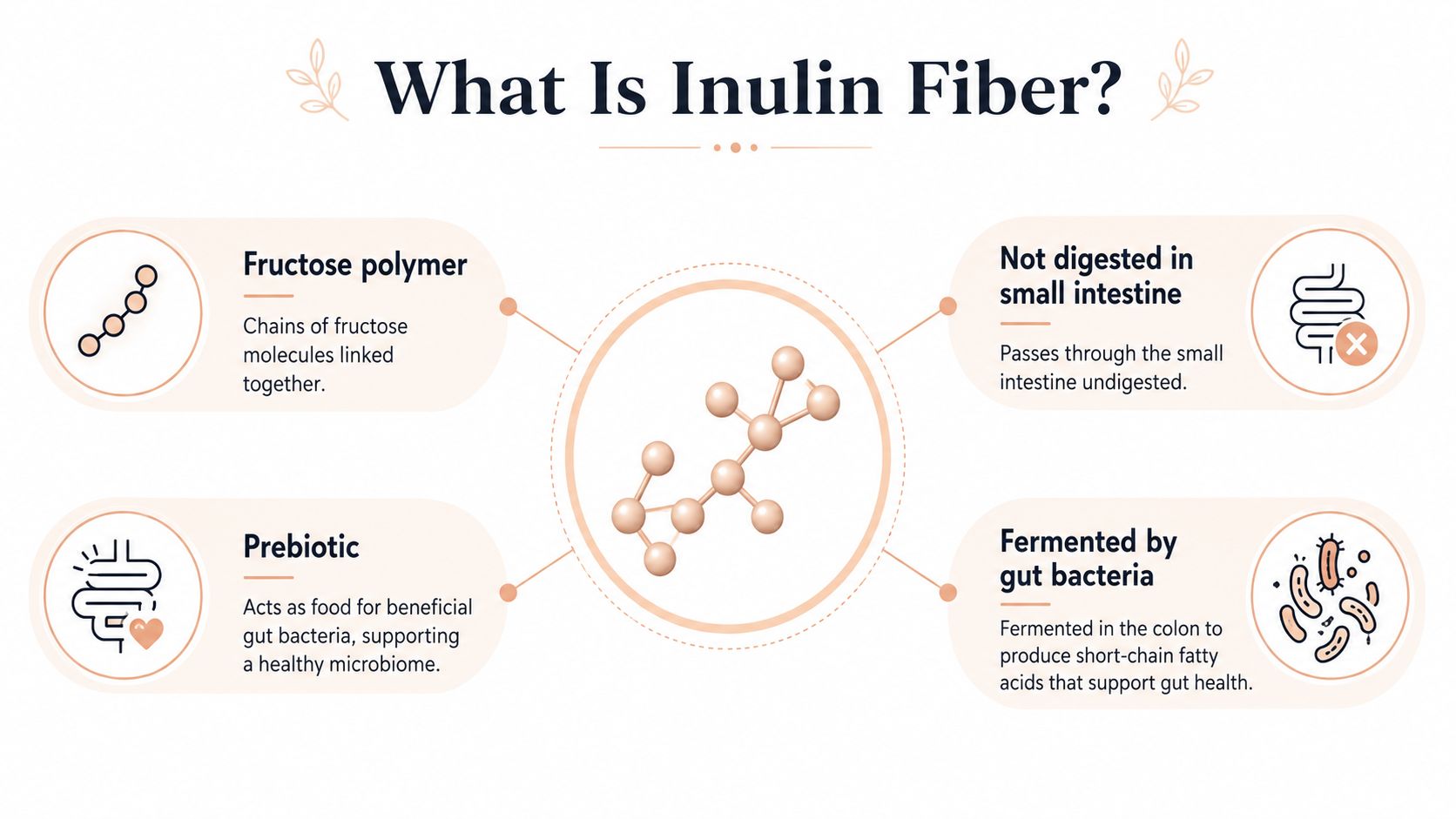
What is inulin fiber, really? It's a naturally occurring soluble fiber found in more than 36,000 plant species, and it shows up in foods like chicory root, Jerusalem artichoke, onion, garlic, barley, and dahlia. It also has a very specific job in the body, because human digestive enzymes can't break it down, so it reaches the colon largely intact and gets fermented by gut microbes instead of being absorbed in the small intestine pubmed review on inulin sources and concentrations Springer Open review on inulin structure.
What Is Inulin Fiber and Why It Matters
If you're standing in a supplement aisle or reading a label on a “high fiber” snack, inulin can look like a simple ingredient with a complicated effect. It is a fructose chain with a terminal glucose residue attached, and the bonds in that chain are arranged in a way your digestive enzymes cannot cut apart. That is why it behaves like fiber instead of sugar. A packed lunch that skips the small intestine and heads straight to the colon is a useful mental model, because that is where inulin becomes useful to your gut bacteria, not to you directly Springer Open review on inulin structure.
Why the chain length matters
The degree of polymerization, or DP, usually ranges from 2 to 60 Springer Open review on inulin structure. Chain length affects how inulin behaves in foods and in your body. Shorter chains tend to dissolve more easily, while longer chains behave differently in thickening and fermentation.
That is part of why inulin shows up in both nutrition conversations and ingredient lists. In plants, it serves as a storage carbohydrate. In the human diet, it functions as a non-digestible soluble fiber that can be concentrated from botanical sources and added to foods or supplements pubmed review on inulin sources and concentrations.
Practical rule: if an ingredient acts like both a fiber and a formulation tool, it is probably doing two jobs at once.
Chicory root became especially important because it can be extracted at scale, which made inulin practical for prebiotic supplements and fiber-fortified foods in major markets. That same usefulness is also why people run into the tolerance paradox with it, since the fermentation that makes inulin helpful can also make it uncomfortable for sensitive stomachs pubmed review on inulin sources and concentrations.
Just Cook It's healthy gut guide is a helpful kitchen-side reference if you want a practical look at how prebiotic eating fits into everyday meals.
How Inulin Works Inside Your Digestive System
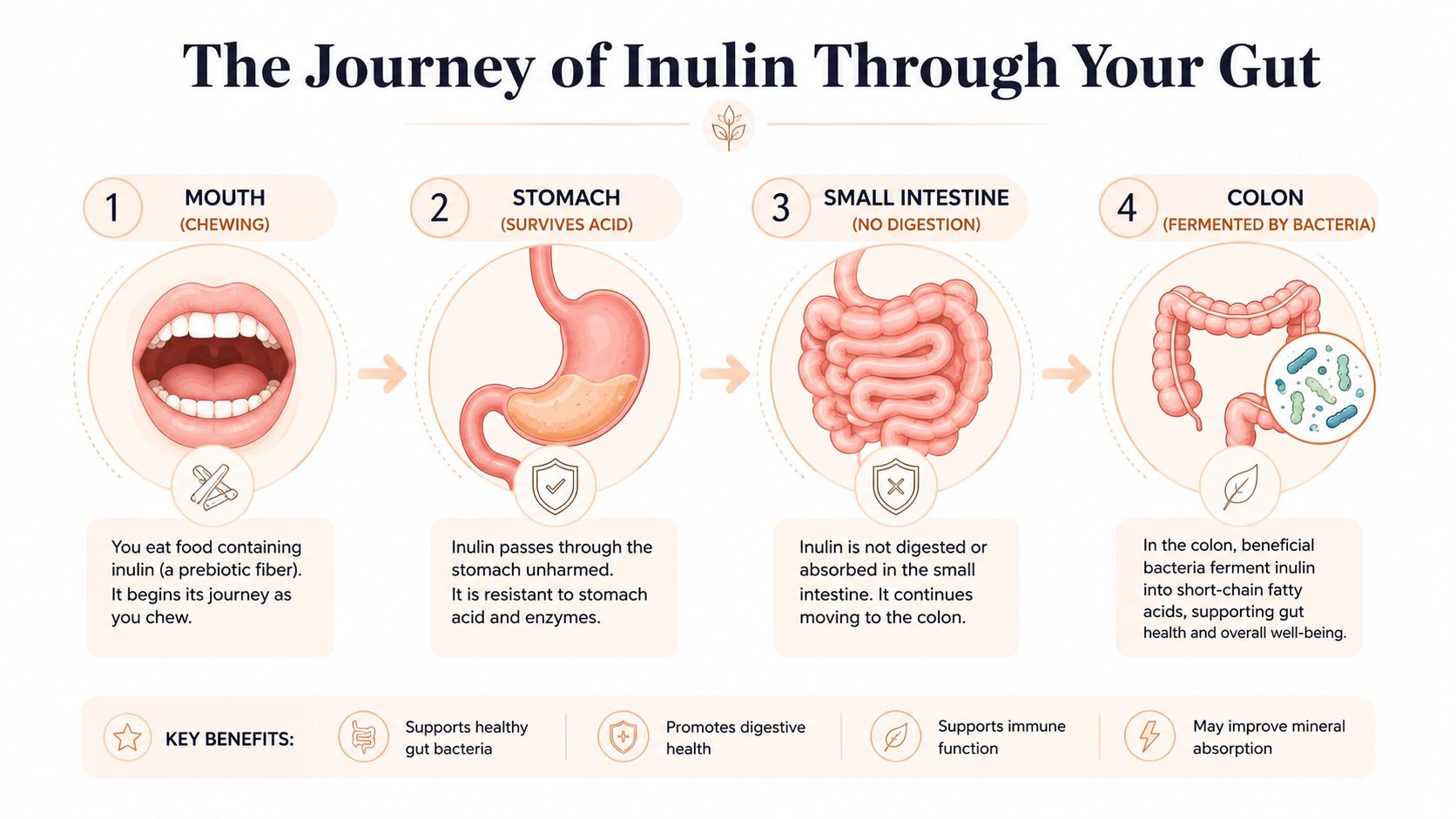
You can eat a spoonful of inulin, or get it through a fortified food, and it still follows the same basic route. It passes through the small intestine without being broken down the way starches or sugars are, then reaches the colon mostly intact, where gut microbes ferment it. That fermentation is the part that matters, because inulin is useful precisely because your body does not digest it the usual way.
What Fermentation Means for Your Gut
Once inulin reaches the colon, it becomes fuel for certain microbes. A good comparison is pantry food for a busy kitchen, the ingredient itself is simple, but it changes what the workers can make with it. In this case, gut bacteria turn inulin into short-chain fatty acids, which are linked with gut barrier integrity, immune balance, and metabolic health Oxford review on inulin and SCFAs.
That is why inulin is called a prebiotic. It does not work by “adding” digestion on its own. It works by feeding the microbes that live in the colon and influence what happens there next.
If you want a practical kitchen-side view of prebiotic eating, Just Cook It's healthy gut guide is a useful companion resource for building more fiber-forward meals without making dinner feel like a science project.
The same fermentation that makes inulin beneficial can also make it tricky for sensitive stomachs. Gut bacteria need the right fuel, but they do not all respond well to a sudden flood. A smaller starting dose and a slower increase usually give the microbiome time to adjust, which can make the difference between helpful support and unnecessary discomfort.
Evidence-Based Health Benefits Beyond Bloating Relief
A person may first hear about inulin because of bloating, yet that is only part of the picture. One of the more useful findings involves bone health. A review reports that about 8 g/day of inulin-type fructans can raise fractional calcium absorption by roughly 8.5% after 8 weeks nutridex inulin review. That does not replace calcium itself, but it suggests this fiber may help the body use calcium more efficiently.
What that means in real life
If you are building a routine that supports bone health, inulin can fit into the plan rather than stand in for the plan. The practical move is simple, keep calcium-containing foods in the picture, and choose a fiber strategy your gut can tolerate.
Inulin may also support metabolic health through the way it is fermented in the colon Oxford review on inulin and SCFAs. The reason this matters is that the short-chain fatty acids made during fermentation are part of why inulin is discussed alongside gut barrier integrity and immune balance.
The tolerance paradox shows up here too. The same fermentation that gives inulin much of its benefit can feel uncomfortable for sensitive people, especially if the dose rises too quickly. That is why some people do well with a small amount and a slow increase, while others feel better choosing a gentler fiber source or spacing their intake more carefully.
A simple way to read the evidence
- Bone support: useful when your diet already includes enough calcium and vitamin D, and you want to support absorption.
- Gut support: helpful when your microbes can handle fermentable fiber without a protest.
- Metabolic support: promising as part of an overall fiber-rich pattern, not a standalone fix.
A food science review also notes that inulin's effects depend a lot on how it is used, which is why the same ingredient can show up in a yogurt, a bar, or a supplement PubMed review on inulin sources and concentrations. That matters because “inulin” on a label does not tell you the full story about dose, texture, or how quickly it may ferment.
If you want a broader look at how prebiotics show up in everyday eating, this guide to foods high in prebiotics is a helpful reference point.
Where to Find Inulin Fiber in Foods and Supplements
If you have ever looked at a fiber label and wondered why one food seems to “work” better than another, the answer is often dose and form. Inulin shows up naturally in some plants, but it also gets added to packaged foods and supplements in ways that change how much you get at one time.
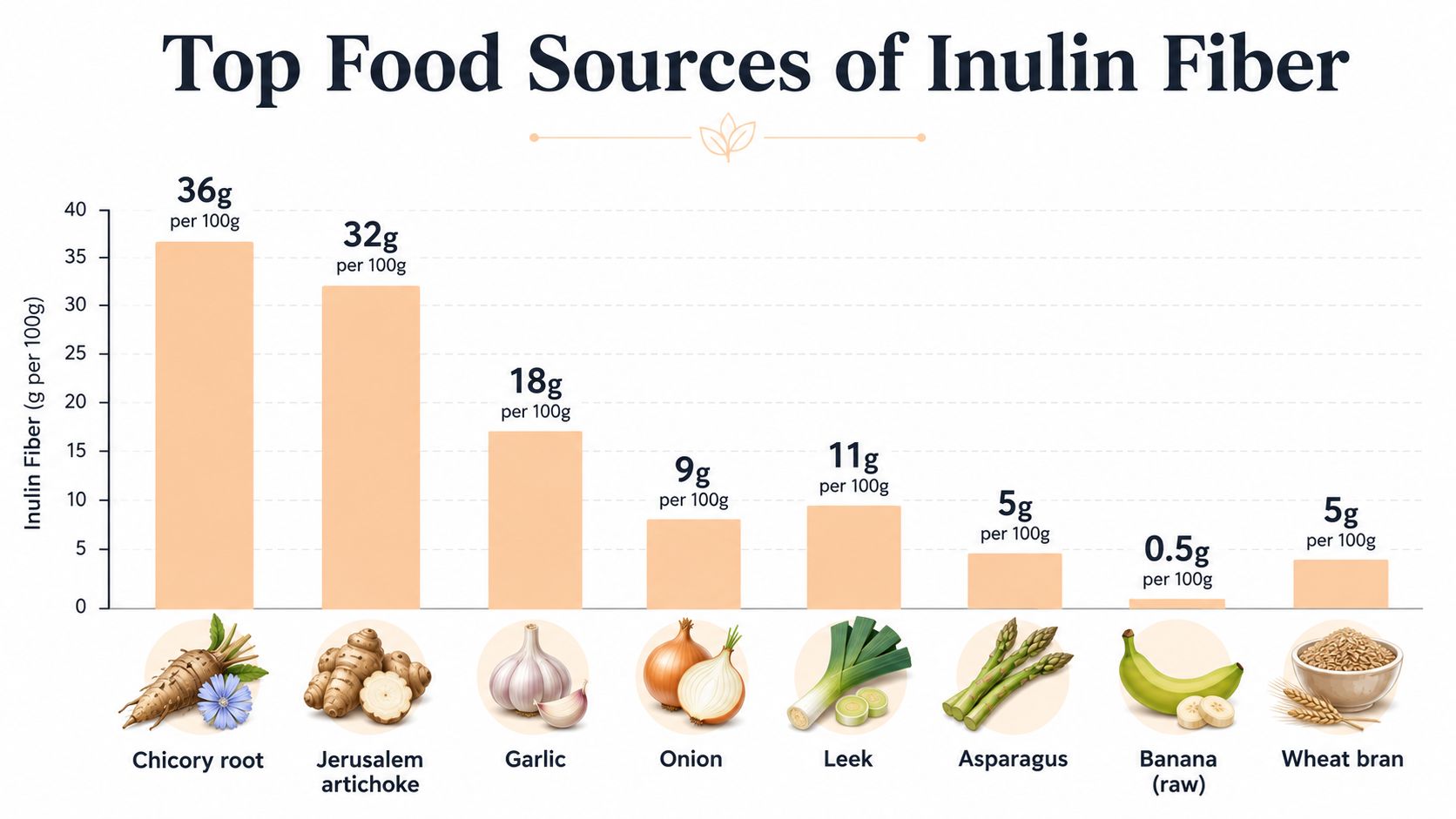
The richest sources are botanical. Chicory root is especially dense, and Jerusalem artichoke is also a strong source pubmed review on inulin sources and concentrations. Everyday foods like garlic and onion contribute smaller amounts, but they still matter when they show up often in your meals.
Whole foods versus functional ingredients
Packaged foods can blur the line. A product may use chicory root fiber to improve texture, reduce sugar, or raise the fiber number on the label, and that is not the same as eating a naturally inulin-rich food. The ingredient can still fit into a healthy pattern, but the body may experience it differently because the amount is more concentrated and the fermentation can happen faster.
If you want a broader look at how prebiotics show up in everyday eating, this Yuve guide to foods high in prebiotics is a helpful reference point.
Reading labels without overthinking it
- Look for ingredient names: chicory root fiber, inulin, or chicory inulin usually signal added inulin.
- Check the food context: a yogurt with added fiber is not the same as a bean, onion, or artichoke on your plate.
- Remember the role: inulin may be there for fiber claims, texture, or sugar reduction, not just gut health.
Supplements usually come as powders, capsules, or blended prebiotic formulas. That is where dose matters most, because a supplement can deliver much more inulin at once than you would normally get from meals, and that can be helpful or uncomfortable depending on your tolerance. For sensitive stomachs, the label matters as much as the ingredient name.
How Much Is Too Much and How to Start Slow
This is the part most guides skip, and it's the part many people need first. Typical intake of naturally present inulin or oligofructose is about 1 to 4 g/day in the United States and 3 to 11 g/day in Europe safety review on inulin intake. That helps explain why a full supplement serving can feel like a big jump if your diet has been low in fermentable fiber.
A simple titration plan
Start low, then let your gut tell you what's reasonable.
-
Begin with 2 to 3 grams per day.
This gives your microbes a small, manageable amount to work with. -
Hold steady for a few days.
If you feel fine, increase by about 1 gram every few days. -
Pause if symptoms ramp up.
Bloating, cramping, gas, or abdominal discomfort are your cue to slow down instead of forcing adaptation. -
Pair it with food if needed.
Many people tolerate fermentable fibers better when they're taken with a meal instead of on an empty stomach.
That pattern matters because inulin is fermentable. The same trait that makes it useful for gut bacteria can also make it a common trigger for gas and bloating if you introduce it too fast, especially if you already have IBS-like symptoms or a low-fiber baseline Medical News Today overview of inulin tolerance.
Simple rule: discomfort that keeps rising is not a sign of “cleanse” or “detox.” It usually means the dose is too aggressive for where your gut is today.
For a deeper look at supplement selection and formulas, this Yuve guide to the best prebiotic fiber supplement is a good companion read before you commit to a product.
Inulin vs Other Prebiotics Finding Your Match
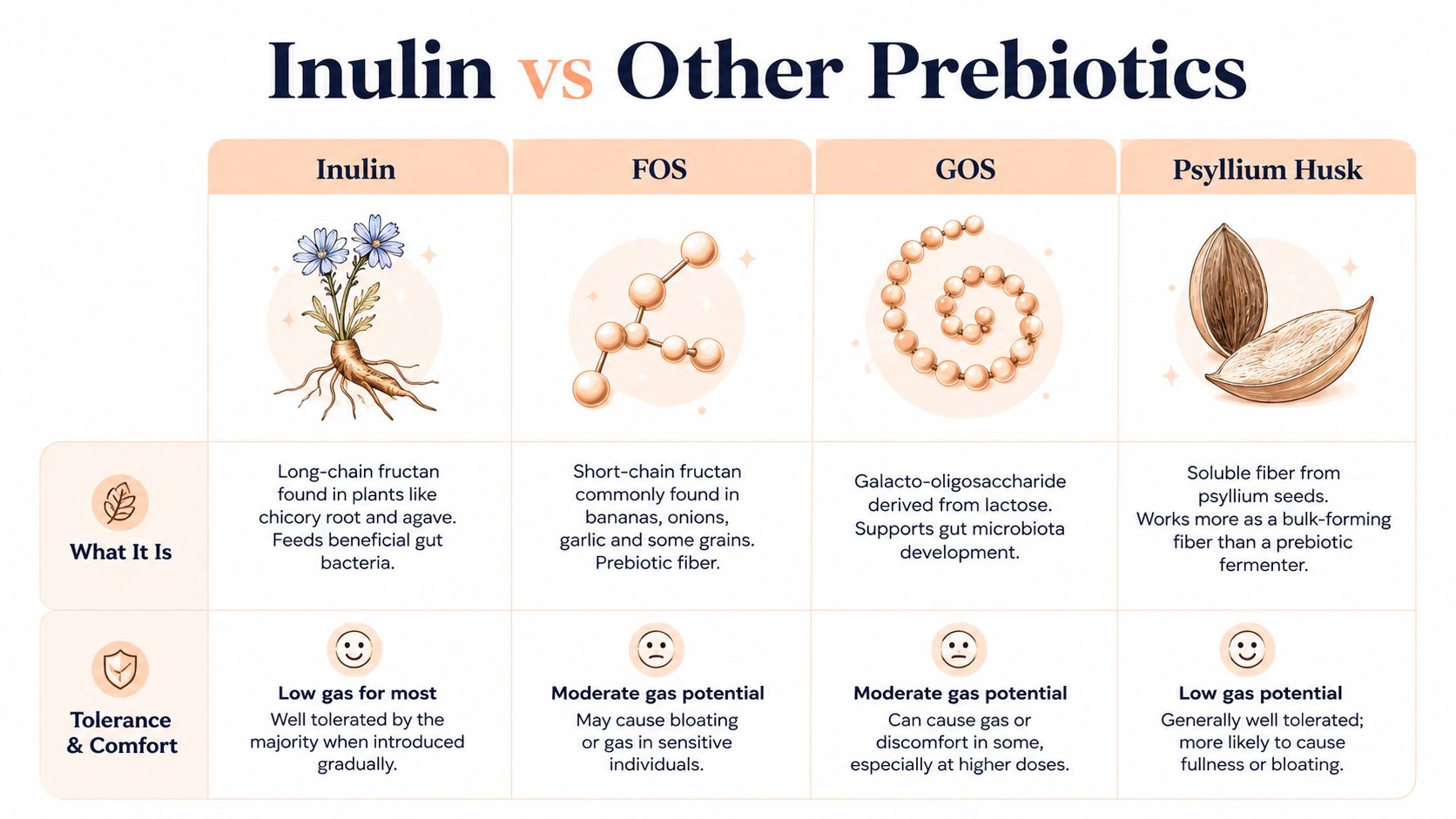
Inulin is one member of a bigger prebiotic family, and it isn't always the easiest fit. Short-chain inulin tends to dissolve more readily and bring a mild sweetness, while long-chain inulin is less soluble but more useful for thickness and gel formation in foods PMC review on inulin solubility and processing. That's one reason some people tolerate one product better than another even when the label says “inulin.”
How to think about the tradeoffs
If your main goal is bloating relief or gentle prebiotic support, starting with a smaller dose and a simpler formula makes more sense than chasing the biggest fiber number. If your main goal is food texture or formulation, long-chain inulin may behave better in the product itself, but that doesn't automatically mean it'll feel better in your stomach.
For a broader comparison of prebiotic categories, Pep Tea's prebiotics and probiotics overview gives a helpful framing for how these ingredients differ in role, even when they sound similar on the shelf.
A practical way to choose
- Choose inulin if you want a classic prebiotic that feeds colon microbes and you're willing to titrate slowly.
- Choose a different fiber if your digestion is very reactive and you need something less fermentable.
- Choose food first if you're still figuring out your baseline tolerance.
The question isn't which fiber is “best.” It's which one fits your gut today, your food pattern, and the way you live.
Smart Choices for Vegans and Sensitive Stomachs
If you're vegan or vegetarian, inulin can be a clean fit because it comes from plants and shows up in many plant-based formulas. If you're sensitive to fermentable fibers, you'll want the opposite of a big leap. You'll want a product with a clear ingredient list, a simple dose, and a format that lets you ease in instead of overwhelming your gut.
What to look for on the label
- Vegan-friendly and gelatin-free: especially if you avoid animal-derived ingredients.
- Non-GMO and gluten-free: useful if you're choosing products with cleaner sourcing standards.
- Transparent dosing: you should know exactly how much inulin you're getting per serving.
- Few extras: the shorter the ingredient list, the easier it is to judge what's helping and what's not.
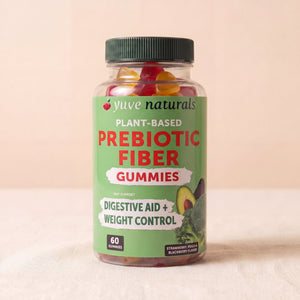
That's where a product like Yuve Prebiotic Fiber Gummies with chicory inulin fits naturally into the conversation. They're a straightforward way to add an inulin-based prebiotic to a routine when you want a plant-based option, and they fit the same gradual-start mindset that sensitive stomachs usually need.
For readers comparing different plant fibers, Yuve's acacia fiber guide is another useful read, especially if you're deciding between a more fermentable fiber and a gentler one.
Small habits that help
Take your fiber consistently, ideally with food if your stomach tends to complain. If you're new to prebiotics, stay with a low dose long enough to learn your pattern before changing anything.
The founder story behind Yuve comes up often for a reason, because digestive discomfort tends to make people cautious, and cautiously is exactly how you should approach inulin. Start small, listen closely, and build only as your body gives you a clear green light.
Yuve offers plant-based digestive support products, including prebiotic formulas with chicory inulin, for people who want to add fiber more intentionally and without guesswork. If you're ready to explore a gentler, more informed approach to gut health, visit Yuve and find a product that fits your routine and your digestion.