By mid-afternoon, a lot of people feel it. Your jeans get tighter, your stomach feels puffy, and you start wondering whether lunch betrayed you. If that sounds familiar, you are very much not alone.
Digestive frustration can make you feel like you're doing something wrong when you're just missing the right kind of support. Sam, the founder behind Yuve, knows that cycle well. The guessing, the food fear, the “why am I bloated again?” spiral. That lived experience is a big reason this topic matters so much here.
Interest in gut support keeps growing because digestive discomfort is common and personal. In fact, 30% of global consumers cite digestive health as their primary wellness concern, according to Strategic Market Research's prebiotic fiber market overview. If you're trying to sort through the noise, you're in good company.
If bloating is your main issue, Lola's guide to addressing bloating is a helpful companion read because it walks through other possible reasons your stomach may feel off.
That Afternoon Bloat Is Real But It Does Not Have to Be Yours
It is 3 p.m., and the discomfort starts creeping in. Your waistband feels tighter than it did at lunch, your stomach feels full and puffy, and you start replaying every bite to figure out what went wrong.
That pattern can make eating feel stressful fast. It can also make simple advice like “just eat more fiber” sound frustrating instead of helpful, especially if your system is sensitive.
Prebiotic fiber supplements can be part of the answer, but the details matter. The goal is not to dump in as much fiber as possible. The goal is to use the right type, in the right amount, at a pace your gut can handle.
Why this gets confusing so quickly
Many adults with recurring bloating try gut support like they are assembling furniture without the instructions. First comes a probiotic. Then a greens powder. Then a fiber bar. By the end of the week, there is more gas, more pressure, and less confidence.
That does not mean your body is failing. It usually means your gut needed a gentler starting point.
A sensitive digestive system often responds better to a calm, step-by-step approach. That is especially true for vegans who may already eat a fiber-rich diet, for people with IBS-type symptoms who can react strongly to certain fibers, and for parents trying to help a child without making bathroom issues feel bigger or scarier.
Yuve’s founder, Sam, built this brand with that kind of lived digestive frustration in mind. The experience of feeling bloated, guessing at solutions, and worrying about food choices is personal. Many readers will recognize that cycle.
What will help
You need clear guidance that separates “more fiber” from “better-matched fiber.” That is the difference between pouring water on a houseplant every hour and giving it the amount it can use. More is not always better. Better matched is better.
If you want a practical overview before choosing a product, this guide to prebiotics for digestive health gives helpful background in plain language.
If bloating is your main concern, Lola's guide to addressing bloating is a useful companion read because it covers other reasons your stomach may feel off beyond fiber alone.
By the end, you will have a simple way to sort through the noise:
- What prebiotics are in plain English
- How they differ from probiotics
- Why some fibers feel gentler than others
- How to choose prebiotic fiber supplements without getting lost in label jargon
- How to start low and slow if you have a sensitive stomach or you are helping a child
Relief often starts with a better plan, not with more restriction.
What Are Prebiotics And How Do They Actually Work
Prebiotics are fibers your body does not break down in the small intestine. They pass through to the large intestine, where certain gut microbes ferment them and use them for fuel. In plain English, prebiotics feed beneficial bacteria that are already there.
That matters because gut bacteria are not all doing the same job. Some help produce compounds that support the gut lining and the environment inside the colon. Some are linked with better regularity and a healthier balance of microbes. A prebiotic gives the more helpful groups something they can use.

Prebiotics versus probiotics
This mix-up is common, especially if you are staring at supplement labels and trying to choose something that will not upset your stomach.
| Term | What it is | What it does |
|---|---|---|
| Prebiotics | Non-digestible fibers | Feed beneficial gut bacteria |
| Probiotics | Live microorganisms | Add more bacteria to the gut |
A simple way to separate them is this. Probiotics bring in live microbes. Prebiotics feed the microbes already living in your gut.
Prebiotic fibers include ingredients such as inulin, fructooligosaccharides, and galactooligosaccharides. Research has shown that these fibers can selectively support helpful groups such as Bifidobacteria and Lactobacilli. If you want another simple explainer on the relationship between the two, this article on optimizing your gut health lays it out in very readable terms.
What happens after your gut bacteria eat them
When gut bacteria ferment prebiotic fiber, they produce short-chain fatty acids, often shortened to SCFAs. You do not need to remember the name. The useful part is what they do.
These compounds help support:
- The gut lining
- A balanced digestive environment
- Immune function
- A healthier mix of gut microbes
If you have a sensitive system, one detail helps explain why fiber can feel great one day and rough the next. Fermentation is not instant, and it is not identical for every type of fiber. Some fibers are used quickly by gut microbes, which can mean more gas or pressure in people with IBS or a lower tolerance. Others are gentler or easier to dose in smaller amounts.
Why supplements can help
Food sources matter, but supplements can be useful when your routine is limited or your gut is easy to irritate. That includes people eating vegan diets, children who accept only a narrow range of foods, and adults avoiding common trigger foods.
The main advantage is control. You can start with a small amount, watch how your body responds, and increase slowly instead of making a big jump from one high-fiber meal to the next. For many people, that feels more predictable and less intimidating.
If you want a plain-language explanation of how prebiotic supplements fit into digestive support, Yuve's guide to prebiotics for digestive health is a helpful follow-up.
Not All Prebiotic Fibers Are Created Equal
You buy a supplement that says "prebiotic," take the suggested scoop, and by evening your stomach feels loud, stretched, or unsettled. That reaction can make prebiotics seem like the problem. Often, the underlying issue is the match between the fiber and your gut.

The main types you'll see
Supplement labels often group very different fibers under one simple word. Prebiotic is the category. The individual fibers inside that category can behave very differently once they reach your colon.
Here are some of the names you will see most often:
-
Inulin
Usually sourced from chicory root. It is common in vegan supplements and functional foods. -
FOS
Short for fructooligosaccharides. These are often fermented quickly, which can mean a faster response and, for some people, more early gas. -
GOS
Short for galactooligosaccharides. This group is often used to support beneficial bacteria and is sometimes easier to use in small, gradual amounts. -
Resistant starch
Found in some foods and supplements. It tends to ferment more slowly, which some sensitive people find steadier.
The key idea is simple. Fiber structure affects the experience. Small differences in chain length and how easily a fiber dissolves can change how fast microbes use it, and how your body feels while that happens.
Fast fermenters and slow fermenters
A helpful comparison is sparkler versus candle. Some fibers create a quick burst of microbial activity. Others burn more slowly and steadily.
| Fiber style | What it may feel like |
|---|---|
| Quickly fermentable fibers | More noticeable activity early on, sometimes with more gas or pressure |
| More slowly fermentable fibers | A gentler build for some people, especially at low doses |
That difference matters if you have IBS, a very reactive gut, or a child who gets uncomfortable quickly and then refuses to try again. A fast-fermenting fiber is not wrong. It may just be too much, too soon, for that person.
This is also why two people can try "the same kind of supplement" and report opposite results.
What this means when you're shopping
A rough first experience does not mean all prebiotics are a bad fit for you. It may mean the dose was too high, the fiber type was too active for your system, or the increase happened too fast.
Look at labels with the same care you would use for coffee strength. One cup of mild coffee and one triple espresso are both coffee. They do not feel the same in your body.
For sensitive adults, starting with a simpler formula and a very small dose is usually the kinder approach. For vegans, chicory-derived inulin or other plant-based fibers may fit well, but tolerance still matters more than marketing. For children, the best option is usually the one you can measure easily and introduce slowly with guidance from a pediatric clinician if needed.
If you want food-based examples to compare with supplement labels, Yuve's guide to foods high in prebiotics is a useful reference.
The Science-Backed Benefits Beyond Better Digestion
You eat, your stomach feels mostly fine, and you assume the story ends there. But your gut is doing far more than moving food along. It is also helping manage how your body handles nutrients, protects its lining, and communicates with the immune system.
When prebiotic fibers reach the colon, gut microbes ferment them and make short-chain fatty acids. Those compounds help nourish the cells that line the colon and support a healthier gut environment. In other words, prebiotics are not only about staying regular. They help maintain the conditions your gut needs to work well day after day.

Better support for your gut barrier and immune system
Your gut lining works like a smart screen door. It should let useful things through, such as digested nutrients, while keeping irritants and unwanted microbes in check.
Prebiotic fermentation helps support that barrier. It also helps feed bacteria that are commonly linked with a healthier gut environment, including Bifidobacteria and Lactobacilli, as noted earlier in the article. That is one reason gut health often shows up in conversations about immune function.
For people with sensitive systems, this point is easy to miss. You may start with prebiotics because of bloating or irregularity, but the goal is often broader. A calmer, better-supported gut lining can make the whole digestive process feel less reactive over time.
Bone health belongs in the conversation too
This surprises many readers.
Some research has found that certain prebiotic fibers may improve calcium absorption. That matters for adults thinking about long-term bone health, for plant-based eaters who pay close attention to nutrient intake, and for children whose bones are still growing.
Prebiotics do not replace calcium, vitamin D, or a balanced diet. They help create a gut environment that may make it easier to use those nutrients well. A garden needs seeds and healthy soil. Nutrients are the seeds. Your gut environment is the soil.
Your gut affects more than comfort. It also influences how well your body uses the nutrients already on your plate.
Why this can be especially helpful for plant-based eaters
Vegans and vegetarians often eat many fiber-rich foods already, which is a strength. At the same time, a high-fiber diet can feel like a lot if your gut is easily irritated, or if you are trying to increase intake after years of eating less plant fiber.
A prebiotic supplement can offer a more measured approach. Instead of making several food changes at once, you can start with a small, known amount and see how your body responds. That can be useful for adults with IBS, for vegan families trying to support a child carefully, and for anyone who wants structure instead of guesswork.
The goal is not to force more fiber as fast as possible. The goal is to build tolerance without creating a miserable week.
A quick visual overview can help make the gut-wide connection easier to grasp:
The benefit people notice most over time
Consistency.
Less post-meal drama. More predictable digestion. Less second-guessing every snack, outing, or family meal. For children, that can mean fewer complaints and less resistance. For adults with IBS or sensitive stomachs, it can mean a little more trust in your body again.
That steady baseline is often the most important win.
How to Choose a High-Quality Prebiotic Supplement
Supplement aisles can be a mess. Pretty packaging, vague claims, mystery blends. If you've ever picked up a bottle and thought, “I have no idea what I'm looking at,” that's normal.
A good prebiotic product should make the label easier to understand, not harder.

Start with the actual fiber source
The first thing I look for is specificity. The label should tell you which prebiotic fiber is inside.
That might be:
- Inulin from chicory root
- FOS
- GOS
- Resistant starch
- Partially hydrolyzed guar gum for lower-FODMAP needs
If a label hides behind vague wording and never names the fiber, I get cautious.
Look for a form that matches your body
Powders, capsules, and gummies all have their place. The best format is often the one you'll take consistently and tolerate well.
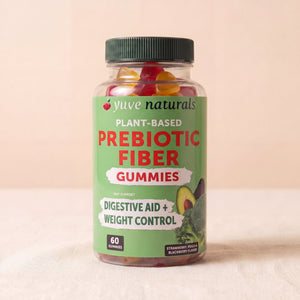
If you're sensitive, a measured format can help because it's easier to start small. For example, Yuve Vegan Prebiotic Fiber Gummies use chicory inulin and provide a simple way to add prebiotic support without gelatin. For people who want a vegan, gluten-free, and non-GMO option, that's one practical format to consider.
That doesn't mean gummies are automatically better. It means convenience and tolerability matter.
Ingredient checklist that makes sense
Here's the filter I use when reading labels:
| What to look for | Why it matters |
|---|---|
| Named prebiotic fibers | You know what your gut is responding to |
| Plant-based sourcing | Helpful for vegans and for ingredient transparency |
| Simple ingredient list | Fewer extras means fewer potential irritants |
| Gluten-free and gelatin-free if needed | Important for many sensitive shoppers |
| Third-party testing | Adds a layer of quality verification |
Third-party testing doesn't guarantee a product will feel right for your body, but it does help you trust that what's on the label is what you're buying.
A few red flags
Some products make me pause right away.
-
Huge serving sizes without guidance
Sensitive guts usually need a gradual start, not a “jump in and hope for the best” strategy. -
Proprietary blends
If you can't tell how much of each ingredient you're getting, it's harder to troubleshoot. -
Lots of added sweeteners, colors, or fillers
These don't automatically make a product bad, but they can complicate the picture if you're already reactive.
The cleaner the label, the easier it is to tell whether the fiber itself is helping you.
Questions worth asking before you buy
Ask yourself:
- Do I know the fiber type?
- Can I start with a small amount?
- Is this aligned with my dietary needs, like vegan or gluten-free?
- Will I realistically remember to take it?
That last one matters more than people think. The perfect supplement on your shelf does nothing. A simple one you can take regularly usually wins.
A Safe Start Guide For Sensitive Stomachs and Kids
You try a fiber supplement at breakfast because you want calmer digestion by the afternoon. Instead, your stomach feels puffy, your pants feel tighter, and you start wondering whether fiber just does not agree with you.
That reaction is common, especially in people with IBS, sensitive digestion, and kids whose systems do not like abrupt changes. The answer is usually not “give up on prebiotics.” The answer is to introduce them the way you would warm up before exercise. Gently, in small amounts, and with room to adjust.
Start with less than the label suggests
Sensitive systems usually do better with a small trial dose taken with a meal and enough water. Then you wait a few days before changing anything.
That pause matters.
Your gut microbes need time to adjust to a new fiber source. If you raise the dose too fast, fermentation can outpace comfort. That is when gas, cramping, or bloating can show up even with a good product.
A practical rhythm looks like this:
-
Begin small
Start below a full serving, especially if you have reacted badly to fiber before. -
Take it with food
Many people find this feels gentler than taking it on an empty stomach. -
Drink water alongside it
Fiber and fluid work as a team. -
Hold steady before increasing
Give your body several days at the same dose so you can judge the response clearly.
What “normal adjustment” can look like
A little extra gas or a mild sense of fullness can happen at first. Your gut bacteria are getting more to ferment, much like a campfire getting new wood. A bigger flame is not always a problem. It only becomes one if it gets too intense for your system.
If symptoms stay mild, your body may need:
- More time
- A smaller dose
- A different type of prebiotic fiber
If symptoms feel loud, painful, or disruptive, pull back sooner rather than later. Pushing through rarely wins with a sensitive gut.
The best dose is the one your body can handle consistently, not the biggest one on the scoop.
Extra care for IBS and highly sensitive digestion
IBS adds another layer because some prebiotic fibers are also high in fermentable carbohydrates. For many people with IBS, inulin-heavy products can feel like too much too soon.
A gentler option is often a lower-FODMAP fiber such as partially hydrolyzed guar gum. It tends to be better tolerated and gives you a clearer read on whether prebiotics help you without creating unnecessary noise. If your stomach reacts to many foods, start with the calmest option, not the trendiest one.
That is especially useful for vegans with IBS, because it can be tempting to choose a plant-based supplement based on marketing alone. Plant-based is helpful, but tolerance still comes first.
What about kids
Parents are right to be careful here. Children are not just smaller adults, and dosing is not always straightforward.
The safest approach is simple:
- Start with a very small amount
- Add only one new product at a time
- Watch for changes in comfort, stool pattern, and appetite
- Ask your pediatric clinician first if your child has GI issues, feeding challenges, or a medical condition
If you want a family-focused walkthrough, Yuve has a helpful guide on how prebiotics for kids can be introduced more carefully.
For children with autism, sensory sensitivities, or strong food preferences, routine matters as much as ingredients. A predictable texture, familiar drink, or tiny repeatable serving can make the difference between “refuses it immediately” and “this is manageable.”
Slow is still progress. For sensitive adults and kids alike, a calm start usually leads to a better outcome than a brave one.
Your Simple Plan to Start Feeling Better Today
It is 3 p.m., your stomach feels tight, and you are wondering whether to try a supplement or just give up and hope tomorrow is better. A simple plan works better than a perfect one, especially if your system is sensitive.
Start with one clear goal. Maybe you want less afternoon bloat. Maybe you want steadier bowel movements, less digestive guesswork after meals, or support that fits a vegan routine. A specific goal gives you a way to notice progress that is easy to miss day to day.
Then keep your setup simple:
- Choose one prebiotic fiber at a time. A single ingredient is easier to judge than a blend with five different fibers.
- Pick a form you will use. Powder in water, mixed into oatmeal, or added to a smoothie can be easier than a large capsule.
- Start with less than you think you need. For sensitive stomachs, IBS, and cautious first-timers, low and slow usually feels better.
- Stay consistent for a bit before judging it. Your gut is more like a garden than a light switch. It often responds to steady care, not a big one-day effort.
If you are choosing for more than just yourself, keep the plan even calmer. Vegans may want a clearly labeled plant-based product without unnecessary additives. Parents may want a powder with a neutral taste that can be mixed into a familiar food or drink. For children, a tiny repeatable amount is usually easier than an ambitious serving that creates pushback.
Families dealing with IBS, sensory sensitivities, or unpredictable stomachs often do best with fewer variables, not more. One product. One small dose. One routine. That makes it easier to notice whether things are improving.
The primary goal is not to build your day around your digestion. The goal is to make digestion less central to your day. When a prebiotic fiber fits your body, meals can feel more ordinary again. That kind of relief matters.
If you want to browse a vegan-focused option, Yuve offers supplements designed for everyday gut support with a simple, plant-based approach.