Your stomach starts puffing out by midafternoon, and suddenly the jeans that fit fine at breakfast feel one notch too tight. If that sounds familiar, you're probably trying to sort out whether prebiotic inulin powder is the helpful fiber everyone talks about, or just another thing that might leave you gassy and frustrated.
That's the honest question, and it's a good one. Inulin can be a smart gut-health tool, but it isn't magic, and it isn't gentle for everyone. The science is more interesting than the hype, because it shows both a clear benefit window and a real tolerance ceiling.
What Is Prebiotic Inulin Powder
Prebiotic inulin powder is a soluble fibre that reaches your large intestine mostly untouched, where it becomes food for certain beneficial gut microbes. Commercial inulin usually comes from chicory root, and quality checks often focus on fructan content, degree of polymerization, and residual sugars because those details affect how it behaves in your body and in a formula.
The easiest way to understand it is through the gut ecosystem. A probiotic is the living microbe, while a prebiotic is the food source that helps the helpful microbes already in your gut grow and carry out their jobs. That is why inulin comes up so often in gut health conversations, especially for people who want to support digestion without changing their whole diet.
The ingredient is also one of the better-studied prebiotic fibers in human research. Reviews of human trials point to a dose-dependent bifidogenic effect, which means it can raise bifidobacteria at practical supplement doses, and regularity-focused studies often report changes in stool number, stool weight, or less laxative use. Those are the kinds of results people care about, because the question is usually not whether a fiber sounds helpful, but whether it changes daily comfort in a noticeable way.

If you want a broader primer on how prebiotic fibers support the gut ecosystem, this prebiotic fiber guide from Yuve is a useful companion read. And if you like seeing fiber in the context of everyday foods, the 2026 asparagus health guide offers a simple example of how naturally fiber-rich foods fit into digestion-focused eating.
How Inulin Works in Your Gut
Once you eat inulin, your body doesn't break it down in the small intestine the way it does with starch or sugar. It travels onward, basically acting like a package delivered straight to the colon, where the local bacteria open it up and use it as fuel.
A simple way to picture the process
Think of your gut like a garden. Inulin feeds the plants you want to grow, instead of feeding the weeds. In the colon, bacteria such as Bifidobacterium and Lactobacillus ferment it, which means they break it down and create short-chain fatty acids that help support the gut lining and immune balance OUP review on inulin mechanisms.
Those short-chain fatty acids are a big reason prebiotic fibers matter. They're linked with a healthier intestinal environment, and they help explain why inulin gets positioned as more than just “fiber for poop.” It's a selective food source for microbes that can influence digestion from the inside out.
Practical rule: if a fiber is fermented well, it can help the right microbes thrive, but it can also create gas while that fermentation is happening.
That's the trade-off people often miss. Fermentation is the point, not a side effect, but your comfort level depends on the dose, the chain length, and your own gut sensitivity. A slower-fermenting inulin can feel different from a faster one, even at the same grams.
Here's the simplest takeaway. Inulin goes to the colon, microbes ferment it, and the byproducts help shape gut conditions. That's the whole mechanism in one line, without the jargon.

For a deeper look at the neighboring ingredient family, this prebiotic resistant starch overview helps show why different fermentable fibers can feel so different in real life.
Evidence-Based Benefits of Prebiotic Inulin Powder
A spoonful of inulin can feel modest, yet for someone dealing with slow digestion, that small change may make bowel habits more predictable. Some human sources note that taking inulin by mouth may increase stool frequency by up to about one extra bowel movement per week in children and adults WebMD inulin reference. That is not a dramatic headline, but when your gut feels backed up and uncomfortable, a little more regularity can matter a lot.
What the research suggests in plain language
Human studies have reported that 8 g/day or more increased bifidobacteria, with rises in the range of 7 to 9 log10, and 9 of 10 regularity-focused studies found improvements in stool number, stool weight, or reduced laxative and enema use human trial overview. For readers trying to make sense of that, the practical message is simple. Inulin can change the gut environment enough to shift bacteria and bowel habits, yet it is not a one-dose, instant-response fiber.
There is also a broader metabolic angle. A 2016 meta-analysis estimated an effect size of 0.61 for insulin sensitivity, about +20% ± 32%, and 0.54 for aortic pulse wave velocity, about −20% ± 37% reduction, while a later review concluded that inulin-type fructans have a strong bifidogenic effect and also promote Lactobacillus and Faecalibacterium prausnitzii PMC review. In everyday terms, researchers are seeing signs that inulin may influence digestion and also markers tied to metabolism and blood vessel function.
Your gut and your mood are connected more than many readers realize, which is why food choices can shape how steady you feel through the day. If you want a gentle, practical overview of that connection, the article on how food affects your mood is a useful read.
The science also keeps the picture balanced. A phase 2 ICU trial using doses up to 32 g/day found no meaningful change in microbiome diversity, short-chain fatty acid producers, pathogen colonization, or 30-day outcomes. That result, discussed in the broader review literature, shows that inulin is not a universal fix. It can be helpful in the right context, but the person, the dose, and the health situation all shape the outcome.

If you are weighing prebiotic and probiotic approaches, the Yuve guide to prebiotics and probiotics offers a clear next read.
How to Find the Right Inulin Dose for You
A lot of people stall at this point. They understand that inulin may help, but they do not know how much to take without making their stomach feel like it is on trial.
Start with the useful range, not the loudest claim
Clinical coverage often places common trial doses around 5 to 15 g/day, while adverse effects rise above roughly 30 g/day dose discussion review. That gap matters because the goal is not to chase the biggest amount you can tolerate once, it is to find the amount your gut can live with day after day.
The better question is not “What is the perfect dose?” It is “What dose can my gut handle consistently?” Chain length matters here too. Higher-DP inulin is fermented more slowly, so it often creates a gentler gas pattern per gram than faster-fermenting short-chain fibers.
A practical approach looks like this.
- Start very low. Use a small amount first, especially if you are sensitive.
- Hold the dose steady. Give your gut time to respond before changing anything.
- Increase slowly. Move up only if your comfort stays stable.
- Track your symptoms. Bloating, stool changes, and gas tell you more than internet hype ever will.
The same logic shows up in human research. Repeated exposure matters more than heroic one-off doses, because the microbiome and your digestion usually adapt over time rather than all at once human trial overview. For that reason, a cautious ramp-up is often more useful than starting high and hoping for the best.
If you want the short version, here it is. Low and steady beats high and miserable.
Side Effects, Tolerance, and Who Should Be Cautious
Inulin can be useful for the gut, but its fermentation is also the reason some people feel worse before they feel better. Because it is a high-FODMAP fructan, it may trigger symptoms in people with IBS or SIBO sensitivity, especially if their gut already reacts strongly to fermentable fibers. That reaction does not mean the ingredient is bad for everyone. It means the gut is treating it like a fast-moving fermentation job, and some digestive systems are more sensitive to that process than others.
Common side effects to watch for
- Gas and bloating. These are the most common early complaints, and they often show up when the dose is too high for your current tolerance.
- Abdominal discomfort. Cramping, fullness, or pressure can happen, especially during the first few tries.
- Changes in bowel habits. Inulin may loosen stools for some people, while others notice more sluggish bowel movements depending on the amount and their baseline digestion.
- General digestive irritation. If FODMAP-rich foods already tend to bother you, inulin may feel rough at first rather than soothing.
Neutral medical references list bloating, gas, constipation, diarrhea, and abdominal discomfort among the common side effects of inulin WebMD inulin reference. For many people, that does not mean inulin is off-limits. It means the safer path is a very small starting amount, followed by slow increases only if comfort stays stable.
Helpful boundary: if your gut is already reactive, treat a prebiotic like a cautious trial, not a challenge.
People with a functional gut disorder or a known sensitivity to high-FODMAP foods should be especially careful. In those cases, a lower starting amount matters even more, and sometimes a different fiber type is a better fit. The point is to support digestion, not create a daily bloating problem in the name of gut health.
A lot of confusion comes from the word “prebiotic” sounding gentle by default. It means the fiber is selectively fermented, which is useful for the microbiome and also explains why gas can arrive before any benefit does.
How to Use and Choose Quality Prebiotic Inulin Powder
Inulin is easy to use once you stop trying to make it the star of the recipe. It usually blends best into things that already have moisture, like coffee, smoothies, oatmeal, yogurt-style bowls, soups, and baked goods. If you stir it into a drink, mix well and let it fully dissolve before deciding it's too gritty, because some powders disperse better than others.
Timing is usually more about comfort than rules. Many people do better taking it with meals or splitting the amount across the day, since that can soften the fermentation load. If you're sensitive, pairing it with food is often kinder than dropping it into an empty stomach and hoping for the best.
Simple ways to make it part of the day
- Morning coffee or tea. Stir in a small amount after the liquid cools slightly.
- Smoothies. It disappears well when blended with fruit, nut butter, or greens.
- Oatmeal or chia bowls. The texture works nicely with warm, spoonable foods.
- Baking. It can fit into muffins or quick breads without dominating the flavor.
Quality selection matters just as much as usage. A solid inulin powder is usually a water-soluble, free-flowing white powder with high dry matter, a near-neutral pH in solution, low microbial counts, and no detectable E. coli or Salmonella COA reference. Some supplier specs also mention 80 mesh and bulk density targets, which matter because they affect caking, dispersibility, and capsule-fill behavior.
If you're comparing labels, here's the plain-English version of what to look for:
- Fructan or inulin content: higher is usually more directly relevant for prebiotic use.
- Degree of polymerization: higher DP often ferments more slowly and can feel gentler per gram.
- Residual sugars: lower levels usually mean a cleaner spec.
- Moisture and bioburden limits: important for shelf stability and supplement quality.
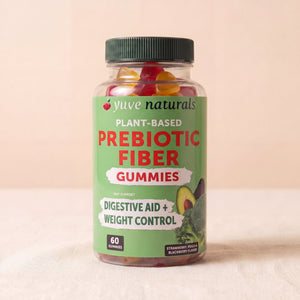
You asked for a real-world product example, and Yuve's Prebiotic Fiber Gummies fit this category as a 3g soluble fiber supplement made with chicory root and inulin. That kind of format is useful if powders aren't your thing and you want a simpler, pre-portioned option.
Inulin vs Other Prebiotics
A spoonful of inulin and a spoonful of another prebiotic can feel similar at first, but your gut may respond very differently to each one. That difference matters if you are trying to support the microbiome without turning every dose into a bloated afternoon.
How the common options stack up
| Prebiotic type | Digestibility | Tolerance | Fermentation speed |
|---|---|---|---|
| Inulin | Not digested in the small intestine | Can cause gas in some people | Moderate, especially with higher DP |
| FOS | Very similar behavior | Often a little easier for some people | Fast |
| GOS | Fermented in the colon | Can be useful, but not always the gentlest | Fast |
| Resistant starch | Reaches the colon largely intact | Often slower and sometimes steadier | Very slow |
The table gives the simple version, but the lived experience is usually more personal. Inulin and FOS often behave like close cousins, which is why some people tolerate one better than the other even though both can feed beneficial bacteria. GOS also reaches the colon and can support microbial growth, yet it may feel brisker in the gut for some readers. Resistant starch acts more like a slow-burning fuel source, so it may feel steadier when your digestive system is sensitive.
If your goal is a stronger prebiotic push, inulin is still a reasonable place to start. If your gut tends to protest quickly, a different prebiotic may fit better, especially if you are easing into fiber support and do not want to spend the day regretting it.
A neutral product listing from the Supplemynts Inc prebiotic fiber supplement shows how many brands frame FOS powders as a prebiotic fiber option with a different fermentation pattern than inulin. That is useful because the key question is not which prebiotic sounds healthiest on paper, it is which one your gut can tolerate in daily life.
A plant-based routine can include inulin-based powders or gummies without much fuss. A parent choosing fiber for a child often cares less about trendy wording and more about gentle dosing and an easy format. If you live with digestive sensitivity, resistant starch or a lower-dose prebiotic may be worth discussing with a clinician before you commit to a daily scoop.