Meta title: Prebiotic vs Probiotic for Constipation - What Helps
Meta description: Confused about prebiotic vs probiotic for constipation? Here's the practical, science-based difference, who should try which first, and when to combine both.
Your coffee is getting cold. You're sitting on the toilet with your phone in one hand, googling why your body suddenly forgot how to poop. By mid-afternoon your jeans feel mean, your stomach feels puffy, and you're already dreading dinner because you know the bloating will get worse.
If that's you, I get it. Constipation is one of those problems people joke about, but when you're living it, it's exhausting and weirdly discouraging. Plenty of people try a random fiber powder and feel worse. Plenty more borrow a probiotic their friend swears by and feel absolutely nothing.
That's why the prebiotic vs probiotic for constipation question deserves a better answer than “take one for gut health.” The answer is more personal than that. Some people do better feeding the bacteria they already have. Others need a specific probiotic strain. And some need both, in the right order, with a little patience.
When Going Number Two Just Won't Cooperate
A lot of constipation stories sound the same at first. You miss one day, then another. Soon you're doing the mental math of your last decent bowel movement, drinking more coffee than usual, and hoping your body gets the hint.
Then the little humiliations start.
- The bloat by 3 p.m. Your stomach feels stretched and heavy.
- The straining nobody mentions at brunch. You're trying hard, but not much happens.
- The late-night searching. “How to poop fast” becomes your least glamorous search history.
I've sat across from enough people with digestive issues to say this plainly. You are not failing at fiber if fiber made you feel worse. You are not imagining things if a probiotic did nothing. Those are common experiences, not rare ones.
Why the usual advice falls flat
Constipation gets oversimplified. People say “eat more fiber” as if all fibers act the same. They don't. Others say “take a probiotic” as if every strain does the same job. It doesn't.
That's the part I want to clean up here. Prebiotics and probiotics are not interchangeable, and they don't help the same person in the same way.
Some people need more fuel for the microbes already in their gut. Some need a specific incoming strain. Some have pelvic floor issues, medication effects, or stress patterns that no gummy will fully solve.
If you've got a nagging sense that your constipation story is messier than a simple supplement battle, you're right.
The practical lens that actually helps
What matters most is not picking a trendy winner. It's asking better questions:
- Are you eating very little fermentable fiber now?
- Did fiber make you gassy and miserable right away?
- Have you already tried generic probiotics with no result?
- Do your symptoms point to motility, stool dryness, or just an underfed microbiome?
And one more thing. If constipation comes with significant straining or a feeling that stool gets “stuck,” it's worth learning about therapy for constipation related to pelvic floor. Supplements can help, but mechanics matter too.
What Prebiotics and Probiotics Actually Are
Let's keep this simple.
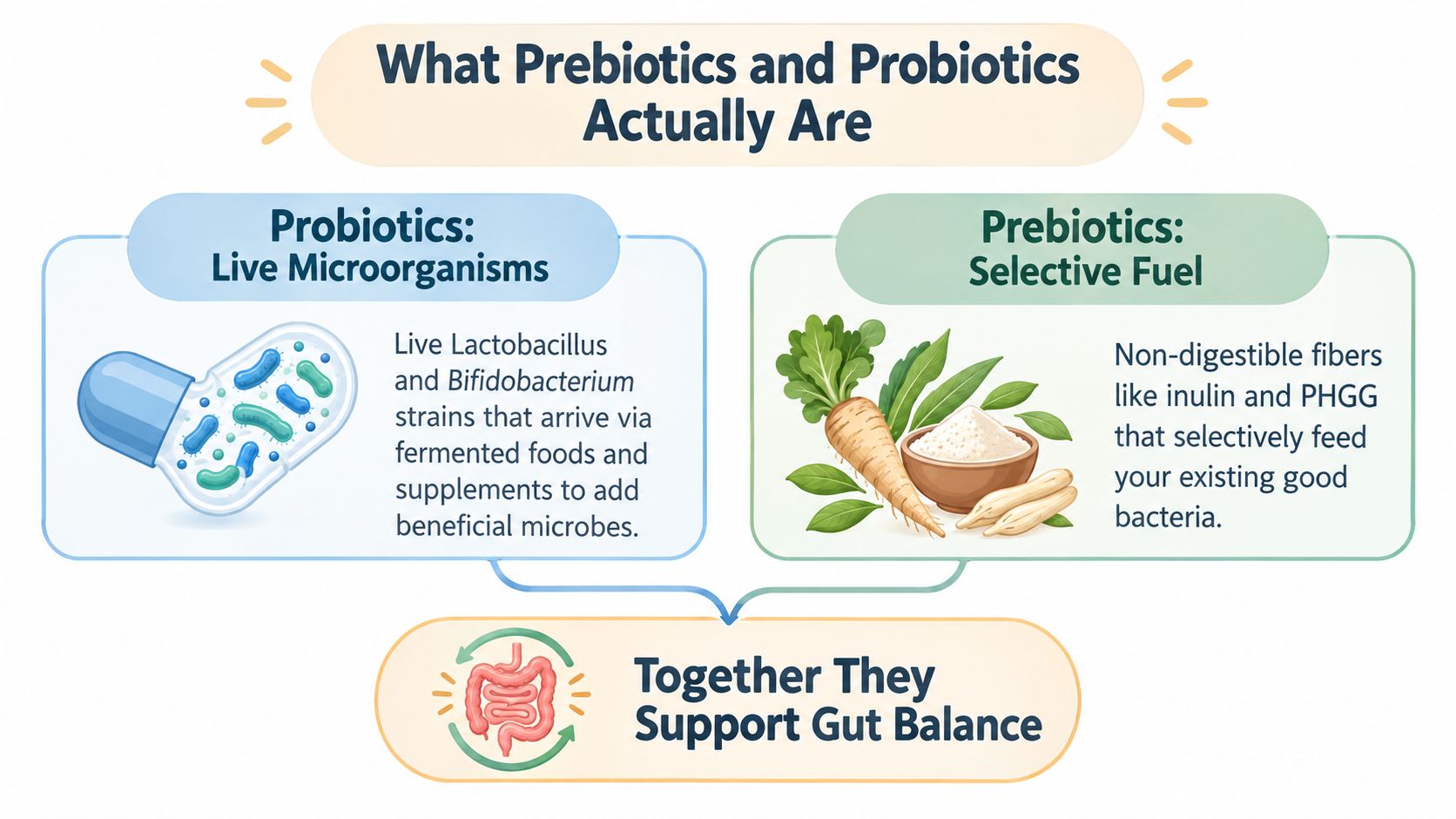
Probiotics are live microorganisms. In real life, that usually means certain strains from groups like Lactobacillus and Bifidobacterium that come from supplements or some fermented foods such as yogurt, kefir, kimchi, and sauerkraut.
Prebiotics are different. They're non-digestible fibers and resistant starches that pass through your stomach and small intestine mostly untouched, then get used by helpful gut bacteria in the colon. Think inulin, FOS, GOS, oats, beans, garlic, onions, leeks, bananas, asparagus, and chicory root.
The easiest way to picture it
If probiotics are the seeds, prebiotics are the soil and fertilizer.
Probiotics add specific microbes. Prebiotics feed helpful microbes already living in your gut. That feeding process can change what those microbes produce, which can affect stool softness, regularity, and comfort.
A lot of people need this distinction because they've been told “gut health” means the same fix for everyone. It doesn't. If you want a more beginner-friendly guide to daily gut support with prebiotics, that breakdown does a good job of showing how prebiotic fibers fit into everyday routines.
A few related terms worth knowing
You'll also hear two other words:
- Synbiotics - products that combine a probiotic and a prebiotic
- Postbiotics - the useful byproducts bacteria make after they ferment fiber
Those terms matter, but for constipation, the biggest practical question is still this. Do you need to add microbes, feed microbes, or do both?
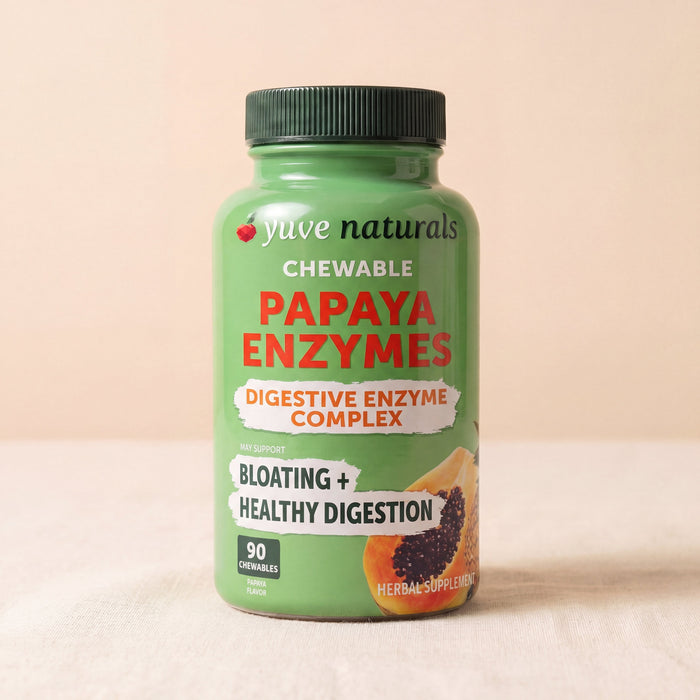
If you're still sorting out the basics, Yuve has a helpful read on prebiotics for digestive health that stays beginner-friendly without dumbing things down.
Side-by-Side on What Matters for Constipation
The prebiotic vs probiotic for constipation debate gets silly when people act like one side has to win. They help through different routes.
Prebiotics often work from the bottom up. They feed microbes already in the colon and can help stool through fermentation and fiber effects.
Probiotics work more top down. They introduce specific strains that may influence motility, stool consistency, and how the gut behaves day to day.
Prebiotics vs Probiotics for Constipation at a Glance
| Factor | Prebiotics | Probiotics |
|---|---|---|
| What it is | Non-digestible fibers or resistant starches that feed beneficial gut bacteria | Live microorganisms added through foods or supplements |
| How it works for constipation | Feeds resident microbes, supports fermentation, and some fibers also help stool hold water and move more comfortably | Adds specific strains that may help bowel regularity, stool form, and gut transit |
| Evidence strength | Limited to moderate, depending on the fiber type | Better studied overall than prebiotics, but still strain-specific |
| Time to first effect | Can feel fast for some people, especially if stool is dry, but gas may show up first | Usually less “instant feeling” and more of a trial over several weeks |
| Typical daily dose range | Food-first is common, supplements vary by fiber type | Label-based dosing matters because effects are strain-specific |
| Common food sources | Garlic, onions, leeks, oats, bananas, beans, asparagus, chicory root, cooled potatoes | Yogurt, kefir, kimchi, sauerkraut, certain supplements |
| Key strains or fiber types | Inulin, GOS, resistant starch, PHGG, psyllium-type fiber approaches | Certain Bifidobacterium strains stand out more than a generic “multi-strain” promise |
| Who it suits best | People eating very low fiber, people with underfed gut bacteria, people who need stool-softening support | People who've already worked on fiber basics and want a targeted strain trial |
Where people get tripped up
A prebiotic can feel more obvious because fiber changes stool physically and microbially. That can be helpful, but it can also mean gas, pressure, and the very glamorous “why am I more bloated?” phase.
Probiotics are often subtler. You usually need a more patient trial, and the product matters more than people think. A random probiotic is not the same thing as a constipation-focused strain.
My read on the head-to-head
If your diet is sparse on plant fiber, starting with prebiotics often makes more sense. If you already eat decently well and fiber has not moved the needle, a more targeted probiotic trial becomes more logical.
That is not fence-sitting. It's just matching the tool to the problem.
What the Research Actually Says
Here's the blunt version. Probiotics have historically been studied more than prebiotics for constipation, but that does not mean all probiotics work, or that prebiotics don't matter.
What the better probiotic evidence shows
A systematic review and meta-analysis on chronic constipation found that probiotics increased stool frequency by 1.29 bowel movements per week, improved stool consistency, and shortened whole-gut transit time by 12.36 hours versus placebo, while also noting that prebiotic trials were too few at that point to support firm conclusions (PubMed review).
What that means for you is pretty simple. Probiotics are the better-studied option historically if your main question is “is there any measurable signal at all?”
An earlier systematic review also found that probiotics increased stools by an average of 1.49 per week in chronic idiopathic constipation, but that result came from only two randomized trials, and the authors still described the prebiotic evidence as too sparse for strong conclusions (PubMed review).
That's why I do NOT think “take any probiotic” is useful advice. The evidence points toward specific strains, not the category as a whole.
Clinical Evidence Snapshot Prebiotic vs Probiotic for Constipation
| Intervention | Key Outcome Measured | Evidence Strength |
|---|---|---|
| Probiotics overall in chronic constipation | Weekly stool frequency, stool consistency, whole-gut transit time | Better studied historically, but still product-specific |
| Prebiotics overall | Weekly stool movements and symptom support | Growing but lower-certainty evidence |
| Synbiotics | Weekly stool movements | Promising, but certainty remains cautious |
| Probiotics in children with functional constipation | Bowel movements versus placebo | Not significant in the reviewed evidence base |
A 2024 network meta-analysis reported that both prebiotics and synbiotics increased weekly stool movements, but the certainty ranged from moderate to very low. The same evidence summary also notes that in children with functional constipation, later review data found no significant difference in bowel movements per week versus placebo, though there may be possible benefits for stool consistency and abdominal pain with low certainty (PubMed network meta-analysis).
The part many articles skip
A 2024 review found that probiotics improved constipation in 70% of analyzed studies, but the benefits clustered around certain strains. A major 2024 nutrition review highlighted Bifidobacterium lactis as a strain associated with increased stool frequency, while many other strains and multi-strain mixtures did not show the same consistency (2024 review and nutrition summary).
That's the difference between useful science and marketing fluff. Not all probiotics are interchangeable.
If you want a practical companion read focused more tightly on strain selection, Yuve also has a post on the best probiotic for constipation.
What about prebiotics
Prebiotics look promising, but the evidence isn't as settled. A 2024 gastrointestinal review says prebiotics, especially GOS, are generally safe and effective for improving constipation and may work by changing the gut microbiome and increasing Bifidobacterium levels (2024 GI review).
That said, the literature is still messy. A much older randomized-trial review concluded probiotic evidence was too limited for a general recommendation and considered probiotics investigational rather than established treatment (systematic review of randomized trials).
So no, we still don't have a single clean answer that works for everyone.
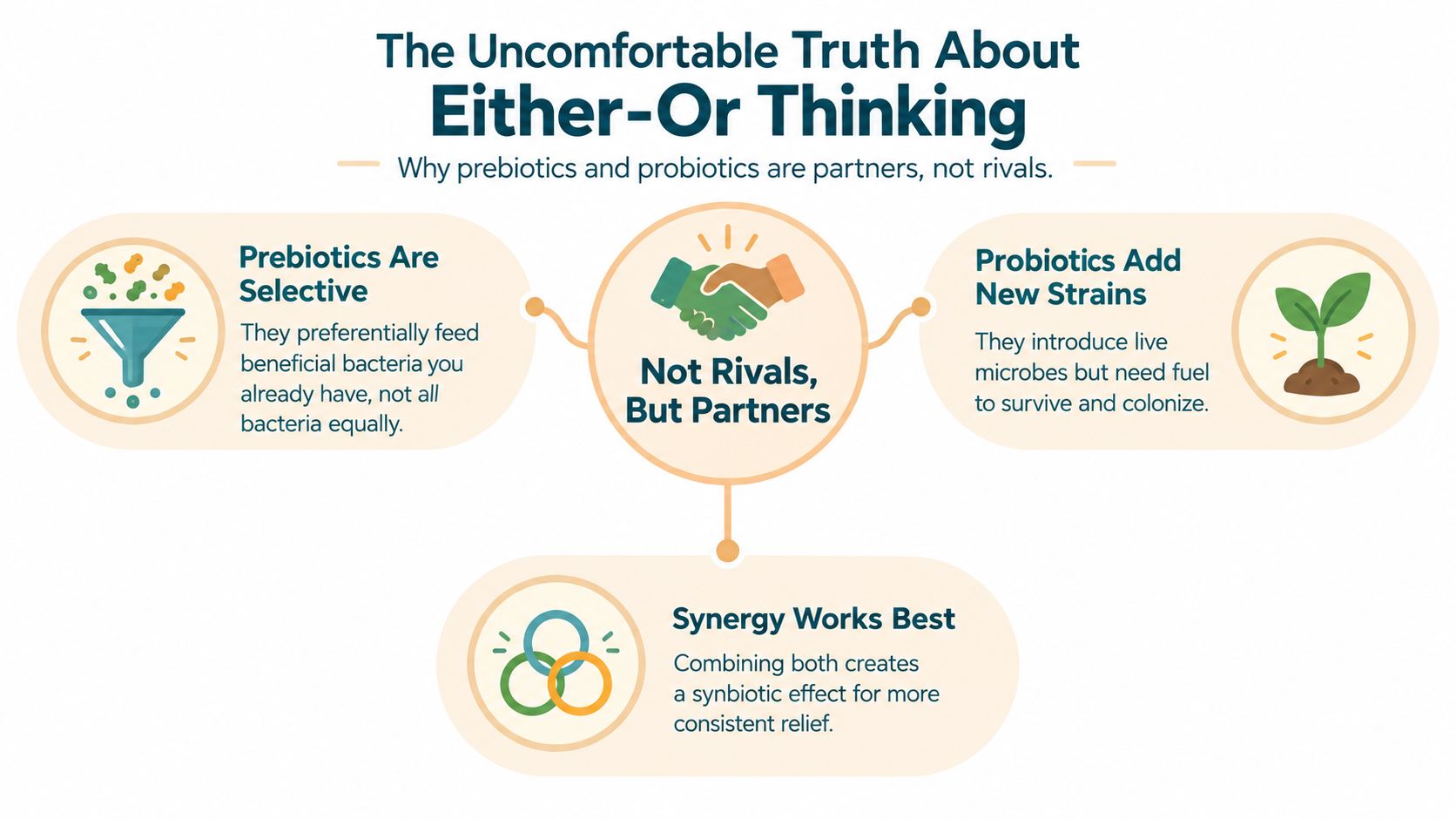
The Uncomfortable Truth About Either-Or Thinking
You clean up your meals, add a probiotic, wait a week, and still feel stuck. That does not mean “gut health supplements” failed. It usually means you picked the wrong tool for the gut you have right now.
Some constipated people are not missing extra bacteria first. They are missing enough fermentable fiber to support the bacteria already living there. In a low-fiber gut, a prebiotic can outperform a probiotic for a simple reason. It changes the environment those microbes live in.
Why prebiotics help some people more
This is the part many articles miss. Response depends on your starting microbiome.
Prebiotics do not feed everything equally. They tend to favor certain microbes more than others, which helps explain why one person gets easier bowel movements and another gets gas, pressure, and no payoff. The difference is not motivation or supplement quality. The difference is often what was already living in the gut, plus what that gut was being fed every day.
Research on prebiotic response supports that idea. In some trials, baseline microbiome patterns helped predict who improved with inulin. That matters because it shifts the whole prebiotic versus probiotic debate. This is not a winner-takes-all contest. It is a matching problem.
Stop asking which one is "better"
A better question is: what is more likely to help this person first?
If someone eats very little fiber, has a narrow range of plant foods, and gets constipated on a routine basis, I usually start by fixing the feeding pattern in the gut before adding more microbes. If someone already eats plenty of fermentable fiber and still struggles, a targeted probiotic trial makes more sense.
That is the uncomfortable truth. “Prebiotic or probiotic?” is often the wrong question. For constipation, the useful question is whether your gut needs more support for the microbes already there, or a specific strain that has been studied for bowel movement frequency.
A Practical Plan to Try First
You do not need a perfect protocol. You need a sensible starting point that doesn't make your gut angrier.

Start with the least dramatic move
If you barely eat fermentable fiber now, begin there.
- Go low first: Start around 3 to 5 g/day of a prebiotic such as inulin or PHGG, then build gradually toward 10 to 15 g/day if tolerated.
- Use food on purpose: Add garlic, onions, oats, bananas, beans, asparagus, or cooled cooked potatoes for resistant starch.
- Expect a transition: Mild extra gas at the start is common. Dun, dun, dun. Unwelcome gas. Yikes. Usually the fix is a smaller starting dose, not quitting on day two.
If fiber already failed you
Then I'd shift to a probiotic trial instead of repeating the same thing louder.
A 2022 review on chronic constipation reported that probiotic supplementation can improve symptoms, but the best strain is still not established. It suggested starting with a minimum daily dose of 10^9 CFU and adjusting based on individual response (2022 chronic constipation review).
Try one clinically studied strain or product for 4 to 12 weeks at the label dose. Take it with food if the product suggests that. Then judge it on actual results, not hope.
A simple start-here checklist
-
Pick your lane first
Low-fiber eater with hard stools and sluggish bowels? Start with prebiotics. Already eating fiber and still stuck? Try a probiotic strain with constipation data. -
Track stool form, not just frequency
Use a simple 1 to 7 stool scale in your notes app. Comfort and ease matter too. -
Hydrate and move
Fiber without fluid can backfire. Walking helps more than people want to admit. -
Use a practical supplement if it fits
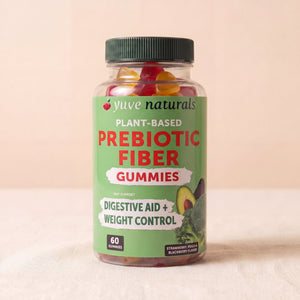
If you want an easy prebiotic option, Yuve Vegan Prebiotic Fiber Gummies are one way to add prebiotic fiber consistently while you work on food and hydration habits. Pairing that with the basics in this guide and Yuve's article on how to improve gut motility makes more sense than relying on a supplement alone.
Practical rule: Start one change at a time. If you begin prebiotics, probiotics, magnesium, and a new breakfast in the same week, you won't know what helped or hurt.
Which One Should You Actually Choose
You buy a fiber supplement because everyone says constipation means you need more fiber. Three days later, you are more bloated, more uncomfortable, and still waiting for a decent bowel movement. Then you switch to a probiotic with twenty strains on the label and no clear reason to expect any of them to help. That is the trap.
Choose based on your starting pattern and your likely microbiome response, not on whether “prebiotic” or “probiotic” sounds better.
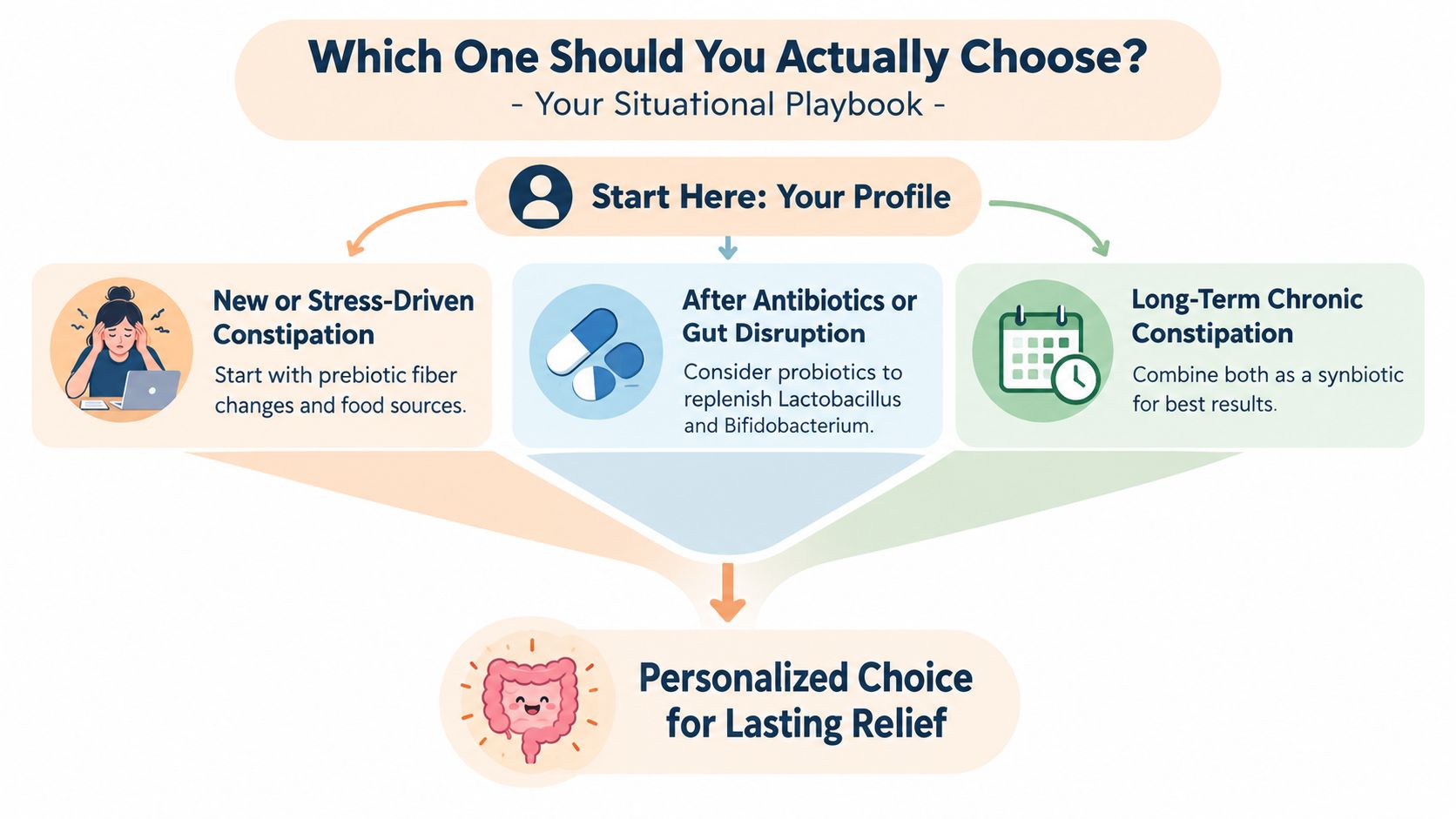
Three common profiles
Start with prebiotics if your diet is light on plants, your stools are hard, and your bowel habits are slow.
This is the cleaner first move for a lot of adults. If your gut microbes have not been getting much fermentable fiber, giving them the right fuel often makes more sense than dropping in new bacteria and hoping they stick.
Start with a targeted probiotic if you already eat a decent amount of fiber and still feel stuck.
In that situation, more prebiotic fiber can just add gas. A single strain or well-studied product is a better bet than a flashy blend with a long ingredient panel and no constipation-specific logic behind it.
Use a slower prebiotic approach if fiber makes you bloat fast.
That reaction does not automatically mean prebiotics are wrong for you. It usually means the dose was too high, the type was a poor fit, or you increased too quickly.
My actual recommendation
I would not treat this as a winner-takes-all choice. That framing is too simplistic for real people with real symptoms.
Some people respond better to prebiotics precisely because their starting gut microbiome needs fuel more than it needs added strains. Others do better with a probiotic because they are already eating enough fiber, and their main problem is not intake. It is function. That is why the right question is not “Which is better for constipation?” The right question is “What is most likely to help my version of constipation first?”
When using both makes sense
A combination approach can work well once you know you tolerate some fiber. Feed the microbes you have, then add a strain with actual constipation research behind it. I use that strategy more often in long-running constipation than in brand-new cases.
I am more cautious with children. As noted earlier, the pediatric evidence does not support using probiotics alone as a reliable constipation fix. Kids with ongoing constipation need a clinician-guided plan, not random supplement testing.
When to stop self-experimenting
See a clinician if you have:
- No change after a fair trial
- Worsening pain or vomiting
- Blood in stool
- Unintended weight loss
- A constant feeling that stool cannot pass even when the urge is strong
Constipation is not always a fiber or bacteria problem. Medications, pelvic floor dysfunction, thyroid issues, IBS-C, and other conditions can sit underneath it. Supplements can help. They should not delay a proper workup when red flags show up.
Quick Answers to Questions You're Probably Typing
How long should I try a probiotic before deciding?
Give it about 2 to 4 weeks before calling it a miss, unless it clearly makes you feel worse.
How long should I try a prebiotic?
Usually 4 to 6 weeks is fair, especially if you're starting low and increasing slowly.
Can kefir and yogurt count as probiotics?
They can contribute live microbes, but they're less precise than a strain-specific supplement.
What side effects are common at first?
Bloating and gas are the big ones, especially with prebiotics. Start smaller and increase more slowly.
What time of day should I take them?
Consistency matters more than the clock. Take them when you'll remember.
Can I use these with antibiotics or acid reducers?
Sometimes yes, but timing and product choice matter. Ask your clinician or pharmacist if you're on regular meds.
Are they safe in pregnancy?
That depends on the specific product and your medical history. Clear it with your prenatal clinician.
What about kids?
Don't wing it. Pediatric constipation deserves a clinician-guided plan, especially if it's ongoing.
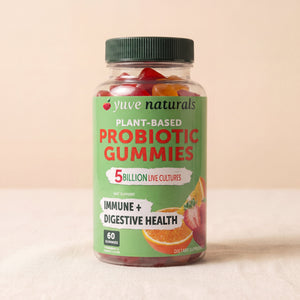
If you're trying to sort out whether your gut needs more fuel, more microbes, or both, Yuve offers plant-based options built around that exact question, including prebiotic fiber and probiotic gummies that fit a daily routine. If you want a simple next step, visit Yuve and choose one approach to test consistently instead of throwing five gut products at the wall and hoping one sticks.