Ever feel like your stomach turns into a balloon by afternoon, meals sit heavily, and your bowel movements never follow a predictable rhythm? You're not imagining the discomfort, and the answer isn't always “eat more fiber.”
Learning how to improve gut motility starts with identifying what's slowing your digestion. Food may be moving too slowly through your intestines, or your pelvic floor may not be coordinating properly when you try to go. Those problems can feel similar, but they need different strategies.
Understanding What Gut Motility Really Means
Gut motility is the coordinated movement that carries food, fluid, nutrients, and waste through your digestive tract. Your stomach churns a meal, your small intestine moves contents forward while absorbing nutrients, and your colon gradually forms and transports stool toward the rectum.
You might notice this system when it doesn't feel smooth. Perhaps breakfast seems to linger, your abdomen feels tight after lunch, or you're uncomfortable and backed up by evening. Gut motility affects more than constipation. Changes in digestive movement can influence bloating, stool consistency, urgency, and the general feeling that digestion has stalled.
Your digestive tract follows a rhythm
Muscles in the digestive tract contract in coordinated waves. Nerves, hormones, meal timing, physical activity, and the gut-brain connection all help regulate that movement. Healthy people commonly experience more bowel activity during the day, especially after waking or eating, with much less activity at night. Clinical guidance suggests trying to use the bathroom 15 to 45 minutes after a meal, when eating can stimulate movement through the colon (PubMed guidance on meal timing and motility).
That doesn't mean one missed bowel movement signals a disorder. Your normal pattern can vary. The more useful question is whether your symptoms are persistent, uncomfortable, and interfering with daily life.
Stress can alter the gut's rhythm, while a sedentary routine may reduce the physical stimulation that supports movement. Medications can matter too. Opioids, anticholinergics, and other drugs may slow digestion, so medication review belongs in the conversation when symptoms continue.
A helpful reframe: “Slow digestion” isn't one diagnosis. It's a symptom pattern that deserves a closer look.
For many people, simple changes involving food, fluids, movement, and routine provide meaningful support. But if you keep increasing fiber and still feel blocked, the problem may be less about what's inside the stool and more about what happens at the outlet.
Identifying Your Specific Motility Problem
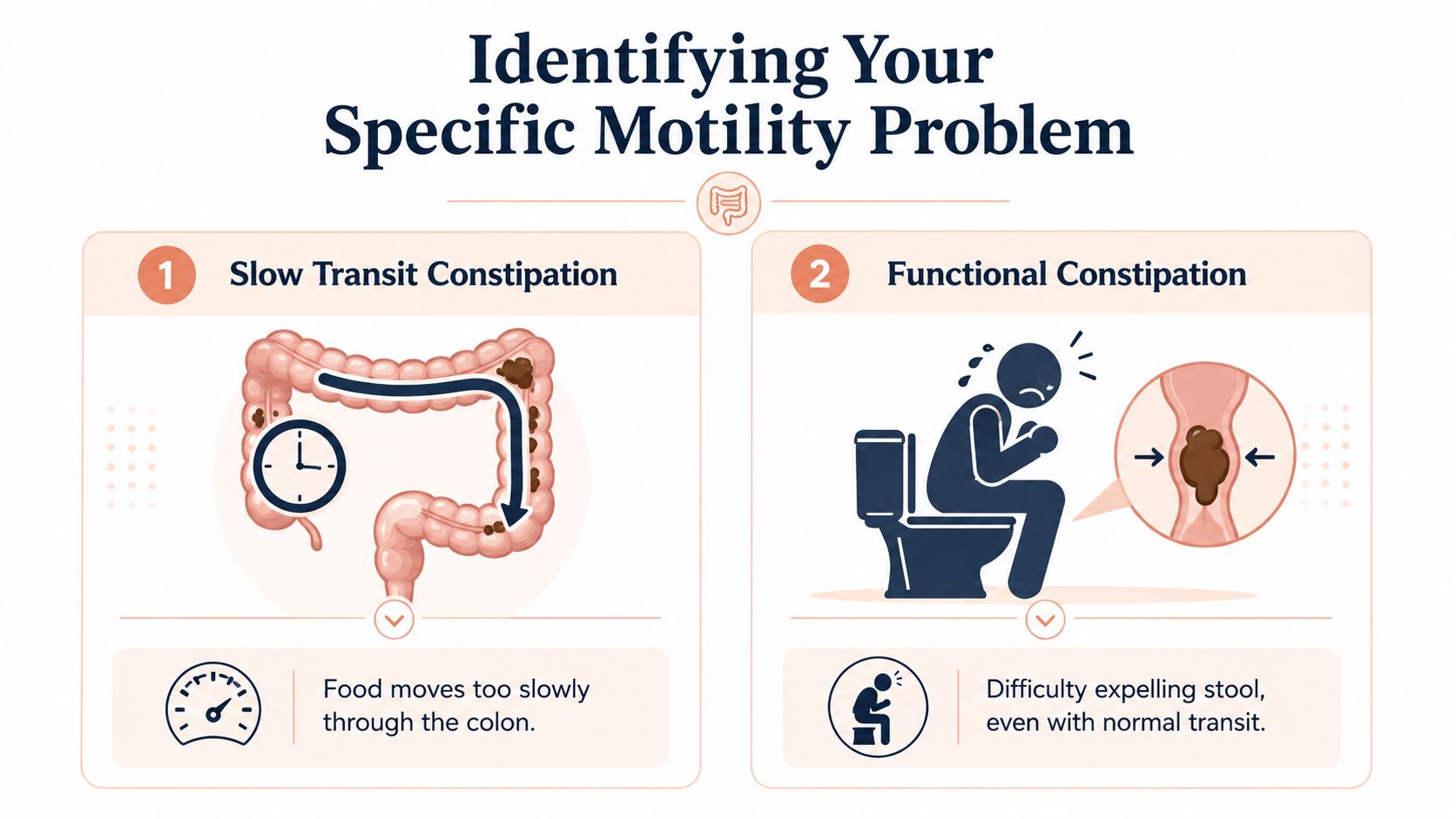
Generic constipation advice often assumes that every person needs the same fix. That's where frustration begins. Someone with slow transit may need a different approach from someone whose stool reaches the rectum but can't be expelled efficiently.
Slow transit constipation
With slow transit constipation, stool moves too slowly through the colon. The longer stool remains there, the more water the colon removes, which can make it harder and more difficult to pass.
Common patterns include:
- Infrequent bowel movements: You may go less often than feels normal for you.
- Progressive fullness: Bloating and abdominal heaviness can build over time.
- Harder stool: Stool may become dry or difficult to pass.
- Limited urge: You might not feel a strong signal to use the bathroom.
Dietary fiber can help this pattern because it adds structure and supports movement. A 2026 evidence synthesis of 40 trials involving 3,225 people found a dose-response relationship between fiber intake and bowel movement frequency. The studies included fiber intakes from 6 to 75 g per day, with a median of 18 g per day, and each additional 1 g of fiber per day was associated with 0.053 more bowel movements per week (2026 fiber evidence synthesis). In plain language, fiber can affect both stool bulk and the speed at which waste travels.
Outlet dysfunction and pelvic floor dyssynergia
With pelvic floor dyssynergia, stool may reach the rectum, but the abdominal muscles and anal sphincter don't coordinate properly. Instead of relaxing during evacuation, the pelvic floor may tighten or fail to open fully.
Clues can include:
- Straining despite soft stool
- A sensation of blockage
- Repeated bathroom trips without complete evacuation
- Needing to change position or use manual assistance
- Bloating that worsens after adding more fiber
More fiber can backfire here. If stool continues to accumulate because evacuation is impaired, increasing bulk may add pressure without solving the mechanical problem. That's why persistent symptoms after lifestyle changes, fiber, and osmotic laxatives should prompt evaluation for outlet dysfunction with anorectal physiology testing or defecography. The hormone-linked constipation explained resource can also help you think through secondary contributors that may overlap with digestive symptoms.
Anorectal testing measures how the rectum and anal muscles work together. Defecography evaluates evacuation more directly. These tests aren't about blaming you for straining. They help identify whether your muscles need coordination training rather than another round of dietary escalation.
If your symptoms sound familiar, compare your pattern with this natural constipation relief guide, then discuss persistent or worsening symptoms with a gastroenterologist.
Dietary Strategies That Actually Move Things Along
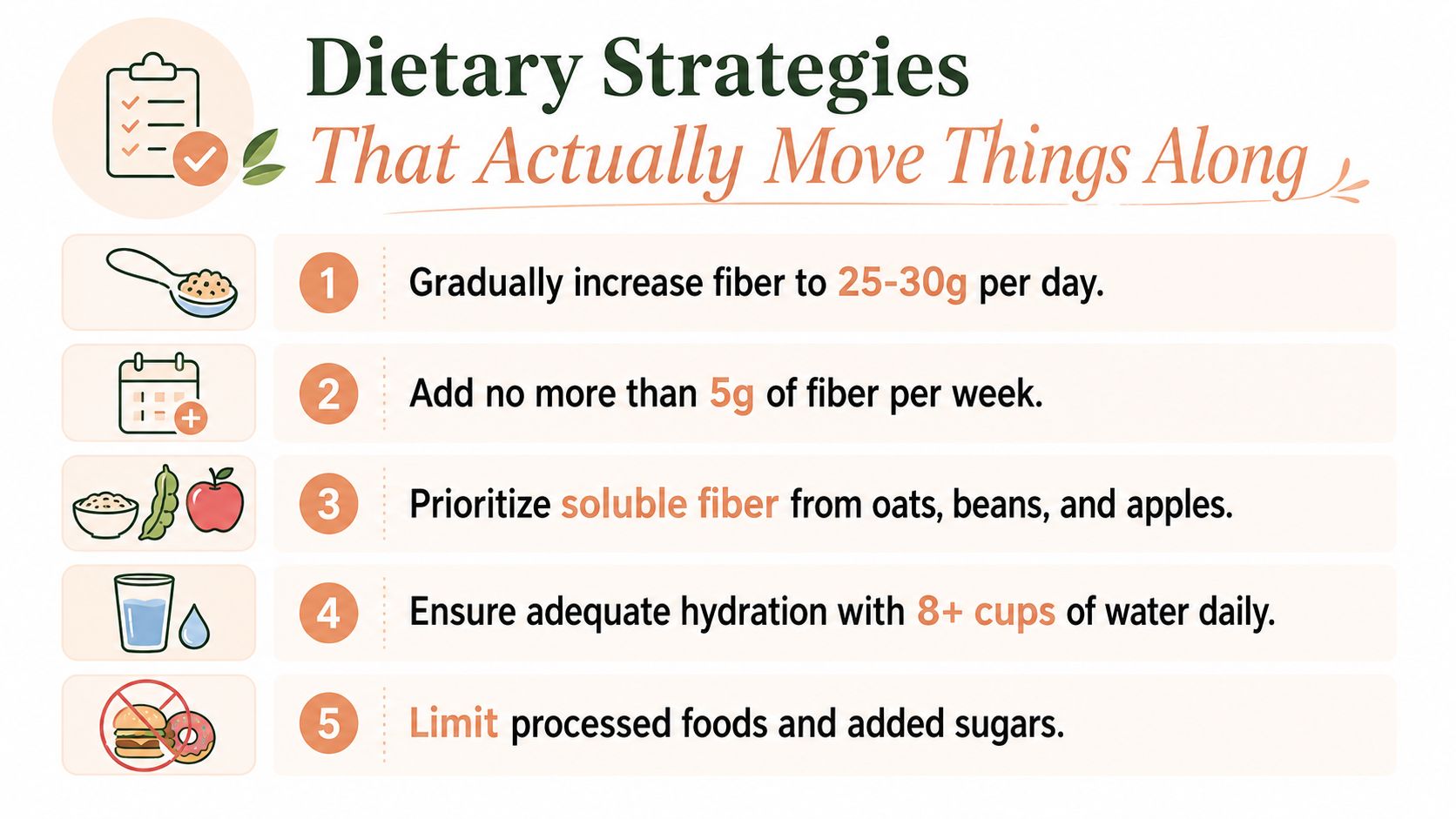
Fiber remains one of the strongest foundational tools for supporting bowel regularity, but dose and pace matter. The practical target for many people with constipation is to work gradually toward 25 to 30 g of total fiber per day, paired with about 1.5 to 2.0 L of fluid daily. This combination supports stool bulk and frequency more effectively than fiber alone, while gradual increases can improve tolerance (fiber and fluid review).
A major medical source recommends 25 to 34 g of fiber per day, depending on calorie needs, and advises adding no more than 5 g per week to reduce gas and bloating (Mayo Clinic constipation guidance).
Build fiber without overwhelming your gut
Try treating fiber as a gradual training plan rather than a sudden overhaul.
- Start with your current intake: Add one consistent fiber-rich food to a meal you already eat.
- Increase slowly: Keep each increase modest, and don't add more than 5 g per week.
- Choose varied sources: Rotate legumes, oats, vegetables, fruits, and whole grains.
- Pair fiber with fluids: Drink regularly throughout the day instead of trying to catch up at night.
- Assess comfort: If bloating rises sharply, pause the increase and review the portion, food type, and possibility of an evacuation disorder.
Oats, beans, lentils, apples, vegetables, and whole grains can all contribute fiber. Soluble fiber, found in foods such as oats and apples, absorbs water and forms a softer texture. Other fibers add bulk and can support transit, but a sudden jump can trigger unwelcome gas. Dun, dun, dun, there it is, the digestive plot twist nobody ordered.
Practical rule: More fiber isn't automatically better if your body can't tolerate the pace or evacuate efficiently.
Hydration deserves equal attention. Fiber needs fluid to soften and add workable bulk to stool. If you increase fiber while drinking too little, you may feel more distended or backed up rather than relieved.
For individualized guidance on portion sizes and food choices, use these personalized fiber intake tips. You can also explore Yuve's information on prebiotic resistant starch to understand how different carbohydrate fibers behave in the gut.
Movement and Timing for Better Digestion
Your digestive tract responds to movement. Evidence reviews report that aerobic and core-strengthening exercise can reduce colonic transit time, while moderate and high physical activity levels are associated with less constipation than low activity (exercise and constipation evidence review).

Choose repeatable movement
You don't need an elaborate workout plan to start. Walking, cycling, jogging, swimming, and core exercises can all fit into a motility-supportive routine.
Clinical studies illustrate that the effect can be measurable. In middle-aged inactive adults with chronic constipation, regular physical activity reduced fulfilled Rome constipation criteria from 2.7 to 1.7. Rectosigmoid transit time fell from 17.5 to 9.6 hours, while total colonic transit decreased from 79.2 to 58.4 hours (clinical physical activity study).
The same research source reports that moderate exercise accelerated whole-gut transit from 51.2 hours at rest to 36.6 hours while cycling and 34.0 hours while jogging. These figures don't promise an identical result for every person, but they show why consistent movement deserves more attention than vague advice to “exercise more.”
Try:
- A morning walk before your day becomes crowded
- A gentle walk after a meal
- Cycling or jogging at an intensity you can sustain
- Core-strengthening movements that feel comfortable
- Stretching when abdominal tension makes movement feel difficult
The timing of bathroom attempts matters too. Eating can activate the gastrocolic reflex, which encourages colon movement. Try sitting on the toilet 15 to 45 minutes after a meal, without forcing or holding your breath.
Here's a short visual guide you can use when adding core work to your routine:
Give yourself time, keep your feet supported if that helps you relax, and stop if you experience pain. A bathroom routine works best when it uses the body's natural signals rather than turning every attempt into a straining session.
Supplements and Medications Worth Considering
Supplements can support a specific digestive problem, but they can't identify whether your constipation comes from slow transit, outlet dysfunction, a medication, or another condition. The most useful choice depends on the mechanism.
Osmotic laxatives draw water into the stool and can help soften it. They're often considered for constipation when dietary changes aren't enough, but they may cause loose stools, cramping, or bloating. A clinician or pharmacist can help you choose an appropriate product and use it safely.
Prokinetic medications aim to stimulate gastrointestinal movement and may be considered when a documented motility disorder persists. These require medical guidance because the right medication depends on your symptoms, other conditions, and current prescriptions.
Biofeedback is different from a laxative. When testing confirms dyssynergic defecation, instrumented biofeedback focuses on coordinated abdominal pushing, anal sphincter relaxation, and balloon expulsion practice. In a long-term cohort, the initial response rate was 72.3%, and among participants followed beyond six months, 82.5% maintained benefit over a median 44 months (long-term biofeedback cohort). The intervention also appears sensitive to adequate training. Complete success occurred in 18% of patients receiving two to four sessions compared with 44% receiving at least five sessions.
Review medications before adding more products
Medication review is especially important if symptoms began after a prescription change. Opioids, cyclizine, anticholinergics, and other motility-slowing drugs can contribute to severe dysmotility. GLP-1 receptor agonists deserve attention too. A 2025 retrospective cohort found that 90% of patients using GLP-1 receptor agonists showed significant delays in GI motility on wireless motility capsule testing (2025 review of medications and gut motility). Don't stop a prescribed medication on your own. Ask the prescriber whether the timing and symptoms suggest a connection.
If dairy reliably causes gas or bloating, Yuve Lactase Enzymes can be a targeted digestive enzyme option for dairy-containing meals. That's different from treating slow transit constipation, but reducing food-specific discomfort can make your overall symptom pattern easier to interpret. For broader context on supplement choices, see supplements to improve gut health. If you're taking a GLP-1 medication and notice mood changes alongside digestive symptoms, this discussion of GLP-1 mental health effects offers useful context to raise with your healthcare professional.
Creating Your Personal Motility Improvement Plan
Randomly changing five things at once makes digestion hard to understand. A simple log gives you a clearer picture of what helps, what causes bloating, and whether your pattern points toward slow transit or impaired evacuation.
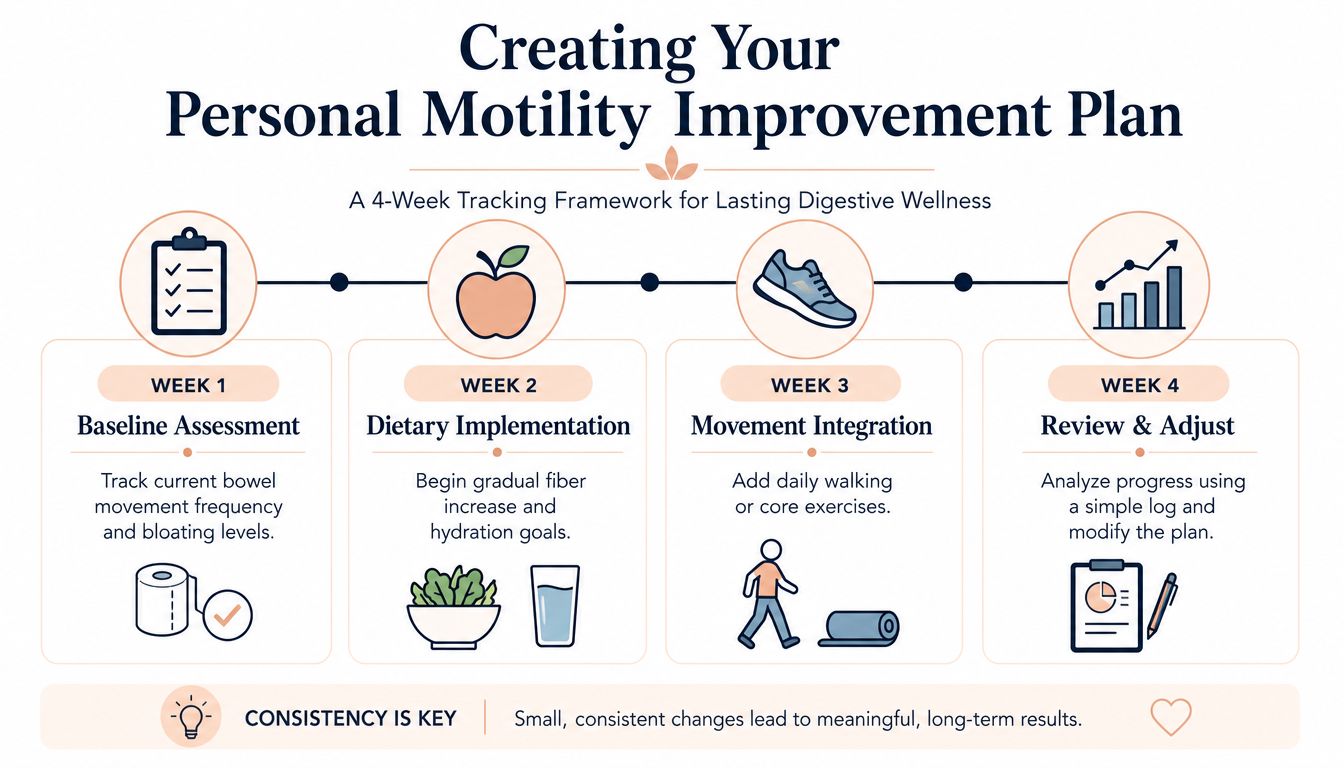
Use a four-week framework
Week 1, baseline: Record bowel movement frequency, stool consistency, bloating, abdominal discomfort, and any straining. Note medications and the timing of meals.
Week 2, dietary implementation: Begin a gradual fiber increase and work toward the fluid range described earlier. Change one major dietary variable at a time.
Week 3, movement integration: Add daily walking, cycling, jogging, or comfortable core exercise. Try a relaxed bathroom visit after a meal rather than waiting until discomfort becomes intense.
Week 4, review and adjustment: Look for patterns. If fiber improves stool consistency but evacuation remains difficult, ask about pelvic floor testing instead of continuing to increase fiber. If symptoms began after a medication change, schedule a medication review.
Biofeedback for confirmed pelvic floor dysfunction may require repeated sessions, while dietary and movement changes can take time to show a stable pattern. Your clinician can help set expectations based on the suspected cause.
Seek medical attention for severe pain, blood in the stool, unexplained weight loss, frequent vomiting, difficulty swallowing, or significant changes in bowel habits. Also make an appointment if you've made consistent changes for 4 to 6 weeks without improvement. Persistent symptoms deserve investigation, not endless self-experimentation.
If you're struggling with digestive discomfort, you're not failing at gut health. Your body may be giving you information about the type of support it needs. Track the pattern, make changes gradually, and share your experience with a qualified healthcare professional.
Yuve offers targeted digestive support, including Yuve Lactase Enzymes for dairy-related discomfort and other gut-health products designed to fit a plant-based routine. Visit Yuve to explore the options, then choose a product that matches your symptoms rather than adding another random fix.