Ever buy kimchi or kombucha for your bloated stomach, then wonder if you got live probiotics or just a fermented-looking product? You're not overthinking it. A lot of people know probiotics can support gut health, but they're much less clear on which vegan sources of probiotics still contain live cultures, which ones lose them during heat or processing, and when a supplement makes more sense than food.
A little label-reading can save you a lot of guesswork. Below, you'll find a practical tour of eight vegan options, from sauerkraut to plant-based probiotic drinks to Yuve Probiotics, so you can compare food format, likely potency, preparation method, and day-to-day realism. We'll also keep an eye on the details that matter when your stomach already feels touchy, like refrigeration, sodium, sugar, serving size, and food safety.
One more distinction matters. Fermented foods and probiotic supplements are related, but they're not the same thing. A scientific review explains that a food should only be called “probiotic” when well-defined live microorganisms have a demonstrated health benefit, which means fermentation alone doesn't automatically guarantee probiotic effect according to this review on fermented plant-based products and probiotics.
If you want a steady, labeled vegan supplement instead of relying on whatever happens to be in a jar or bottle that week, Yuve Probiotics can be part of that routine. Food first is great. Consistency matters too.
1. Fermented Sauerkraut and Kimchi
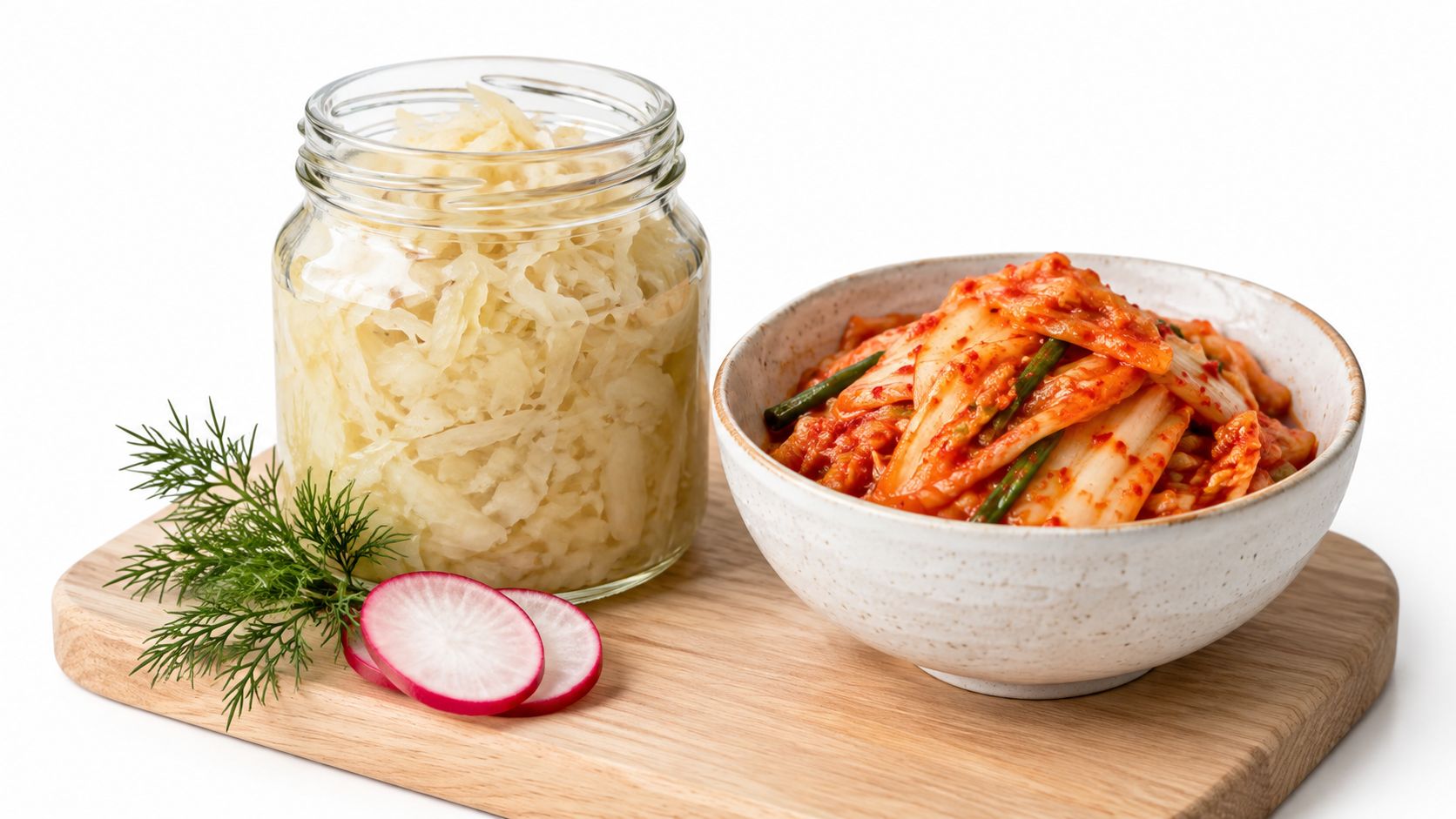
Sauerkraut and kimchi are usually the easiest entry point into vegan fermented foods. They're familiar, they fit into real meals, and when they're naturally fermented and unpasteurized, they can deliver live microbes along with fiber from the vegetables themselves.
They're also a good reminder that vegan sources of probiotics don't have to come from dairy. Independent guidance regularly points to kimchi and sauerkraut as practical plant-based options, while also warning that the method matters. Brine fermentation supports live cultures, while vinegar-pickled versions may not offer the same thing, as explained in this guide to vegan probiotic foods.
How to choose the right jar
If your stomach gets cranky fast, start small. A forkful with lunch is plenty at first. That gives your gut time to adjust, instead of going from zero to a big bowl and then dealing with. Dun, dun, dun. Unwelcome gas. Yikes.
Look for these clues:
- Check the fridge section: Shelf-stable jars are more likely to be heat-treated.
- Look for live culture language: “Raw,” “unpasteurized,” or “naturally fermented” are better signs than “pickled.”
- Scan the ingredients: Vegan kimchi should be free of fish sauce or other animal ingredients.
Practical rule: If the label talks more about flavor than fermentation, pause and investigate.
Easy ways to use them
A spoonful of sauerkraut works well on grain bowls, avocado toast, or beside roasted potatoes. Kimchi is great with rice, tofu, and sesame greens.
If you want to make your own, a simple cabbage-and-salt ferment is a nice place to start. You can get ideas from the fermentation kitchen recipes, then compare them with Yuve's own guide to fermented foods with live cultures.
2. Tempeh
Tempeh is the practical option in this list. If sauerkraut or kimchi feel like condiments, tempeh feels like dinner.
It starts as whole soybeans bound together by fermentation, which is why the texture is firm and sliceable instead of soft like tofu. That food format matters. Tempeh can earn a regular place in meals because it brings protein, chew, and staying power, not just a tangy spoonful on the side.
For probiotics, though, tempeh sits in a different category from refrigerated fermented vegetables or a labeled supplement. Its fermentation history is real, but its live-culture reliability is less predictable in everyday use. Many people steam, sauté, bake, or pan-fry it before eating, and heat can reduce the microbes you would otherwise get from a live fermented food.
That does not make tempeh pointless. It changes what you count on it for.
A helpful way to frame it is this: tempeh often works better as a fermented staple than as a high-confidence probiotic source. In the eight-way comparison for this article, it scores well for convenience and meal value, more modestly for likely potency, and somewhere in the middle for label clarity. Tempeh packages rarely tell you specific strains or live counts, so you are usually buying it for the fermented food itself, not for verified microbial diversity.
That distinction can matter if your stomach is sensitive. Some readers find fermented soy easier to tolerate than a large serving of intact beans. If chickpeas, black beans, or lentils sometimes leave you feeling overfull or gassy, tempeh may feel gentler in a normal portion. Fermentation works a bit like pre-soaking and pre-digesting part of the job before the food reaches your plate. It is not a promise of symptom relief, but it is one reason tempeh appeals to people trying to build a gut-friendlier vegan routine.
Here is where tempeh fits best in real life:
- Slice it into a grain bowl when you want a filling fermented food, even if live cultures are not the main goal
- Pair it with a clearly live food, such as sauerkraut, if you want both substance and more reliable fermentation exposure
- Use it on days when a capsule feels unnecessary, but you still want your meals to include some fermented variety
Preparation matters here, too, but in a different way than with miso. With tempeh, cooking is usually part of making it taste good and feel digestible. If you cook it thoroughly, prioritize flavor, texture, and food safety first. If your main goal is known strains, potency, and consistency, a multi-strain vegan supplement is usually the more reliable tool.
A recent review of non-dairy probiotic development also shows how broad this category has become, covering grains, pulses, oats, quinoa, amaranth, fruit, and vegetable-based drinks, not just traditional ferments like tempeh, according to this review of non-dairy probiotic foods and beverages.
Tempeh is a strong food-first choice for fermented variety and meal-building. It is a weaker choice if you need dependable live-culture potency or clearly labeled strains.
3. Miso Paste (Non-GMO, Unpasteurized)
Could one spoonful of miso fit into a probiotic routine more easily than a jar of kraut or a daily capsule? For many readers, yes. Miso is a seasoning first, which makes it one of the easiest fermented foods to use consistently. That matters in this eight-option comparison because convenience often decides whether a probiotic habit lasts past one week.
Miso has a different profile from the other vegan probiotic options in this list. Its food format is a paste, not a drink, whole food, or supplement. Its everyday use is excellent because a small amount can flavor soup, dressings, sauces, and roasted vegetables. Its likely potency is less predictable than a multi-strain supplement, and its microbial diversity can vary by brand and processing. Label reliability also matters more than many shoppers expect, because one word can change the whole picture.
Use it gently if live cultures are your goal
Miso works a bit like fresh herbs. Add it at the end, and you keep more of what makes it special. Boil it hard for several minutes, and you still get flavor, but live cultures are less likely to remain intact.
That distinction helps if you are trying to sort out why one fermented food feels helpful and another does not. A reader dealing with mild bloating, for example, might tolerate a small amount of miso stirred into warm broth better than a large serving of raw kimchi. That does not mean miso will fix digestive symptoms. It means the format, portion size, and preparation method can make it easier to test calmly.
A practical approach:
- Stir it into warm broth after the heat is off
- Whisk it into dressings with tahini, lemon, and water
- Mix a small amount into sauces added near the end of cooking
A label detail shoppers often miss: unpasteurized vs. pasteurized
If you want miso for probiotic potential, the key question is not just whether it is fermented. It is whether the finished product is unpasteurized and handled in a way that preserves live cultures.
This is also a good example of the bigger issue with vegan probiotics. A plant-based label does not tell you how many live microbes remain, which strains are present, or how carefully the product was processed. One review on vegan probiotics and ingredient transparency explains why details such as production method, dairy-free media, gelatin-free delivery systems, and strain-specific evidence matter when consumers are comparing options in this review on vegan probiotics and ingredient transparency.
For sourcing tips, see where to buy miso paste.
In the bigger eight-item comparison, miso is a strong food-first choice for everyday use and label-conscious shoppers who want a gentle, savory option. It is a weaker choice if you need clearly named strains, measured potency, or the consistency that supplements are designed to provide.
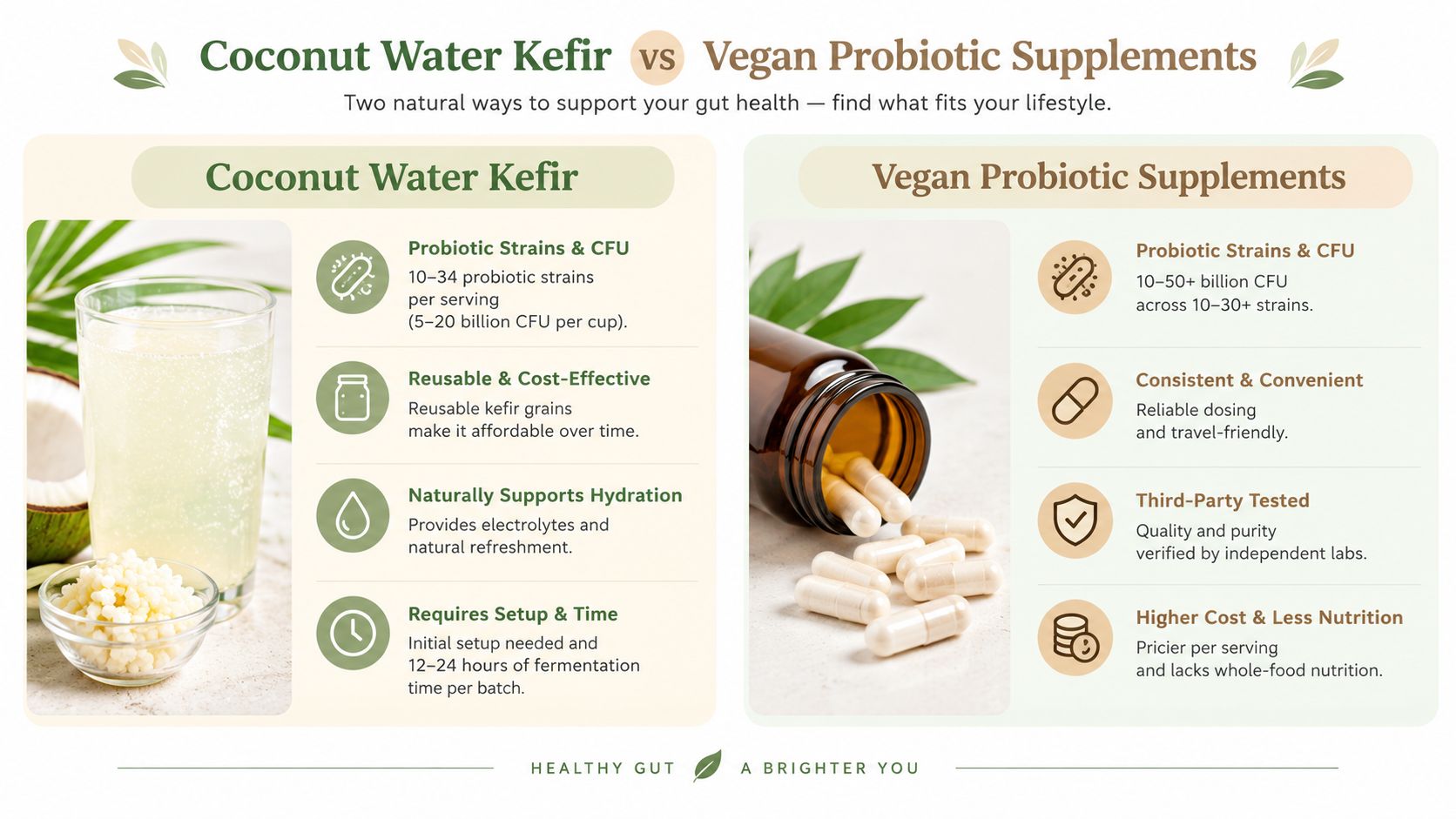
4. Coconut Water Kefir
If sauerkraut feels too salty and kombucha feels too sharp, coconut water kefir can be the gentler middle ground. It's lightly tangy, slightly fizzy, and often easier to sip than to explain.
This option also shows how far plant-based probiotic foods have come. A 2024 review reported that the global plant-based probiotics market grew at a 5.1% CAGR from 2017 to 2021, was valued at about US$890.1 million in 2022, and was projected to grow at 6.7% CAGR over the following decade, reflecting how fermented fruits, vegetables, grains, and legumes have moved into a more established category according to this 2024 review of plant-based probiotic foods.
What makes it appealing
Coconut water kefir is dairy-free by nature, which makes it useful for people who want a kefir-style drink without lactose. It's also easy to portion. A small glass with breakfast or lunch is enough to test your tolerance.
Here's the video version if you want to see the process in action:
Keep your expectations practical
Homemade versions can vary a lot. One batch may be lively and tart, another mild and barely active. That doesn't make it bad. It just means beverages like this are less standardized than supplements.
A few smart habits help:
- Start with a modest pour: Especially if carbonated drinks tend to bloat you.
- Store it cold after fermenting: Refrigeration slows further fermentation.
- Watch ingredient additions: Some flavored products drift far from the simple original.
For someone who enjoys experimenting in the kitchen, this can be fun. For someone who wants certainty before a busy workday, a supplement may be easier.
5. Vegan Probiotic Supplements (Multi-Strain Formulas)
We move from “food can help” to “labels become very useful.” Vegan probiotic supplements give you something fermented foods usually can't. A clearer sense of which strains you're taking, how much is in the serving, and whether the capsule itself is vegan.
That transparency matters. A lot of “vegan probiotic” content stops at ingredient lists and skips the manufacturing details people need, like dairy-free culture media, gelatin-free capsules, and lactose-free fillers. Those are exactly the kinds of details worth checking when choosing a supplement.
Why supplements solve a different problem
If your digestion feels unpredictable, consistency can be calming. You don't have to wonder whether your miso was boiled, whether your kimchi was pasteurized, or whether today's kombucha sat warm in the car.
Yuve fits well here because it offers a vegan probiotic option made for daily use. The brand describes its probiotic gummies as containing 5 billion live plant-based cultures and being vegan, gelatin-free, and non-GMO. If you're comparing formats, that gives you a more measurable option than most foods.
What to check before you buy
Use this short filter:
- Capsule or gummy source: Make sure it's gelatin-free.
- Strain listing: Specific names beat vague “proprietary blend” language.
- Storage directions: Follow them. Heat and moisture can reduce viability.
- Third-party testing: A good sign when available.
If you want help sorting through labels, Yuve has a practical post on how to choose probiotics.
A supplement is often the simplest choice when you want vegan sourcing plus a clearly labeled serving.
6. Kombucha (Unpasteurized, Low-Sugar Varieties)
Could a fizzy bottle in the fridge be your easiest probiotic habit, or your fastest route to feeling more bloated? With kombucha, both outcomes are possible.
Kombucha is fermented tea, so it sits in a different lane than foods like tempeh or sauerkraut. You are getting a drink, not a meal, and the tradeoff matters. It is convenient and easy to find, but the amount and mix of live microbes can vary a lot from brand to brand. That makes kombucha one of the less predictable options in this eight-item comparison, even though it is one of the most popular.
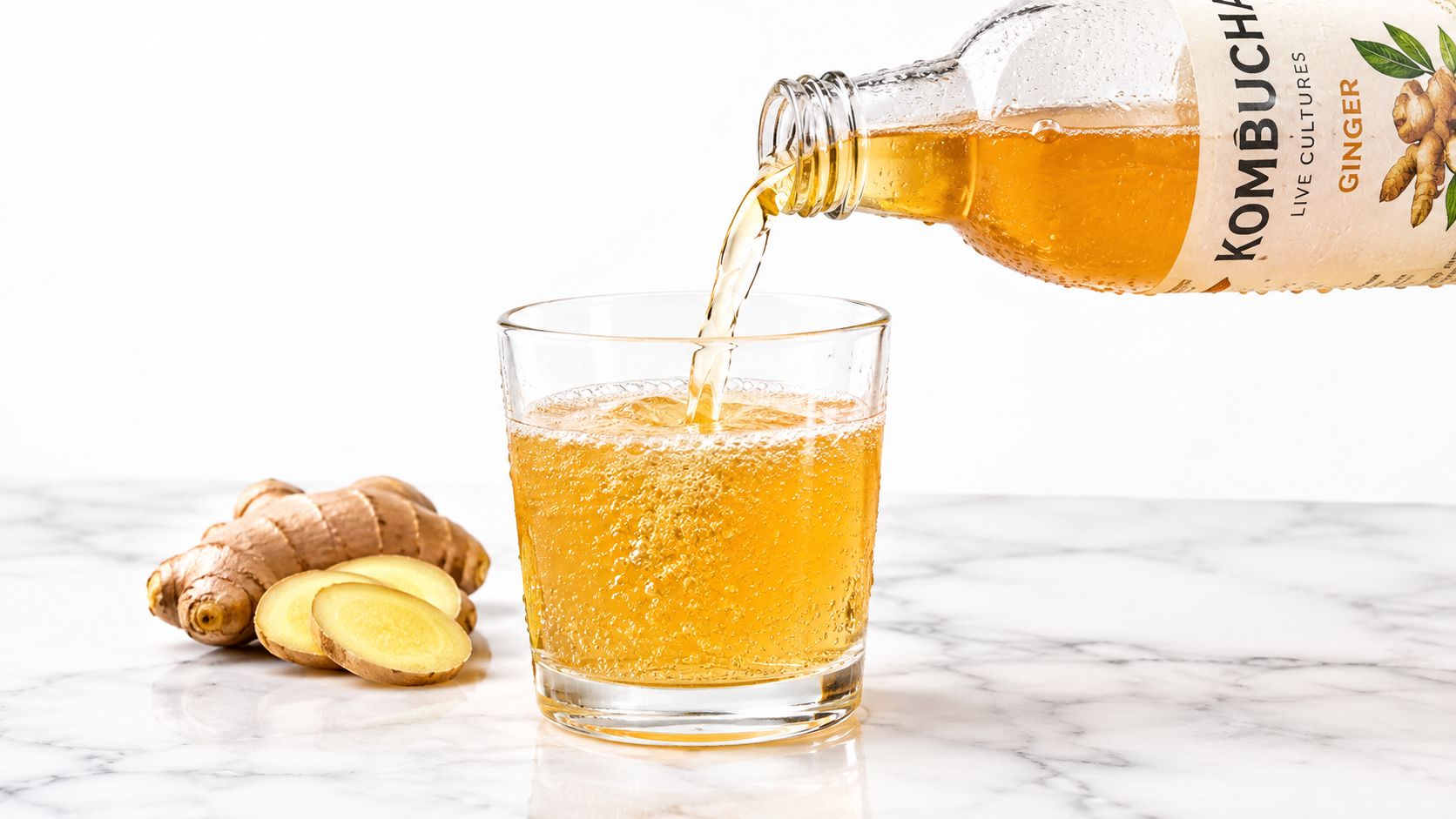
A useful way to judge kombucha is to ask six practical questions. What format is it? A ready-to-drink fermented tea. How diverse are the microbes? Potentially mixed, but labels often do not spell that out clearly. How potent is it likely to be? Sometimes modest, sometimes stronger, but usually less measurable than a supplement. How reliable is the label? Better when the bottle is refrigerated and clearly marked unpasteurized. How is it prepared? By fermenting sweetened tea with a culture. How does it fit daily life? Best as a small, enjoyable add-on, not your only probiotic strategy.
For some people, kombucha works like sparkling water with extra fermentation. For others, the bubbles, acids, and residual sugar can feel irritating, especially during a week when digestion already feels touchy. If you tend to get bloated in the afternoon, a few ounces with lunch may sit better than a full bottle on an empty stomach.
Shopping choices make a real difference here. Unpasteurized matters because heat can reduce or remove live cultures. Low-sugar matters because some bottles drift closer to soda than to a lightly fermented drink. Refrigerated products are often the safer bet if live cultures are your goal, since shelf-stable kombucha may have been treated for longer storage.
A simple kombucha test run can help:
- Start with a small serving instead of a full bottle.
- Drink it with food.
- Choose plain, ginger, or less-sweet varieties first.
- Skip it if carbonation regularly makes your stomach feel tight.
In the bigger comparison, kombucha scores high for convenience and everyday enjoyment, medium for microbial diversity, and lower for label precision. If you like the ritual and tolerate it well, it can be a realistic food-first option. If it leaves you feeling puffy or uncomfortable, that is useful feedback, not a sign that you are doing gut health wrong.
7. Nutritional Yeast (Fortified With B12 and Probiotics)
Nutritional yeast can confuse probiotic shoppers because it sits in two categories at once. It is a pantry seasoning first, and only sometimes a probiotic product. The cheesy, savory flavor comes from yeast processing, but the flakes sold for popcorn or pasta are usually inactive, which means they are not delivering live probiotic cultures in the way sauerkraut, kefir, or a multi-strain capsule might.
That distinction matters if you are comparing all eight options in this guide by format and reliability. Nutritional yeast scores high for convenience and everyday use. It scores much lower for probiotic certainty unless the package clearly says live cultures and names the strains.
The label wording matters:
- “Fortified with B12” refers to added vitamins, not probiotics.
- “Contains live cultures” suggests probiotic potential.
- Specific strain names, such as listed Lactobacillus or Bifidobacterium strains, make the claim more useful.
- A live count or storage instructions gives extra clues about likely potency.
A simple shelf example shows why people get tripped up. One container may offer B12 and flavor only. Another may add probiotic strains. From the outside, both can look like the same yellow flakes.
If your stomach is sensitive, this category can still be helpful. Nutritional yeast often works as a low-effort food that makes beans, vegetables, and whole grains more enjoyable, which can support a steadier plant-based routine overall. But if you are trying to address bloating and want a probiotic you can evaluate more clearly, nutritional yeast is usually the sidekick, not the main tool.
Use it for what it reliably does well. Sprinkle it on soups, roasted vegetables, pasta, or avocado toast for flavor and, in fortified versions, B12. Then get most of your probiotic exposure from fermented foods with clearer live-culture signals or from a vegan supplement that lists strains and potency.
8. Plant-Based Probiotic Beverages (Fermented Oat, Nut, and Seed Drinks)
Could a fermented oat or almond drink give you some of the probiotic upside of yogurt without the dairy? Sometimes yes, but this category asks for more label reading than several of the foods earlier in this guide.
These products sit in an interesting middle ground. They are more drinkable and routine-friendly than sauerkraut or miso, yet often less straightforward than a supplement capsule that lists strains and CFU on the front. A bottle may be made from oats, cashews, soy, seeds, or blended plant bases. The fermentation step can add tang, and in some products, live microbes. In others, fermentation is part of manufacturing but the finished drink gives you little usable information about what is still alive.
That difference matters if you are comparing all eight vegan probiotic options by realistic everyday use. A fermented plant drink may score well for format and convenience. It usually scores lower for label reliability unless the package clearly names the cultures, storage needs, and whether the beverage remains unpasteurized after fermentation.
Why this format appeals to people
For someone who gets bored with capsules or dislikes strong fermented foods, these drinks can be a gentler entry point. A small serving with breakfast may feel easier than adding kimchi to lunch. If bloating is already making meals feel unpredictable, a mild cultured oat drink can also seem less intimidating than a spicy or acidic option.
Use matters here.
A refrigerated cultured drink can fit into a routine in a few different ways: alongside toast in the morning, as a small snack on a busy afternoon, or as a simple add-on when appetite is low but you still want something fermented. That food format is part of the appeal. You are not just asking, “Does it contain probiotics?” You are asking, “Will I use this often enough for it to be part of my routine?”
Reliability remains the key question
Plant-based probiotic beverages vary more than their packaging suggests. Some are live cultured products that need refrigeration and list specific organisms. Others use broad gut-health language without telling you much about strain identity, live count, or whether heat processing happened after fermentation.
If you want a quick refresher on the term, Yuve explains what live cultures are in plain language.
A practical store check helps. If one bottle says “contains live active cultures,” lists strains such as Lactobacillus or Bifidobacterium, and gives storage instructions, you have more to work with. If another bottle mainly highlights plant protein, vitamins, or digestive wellness but gives no culture details, treat it more like a fermented-flavored beverage than a clearly defined probiotic source.
That does not make the second product useless. It just places it differently in your eight-option comparison. It may still be a good dairy-free drink. It is harder to rank high for probiotic certainty.
If your digestion is sensitive, start small and pay attention to the whole formula, not just the culture claim. Added fibers, sugar alcohols, gums, or large servings of nuts and seeds can bother some people, even when the beverage itself is well made. In practical terms, these drinks often work best as a convenient supporting option rather than the most dependable source in a probiotic plan.
8-Point Comparison of Vegan Probiotic Sources
| Item | 🔄 Implementation complexity | ⚡ Resources & Convenience | 📊 Expected outcomes | 💡 Ideal use cases | ⭐ Key advantages |
|---|---|---|---|---|---|
| Fermented Sauerkraut and Kimchi | Low, store-bought ready; home ferment 3–7 days; heating >115°F kills cultures | Affordable, widely available refrigerated or shelf-stable; check "live cultures"; may be high in sodium | ~1–8B CFU/serving; Lactobacillus & Leuconostoc diversity; adds fiber, K2, B vitamins | Daily condiment/side to diversify microbiome; food-first probiotic intro | Whole-food probiotic + prebiotics; versatile and low-cost. ⭐⭐⭐ |
| Tempeh | Moderate, requires refrigeration and cooking (steam then cook) | Needs fridge, shorter shelf life (2–3 wks); less available than tofu; moderate cost | ~3–4B CFU/serving; complete protein (≈19g/3oz); reduced antinutrients | High-protein meals, grilling, crumbles for savory dishes; plant-based muscle recovery | Protein-dense fermented food with probiotics; sustainable. ⭐⭐ |
| Miso Paste (Non‑GMO, Unpasteurized) | Low, used as seasoning; add at end of cooking to preserve cultures | Long shelf life; small amounts flavor large batches; watch sodium and pasteurization | ~1–10B CFU/tbsp (varies); B vitamins, enzymes, potential anti‑inflammatory compounds | Soups, dressings, umami boost; add after cooking to retain live cultures | Concentrated flavor + enzymes and probiotics; long-lasting pantry staple. ⭐⭐ |
| Coconut Water Kefir | Moderate, home batches 12–24 hrs; requires kefir-grain maintenance | Initial grain & jar investment; grains reusable indefinitely; refrigerated storage | ~5–20B CFU/cup; 10–34 strains (high diversity); hydrating and B vitamins | Daily probiotic beverage, smoothies, post-workout drinks; for users wanting strain diversity | Exceptional microbial diversity and drinkability; cost-effective long-term. ⭐⭐⭐ |
| Vegan Probiotic Supplements (Multi‑Strain) | Low, take capsule/powder; minimal prep; follow storage (some require cold chain) | Very convenient and travel‑friendly; consistent dosing; higher cost per serving | 10–50+B CFU/serving across many strains; targeted support shown in 2–4 weeks | When fermented foods are unavailable, for travel, or targeted digestive concerns | Standardized CFU/strains, third‑party testing, reliable dosing. ⭐⭐⭐ |
| Kombucha (Unpasteurized, Low‑Sugar) | Low–moderate, store-bought ready; home brew 7–30 days with SCOBY care | Widely available refrigerated; check "raw"; sugar and caffeine vary by product | ~1–3B CFU/serving; provides organic acids and tea polyphenols | Fizzy daily drink, transition into fermented beverages, flavor variety seekers | Enjoyable beverage with probiotics + antioxidants; reusable SCOBY for home brew. ⭐⭐ |
| Nutritional Yeast (Fortified with B12 & Probiotics) | Low, ready-to-use flakes; probiotic effect only if formulation includes added live strains | Shelf-stable, affordable, widely available; verify B12 fortification and probiotic labeling | Reliable source of B12 when fortified; beta‑glucans present; CFU only if probiotics added | Daily seasoning for B12 support and umami flavor in vegan diets | Fortified B12 source + savory flavor; versatile and shelf-stable. ⭐⭐ |
| Plant‑Based Probiotic Beverages (Fermented Oat/Nut/Seed) | Low–moderate, ready-to-drink; product-dependent (live vs pasteurized) | Niche availability, higher price ($3–5), refrigerated; check "live cultures" | ~5–10B CFU/serving (varies); adds protein, fiber and enzymes alongside probiotics | On-the-go probiotic + protein option; post-workout or meal replacement | Combines probiotics with protein & fiber, complete beverage for plant-based diets. ⭐⭐ |
Build Your Vegan Probiotic Routine
The best vegan probiotic routine is the one you'll stick with and tolerate. If you like a food-first approach, fermented vegetables and unpasteurized miso are practical places to start because they fit easily into meals. If you also want protein, tempeh or some of the newer fermented plant beverages can make more sense than a side of sauerkraut.
If you prefer drinkable formats, kombucha and coconut water kefir are convenient, but they aren't interchangeable. Kombucha tends to be lighter and more acidic. Coconut water kefir can feel gentler for some people, but homemade batches vary. If consistency, labeled strains, and known serving details matter most to you, a vegan supplement like Yuve Probiotics is often the simpler option.
There's also a bigger nutrition context here. A review on vegan diets and gut microbiota found that the picture is nuanced. One review reported significantly lower Bifidobacteria levels in vegans than omnivores, with a p-value of 0.002, while other research found higher abundance of fiber-degrading bacteria such as Prevotella in vegan and vegetarian patterns. The same research summary also notes that a 2024 Nature study analyzing 21,561 individuals linked vegan gut-microbiome signatures to fruits and vegetables and highlighted taxa associated with fiber degradation and short-chain fatty acid production in this review of vegan diets and gut microbiota. The practical takeaway is simple. Fermented foods can help, but so can the rest of your plant-based pattern, especially fiber-rich foods that feed gut microbes.
A few habits make any option work better:
- Start low and go slow: A small serving is enough when you're testing tolerance.
- Read labels carefully: Look for live cultures, specific strains, vegan capsules, and animal-free ingredients.
- Protect viability: Refrigeration and heat matter. A live food can lose that edge if it's pasteurized or boiled.
- Watch sodium and sugar: Kimchi, sauerkraut, kombucha, and flavored drinks can add up fast.
- Get help for persistent symptoms: If bloating, pain, diarrhea, constipation, allergies, pregnancy concerns, or a digestive condition are part of the picture, check in with a healthcare professional.
If you want one next step, pick one food and one consistent backup. For example, maybe that's refrigerated sauerkraut at lunch and a vegan probiotic supplement on busy days. If you'd like to compare products and routines, explore Yuve's gut health options. And since evidence and product labels change, it's smart to revisit this topic from time to time rather than assuming every fermented product on the shelf works the same way.
I'd love to know which option fits your real life best. A forkful of kimchi? A miso soup habit? A labeled supplement because you want less guesswork?
Yuve offers vegan gut-health supplements, including probiotic options designed for people who want plant-based ingredients and clearer label guidance than food alone can provide. If you want a consistent addition to your vegan probiotic routine, visit Yuve and compare the products that fit your digestion goals.