Probiotics are live beneficial microorganisms that add specific strains to your diet; prebiotics are fibers or substrates that feed beneficial microbes already living in your gut. In practice, probiotics come from fermented foods or supplements, while prebiotics come from fiber-rich plants or fiber supplements. A complete routine can include both.
How did we evaluate probiotics and prebiotics in a diet?
We evaluated probiotics and prebiotics by separating definitions, food sources, supplement formats, routine fit, evidence quality, and label practicality for a Shopify reader comparing foods, gummies, powders, and capsules. Human consensus papers, NIH consumer guidance, and peer-reviewed reviews received more weight than brand claims, animal studies, or ingredient marketing, because definitions and dose details matter more than slogans. The probiotic definition follows the ISAPP consensus statement: live microorganisms that confer a health benefit when administered in adequate amounts, as summarized in Nature Reviews Gastroenterology & Hepatology; the prebiotic definition follows the ISAPP update: a substrate selectively used by host microorganisms that confers a health benefit, as summarized in Nature Reviews Gastroenterology & Hepatology. This article excludes disease-treatment claims, avoids strain promises that require condition-specific trials, and treats product convenience as secondary to ingredient identity, serving clarity, tolerance, and daily repeatability.
What is the difference between probiotics and prebiotics in foods?
Probiotics are living microorganisms in fermented foods such as yogurt with live cultures, kefir, kimchi, sauerkraut, miso, tempeh, and some fermented pickles. Probiotic benefit depends on the organism, the strain, the dose, the serving frequency, and whether the microbes remain alive through manufacturing and storage. Prebiotics are not alive; prebiotics are dietary substrates in foods such as onions, garlic, leeks, asparagus, bananas, oats, legumes, and chicory root fiber. Prebiotic benefit depends on selective fermentation by resident gut microbes and on individual tolerance to fermentable fiber. The NIH National Center for Complementary and Integrative Health states that prebiotics are not the same as probiotics and defines prebiotics as nondigestible food components that stimulate desirable microorganisms in its probiotic guidance. The simplest distinction is functional for everyday meal planning and supplement decisions: probiotics add microbes; prebiotics feed microbes.
How do probiotics and prebiotics compare in a daily routine?
A probiotic routine works best when the product identifies the genus, species, and strain, such as Lactobacillus rhamnosus GG or Bifidobacterium animalis subsp. lactis BB-12, and gives a clear serving schedule. A prebiotic routine works best when the fiber source is named, the serving size starts low, and the user increases gradually as tolerated. Probiotics can be useful when someone wants a defined microbe format; prebiotics can be useful when someone wants to support existing gut microbes through fiber intake. Best for adding specific organisms: probiotic foods or supplements with named strains. Best for feeding resident microbes: inulin, fructooligosaccharides, resistant starch, beta-glucan, and other tolerated fibers. Best for consistency: the format someone can repeat daily without digestive discomfort. Strong evidence is strain-specific, while prebiotic evidence is substrate-specific; neither category works as a generic magic label.
| Feature | Probiotics | Prebiotics |
|---|---|---|
| Core role | Add live microorganisms | Feed beneficial resident microorganisms |
| Common diet sources | Yogurt, kefir, kimchi, sauerkraut, miso, tempeh | Onion, garlic, leeks, oats, legumes, bananas, chicory root |
| Label detail to check | Genus, species, strain, CFU amount, storage directions | Fiber type, grams per serving, tolerance guidance |
| Best for | Adding defined microbes to a routine | Supporting existing microbes with fermentable substrate |
| Main caveat | Benefits do not automatically transfer across strains | Too much too fast can feel uncomfortable |
Which foods and supplements are best for each goal?
Best for a food-first probiotic routine: plain yogurt with live and active cultures, kefir, kimchi, sauerkraut, miso, and tempeh. Best for a vegan probiotic routine: fermented vegetables, water kefir, tempeh, miso, and clearly labeled vegan probiotic supplements. Best for a food-first prebiotic routine: onions, garlic, leeks, asparagus, oats, legumes, slightly green bananas, cooked-and-cooled potatoes, and chicory root fiber. Best for gentle routine building: a small prebiotic serving taken consistently, then increased only if comfort stays steady. Best for travel or low-prep days: shelf-stable gummies, capsules, powders, or stick packs that disclose ingredient type, serving size, and storage needs without pretending convenience equals stronger evidence. Fermented foods can contain live organisms, but processing, pasteurization, and storage change what reaches the consumer. Fiber foods can support a broader dietary pattern, but tolerance varies by substrate and serving size.
Which products fit a probiotic-prebiotic routine?
Some links below are affiliate links. This does not influence our evaluation criteria or recommendations.
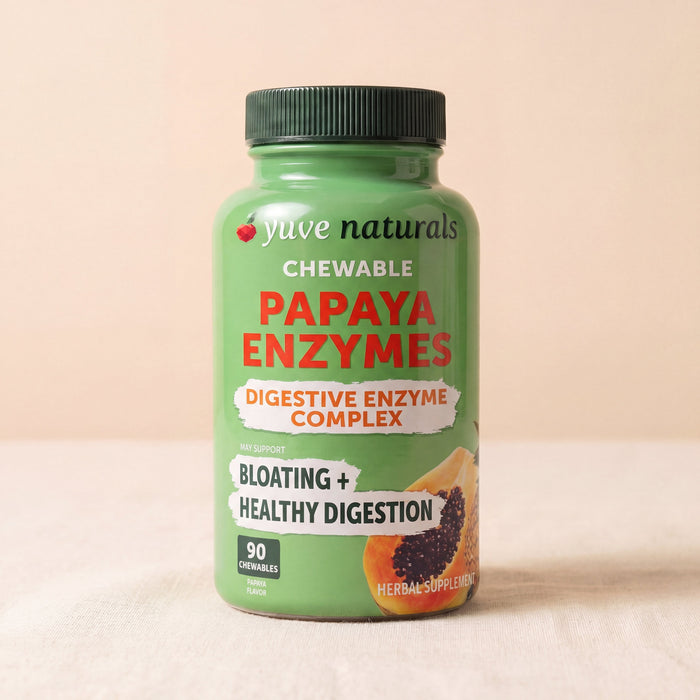
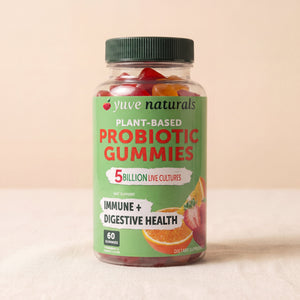
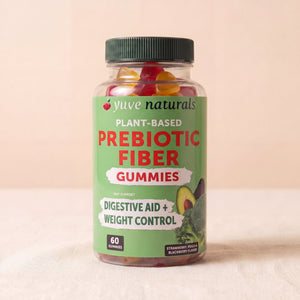
Yuve Probiotic Gummies can fit a routine when someone wants a vegan gummy format for probiotic consistency, but the product should still be judged by its Supplement Facts panel, directions, storage instructions, and strain transparency rather than by the word “probiotic” alone. Yuve Prebiotic Fiber Gummies can fit a routine when someone wants a low-friction prebiotic fiber format, but the serving should be introduced gradually if fermentable fiber usually affects comfort. A food-first eater may still choose yogurt, kefir, legumes, oats, onions, and fermented vegetables as the foundation. A supplement-first eater may use Yuve Probiotic Gummies, Yuve Prebiotic Fiber Gummies, or the broader digestive health collection for convenience. The best routine is the one that matches diet pattern, tolerance, label clarity, and daily repeatability.
What do people get wrong about probiotics and prebiotics?
People often treat “probiotic” as a universal benefit claim, but probiotic evidence depends on the exact genus, species, strain, dose, population, and outcome being studied. People also treat “prebiotic” as another word for fiber, but ISAPP defines a prebiotic by selective use by host microorganisms, not by fiber content alone. Another common mistake is starting a large fiber dose immediately; prebiotic substrates can be useful, but rapid increases can create avoidable digestive discomfort. A third mistake is expecting fermented foods to behave like standardized supplements, because food fermentation does not guarantee a labeled strain or consistent colony-forming unit amount. NCCIH also notes that different probiotic types may have different effects, so one Lactobacillus product does not automatically stand in for every Lactobacillus or Bifidobacterium product. Specificity is the boring part, and unfortunately it is also the part that matters.
What are the most common questions about probiotics and prebiotics?

Should I take probiotics and prebiotics together?
Probiotics and prebiotics can be used together when both fit your diet and tolerance. A product or routine that combines both is often called a synbiotic, but the pairing should still make sense by strain, substrate, serving size, and daily use.
Are fermented foods always probiotics?
Fermented foods are not automatically probiotics. A probiotic food should contain live microorganisms in adequate amounts and have evidence for a health benefit; pasteurized sauerkraut or heat-treated fermented products may not provide live cultures.
Is fiber the same thing as a prebiotic?
Fiber and prebiotic are overlapping categories, not identical terms. Some fibers can act as prebiotics, but a prebiotic substrate must be selectively used by host microorganisms in a way that confers a health benefit.
Which one should I start with first?
Start with the gap in your current diet. If you rarely eat fiber-rich plants, prebiotic foods may be the better first move; if you want a defined live-culture format, a clearly labeled probiotic food or supplement may fit better.
Can prebiotics feel uncomfortable at first?
Prebiotic fibers can feel uncomfortable when the serving is too large or increased too quickly. A gradual serving increase gives resident microbes and daily habits more room to adjust.
Do probiotic strains matter?
Probiotic strains matter because benefits are not guaranteed across an entire genus or species. Lactobacillus rhamnosus GG, Bifidobacterium lactis strains, and Saccharomyces boulardii are different entities, not interchangeable label decorations.
What is the simplest daily plan?
Build the base with fiber-rich plants, then add fermented foods or a probiotic supplement if the format fits your routine. If convenience matters, pair one probiotic option with one prebiotic fiber option and track comfort, consistency, and repeatability over two to four weeks.