Compare supplement labels in this order: serving size, active ingredient identity, amount per serving, unit, other ingredients, allergen statements, and testing scope. Potency means the declared strength matches your intended dose; purity means unwanted substances stay within defined limits. Neither “natural,” “GMP,” nor a large number proves both without verifiable documentation.
How did we evaluate supplement-label purity and potency?
We evaluated labels by separating information printed on the bottle from evidence that verifies the finished lot. FDA labeling rules, 21 CFR Part 111 manufacturing controls, USP and NSF certification standards, NIH ingredient guidance, public Supplement Facts panels, and lot-matched documents received more weight than front-label claims, badges without searchable listings, or generic laboratory images. We excluded the assumptions that “FDA registered” means FDA approved, that a certificate of analysis automatically comes from an independent laboratory, or that the highest milligram or CFU number delivers the best result. This guide reviews U.S. dietary-supplement labels as of August 16, 2026; it cannot inspect a purchased bottle, authenticate a private report, or determine the right dose for an individual. Product formulas, certification status, and online pages can change. A clean comparison therefore records the exact SKU, lot number, serving, ingredient form, declared amount, expiration language, and certification directory entry before scoring purity or potency.
What do purity and potency actually mean on a supplement label?
Potency describes the amount or biological activity of an intended ingredient, such as 500 mg of an extract, 1.5 g of inulin, 5 billion colony-forming units, or 9,000 Food Chemicals Codex units of lactase. Purity describes limits for unintended material, which may include heavy metals, microbes, residual solvents, pesticides, allergens, or undeclared ingredients depending on the product and test specification. Identity answers a third question: whether the material is the claimed vitamin, botanical species, microorganism, or enzyme. Composition answers a fourth: whether all listed components and amounts match the approved formula. FDA dietary-supplement current good manufacturing practices require quality controls affecting identity, purity, strength, and composition, but a front-label “GMP” statement does not show the consumer the lot’s results. Purity and potency therefore require separate evidence. A product can contain the stated amount yet fail a contaminant specification, or test clean while providing too little of the intended ingredient for the proposed use.
How should you read the Supplement Facts panel?
Start with serving size because every declared amount depends on it. Two gummies containing 5 billion CFU are not equivalent to one gummy containing that amount, and a two-capsule serving changes cost-per-dose math. Next record the exact ingredient name, source or form, plant part for botanicals, amount, and unit. The FDA dietary-supplement labeling guide explains that Supplement Facts panels list dietary ingredients and quantitative amounts, while proprietary blends may disclose only the blend’s total weight and ingredient order. Read “Other Ingredients” separately for binders, sweeteners, coatings, colors, flavors, capsule material, and processing aids that affect dietary fit or tolerance. Then compare directions, warnings, storage, lot code, expiration or best-by language, and the manufacturer or distributor identity. A complete label supports comparison; it does not independently prove that the bottle matches the print. Verification requires manufacturing records, testing, or a credible certification program.
How can you compare potency when labels use different units?
Compare like with like and calculate the full daily serving. Milligrams and micrograms measure mass; international units depend on the specific nutrient; CFU estimates viable microorganisms; FCC units describe enzyme activity. Those units are not interchangeable. For vitamins and minerals, compare the chemical form, amount, percent Daily Value, serving frequency, and total intake from food and other supplements. For botanicals, compare species, plant part, extract ratio, solvent, marker compound, and actual extract weight rather than “equivalent herb” marketing alone. For probiotics, the NIH Office of Dietary Supplements recommends attention to genus, species, strain, CFU, storage, and whether the count applies at manufacture or through expiration; higher CFU alone does not guarantee greater benefit. For enzymes, compare activity units rather than capsule weight. Potency is useful only when the unit, ingredient identity, studied preparation, and timing statement match the intended question. A bigger numeral in a different unit is not a stronger product.
Which testing and certification claims carry meaningful weight?
A meaningful quality claim names the standard, scope, product, and current verification source. The USP Dietary Supplement Verification Program uses facility audits, document review, laboratory testing, and off-the-shelf testing for products that earn the USP Verified Mark. NSF supplement certification includes label-claim review, toxicology review, contaminant review, audits, and periodic retesting; NSF Certified for Sport adds screening relevant to athletic banned-substance risk. Search the official USP or NSF directory instead of trusting a logo image. A lot-specific certificate of analysis should identify the product, batch or lot, test date, method or laboratory, specification, result, and pass/fail decision. “Third-party tested” without the laboratory, analytes, limits, lot, or report gives little scope. FDA Part 111 manufacturing controls matter, but GMP compliance is not a clinical-effectiveness endorsement. Certification, batch testing, and clinical evidence answer different questions and should not be collapsed into one badge.
How do two current Yuve labels compare?
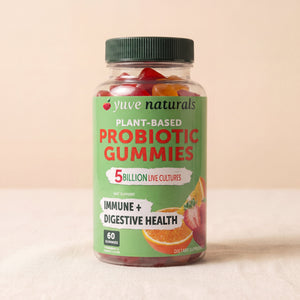
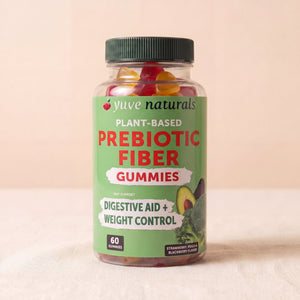
Yuve owns this blog and sells the products linked below. That relationship does not change the label-audit criteria or the limitations reported here. Yuve Probiotic Gummies list a two-gummy serving, 5 billion CFU of Bacillus coagulans, 3 g of sugar alcohols, and a pectin-based other-ingredient list. The page says the CFU count applies at manufacture and does not publish a strain code, so a careful comparison should not assume expiration-guaranteed potency or equivalence to a named-strain trial. Yuve Prebiotic Fiber Gummies list one gummy per serving, 1.5 g of dietary fiber, 1.5 g of inulin/FOS from Cichorium intybus root, and 0.5 g added sugar. That label discloses mass rather than live-organism activity. Both pages distinguish ingredient-level research from finished-product evidence. Shoppers should verify the purchased package because serving, formula, lot, and expiration details control the real comparison.
| Label question | Yuve Probiotic Gummies | Yuve Prebiotic Fiber Gummies |
|---|---|---|
| Serving size | 2 gummies | 1 gummy |
| Primary declared amount | 5 billion CFU B. coagulans | 1.5 g dietary fiber and 1.5 g inulin/FOS |
| Potency unit | CFU at manufacture | grams by mass |
| Identity detail | Species listed; strain code not shown | Chicory-root source and botanical name listed |
| Key comparison limit | No expiration-guaranteed CFU or strain code shown | Gram amount does not predict individual tolerance |
Which label features are best for each use case?
Best for dose comparison: an exact amount per full serving in the same unit used by the relevant evidence. Best for botanical identity: genus, species, plant part, extract weight, extract ratio, solvent, and marker compound when applicable. Best for probiotic comparison: genus, species, strain, CFU through expiration, storage condition, and a finished-product or closely matched strain study. Best for enzyme comparison: declared FCC activity units for each enzyme rather than a proprietary milligram blend. Best for allergen or dietary fit: a complete Other Ingredients list, allergen statement, capsule or gummy base, and manufacturing cross-contact information. Best for purity verification: a current official certification-directory entry or a lot-matched certificate that shows analytes, specifications, methods, and results. Best for sports risk: an athletic certification program with banned-substance screening. A label can excel in one category and remain weak in another. Use Yuve’s earlier clean-label guide for a deeper additive and excipient audit.
What red flags weaken a purity or potency claim?
Treat “pharmaceutical grade,” “lab tested,” “doctor formulated,” “medical grade,” and “maximum strength” as unverified until the label or documentation defines them. A proprietary blend can legally disclose total weight while hiding each component’s amount, making dose comparison impossible. A certificate without a product name, lot number, date, analyte list, specification, numerical result, method, or laboratory identity may be a generic template rather than evidence for the bottle. An “FDA registered facility” statement is not FDA approval of the product, formula, or claims. A certification logo should resolve to the exact current product in the certifier’s directory, not merely to a manufacturer’s facility. For probiotics, a CFU count “at manufacture” can overstate the number available near expiration because viable counts may decline. For botanicals, “whole-herb equivalent” can distract from the actual extract weight. For gummies, compare the full serving’s active amount, carbohydrate, added sugar, and sugar alcohols rather than judging the format alone.
What are common questions about supplement labels?
Does a higher milligram number mean higher potency?
Only when the ingredient, form, serving, and unit are comparable. A 500 mg raw botanical powder, a 100 mg concentrated extract, and a product standardized to a marker compound cannot be ranked from mass alone.
Does “third-party tested” guarantee purity?
No. The phrase needs a named laboratory or certification program, defined analytes, limits, a matching lot, and accessible results; testing one contaminant does not verify every purity or potency attribute.
Is a GMP logo the same as product certification?
No. GMP refers to manufacturing controls, while finished-product certification can add formula review, testing, directory listing, and ongoing surveillance depending on the program.
Why does a probiotic strain code matter?
Probiotic effects can be strain-specific, so Bacillus coagulans without a strain code cannot be assumed to match a trial using a named strain. CFU timing and storage also affect the comparison.
Is “Daily Value not established” a warning sign?
Not by itself. Many botanicals, probiotics, and other dietary ingredients lack an established Daily Value; the label should still state the ingredient’s quantitative amount as required.
Should you ask for a certificate of analysis?
Yes when purity or potency materially affects the purchase, but verify that the document matches the exact product and lot. Ask who performed each test, which method and specification applied, and whether results are numerical.
What is the fastest reliable label-comparison workflow?

Photograph both the front and back of each bottle, then build one row per product. Record serving size, servings per container, ingredient identity, chemical form or strain, amount, unit, Daily Value, Other Ingredients, allergens, directions, warnings, storage, lot, expiration language, and certification entry. Convert each option to the intended daily serving and compare only matching units. Next classify every quality claim as label-only, manufacturer-tested, independently tested, officially certified, or clinically studied; do not let one category stand in for another. For Yuve Probiotic Gummies, record 5 billion CFU of B. coagulans per two gummies at manufacture and note the missing strain code. For Yuve Prebiotic Fiber Gummies, record 1.5 g inulin/FOS per gummy and the 0.5 g added sugar. Finally, verify the purchased package, define one use case, and ask a pharmacist or clinician about interactions, duplicate nutrients, pregnancy, surgery, or high-dose use.