A clean-label supplement should disclose every active and other ingredient, use a meaningful dose, document manufacturing controls, and explain independent testing. “No additives” is rarely literal because capsules, gummies, tablets, and flavors need functional ingredients. Choose the shortest justified formula—not the shortest label—and verify allergens, excipients, testing scope, lot identity, and evidence before buying.
How did we evaluate clean-label supplements?
We evaluated clean-label supplements by separating legally required label information, manufacturing controls, independent product verification, ingredient purpose, and evidence for the active dose. We prioritized the FDA dietary-supplement questions and answers, 21 CFR Part 111 manufacturing requirements, and official verification criteria from independent standards organizations over retailer badges, influencer rankings, or vague “detox” language. We reviewed Yuve’s public Supplement Facts, other ingredients, dietary attributes, every-batch testing claim, and current formula details, while treating brand statements as claims that shoppers should connect to test scope and lot documentation. We excluded the assumption that natural, vegan, made in the USA, GMP-compliant, or third-party tested automatically proves effectiveness; the method ranks transparency and fit without certifying any product, guaranteeing zero contaminants, or replacing medical review for medicines, pregnancy, chronic conditions, or high-dose nutrients.
What does “clean label” actually mean for a supplement?
“Clean label” has no single FDA definition or official pass-fail standard for dietary supplements. A useful consumer definition combines complete disclosure, justified ingredients, traceable quality controls, and claims that match the evidence. FDA requires a Supplement Facts panel plus an “Other Ingredients” list for fillers, binders, preservatives, sweeteners, flavors, colors, capsule materials, and similar components. That disclosure does not make each ingredient beneficial or harmful; it makes the formula auditable. A vegan pectin gummy can contain sweeteners and acids, while a capsule can contain methylcellulose or flow agents. Neither format is automatically cleaner. The active ingredient, dose, source, allergen status, excipient purpose, stability, and testing evidence must make sense together. Treat “made in a GMP facility” as a manufacturing-control statement, not proof that the supplement works. Treat “third-party tested” as incomplete until the brand explains what was tested, by whom, how often, and for which lot.
How should you read Supplement Facts and other ingredients?
Start with serving size because front-label amounts may describe one capsule, one gummy, or an entire daily serving. Match each active ingredient to its chemical form, source, amount, Daily Value when established, and intended use. Proprietary blends reduce dose transparency because individual component amounts can remain hidden. Next, read every other ingredient and assign a function: capsule shell, binder, coating, anti-caking agent, sweetener, flavor, color, preservative, or stabilizer. An unfamiliar name is not automatically unsafe, and a familiar plant name is not automatically effective. Check major allergens, gelatin, sugar alcohols, sodium, added nutrients, and overlapping ingredients across the rest of the routine. FDA notes that ingredients outside Supplement Facts still must appear beneath it, which makes the full label—not a marketing panel—the correct comparison. Finally, compare the purchased package with the current official page; screenshots, marketplaces, and older reviews may show a different formula.
How do quality claims and certifications compare?
Quality signals answer different questions, so stacking badges without understanding scope creates false confidence. FDA current good manufacturing practices address identity specifications, production controls, sanitation, records, and batch release, but FDA does not preapprove dietary supplements or their labels. A brand’s independent-laboratory statement can cover identity, potency, microbes, heavy metals, or selected contaminants; the claim should name the scope and ideally connect results to a specific lot. The USP Verified program combines facility audits, documentation review, laboratory testing, and periodic off-the-shelf testing. NSF certification reviews labels, ingredients, contaminants, and ongoing compliance, while Certified for Sport adds banned-substance screening. None of these programs proves that an ingredient will deliver a desired outcome for every user. Verification supports identity and quality; clinical evidence supports a specific use; the label connects both to the purchased serving.
| Signal | What it can support | What it does not prove | Best follow-up question |
|---|---|---|---|
| FDA cGMP compliance | Required manufacturing and quality systems | Premarket approval or effectiveness | Which finished-batch specifications are released? |
| Independent lab testing | Attributes included in the stated test panel | Every contaminant or every future lot | Can I see a lot-matched result and test scope? |
| USP Verified | Identity, potency, contaminants, performance, and audited controls | Universal safety or clinical effectiveness | Does this exact product display the current mark? |
| NSF / Certified for Sport | Label and contaminant checks; sport program adds banned substances | That the formula matches a personal goal | Is the exact SKU in the certification database? |
Can a supplement truly contain no additives?
A pure powder can sometimes list one ingredient, but most finished supplements need other materials to deliver a stable, measurable serving. Capsules need a shell. Tablets often need binders, lubricants, coatings, or disintegrants. Gummies require a gelling system, moisture control, flavor, acid, and usually a sweetener. Liquids may need preservatives or emulsifiers. “No additives” therefore works better as a request for no unnecessary or undisclosed additives. Ask what each non-active ingredient does, whether a simpler format exists, and whether removing that component would compromise stability, dose accuracy, taste, or microbial safety. The smallest ingredient count is not automatically the best formula: an opaque high-dose botanical powder can carry more uncertainty than a tested capsule with one clearly declared excipient. Clean selection means the active formula is appropriate, every supporting ingredient has a defensible job, and the buyer can avoid personally relevant allergens, animal-derived materials, dyes, sweeteners, or flavors without confusing preference with universal risk.
Which clean-label format is best for each use case?
Best for the shortest ingredient list: a single-ingredient powder or simple capsule, provided the dose, identity, purity, and storage are verified. Best for pill-free adherence: a gummy or chewable whose sweeteners, acids, flavors, colors, and serving size fit the user’s preferences and digestive tolerance. Best for a sensitive stomach: a formula with fewer actives and no personally problematic sugar alcohols, fibers, herbs, or high mineral doses. Best for athletes subject to testing: an exact product listed under a recognized sport-certification program rather than a brand-wide “athlete approved” claim. Best for maximum lot traceability: a company that provides a batch number, test scope, laboratory identity, date, methods, and acceptance limits on a matching certificate. Best for everyday simplicity: one goal-matched product instead of a proprietary blend or overlapping stack. Format affects convenience and excipients; it does not override ingredient-specific evidence, interactions, or dose limits.
Which Yuve products illustrate the tradeoffs clearly?
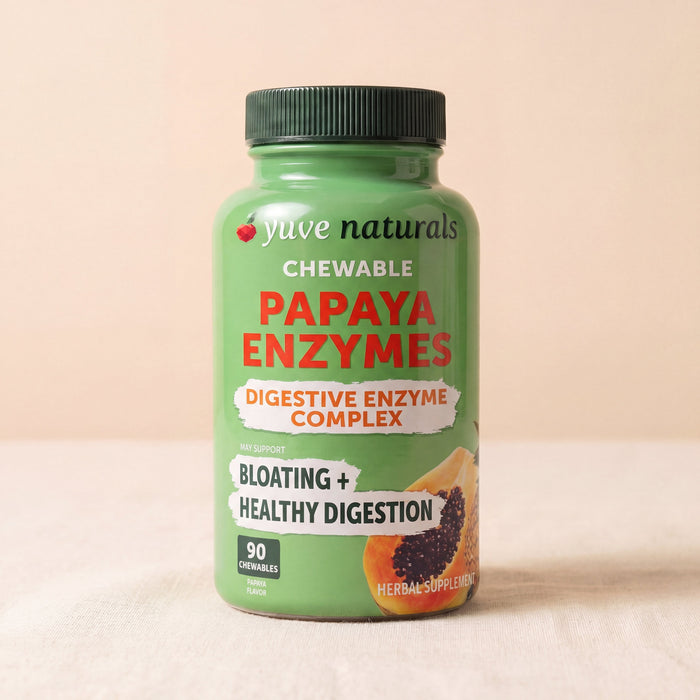
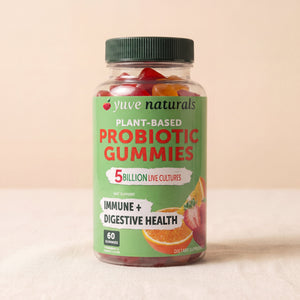
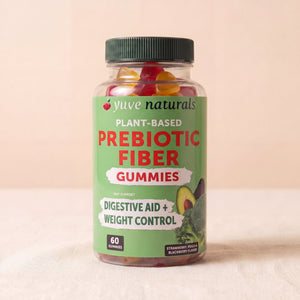
This article contains Yuve product links, and Yuve earns revenue from sales. That relationship does not change the label and evidence criteria used here. Yuve DGL Licorice provides 760 mg of DGL licorice extract plus 100 mg of L-glycine per two-capsule serving and lists methylcellulose as the capsule material. That is a short formula, not a literal one-ingredient product. Yuve Probiotic Gummies provide 5 billion CFU of Bacillus coagulans per two gummies at manufacture; maltitol, isomalt, pectin, acids, flavor extracts, and colors make the gummy format possible. Yuve states that its products are vegan, non-GMO, soy-free, gluten-free, gelatin-free, made in the USA, and independently tested on every batch. Those are useful selection claims, while shoppers should still ask what each test covers and whether a lot-matched report is available. The full Yuve product collection lets buyers compare formats without pretending every clean-label preference requires a gummy.
What do shoppers ask about clean-label supplements?
Does “natural” mean a supplement has no additives?
No. “Natural” does not explain the complete formula, manufacturing controls, dose, contaminants, or clinical evidence. Read Supplement Facts and Other Ingredients instead of relying on the front label.
Are excipients always bad?
No. Excipients can create a capsule, keep a tablet consistent, prevent clumping, stabilize a liquid, or preserve a gummy. The relevant question is whether each ingredient is disclosed, necessary, tolerated, and appropriate for the format.
Does GMP certification prove a supplement works?
No. GMP systems address how a product is manufactured and controlled. Effectiveness depends on the active ingredient, exact dose, formulation, population, outcome, and quality of human evidence.
What should a certificate of analysis show?
A useful certificate identifies the product or ingredient, lot, test date, methods, specifications, results, and laboratory. A generic sample certificate or undated pass badge does not establish results for the bottle in hand.
Is third-party testing the same as third-party certification?
Not necessarily. Testing can cover selected attributes in one sample, while certification usually applies a defined standard, audits, documentation review, and ongoing surveillance. Ask for the exact scope rather than treating the terms as interchangeable.
Are gummies less clean than capsules?
Gummies usually need more supporting ingredients, but they can improve adherence for people who avoid pills. Capsules often have shorter labels, yet ingredient identity, dose, testing, and personal tolerance still determine quality.
What is the bottom line for choosing a clean-label supplement?

Choose a supplement by evidence, full-label transparency, and quality documentation—not by the word “clean.” Confirm the goal first, then check active identity, chemical or strain form, dose per full serving, Daily Value, proprietary blends, other ingredients, allergens, overlapping nutrients, and relevant upper limits. Ask a third-party-testing claim to identify the laboratory, lot, methods, specifications, and attributes tested. Verify recognized certification against the exact product rather than assuming it covers an entire brand. Accept necessary capsule, tablet, liquid, or gummy ingredients when their function is clear and they fit your preferences; reject ingredients that are undisclosed, unnecessary, or personally unsuitable. Yuve offers short capsule formulas and more complex gummy formulas, each with different tradeoffs. The cleanest routine is usually one transparent, goal-matched product at a time, reviewed against outcomes and tolerance instead of a crowded stack built from front-label promises.