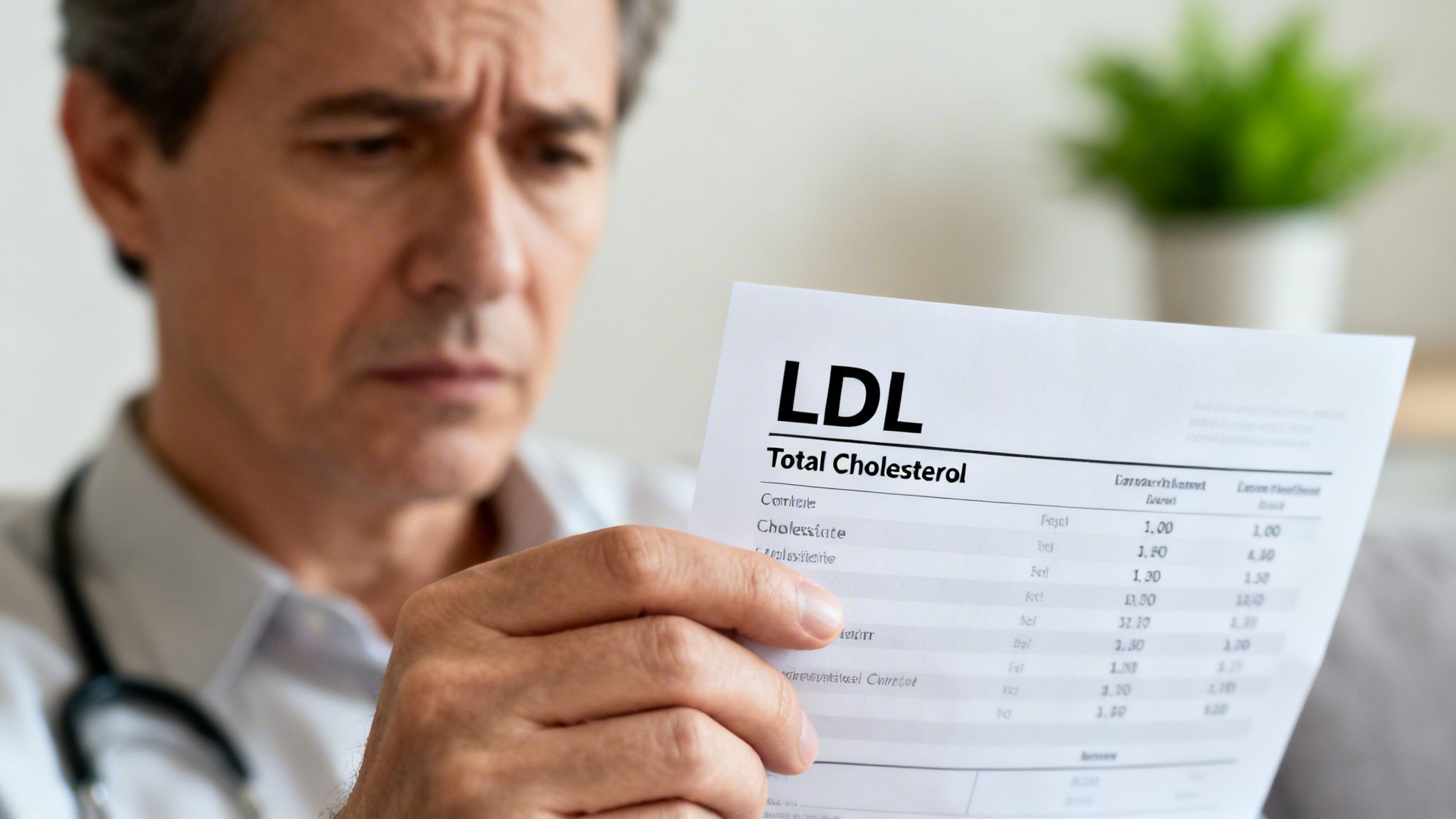
That sinking feeling when you open your latest cholesterol report. It's a heavy, frustrating moment, especially when you feel like you’re doing everything right. We get it. That piece of paper can feel like a final grade on your health, and it’s easy to feel a little lost and defeated.
But that number isn't a final grade. It's a starting point. It's a chance to get proactive, and this guide is here to walk you through your options, so you can feel empowered, not uncertain. Think of us as your knowledgeable friend who’s right here with you.
For many people, the first and most important steps are comprehensive diet and lifestyle strategies. Sometimes, though, you need an extra tool in your toolkit. That’s where an ancient remedy with a lot of modern science behind it comes into play: red yeast and rice.
What You Will Discover in This Guide
The world of supplements can be confusing. Our goal is to cut through the noise and give you clear, straightforward information you can actually use.
Here’s a quick look at what we’ll cover, step-by-step:
- What red yeast and rice actually is and its surprising origins.
- The science behind how it can help maintain healthy cholesterol levels.
- How to use it safely and effectively to make the smartest choice for your body.
- Key tips for finding a high-quality, trustworthy supplement you can count on.
A Note From Our Founder: My own journey to creating Yuve started with a personal search for clean, effective solutions to my own health struggles, so I know how critical it is to have information you can trust. I remember feeling so frustrated trying to find answers that worked. You’ve already taken a huge step just by being here and looking for answers. Let's build on that positive momentum and find a natural path to support your heart health goals, together. - Sam, Yuve Founder
What Exactly Is Red Yeast and Rice?
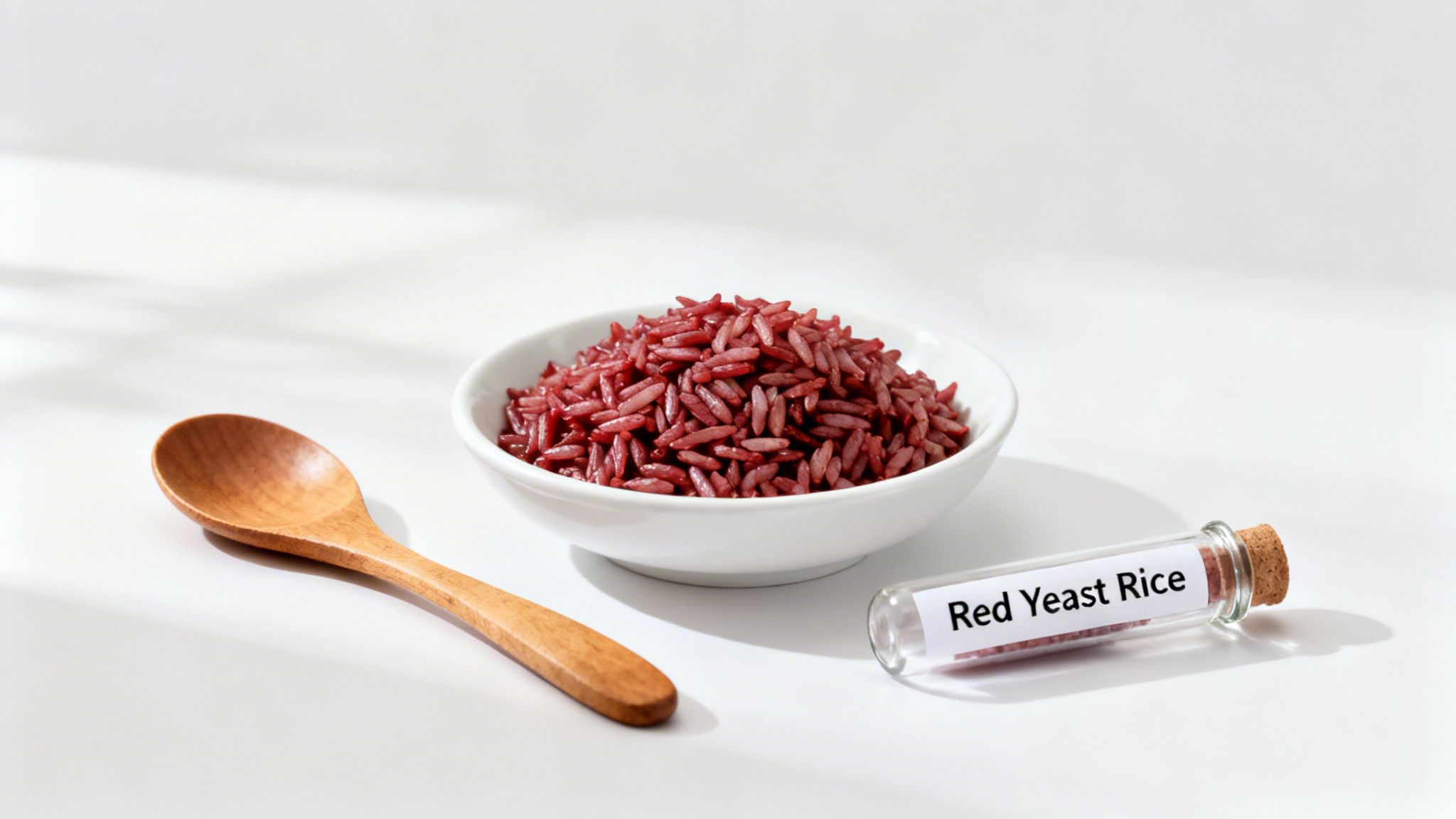
You’ve probably heard of red yeast and rice, but what is it, really? It sounds a bit exotic, but the concept is wonderfully simple. At its heart, it’s just white rice that has been fermented with a specific, vibrant yeast called Monascus purpureus.
This fermentation process does more than just give the rice its signature reddish-purple color. As the yeast cultures on the rice, it creates a whole suite of new, active compounds. It's a similar idea to how fermentation transforms grapes into wine or cabbage into kimchi-it unlocks an entirely new set of properties. For centuries, this natural process has been a cornerstone of traditional Chinese medicine and has also been used as a food preservative and coloring agent.
The Star Player: Monacolin K
While fermentation produces many substances, one compound, in particular, gets most of the credit: monacolin K. And for very good reason.
What makes this single compound so significant? It turns out that monacolin K is chemically identical to the active ingredient in the first statin drug developed to lower cholesterol. This is the primary reason red yeast rice has become such a widely recognized supplement for people looking to support their heart health.
What this means for you: When you take a high-quality red yeast rice supplement, you are getting a natural source of monacolin K, the key compound studied for its ability to help maintain cholesterol levels already within a healthy range.
This isn't about some vague, poorly understood benefit. We're talking about a specific, active compound with a significant body of scientific research backing its mechanism of action.
More Than Just One Compound
But it's a mistake to focus only on monacolin K. One of the fascinating things about whole, natural products is their inherent complexity. The fermentation of rice with Monascus purpureus creates a whole spectrum of beneficial compounds, not just a single molecule.
This includes other important substances:
- Sterols: These are plant-based compounds that can help block the absorption of cholesterol in the gut.
- Isoflavones: A class of compounds that may function as antioxidants.
- Monounsaturated fatty acids: These are the "healthy fats" well-known for their heart-protective benefits.
Many experts believe this natural matrix of compounds works in synergy, creating a combined effect that may be greater than any single ingredient on its own. It's a team effort, all happening inside that tiny grain of fermented rice.
Understanding that red yeast and rice is a fermented food with a powerful, scientifically recognized active ingredient helps explain its long-standing reputation. It’s far more than an old folk remedy-it’s a natural product with a potent component at its core.
How Red Yeast and Rice Supports Your Heart Health
We've covered the what, but now for the million-dollar question: Does red yeast rice actually do anything? It's one thing to know its history, but it’s another to trust it with your health. The short answer is yes, and the scientific evidence is quite strong.
Let's get into how this ancient ingredient can be a modern ally for your heart.
Turning Down the Cholesterol Faucet
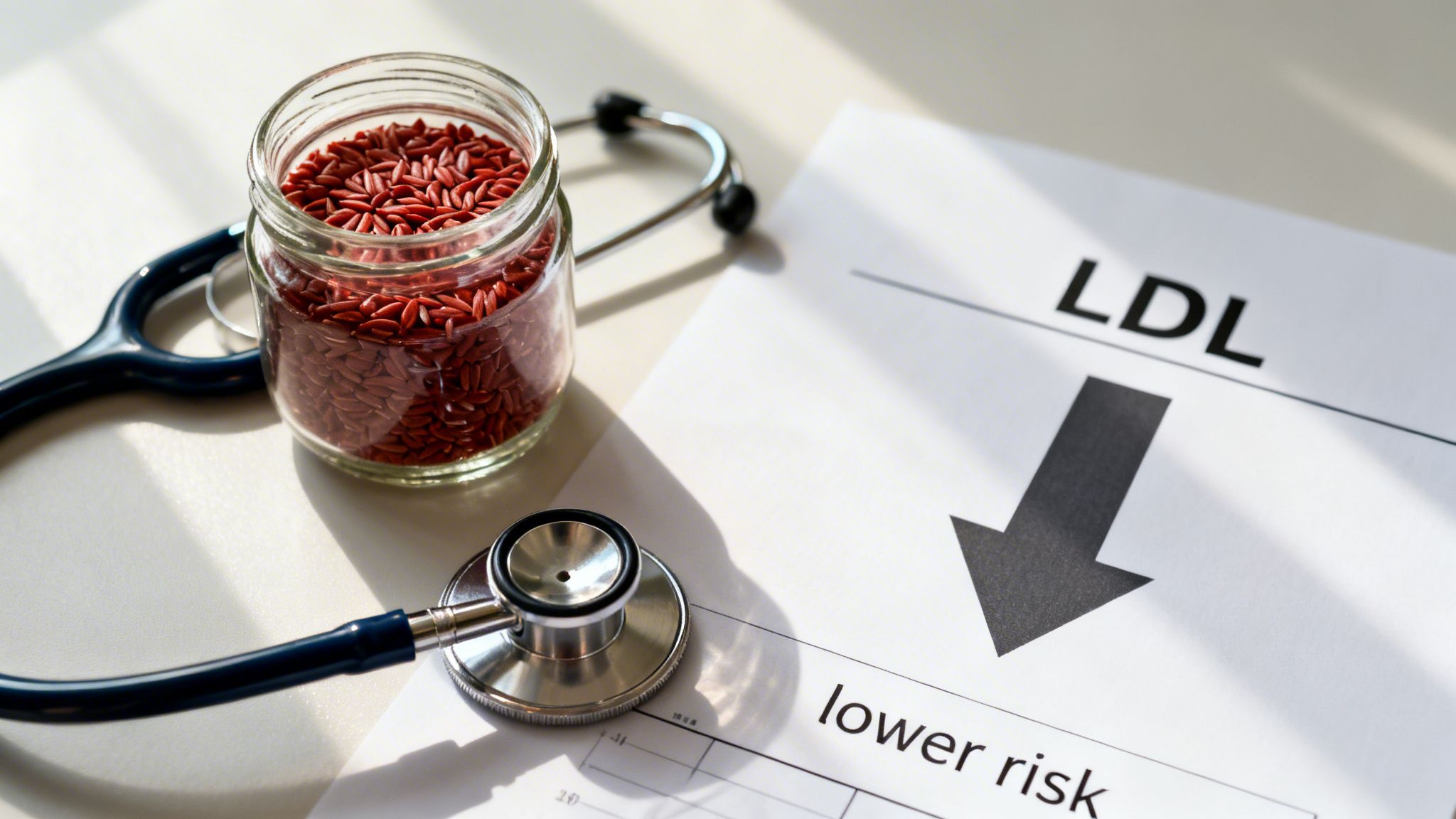
Remember our key compound, monacolin K? This is where it really takes center stage. Study after study has shown that a high-quality red yeast rice supplement can make a real difference in managing LDL ("bad") cholesterol and total cholesterol levels that are already in a healthy range.
So, how does it work? Imagine your liver has a "cholesterol factory," and a specific enzyme, HMG-CoA reductase, acts like the main faucet controlling production.
Monacolin K works by gently turning down that faucet. It inhibits the enzyme just enough to reduce the amount of cholesterol your liver pumps out. This mechanism is so well-understood and effective that it's the very same one used by certain prescription cholesterol medications.
This means you’re not just taking a guess with red yeast rice. You're using a targeted, science-backed approach to work with your body’s own cholesterol management system.
Science Corner: What the Research Says
Even the National Center for Complementary and Integrative Health (NCCIH), a highly respected source for evidence-based research, points to the consistent findings on how red yeast rice helps maintain healthy cholesterol. A landmark review published in Atherosclerosis confirmed that preparations of red yeast rice significantly lowered LDL cholesterol and total cholesterol.
What this means for you: This isn't just a folk remedy-it's backed by solid data. You can feel confident you’re choosing a path supported by science.
A Team Effort for Your Heart
While monacolin K gets most of the credit, it’s not working alone. Think of it as the star player on a team, where every member has a crucial role. Red yeast rice contains a whole suite of compounds that contribute to its heart-healthy reputation.
- Plant Sterols: These handy compounds help block some cholesterol from being absorbed in your gut in the first place.
- Healthy Fats: You'll also find monounsaturated fats, the same kind famous for their role in a heart-conscious diet.
- Isoflavones: These act as powerful antioxidants, helping to protect your cells from the damaging effects of oxidative stress.
It’s this natural synergy that makes red yeast rice a more holistic choice. You're getting the benefit of the entire food, not just a single isolated molecule. If you're exploring other plant-based strategies for heart wellness, our guide on vegan alternatives to fish oil is a great next read.
Pairing Your Supplement with a Heart-Healthy Lifestyle
A supplement is a powerful tool, but it works best when it's part of a bigger plan. The most successful approach always involves pairing smart supplementation with a proactive, healthy lifestyle.
To give your heart the absolute best support, adopting a proven dietary strategy is key. A perfect example is the DASH meal plan, which is specifically designed by experts to support cardiovascular health.
When you combine a quality supplement like Yuve Red Yeast Rice with a smart eating plan, you create a powerful one-two punch for your well-being. It’s about taking control and building a comprehensive strategy for a healthier you.
Staying Safe With Red Yeast Rice
Just because a supplement comes from a natural source doesn’t mean you can use it without careful consideration. When it comes to something as potent as red yeast rice, being smart and safe is non-negotiable.
Our goal is to give you the full picture-the benefits, the science, and just as importantly, the safety guidelines. Let’s walk through what you need to know to use red yeast rice responsibly.
Potential Side Effects and Why They Happen
The reason red yeast rice works so well is because its active compound, monacolin K, is chemically a mirror image of the active ingredient in the prescription drug lovastatin. Because they are fundamentally the same compound, they can also share the same potential side effects.
While most people tolerate it well, it's crucial to know what to watch for. The most common issues that can crop up are:
- Muscle Pain or Weakness: This is the most-discussed side effect for any statin-like compound. It can feel like a persistent, dull ache that wasn't there before.
- Digestive Upset: Some people experience gas, bloating, or general stomach discomfort, particularly when first starting. Dun, dun, dun-unwelcome gas. Yikes!
- Liver Stress: In some rare instances, it can elevate liver enzymes. This is exactly why checking in with your doctor for monitoring is so important.
If you notice any of these symptoms, especially muscle pain, don't try to "tough it out." Your body is sending you a clear signal. It's time to stop taking the supplement and consult your healthcare professional.
The Single Most Important Safety Step
If there is one piece of advice you take away from this guide, it's this: you absolutely must speak with your doctor before starting red yeast rice. This isn't just a friendly recommendation; it's the foundation of using this supplement safely. I do NOT think anyone should start this supplement without that conversation first.
Your doctor has the context of your complete medical history, understands potential interactions with other medications you're taking, and knows your specific health goals. They are your essential partner in this process.
When to Avoid Red Yeast Rice
Red yeast rice is a targeted, powerful supplement, which means it isn't suitable for everyone. There are clear situations where it should be avoided entirely.
Steer clear of red yeast rice if any of the following apply to you:
- You are pregnant, planning a pregnancy, or breastfeeding.
- You are already taking a prescription statin medication.
- You have liver disease or a history of elevated liver enzymes.
- You take other medications that can be hard on the liver.
- You drink more than two alcoholic beverages per day.
To help you navigate this, we've created a simple checklist.
Red Yeast Rice Safety Checklist
Use this checklist before considering red yeast rice. Always consult a healthcare professional for personalized advice.
| Consideration | Yes/No | Action Required |
|---|---|---|
| Are you pregnant, breastfeeding, or trying to conceive? | If Yes, do not take. | |
| Are you currently taking a prescription statin? | If Yes, do not take. | |
| Do you have a history of liver issues? | If Yes, do not take. | |
| Do you drink more than 2 alcoholic drinks daily? | If Yes, avoid taking it. | |
| Have you discussed taking RYR with your doctor? | If No, schedule an appointment before starting. | |
| Do you take other supplements or medications? | If Yes, review them with your doctor for interactions. |
Beyond these personal health factors, the quality of the supplement itself is a major safety concern. Ensuring a product is pure and accurately dosed is vital. You can learn more about what to look for in our guide on the best third-party tested supplements. An informed choice is always the safest one.
How To Choose A High-Quality Supplement
Walking into the supplement aisle to find a good red yeast and rice product can be incredibly confusing. It's a space where quality varies dramatically, and what you see on the front of one bottle might be completely different from what’s inside another.
The reality is, the amount of monacolin K-the key active compound-can be all over the map. Even worse, some poorly made products can contain a nasty contaminant called citrinin, a toxic byproduct that forms when the fermentation process goes wrong. You absolutely need to know that what you're putting in your body is clean, effective, and safe. Let’s cut through the noise and get straight to what matters.
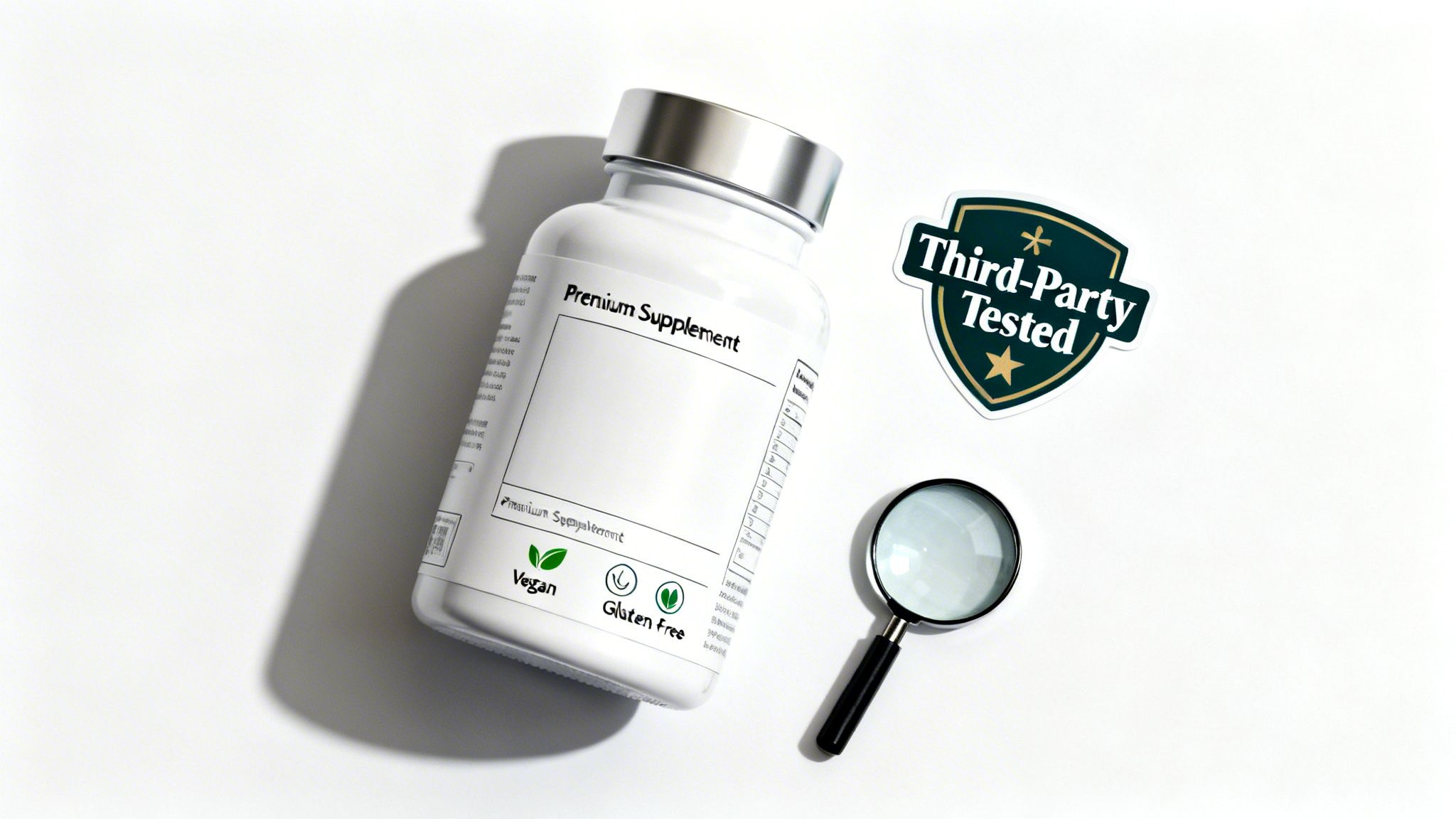
Non-Negotiable Quality Checks
Think of these as your bottom-line requirements. Any brand worth its salt will make this information clear and easy to find.
-
Look for Third-Party Testing: This is the single most important checkpoint. Since the FDA doesn’t tightly regulate supplements, independent verification is your only real guarantee of quality. Seals from respected organizations like USP (U.S. Pharmacopeia) or NSF International mean an outside lab has confirmed the product has what the label claims and is free from dangerous contaminants.
-
Check for Citrinin-Free Assurance: Citrinin is a mycotoxin that can damage the kidneys. It's a risk with any fermented product if the process isn't perfectly controlled. A reputable company will test every single batch to ensure it's 100% citrinin-free. If a brand is silent on this, I’d say it's not worth the risk. Full stop.
-
Verify the Monacolin K Content: The whole point of taking red yeast rice is for the monacolin K, so you need to know you're getting a consistent and effective amount. The label should state the dosage clearly. This kind of transparency shows a brand is confident in its product's potency. If you want to become a pro at this, our guide on how to read supplement labels has more great tips.
Why a Clean, Vegan Formula Matters
Beyond potency and safety, the other ingredients count, too. I’ve always believed that what’s left out of a supplement is just as crucial as what’s put in.
- Vegan and Gelatin-Free: A surprising number of capsules are made from gelatin, which is derived from animal bones and tissues. A vegan capsule guarantees the product is entirely plant-based and cruelty-free.
- Non-GMO and Gluten-Free: If you have sensitivities or just want the cleanest product possible, these certifications offer peace of mind. They confirm your supplement is made without genetically modified ingredients or common allergens like gluten.
When you choose a supplement that meets these clean-label standards, you’re getting the support you want without any of the junk you don’t. It’s about purity and confidence in every dose.
The Yuve Difference: Your Partner in Heart Health
When our founder, Sam, was on his own health journey, he was constantly let down by the lack of clean, transparent, and genuinely effective supplements out there. This frustration is what led him to create Yuve Red Yeast Rice-built on an absolute commitment to quality.
Positioning a supplement as a core part of your wellness strategy is a smart, proactive step. With Yuve Red Yeast Rice, you get a product meticulously designed to be that solution. Our formula is:
- Rigorously Third-Party Tested: We don’t just say it’s pure; we prove it. We verify the monacolin K potency and ensure every single batch is free of citrinin and other contaminants.
- 100% Vegan and Clean: Our capsules are plant-based, non-GMO, and made without gluten, gelatin, or any artificial fillers.
- Reliably Sourced: We partner with suppliers who are just as obsessed with purity and sustainable practices as we are.
Making a decision about your health can feel huge, but it doesn't have to be complicated. By focusing on these key quality markers, you can confidently pick a red yeast and rice supplement that is both safe and effective-a proactive step toward supporting your heart with a product you can actually trust.
FAQs: Your Top Questions About Red Yeast Rice, Answered
When you're considering a new supplement, questions are a good thing. They show you're taking your health seriously. I've worked with countless people navigating their wellness journeys, and a few key questions about red yeast rice come up time and time again.
Let's walk through them, so you can have the clarity you need to make the best decision for your heart.
How Much Red Yeast Rice Should I Take Daily?
This is usually the first thing people ask. In most of the clinical research you'll find, the effective dosages range from 1,200 to 2,400 mg per day. This is typically split into two doses-one in the morning and one at night-to maintain stable levels in your system.
But that’s a general guideline, not a prescription. The concentration of active compounds can differ between brands, so the most important starting point is the directions on the product label. Better yet, have a conversation with your healthcare provider. They can help you land on a dose that makes sense for your specific health profile and goals.
Can I Take Red Yeast Rice with a Statin Drug?
I’m going to be very direct here: the answer is an emphatic no. Combining red yeast rice with a prescription statin is a dangerous move.
Here's the critical piece of information: the main active compound in red yeast rice, monacolin K, is chemically identical to the prescription drug lovastatin. Taking both is essentially like double-dosing your medication. This dramatically elevates your risk for significant side effects, including severe muscle breakdown (rhabdomyolysis) and serious liver damage.
Think of it this way: your doctor needs to be the head coach for your health. They can only keep you safe if they know about every player on the field-and that includes every single supplement and medication you take.
How Long Does It Take for Red Yeast Rice to Work?
We all want to see progress, and that's completely understandable. Based on clinical studies and real-world experience, most people who use red yeast rice consistently see a measurable drop in their cholesterol levels within 8 to 12 weeks.
This isn't a magic pill, though. True success comes from consistency and a holistic approach. The best results happen when the supplement is paired with a heart-smart diet and regular movement. The only way to know for sure if it's working is to get follow-up blood work done with your doctor, which allows you to track your progress accurately.
Is Red Yeast Rice Vegan and Gluten-Free?
An excellent and increasingly important question. In its raw form, red yeast rice is just that-rice fermented with yeast. So yes, the ingredient itself is naturally vegan and gluten-free.
The complications arise when it's put into a supplement. The final product isn't always as clean as the core ingredient.
- Capsule Material: The biggest culprit is often the capsule itself. Many are made from gelatin, an animal byproduct.
- Fillers and Binders: To make the manufacturing process smoother, some companies add other ingredients that might contain gluten or other allergens you're trying to avoid.
You really have to read the "other ingredients" list carefully. A simpler way to get peace of mind is to look for a product that is explicitly certified vegan and gluten-free, like the formula from Yuve. This certification takes the guesswork out of it, ensuring you're not accidentally consuming animal products or hidden allergens.
At Yuve, we're committed to making your health journey straightforward and transparent. Our Red Yeast Rice is formulated for maximum purity and effectiveness, offering a clean, vegan, and trustworthy option for supporting your heart.
Take a proactive step for your heart health with Yuve Red Yeast Rice today!