Trying to keep your cholesterol in check can feel like a frustrating balancing act, right? You’re not alone. Many of us are looking for natural ways to support our heart health without a complete diet overhaul, and that’s where some surprisingly ancient foods come into play. One of the most fascinating is red yeast rice food.
In this guide, we'll walk through what red yeast rice is, how it supports your heart, and how to choose a safe, effective product. Let's make this feel less confusing and more empowering, together.
What Exactly Is Red Yeast Rice Food?
If you’ve ever admired the beautiful red crust on Peking duck or noticed the rich color of certain preserved tofu, you've probably already encountered red yeast rice food. It’s not a special type of grain, but rather plain white rice that has gone through a fascinating transformation.
The rice is fermented with a specific yeast, Monascus purpureus, which is what gives it that signature, deep reddish-purple hue. The process is a lot like what turns cabbage into tangy kimchi or grapes into complex wine-fermentation unlocks entirely new properties, flavors, and in this case, a whole host of beneficial compounds that have been prized in Traditional Chinese Medicine for centuries.
From Culinary Ingredient to Wellness Staple
For more than a thousand years, red yeast rice has been a fixture in Asian kitchens. Its role has always been multifaceted.
- Natural Food Coloring: It lends a striking, all-natural red color to meats, sauces, and even pastries, adding a visual appeal that artificial dyes can't match.
- Flavor Enhancer: The taste is subtle, adding a slightly sweet and savory depth that enhances the overall profile of a dish.
- Food Preservative: Traditional cooks also relied on its natural properties to help preserve foods like pickled tofu and certain kinds of fish.
But its journey didn't stop in the kitchen. As modern science began to investigate traditional ingredients, red yeast rice caught the attention of researchers for its potential health benefits, especially concerning heart health. This is all thanks to compounds created during fermentation called monacolins.
The most notable of these compounds is monacolin K. It has been widely studied for its ability to help maintain cholesterol levels that are already in a healthy range by supporting the liver’s own natural cholesterol production process.
This is why today, you can find red yeast rice food in two distinct forms: a culinary powder for cooking and a concentrated dietary supplement. While the powder is fantastic for adding authentic color and a hint of flavor to your food, supplements are designed to deliver a specific, consistent amount of those key active compounds.
This evolution from an ancient kitchen staple to a modern wellness aid is what makes red yeast rice so compelling. It’s a wonderful example of how traditional food wisdom and contemporary science can come together, offering a plant-based way to be proactive about your health. Sometimes, the best solutions have been right there in the world's pantries all along.
The Journey From Ancient Staple To Modern Superfood
Long before it was a capsule in a health food store, red yeast rice was a staple in Asian kitchens, with a history stretching back more than a thousand years. This isn't some new wellness trend; it's an ancient culinary treasure whose story perfectly illustrates how traditional wisdom often anticipates modern science.
For centuries, its primary job was purely culinary. Think of it as nature's food coloring. It was used to give foods a beautiful, vibrant red tint, add a subtle layer of flavor, and even help preserve meats and tofu.
If you’ve ever admired the iconic reddish glaze on a Peking duck or the deep color in certain types of pickled tofu, you’ve likely seen red yeast rice at work. It’s a fantastic example of how ancient food artisans used natural ingredients to make their creations more beautiful and last longer.
From Ancient Kitchens To Modern Labs
The big shift happened when science finally started to investigate the "why" behind its traditional uses. While it was a beloved food for ages, its medicinal value-long noted in Traditional Chinese Medicine-didn't come under the scientific microscope until the 20th century.
The turning point came in 1979. Researchers in Japan isolated its most powerful active compound: monacolin K. This discovery was a game-changer. It provided a scientific explanation for the health benefits people had anecdotally reported for generations and kicked off a wave of global interest.
Suddenly, this humble ingredient was seen in a completely new light-not just as a red yeast rice food, but as a natural powerhouse for supporting heart health.
A Modern Boom Rooted In Ancient Wisdom
Today, red yeast rice is more popular than ever. As more of us look for natural, plant-based ways to support our well-being, it's a perfect fit. The growth in its global market is staggering and reflects a major shift in how we approach our health.
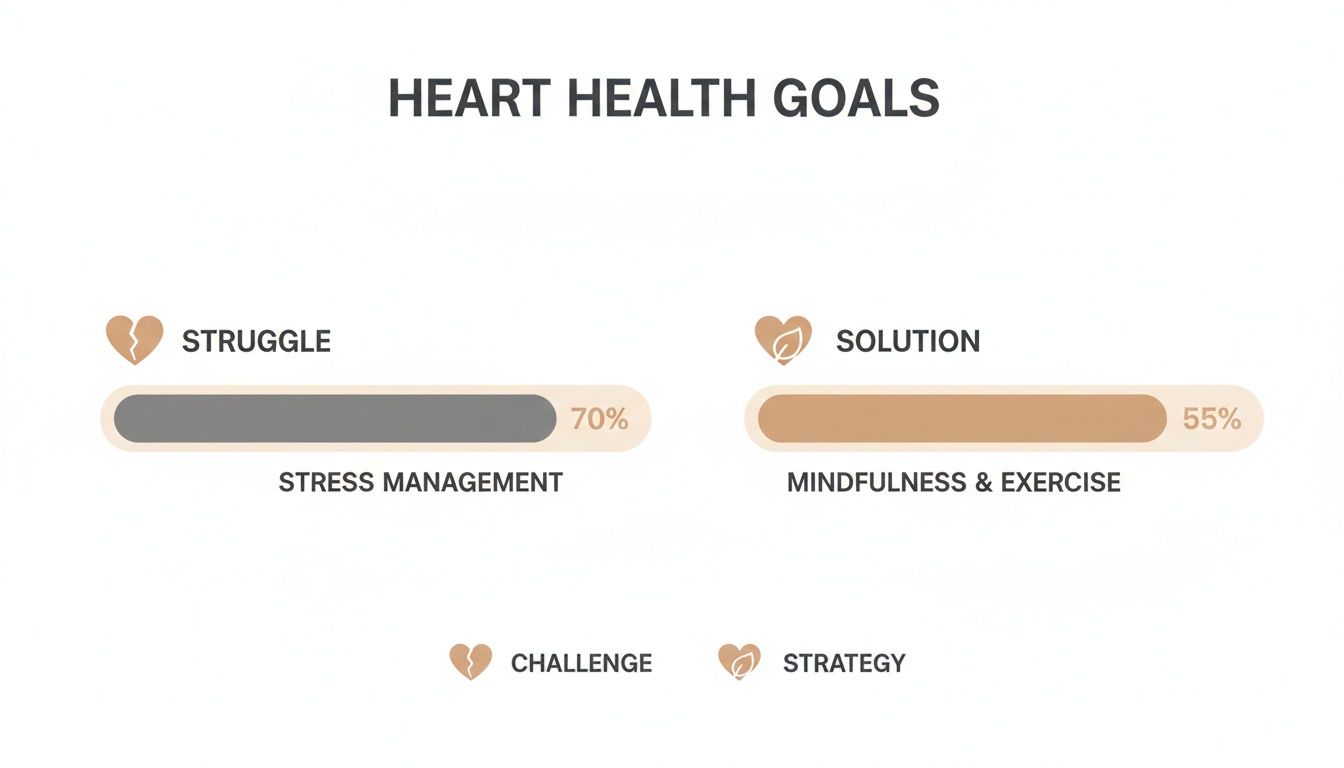
This modern boom is backed by some impressive numbers. Europe, for instance, commands over 30% of the market share and is growing at a steady 7.3% CAGR. The Asia Pacific region is surging even faster at an incredible 10.8% CAGR, fueled by both its deep culinary history and new health demands.
It's a beautiful full-circle story: what started as a way to color and preserve food is now embraced worldwide for its profound health benefits. This dual identity makes it uniquely powerful.
The journey of this ancient grain is a great reminder that sometimes the best solutions aren't new inventions, but rediscovered treasures. As you explore its benefits, you're tapping into a tradition that has supported well-being for generations. If you're curious about how fermentation creates such potent foods, you can learn more about other fermented foods for digestion in our guide.
How Red Yeast Rice Supports Your Heart Health
So, what’s all the buzz about red yeast rice food and heart health? The secret isn’t just in the rice itself, but in the incredible transformation that happens during fermentation. When that Monascus purpureus yeast gets to work, it creates a whole suite of powerful, biologically active compounds.
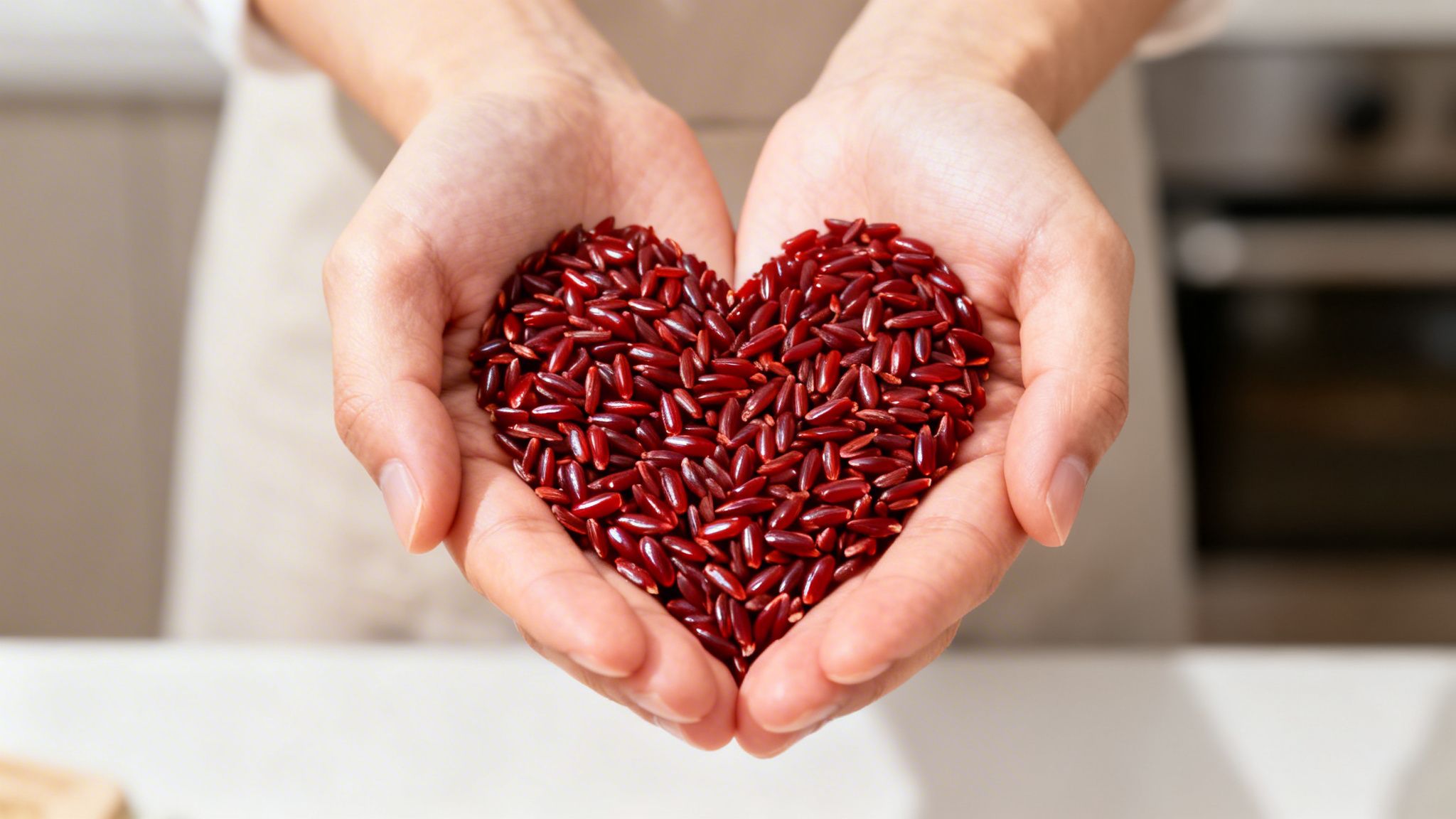
The most famous of these compounds are a family of substances called monacolins. And within that family, one compound in particular, monacolin K, steals the spotlight for good reason.
Science Corner: The Cholesterol Gatekeeper
What exactly makes monacolin K so special? Its chemical makeup is identical to the active ingredient found in some prescription statin medications. It works by targeting a very specific enzyme in the liver known as HMG-CoA reductase.
Think of this enzyme as the master control switch for your body’s internal cholesterol factory. When that switch is flipped on, your liver ramps up cholesterol production. Monacolin K acts as a natural gatekeeper, essentially telling that enzyme to dial things back a bit.
This process specifically helps lower the production of LDL cholesterol-the kind often called "bad" cholesterol. Too much LDL can lead to plaque buildup in your arteries, a major concern for long-term heart health. By gently influencing this process, monacolin K helps maintain healthier blood lipid levels and supports your entire cardiovascular system.
What this means for you: By working with your body's natural cholesterol-making process, red yeast rice offers a food-based approach to supporting heart health. It's not about forcing a change, but about providing gentle, natural support.
This isn't just folklore; a 2019 review published in the journal Planta Medica confirmed that a standardized amount of monacolin K from red yeast rice can significantly lower both total and LDL cholesterol. For many people, it’s a trusted, plant-based way to help manage cholesterol that's already in a normal range.
More Than Just Monacolins
While monacolin K gets most of the headlines, it’s not working alone. Red yeast rice is a complex food, and its benefits come from a whole symphony of compounds playing together. I do NOT think it's wise to rely on a single isolated compound when the whole food offers so much more. This is a big reason why many people prefer the whole food product over an isolated supplement.
Here are a few other key players on the team:
- Sterols: These plant-based compounds, like beta-sitosterol, help block your gut from absorbing excess cholesterol from your food in the first place.
- Isoflavones: These powerful antioxidants help protect your cells from the oxidative stress and damage that contribute to aging and disease.
- Monounsaturated Fatty Acids: You know these as "good fats." They are celebrated for their own heart-protective qualities.
This combination creates a powerful synergy. It’s the entire team of compounds working in concert, not just one star player. This is a classic example of whole-food nutrition, where the benefits are far greater than the sum of the individual parts.
If you're exploring ways to support your heart, it's worth looking at other traditional fermented foods, too. For instance, our guide to the benefits of a Nattokinase supplement delves into another amazing Japanese food that helps support healthy circulation.
Ultimately, understanding how red yeast rice food works gives you the power to make informed choices for your health. It’s not a magic pill, but a time-tested, natural way to proactively support your body. This knowledge can help you feel more confident and in control of your wellness journey.
Choosing A Safe And Effective Product
So, you're intrigued by the heart-healthy buzz around red yeast rice food and ready to give it a try. I get it. But before you grab the first bottle you see, let's talk about how to do this safely and effectively.
Think of it as being a smart consumer. When you’re choosing a product like this, you’re not just buying a supplement; you’re making an active choice for your well-being. We need to make sure it's the right one.
The world of red yeast rice supplements is a little tricky, especially in the U.S., where FDA rules about monacolin K levels have created some inconsistencies in the market.
Interestingly, it's Europe that has truly embraced red yeast rice, now accounting for over 30% of global revenues. This isn't just a trend; it's a market built on trust. Strict but clear guidelines from the European Food Safety Authority (EFSA) mean products are carefully vetted for both safety and effectiveness. This rigorous approach has won over consumers, and the market there is projected to grow by over 7.3% each year. It’s a great example of how strong standards can build confidence.
Your Safety and Quality Checklist
Because quality and regulations can vary so much, being an educated shopper is your single best defense. The goal is simple: find a product that works, without any nasty surprises.
One of the biggest concerns with poorly made red yeast rice is a contaminant called citrinin. It’s a mycotoxin that can sometimes form during the fermentation process, and it’s known to be harmful to the kidneys.
This part is non-negotiable. A reputable brand will always test for citrinin and be upfront about its purity standards. If a company can't promise its product is citrinin-free, it's an immediate red flag.
Here’s what to look for to ensure you're getting a quality product:
- Third-Party Testing: This is a huge seal of approval. Look for brands that are verified by third-party tested supplements. This independent certification confirms the product is pure and free from contaminants like citrinin.
- Clear Labeling: The label should be straightforward and easy to read. Vague promises or missing information should make you pause. If you want to sharpen your skills, check out our guide on how to read supplement labels to become a pro.
- Standardized Extract: For consistent results, you want a product that guarantees a specific amount of the active compounds in every dose. This ensures you’re not guessing what you’re getting from one batch to the next.
A Crucial Conversation With Your Doctor
Here it is-the most important step of all. Because monacolin K is chemically identical to the active ingredient in some statin drugs, you should NEVER take red yeast rice with a prescription statin unless your doctor gives you the green light.
Taking both at the same time is like unknowingly taking a double dose of a potent medication. This can seriously increase the risk of side effects like muscle pain (myopathy) or, in rare cases, liver problems.
Before starting any new supplement-especially this one-have a conversation with your doctor or another trusted healthcare provider. They can look at your whole health picture and help you decide if red yeast rice is a good fit for you, ensuring it won't clash with any other medications you’re taking. They’re your partner in this, and that conversation is the key to using red yeast rice food safely.
How To Add Red Yeast Rice To Your Wellness Routine
So, you're curious about red yeast rice food and how you might actually use it. The science is one thing, but figuring out where it fits into your daily life is what really matters. Let's get practical and look at the two main ways people approach it.
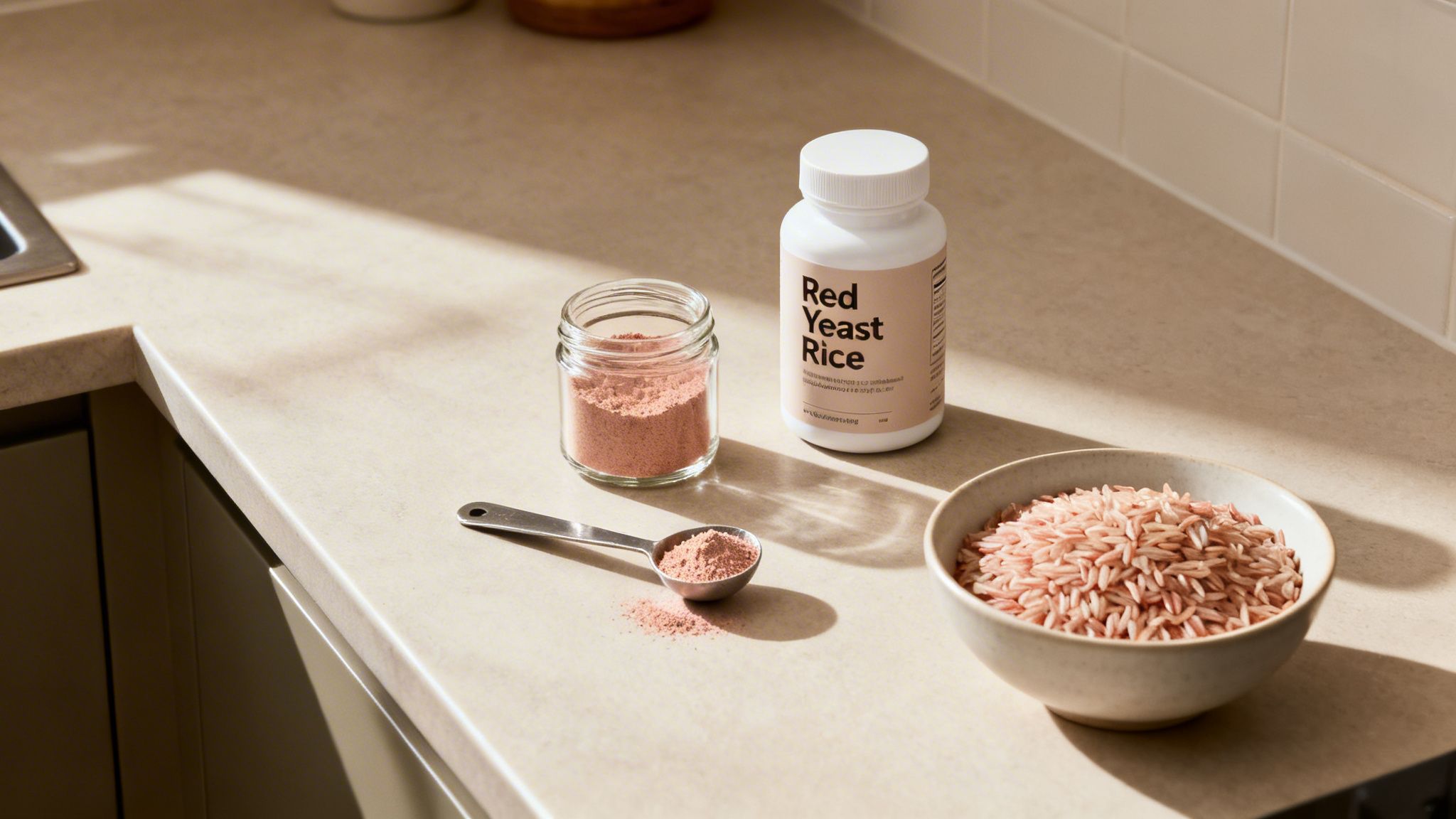
You can go down the traditional culinary path or the modern supplement route. Each has its place, depending on your goals.
Cooking With Red Yeast Rice Powder
For anyone who loves experimenting in the kitchen, red yeast rice powder is a fascinating ingredient. Its primary role in cooking is to impart a stunning natural red color and a subtle, savory-sweet flavor. A little bit goes a very long way.
Here are a few ways to start:
- Make a Classic Marinade: Try whisking a teaspoon of the powder into a marinade for tofu or plant-based proteins. It gives them that characteristic reddish hue and an umami depth you'd find in traditional Chinese BBQ.
- Color Your Grains: A small pinch added to the cooking water for rice or quinoa will give the finished grains a beautiful, rosy tint.
- Boost Your Sauces: It adds a wonderful color and complexity to savory sauces, especially dipping sauces for dumplings or spring rolls.
Cooking with red yeast rice is a fantastic way to honor its history. However, if your main goal is consistent heart health support, relying on the food powder alone is tricky. You can't really be sure how much of the active compounds you're getting in any given dish, which leads us to supplements.
A Founder's Story: Building A Holistic Routine
When you need consistent, targeted benefits, supplements are a much more reliable path. This is a subject our founder, Sam, knows firsthand. He spent years wrestling with digestive issues, feeling like his own body was working against him. His breakthrough didn't come from a single "magic pill," but from carefully building a holistic routine that worked for him.
He learned that the most effective strategy often involves combining a targeted supplement with excellent overall health habits. While a supplement like red yeast rice is great for a specific goal (like supporting cholesterol levels), true wellness means making sure your entire system is running smoothly.
This is where the bigger picture comes in. When we support one part of our body, like our heart, we can’t forget about the engine that powers it all-our digestive system.
Think about it this way: you can eat the most heart-healthy food on the planet, but if your gut can't properly break it down and absorb the nutrients, you're not getting the full benefit. Inefficient digestion often shows up as bloating, discomfort, and poor nutrient uptake. Yikes! We've all been there, and it's so frustrating.
This is exactly why pairing a heart-focused strategy with digestive support is a game-changing combination. Adding a high-quality digestive enzyme is a smart, proactive move to ensure you're getting the absolute most out of every healthy choice you make.
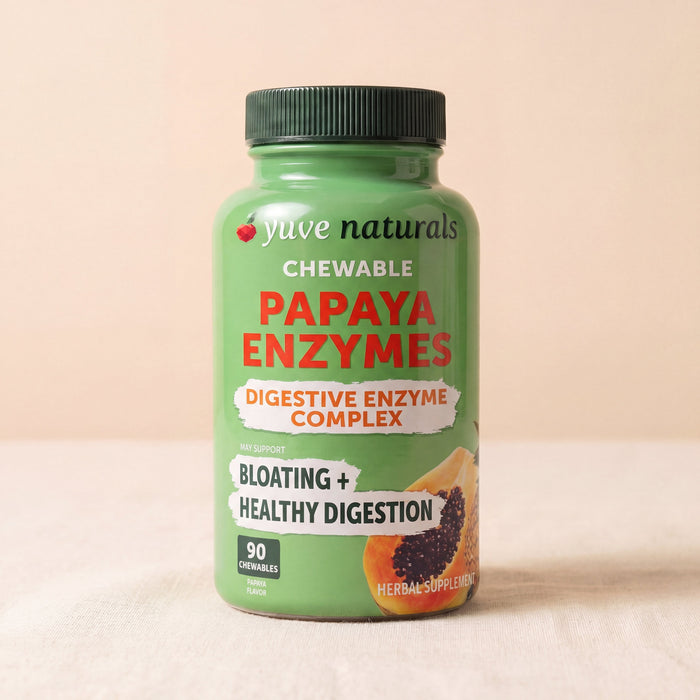
For instance, our Yuve Vegan Papaya Enzymes are formulated to help your body break down fats, proteins, and carbohydrates more efficiently. Taking one before a meal is about more than just avoiding that post-meal bloat; it’s about optimizing your entire system so it can absorb all the good stuff from your diet and other supplements. It’s not just an add-on-it's a foundational piece of the puzzle.
Your Quick Wins Checklist For A Healthier Heart
Alright, we’ve just gone through a ton of information on red yeast rice, from its ancient culinary roots to its modern-day health implications. So, where do you go from here?
Feeling motivated is great, but turning that motivation into real, lasting habits is what truly matters. It's not about a complete life overhaul overnight. It’s about making small, smart choices that build on each other, day after day.
Here's a simple, scannable checklist to help you get started. Think of it as your cheat sheet for putting all this knowledge into practice.
Your Daily Heart Health Actions
This goes way beyond just a single supplement. A truly heart-supportive lifestyle is about creating a daily rhythm that works for your body as a whole.
- Loop In Your Doctor. This is non-negotiable and always your first step. Before you even think about adding red yeast rice or any new supplement to your routine, have a conversation with your healthcare provider. They know your health history and can help you make a safe, informed choice.
- Get Serious About Fiber. Make it a goal to add more plants to every meal. We're talking about simple things like oats for breakfast, a handful of beans in your salad, or an apple for a snack. Fiber is a superstar for managing cholesterol and keeping your entire digestive system running smoothly.
- Hydrate, Hydrate, Hydrate. It sounds almost too simple, but water is absolutely essential for good circulation and overall health. Keep a bottle on your desk or in your bag and make sipping throughout the day a habit. It’s one of the easiest wins you can get.
- Move Your Body Every Day. You don't need a gym membership or marathon training. A brisk 20-minute walk after dinner, a quick yoga session in the morning, or even just dancing around the kitchen while you cook all count. Find an activity you genuinely enjoy, and it will never feel like a chore.
The Digestive Advantage
We've touched on the critical link between gut health and heart health. Here’s the thing: you can eat the most nutritious diet in the world, but if your body can't properly break down and absorb those nutrients, you're leaving benefits on the table.
This is where focusing on digestion becomes a true game-changer.
Support Your Digestion for Maximum Benefit: Think of great digestion as the foundation of your entire wellness routine. When your gut works efficiently, it can unlock the full potential of the healthy foods you eat.
To ensure you're getting the absolute most from your meals, adding a digestive aid is a powerful, proactive move. The Yuve Vegan Papaya Enzymes are formulated specifically to help your body break down fats, proteins, and carbs more effectively. It’s a simple step that helps turn every healthy choice you make into real, usable fuel for your body.
Ready to build a routine that supports your well-being from the ground up? We're here to help you on your journey. Feel free to explore our full line of plant-based, clean-label supplements and see how Yuve can help you feel your best.
Frequently Asked Questions About Red Yeast Rice
It's smart to ask questions when you're thinking about adding something new to your routine. Let's dig into some of the most common ones we hear about red yeast rice food to clear up any confusion.
Is Red Yeast Rice Considered Vegan?
Yes, it is. Red yeast rice is created using just two ingredients: white rice and a fungus called Monascus purpureus. The entire fermentation process is plant-based from start to finish, making it a perfectly suitable ingredient for anyone following a vegan or vegetarian diet.
Can I Take Red Yeast Rice With Other Supplements?
This is an important question. While red yeast rice can often be part of a supplement plan, it’s not something to mix and match without a second thought. Because it contains active compounds that can have powerful effects, you need to be careful.
The most important rule is to be completely open with your doctor. Always show them a full list of every supplement you're taking-including red yeast rice-so they can check for any potential interactions and give you advice that’s right for your specific health needs.
How Long Does It Take To See Results?
This is where patience comes in. Red yeast rice works gradually with your body’s systems, so don't expect an overnight change. Most people need to take it consistently for about 8 to 12 weeks before seeing a measurable difference in their cholesterol lab results.
Think of it like getting in shape-you don’t see a six-pack after one workout. It’s the steady, consistent effort over a couple of months that brings the results you're looking for.
What Is The Difference Between Red Yeast Rice Food Powder And Supplements?
It's easy to confuse the two, but they are used for completely different reasons.
- Red Yeast Rice Food Powder: Think of this as a culinary ingredient. It’s used in cooking, mostly in traditional Asian cuisine, to add a beautiful red color and a subtle savory depth. The amount of active compounds is very low and varies from batch to batch.
- Red Yeast Rice Supplements: These are formulated specifically for health benefits. The goal here is to concentrate and standardize the active compounds, like monacolins, so that each capsule delivers a consistent, predictable dose.
If you want to support your cholesterol levels, a supplement is the only reliable option. If you’re just looking to add authentic color and flavor to a recipe, the food powder is what you need.
At Yuve, our goal is to help you build lasting health with clean, plant-based ingredients. If you're ready to create a wellness routine that truly nourishes your body, we invite you to explore our products.
Discover Yuve's plant-based supplements and start your journey today.