Ever seen a dish with a strikingly beautiful, deep red color and wondered how it got that way naturally? Chances are, you were looking at food made with red yeast rice. It’s not a special grain, but rather regular white rice that has been fermented with a very specific mold, Monascus purpureus, which works its magic to create that signature crimson hue.
You’re exploring ways to make your food more vibrant and maybe even get a health boost, and you keep hearing about this ingredient. We get it. It can feel confusing-is it a food, a supplement, or something in between? Let's clear it all up together. In this guide, we'll walk you through what red yeast rice is, how it’s been used for centuries, and how you can safely decide if it has a place in your kitchen or wellness routine.
What Is Red Yeast Rice and Why Is It in Your Food?
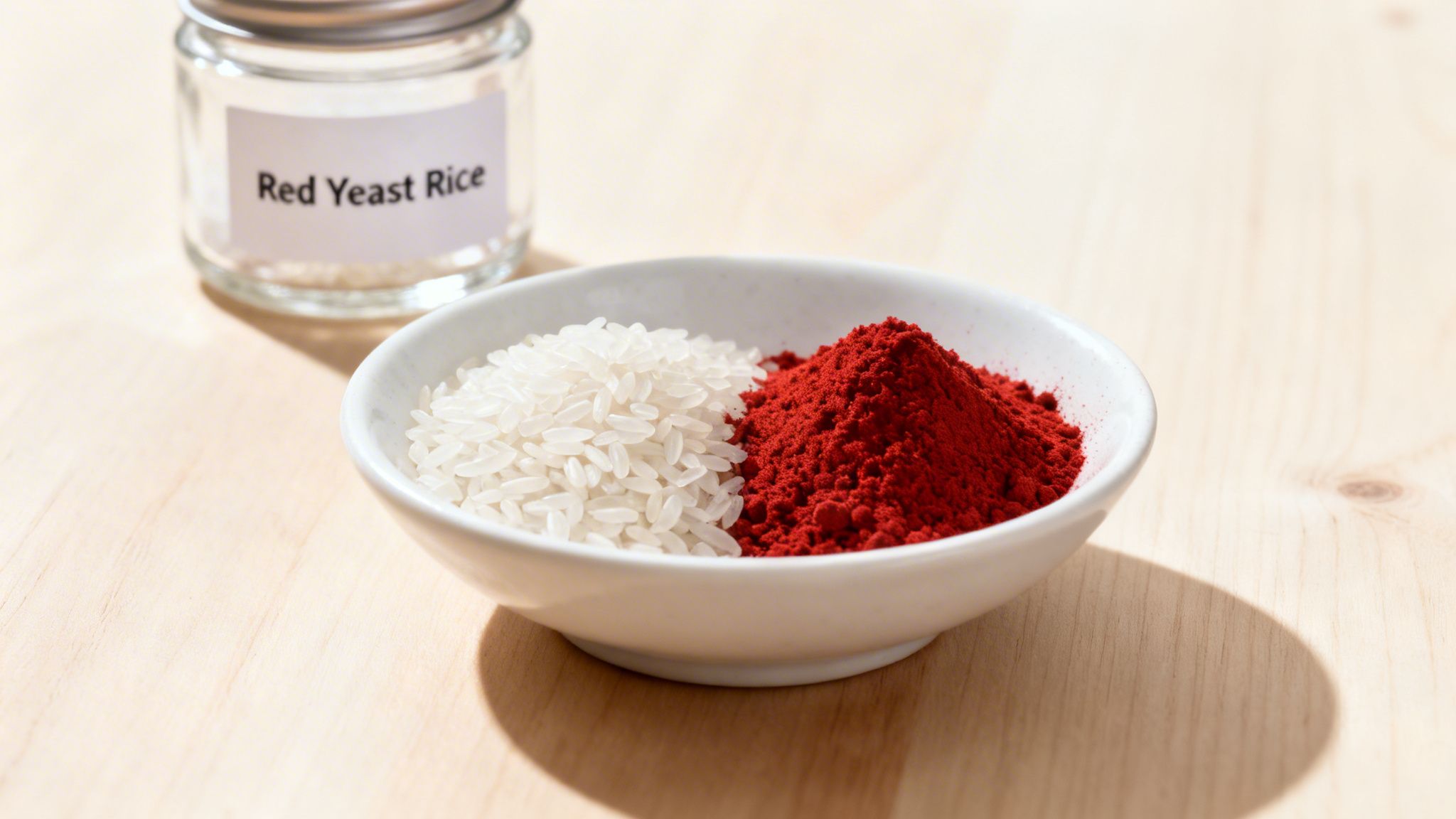
The process is a classic example of fermentation, much like how we get sourdough, yogurt, or kimchi. A living culture is introduced to a simple food, transforming it into something new. In this case, the Monascus purpureus mold is grown on polished rice, which could be any number of different rice varieties.
This ancient technique doesn't just change the rice's color; it also imparts a unique flavor and creates new chemical compounds.
More Than Just a Pretty Color
While the stunning color is what you notice first, red yeast rice brings more to the table. It’s a workhorse in the kitchen, adding a subtle, slightly sweet yet savory flavor that deepens the taste of many dishes. You've probably seen it lending its ruby gloss to classics like Peking duck and char siu (Chinese BBQ pork).
It’s getting a lot of attention these days for a few good reasons:
- A natural food colorant: As more people look to avoid artificial dyes like Red No. 40, red yeast rice offers a fantastic, plant-based alternative straight from nature.
- A functional food: This means it can offer health benefits that go beyond basic nutrition. It’s food with a purpose, which we'll dive into soon.
- A rich history: This is no modern health fad. Red yeast rice is a time-honored ingredient, trusted in Asian culinary and medicinal traditions for centuries.
Understanding red yeast rice is simple: it’s a fermented grain that connects a modern desire for natural ingredients with ancient wisdom. Once you see it this way, you can feel much more confident about bringing it into your own kitchen.
From its fascinating history to its health profile and delicious uses, let’s get to know this incredible ingredient and learn how you can safely use red yeast rice in food at home.
A Culinary Tradition Spanning Centuries
Red yeast rice is definitely not some new health trend. Its story is woven deep into the fabric of Chinese culinary history, stretching back more than a thousand years to the Tang Dynasty, around 800 AD.
Long before modern food dyes and chemical preservatives, chefs in ancient China had their own secret weapon. They turned to powerful, natural ingredients like red yeast rice to both preserve meats and give them a stunning, appetizing color.
A Time-Honored Culinary Tool
This fascinating ingredient was so much more than just a natural food coloring. Red yeast rice was fundamental to creating some of the most iconic and delicious dishes in Asian cuisine.
- Peking Duck: Ever wonder how the skin gets that gorgeous, glossy mahogany-red color? Traditionally, red yeast rice was a key part of the marinade, lending the duck its signature hue and a subtle, complex flavor.
- Char Siu (Chinese BBQ Pork): The secret behind the beautiful ruby-red glaze on the edges of this beloved dish is often red yeast rice. It creates a vibrant color that caramelizes perfectly during roasting.
- Fermented Tofu (Furu): Sometimes called "Chinese cheese," this intensely savory condiment is often fermented with red yeast rice, which gives it a distinct reddish color and a unique, umami-packed taste.
This long history shows us that red yeast rice in food is not some modern, lab-created novelty. It’s a time-tested, plant-based ingredient that has been valued for centuries for its ability to naturally color, preserve, and flavor food.
From Ancient Kitchens to Modern Pantries
Today, red yeast rice is making a major comeback. As more people look for clean, natural ingredients, this ancient staple fits perfectly into a modern, health-conscious lifestyle. It's a fantastic example of how ancient food wisdom can meet our current wellness goals.
The proof is in the numbers. The global market for red yeast rice is expected to jump from US$461.7 million in 2026 to over US$1.03 billion by 2034, and food applications are a huge part of that growth. This isn't just a niche trend; it’s a massive shift towards foods that are both delicious and functional.
This renewed interest is part of a larger movement towards whole, unprocessed foods. By exploring the world of fermentation, you'll find even more ways to support your well-being naturally. Our guide on how fermented foods for digestion can be a game-changer for your gut health is a great place to start. When you understand the rich past of red yeast rice, you can really appreciate its place in a modern kitchen.
The Science Corner: How Red Yeast Rice Supports Health
Alright, let's move from the kitchen to the clinic-metaphorically, of course. We've seen how red yeast rice can transform a dish with its stunning color and subtle flavor, but its value goes far beyond aesthetics. For centuries, it's also been prized for what it can do for our health.
This is what many of us call a "functional food." It’s a simple idea: some foods do more than just provide basic energy and nutrients. They offer a tangible wellness boost, and red yeast rice is a perfect example, particularly when it comes to heart health.
The Science Behind the Support
So, where does this power come from? It all happens during fermentation. As the Monascus purpureus mold works its magic on the rice, it creates a fascinating group of compounds. One of these is a real standout: monacolin K.
Here’s the remarkable part: monacolin K is chemically identical to the active ingredient found in certain prescription statin medications-the ones specifically designed to manage cholesterol. When you cook with red yeast rice, you're getting this compound in its natural, whole-food state, not as an isolated chemical.
This connection hasn't gone unnoticed. In Europe, where functional foods are a huge part of the wellness conversation, red yeast rice is incredibly popular, making up over 30% of the global market. Why? Because the results are compelling. Studies have shown that some red yeast rice products can help lower LDL (the "bad") cholesterol by an impressive 20-30%. It's a traditional ingredient that has captured the serious attention of modern science. You can see this trend reflected in detailed analyses like this global red yeast rice market report.
Simply put, using red yeast rice in your meals is a way to lean on a time-honored, natural approach to supporting healthy cholesterol levels that are already in a normal range.
A Holistic Approach to Wellness
Of course, true health isn't about finding a single "magic bullet" ingredient. A vibrant, heart-healthy lifestyle is built on a foundation of smart, consistent choices-a balanced diet, regular movement, and finding ways to manage stress. Think of red yeast rice as one valuable player on a much larger team.
Building that well-rounded routine means supporting your body from all angles. For many of us, that involves pairing a diet rich in whole and functional foods with clean, targeted supplementation. At Yuve, this is our passion. We create plant-based supplements that work with your healthy habits, helping to fill nutritional gaps and give your body the comprehensive support it needs to truly thrive.
Using Red Yeast Rice Safely in Your Kitchen
We've covered the fascinating history and potential benefits of red yeast rice, but any ingredient this powerful deserves a healthy dose of respect. It's completely understandable to feel a bit cautious when navigating functional foods, so let's break down exactly how you can bring red yeast rice into your food safely and responsibly.
The first thing you need to know about is a potential contaminant called citrinin. During the fermentation process, some strains of the Monascus mold can unfortunately produce this compound, which can be harmful to the kidneys.
I do NOT think you should ever take a risk with this. Any reputable brand will go to great lengths to test their products and guarantee they are citrinin-free. This is perhaps the single biggest reason why you can't just grab any red yeast rice off the shelf-purity and safety are everything.
Food vs. Supplement: What’s The Difference?
You'll generally find red yeast rice sold in two different forms: as a culinary ingredient (often a powder) and as a dietary supplement (usually in capsules). The real difference between them comes down to the concentration of its active compound, monacolin K.
- As a Food: When used in small amounts for that classic Peking duck color or to give a loaf of bread a beautiful rosy hue, the level of active compounds is quite low.
- As a Supplement: Products designed to support health goals, like managing cholesterol, are specifically formulated to contain a standardized, much higher amount of monacolin K.
This is where the regulatory landscape gets a little complicated. Because monacolin K is chemically identical to the active ingredient in a prescription statin, the FDA has a complex stance, sometimes classifying high-concentration products as unapproved drugs. This makes brand transparency non-negotiable.
Your Safety Quick-Wins
Feeling a little overwhelmed? No need. This straightforward decision guide can help you visualize the steps to consider before using red yeast rice in your food.
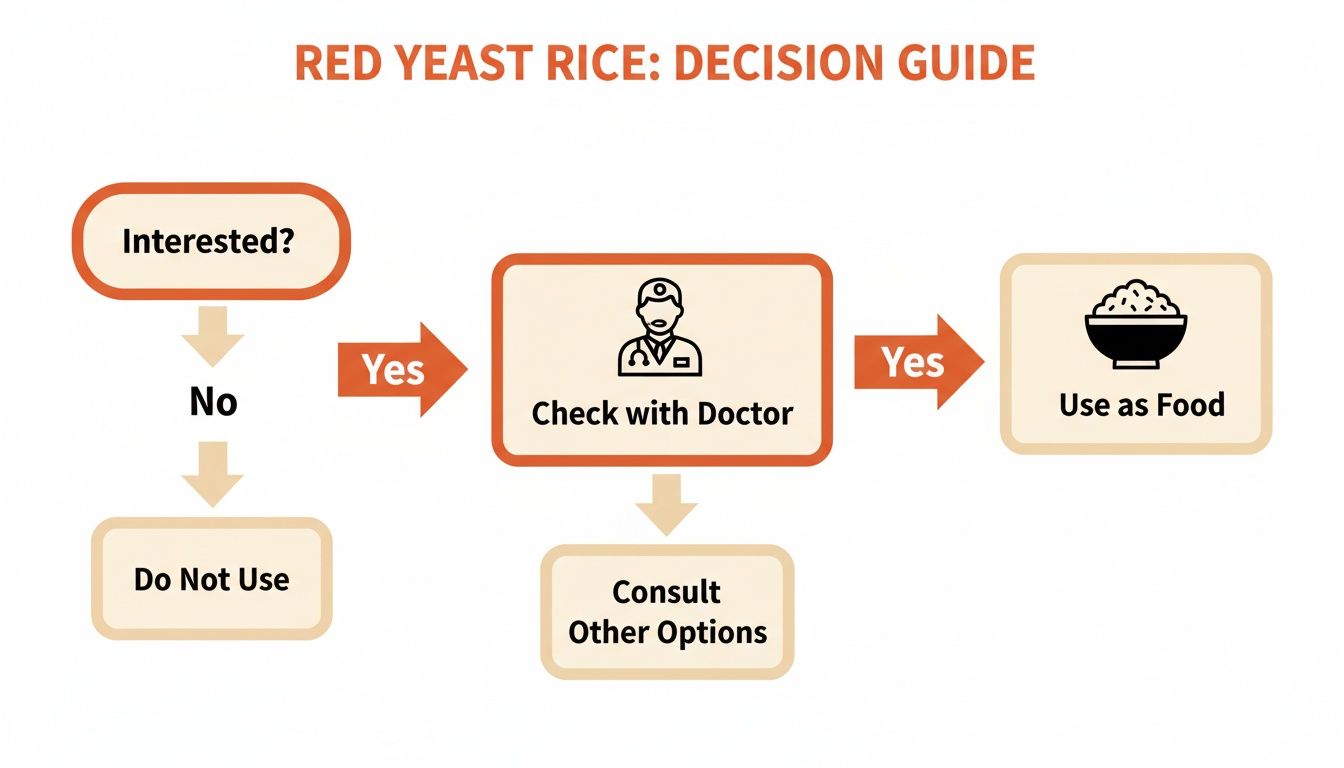
This quick reference table breaks down the most important safety actions to ensure you're using red yeast rice effectively and without risk.
Red Yeast Rice Safety Checklist
| Action Item | Why It Matters | Yuve's Approach |
|---|---|---|
| Consult Your Doctor | Monacolin K is a statin-like compound and can interact with medications or have side effects. Medical guidance is essential, especially if you're on cholesterol medication. | We always recommend speaking with a healthcare professional before starting any new supplement regimen. |
| Choose Citrinin-Free Products | Citrinin is a toxic byproduct that can form during fermentation and harm the kidneys. It's a serious safety concern. | Our red yeast rice is rigorously third-party tested to be certified citrinin-free, ensuring purity and safety. |
| Verify Third-Party Testing | Independent testing confirms that the product is pure, potent, and free from contaminants, providing an unbiased seal of quality. | We believe in full transparency. Our products are third-party tested to verify what's on the label is what's in the bottle. |
| Practice Kitchen Safety | When using powders, preventing cross-contamination ensures the integrity of your meals and the safety of everyone eating them. | We encourage smart kitchen habits for all ingredients, not just red yeast rice. |
Ultimately, your journey with red yeast rice should always start with a conversation with your healthcare provider. Here are the key takeaways:
-
Always Talk to Your Doctor: This is the absolute most important step. Because of the statin-like nature of monacolin K, you should never take it without getting a green light from your doctor, especially if you are already taking cholesterol medication.
-
Choose Reputable Brands: Look for companies that are transparent about their sourcing and testing. You want products that are third-party tested and explicitly certified citrinin-free. This was a founding principle for us at Yuve-sourcing only the purest ingredients.
-
Practice Kitchen Safety: When you're using red yeast rice powder in recipes, remember the fundamentals of food safety. It's always a great idea to prevent cross-contamination in your kitchen to keep every meal you make both safe and delicious.
Delicious Ways to Cook With Red Yeast rice
Now for the best part-bringing this amazing ingredient into your own kitchen. We've talked history and safety, but using red yeast rice in food is where the real creativity begins. It’s your chance to add a gorgeous, natural crimson hue and a subtle umami note to your meals.
We're going to explore some simple, modern, and completely vegan-friendly ways to play with it. Think of it as a secret weapon for stunning color and savory depth. A little truly goes a long way!
Simple and Creative Vegan-Friendly Recipes
You don't need complicated recipes to make an impact. These ideas are all about incorporating red yeast rice powder into dishes you probably already make. It’s the perfect way to add a "wow" factor with hardly any extra effort.
-
'Red Velvet' Beet & Berry Smoothie: Give your standard smoothie a makeover. Just add a quarter teaspoon of red yeast rice powder to your blend of beets, berries, and plant-based milk. It won't really change the taste, but it will deepen the color into a rich, velvety red that just looks incredible.
-
Savory Tofu & Tempeh Marinades: This is a game-changer for plant-based proteins. Whisk a teaspoon of the powder into a simple marinade of soy sauce, garlic, ginger, and a little maple syrup. When you bake or pan-fry your tofu or tempeh, it will develop a beautiful reddish crust that looks just like classic char siu.
-
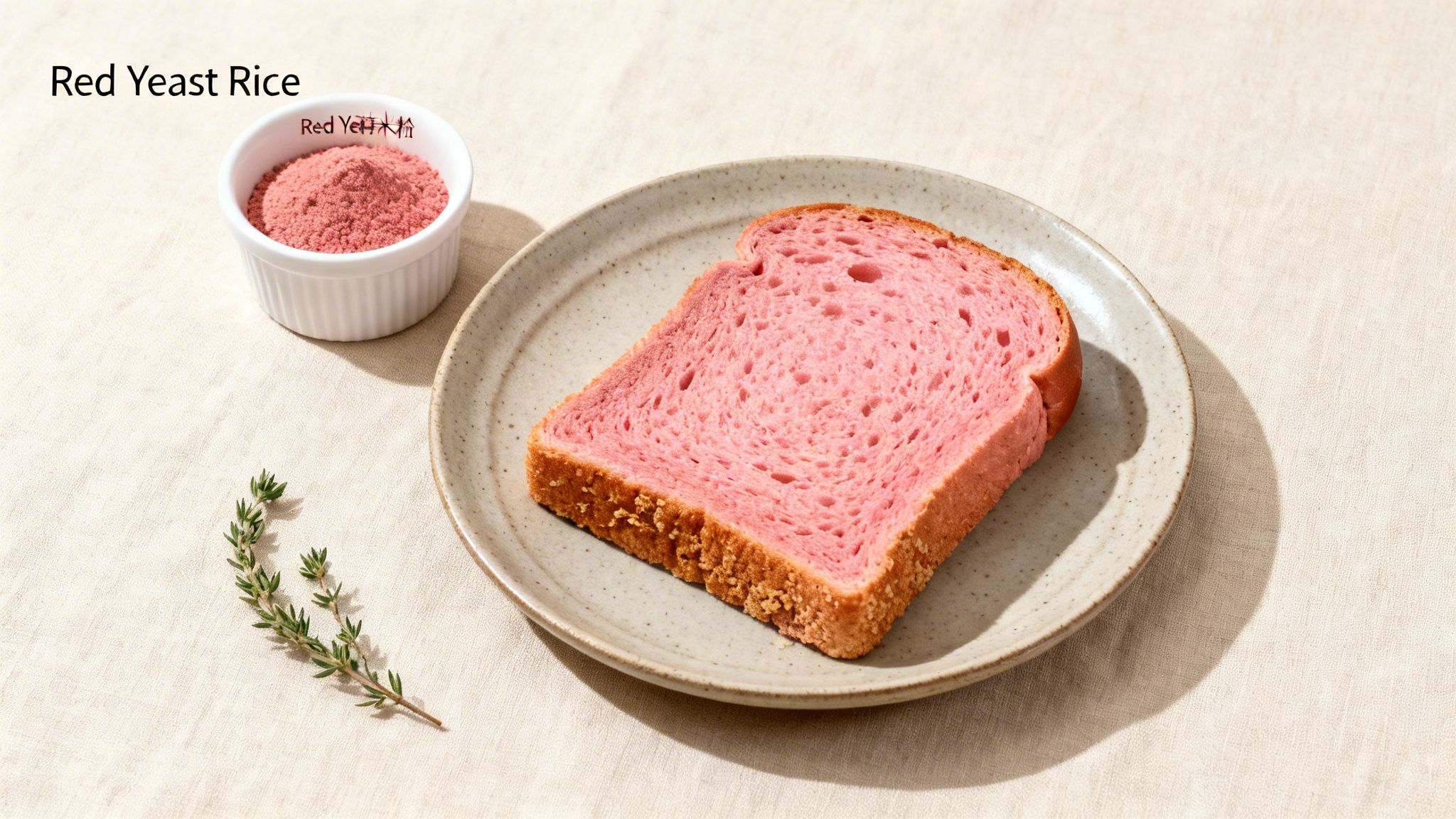
Beautiful Rosy Bread Dough: If you love to bake, you have to try this. Mix about one teaspoon of red yeast rice powder into your favorite bread dough. The finished loaf will have a delicate pink crumb that makes for stunning sandwiches or avocado toast.
Quick Wins to Get Started
Feeling inspired but want to ease into it? I get that. Sometimes the best way to test out a new ingredient is to just sprinkle it into something familiar.
My favorite way to start with a new food is to just add a little to something familiar. When I first tried red yeast rice, I added a tiny pinch to my rice cooker. The result was a gorgeous, subtly pink rice that made my weeknight grain bowl feel special. - Sam, Yuve Founder
As you get more adventurous with new foods, you want to feel your best from the inside out. That’s why we formulated Yuve Daily Cleanse. It's a gentle, proactive step to support your body's natural detox pathways, helping you feel light and ready for anything. It’s our go-to for ensuring our bodies feel just as vibrant as our food looks.
Finding and Choosing Quality Red Yeast Rice Products
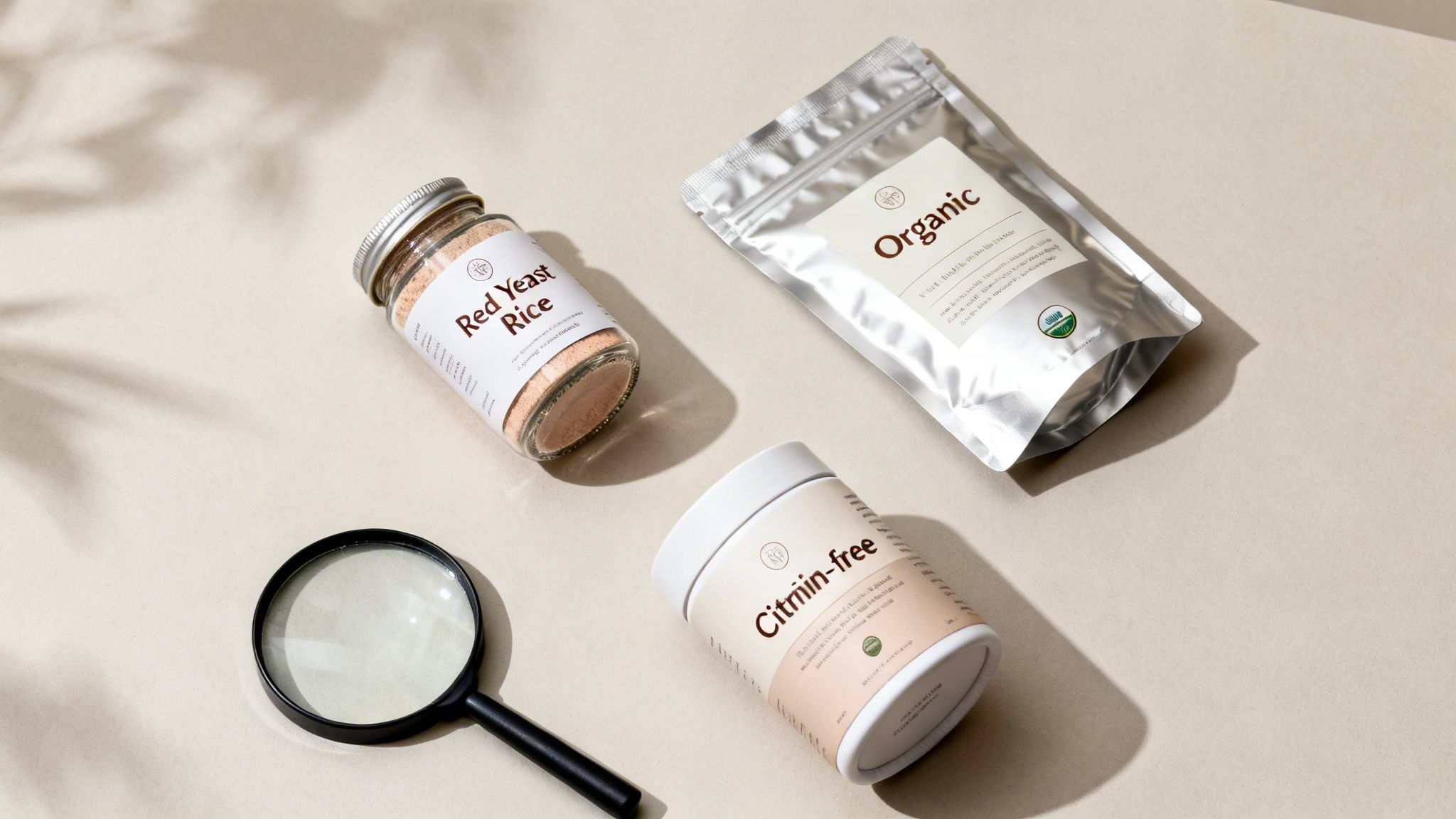
So, you're ready to start experimenting with red yeast rice. That’s fantastic. But before you grab the first product you see, it’s crucial to know what you’re looking for. Not all red yeast rice is created equal, and choosing a high-quality product is key for both safety and effectiveness.
Depending on what you’re making, you’ll find it in a few different forms:
- Powder: This is by far the most versatile option for cooking. You can whisk it into marinades, mix it into bread dough, or even blend it into smoothies to get that incredible ruby hue.
- Paste: A concentrated form that’s often a staple in traditional Asian recipes. It’s perfect for creating rich glazes and deeply colored sauces.
- Whole Kernels: These are simply the fermented rice grains. You can grind them yourself into a fresh powder or use them whole in certain preparations.
How to Read the Label Like a Pro
When it comes to buying red yeast rice in food or supplement form, quality is everything. This is one area where you absolutely don't want to cut corners, as your health is on the line.
Here are the most important quality markers to look for on any package:
- 'Citrinin-Free' Certification: This is the most critical point. Citrinin is a mycotoxin that can sometimes form during the fermentation process and can be harmful. Any trustworthy brand will test for its absence and clearly state their product is citrinin-free. Don't even consider a product without this guarantee.
- Third-Party Testing: This is your proof that an independent laboratory has checked the product for purity and potency. It confirms that what's on the label is actually in the bottle. Our guide on the best third-party tested supplements goes into more detail about why this is so important for your safety.
- Transparent Sourcing: Does the company tell you where their rice is grown and fermented? Good brands are proud of their sourcing and aren't afraid to share it. Transparency is a huge green flag.
- Organic Labels: Opting for organic is a great way to ensure the rice was grown without synthetic pesticides or chemicals.
Keep in mind that using red yeast rice as a simple food coloring in small amounts is very different from using a standardized supplement for specific health goals. Always choose the right product for your intended purpose.
Found a brand of red yeast rice powder or paste you swear by? We'd love to hear about it. Share your finds in the comments below to help others in the community!
FAQ: Your Questions About Red Yeast Rice
It's natural to have questions when you're trying a new ingredient, especially one with a story as rich as red yeast rice. You're not just adding a color; you're using something with a long history in both kitchens and traditional medicine. So, let's clear up a few of the most common things people ask.
What Does It Actually Taste Like?
This is usually the first question on everyone's mind! Honestly, the flavor of culinary red yeast rice powder is incredibly subtle. It adds a faintly sweet, slightly savory note that borders on umami, but it's not going to take over your dish.
Think of it more as a natural food colorant with a whisper of flavor. In most recipes, you'll appreciate its gorgeous red hue long before you can pinpoint a specific taste.
Can I Take It with Cholesterol Medication?
This is a really important question, and the answer is a firm no-not without talking to your doctor first. You must speak with your healthcare provider before combining them.
Here's why: red yeast rice can naturally contain a compound called monacolin K, which is chemically identical to the active ingredient in certain statin medications. Taking them together is like unknowingly doubling your dose, which could lead to serious side effects. This isn't a "maybe" situation; it's a mandatory conversation with your doctor to keep you safe.
Is All Red Yeast Rice Vegan and Gluten-Free?
In its pure form, absolutely. Red yeast rice is simply rice that has been fermented with a specific yeast, making it inherently vegan and gluten-free.
That said, it's always smart to be a "label detective." Always check the packaging for disclaimers about shared equipment or "may contain" warnings. If you have celiac disease or a severe allergy, you'll want to be sure there's no risk of cross-contamination from the facility where it was processed.
How Much Is Safe to Use in Food?
The answer really depends on what you're using it for. It's crucial to separate using it in the kitchen from using it as a health supplement.
- For Culinary Use: When you're just adding color and a hint of flavor to a dish, a small amount like a teaspoon or two of the powder in a large recipe is the way to go.
- For Health Support: If you're considering a red yeast rice supplement for its health properties, you must follow the dosage instructions on the product label and only do so under a doctor's supervision.
Using red yeast rice in food is a fantastic culinary adventure. With this information in hand, you can start exploring its potential with confidence and peace of mind.
At Yuve, we believe that feeling your best should be simple. Our supplements are crafted with clean, plant-based ingredients to support your wellness journey from the inside out. Explore our full range of vegan-friendly products today.