Ever finish antibiotics expecting your digestion to settle, only to find your stomach feels like a balloon by afternoon? Bloating, loose stools, constipation, fatigue, and food sensitivity can feel alarming, especially when you thought the infection was the last hurdle.
Restoring gut microbiome after antibiotics isn't about forcing your body back to normal with one yogurt, capsule, or restrictive meal plan. Your gut is an ecosystem, and recovery depends on the antibiotic, your starting microbiome, your symptoms, and the environment you create afterward. This guide offers a realistic timeline, food-first strategies, a more careful look at probiotics, and a daily routine you can adapt without panic.
Understanding Your Post-Antibiotic Reality
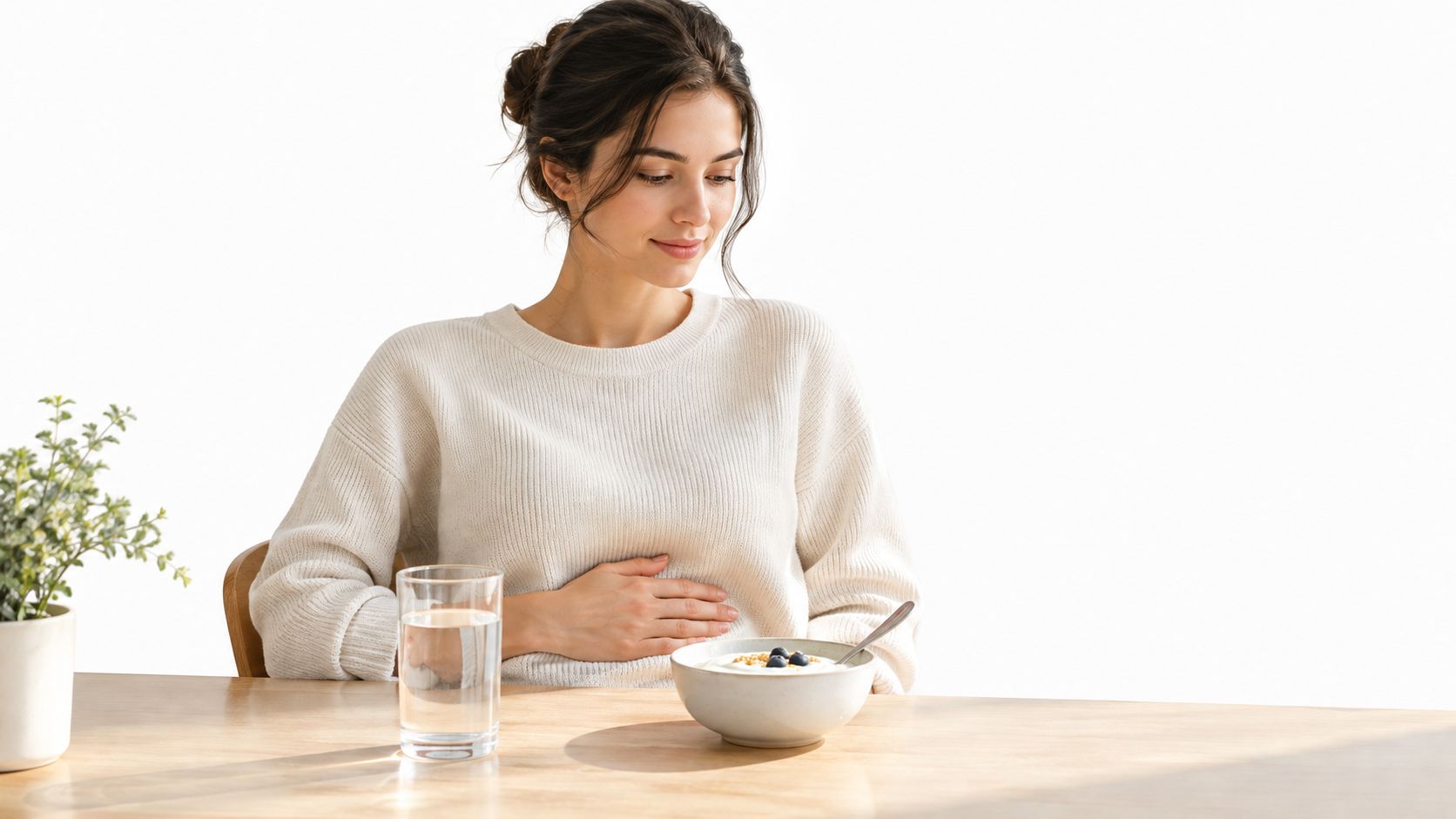
A few days after finishing antibiotics, you might notice that familiar foods suddenly feel unfamiliar. A breakfast that never bothered you may bring bloating. Your bowel habits may change. Even if the original infection is gone, your digestive system can still feel unsettled.
That experience doesn't mean you've done anything wrong. Antibiotics can affect beneficial microbes alongside the bacteria causing an infection, so the gut community may need time to reorganize. Think of it less like cleaning an empty room and more like repairing a busy city after a storm. Some roads reopen quickly, while smaller neighborhoods need longer to reconnect.
Why symptoms can linger
Your gut microbiome doesn't have just one job. Different microbes interact with food, produce useful compounds, compete with opportunistic organisms, and contribute to the stability of the intestinal environment. When that community shifts, digestion may feel different even if tests don't show a dramatic problem.
A 2020 systematic review of 31 studies found that, for most people, the gut microbiota moved back toward its baseline within a few weeks after antibiotics, while some studies observed effects lasting 2 to 6 months (systematic review of post-antibiotic microbiome recovery). “Back toward baseline” is important wording. It doesn't promise that every species, function, or symptom will normalize at the same pace.
Practical rule: Recovery isn't measured by one perfect bowel movement. Look for gradual improvements in comfort, regularity, food tolerance, and energy.
You also don't need to earn recovery by eating perfectly. Start with regular meals, gentle movement, enough fluids, and foods you can tolerate. If your stomach is sensitive, small changes are more useful than an aggressive supplement stack. You've got this, but your gut may need consistency more than intensity.
The Timeline of Microbial Recovery
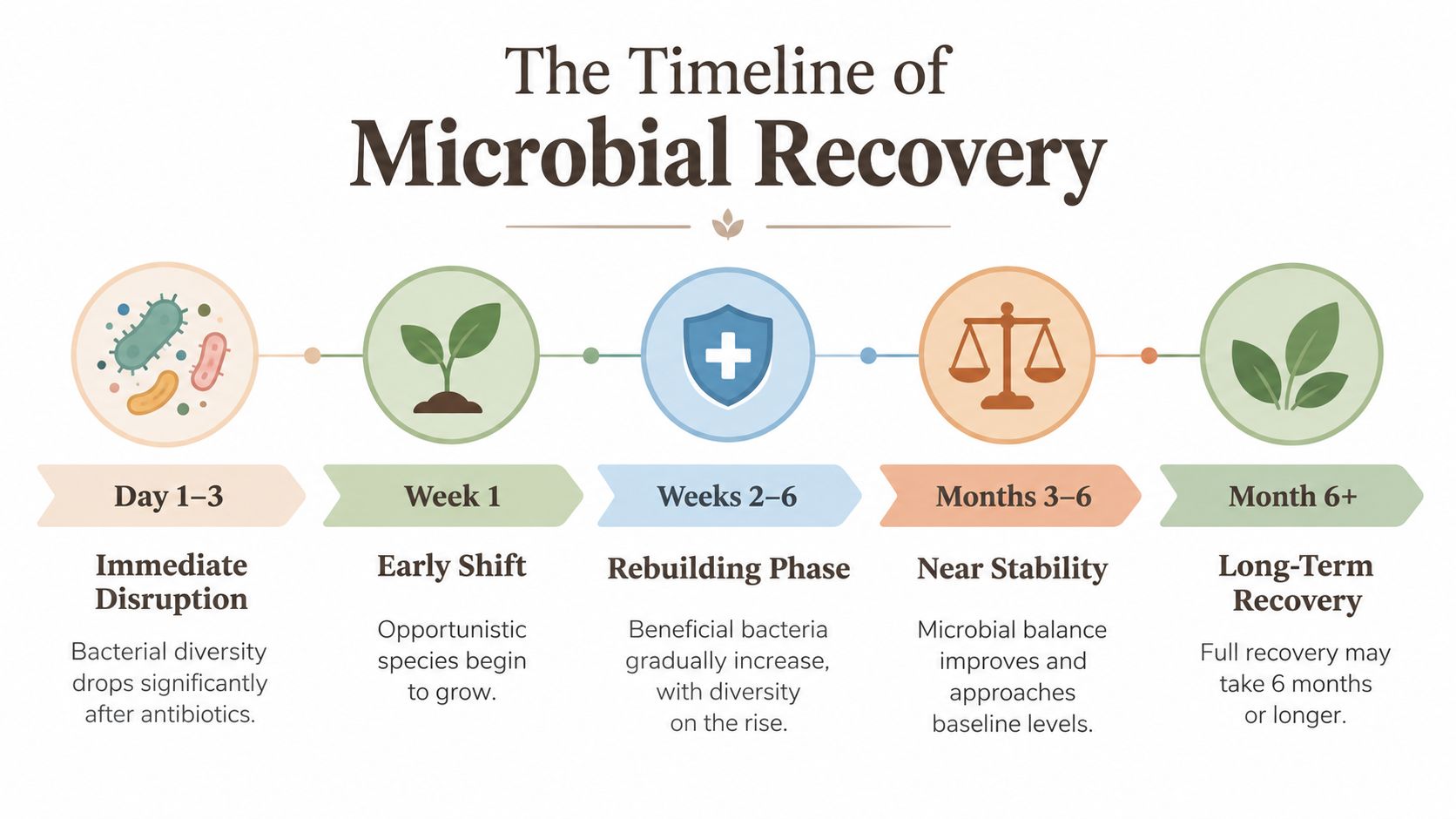
You finish the prescription, choose probiotic yogurt, and expect your digestion to feel normal within a week. Recovery rarely follows that neat script. Microbial composition, species-level presence, resistance genes, and metabolic function can recover on different timelines, so symptom relief is only one part of the picture.
A 2018 metagenomic study of 12 healthy men examined a four-day combination of meropenem, gentamicin, and vancomycin. The overall microbiota returned near its starting composition in about 1.5 months, yet 9 common species found before treatment remained undetectable in most participants after 180 days (the 2018 recovery study). A community can therefore look broadly familiar while particular members are still missing.
A practical way to read the recovery curve
| Recovery layer | What it means |
|---|---|
| Composition | The overall microbial mix moves closer to its earlier pattern. |
| Species presence | Individual organisms return, or remain absent, at different rates. |
| Function | Microbes resume activities involving digestion, metabolites, and interactions with the gut environment. |
| Resistome | Antibiotic resistance genes and related microbial features may follow their own timeline. |
A 2026 population-scale study of 14,979 adults in Sweden found that diversity recovered most rapidly during the first 2 years after antibiotic exposure, then more slowly. The study also identified measurable microbiome associations lasting 4 to 8 years for certain antibiotics. Clindamycin, fluoroquinolones, and flucloxacillin showed the strongest long-term associations (Nature Medicine population study). These findings do not mean symptoms will last for years. They show that antibiotic history can leave a microbial imprint beyond a short digestive episode.
A 2025 review describes recovery as highly variable. Some communities return near baseline within 1 to 12 months, while others remain changed in taxonomy, resistance genes, or metabolic output. After prolonged exposure, partial recovery may take 8 months or more (2025 review of post-antibiotic microbiome recovery).
What this means for you: Feeling better and restoring every microbial feature are different goals. Track symptoms and food tolerance, but do not treat a temporary digestive change as proof of permanent damage. Recovery is gradual, and you can support it without chasing a one-size-fits-all probiotic fix.
Nutritional Strategies for Repopulation
Food gives recovering microbes the materials they need to grow and function. The most useful shift is usually not “What must I remove?” but “What supportive foods can I add without overwhelming my digestion?”
Fiber is the foundation. Your body doesn't fully digest many plant fibers in the upper digestive tract, so microbes in the colon can use them as fuel. Prebiotics are a type of fiber or plant compound that selectively supports beneficial microbes. General fiber still matters, but prebiotic foods are especially useful when you're trying to create a more welcoming habitat.
Build your plate gradually
If you're already bloated, adding a huge bowl of beans, raw onions, and bran cereal overnight may backfire. Increase variety in manageable portions and use cooked foods when raw produce feels harsh.
Try this progression:
- Begin with gentle anchors. Oats, cooked carrots, potatoes with the skin, bananas, or a small serving of lentils can be easier starting points than a sudden mountain of raw vegetables.
- Add prebiotic variety. Garlic, onions, leeks, asparagus, and oats provide fibers that gut microbes can ferment. Start with the portion your body handles, then build slowly.
- Include plant color. Berries and other polyphenol-rich foods contribute compounds that interact with the gut ecosystem. Green tea is another practical source to include if it suits you.
- Rotate rather than obsess. Use different fruits, vegetables, whole grains, legumes, nuts, and seeds across meals so you're not relying on one ingredient.
A simple shopping list
- Prebiotic vegetables: Garlic, onions, leeks, and asparagus.
- Comfortable grains: Oats and other whole grains you tolerate.
- Fiber-rich plants: Lentils, beans, peas, carrots, broccoli, and fruit.
- Polyphenol sources: Berries, green tea, herbs, and colorful plant foods.
- Fermented options: Plain yogurt, kefir, kimchi, or sauerkraut, provided they fit your tolerance and medical needs.
Drink fluids consistently, especially as fiber intake rises. If you have IBS-like symptoms, introduce one major change at a time so you can tell whether a food helps, irritates, or needs a smaller portion.
The aim isn't to force more fiber at any cost. The aim is to feed your existing community while keeping meals comfortable enough to repeat. If garlic or onions trigger symptoms, you can still support gut health with oats, berries, cooked vegetables, legumes in tolerated portions, and other plant foods.
Probiotics and Fermented Foods - A Nuanced Look
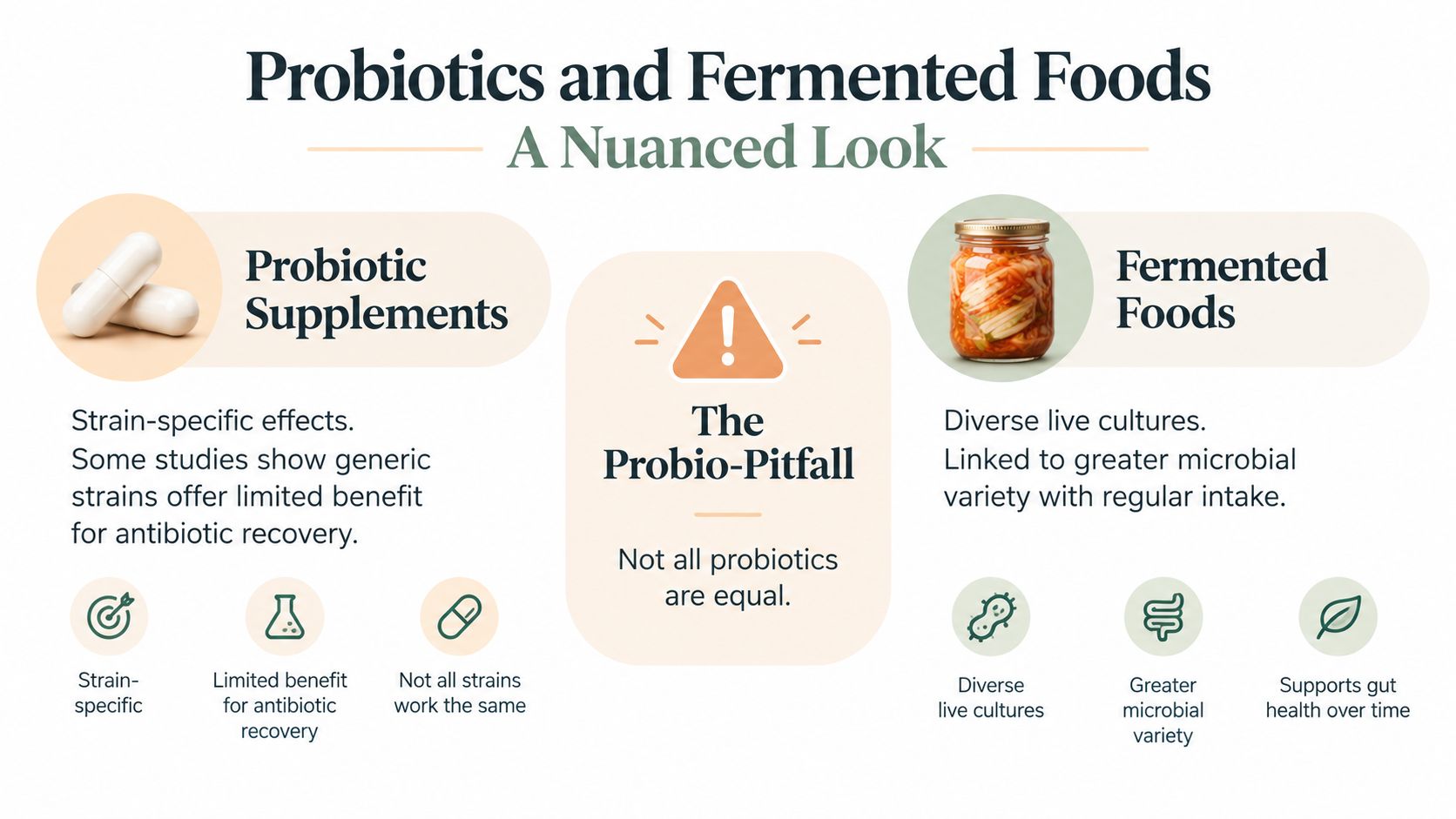
After antibiotics, you may feel pressure to buy a probiotic immediately. The more useful first question is what you want to support: preventing antibiotic-associated diarrhea, easing symptoms, or helping your broader microbial community recover. A probiotic contains selected strains, and their effects can vary with the person, timing, dose, antibiotic, and outcome being measured.
A 2024 systematic review of probiotics for antibiotic-related microbiome disruption found mixed results. One study reported protection against diversity loss, another found worsening, and four found no effect (2024 systematic review indexed in PubMed). This does not show that probiotics never help. It shows that a general promise of complete restoration is stronger than the evidence supports.
Compare the options
Fermented foods such as kefir, yogurt, kimchi, and sauerkraut offer live cultures within the food itself. Tolerance varies, and sauerkraut cannot be assumed to replace every species affected by antibiotics. A small serving may still be a practical addition if it feels comfortable. You can browse organic sauerkraut choices, checking ingredients, preparation, and storage details before choosing.
Probiotic supplements provide more targeted strains, although “multi-strain” does not automatically mean “better.” In a controlled human study, a 12-member probiotic cocktail delayed taxonomic-diversity recovery compared with autologous fecal microbiota transplantation. The probiotic-treated group took about 6 months to normalize, compared with roughly 3 weeks without probiotics (controlled probiotic recovery study31108-5)). The finding challenges the assumption that adding outside organisms always helps the original community return.
Probiotics may still serve a different purpose during antibiotic treatment. An NCCIH summary of a 2017 analysis of 31 studies involving 8,672 patients reported moderate-certainty evidence that probiotics reduced the risk of C. difficile diarrhea among people receiving antibiotics (NCCIH probiotic information). Preventing a complication and restoring your pre-antibiotic microbiome are separate goals, so discuss the intended outcome with a clinician.
Auto-FMT and microbiota restoration remain specialized, emerging approaches, not do-it-yourself treatments. Research on donor-free restoration is promising in some settings, but clinical decisions require qualified specialists. You do not need to solve this alone.
For practical guidance, explore Yuve's guide to fermented foods with live cultures. The better question is “What outcome am I trying to support, and is this product appropriate for my health situation?” Start with the least complicated option you tolerate, monitor your response, and seek personalized advice when symptoms persist.
Building Your Daily Gut-Healing Routine
A routine works when it fits your actual day. You don't need a refrigerator full of specialty foods or a complicated schedule. Anchor each meal with something your gut can tolerate, then add variety in small, repeatable ways.
Morning
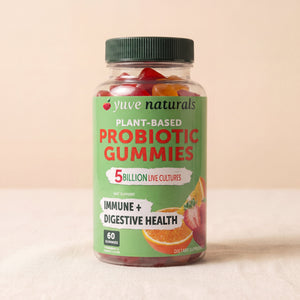
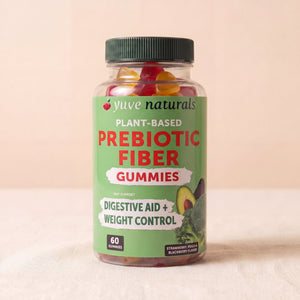
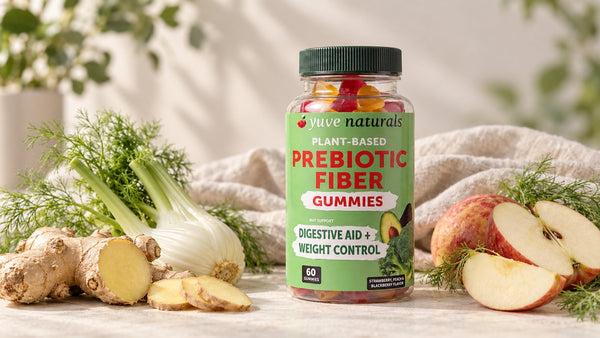
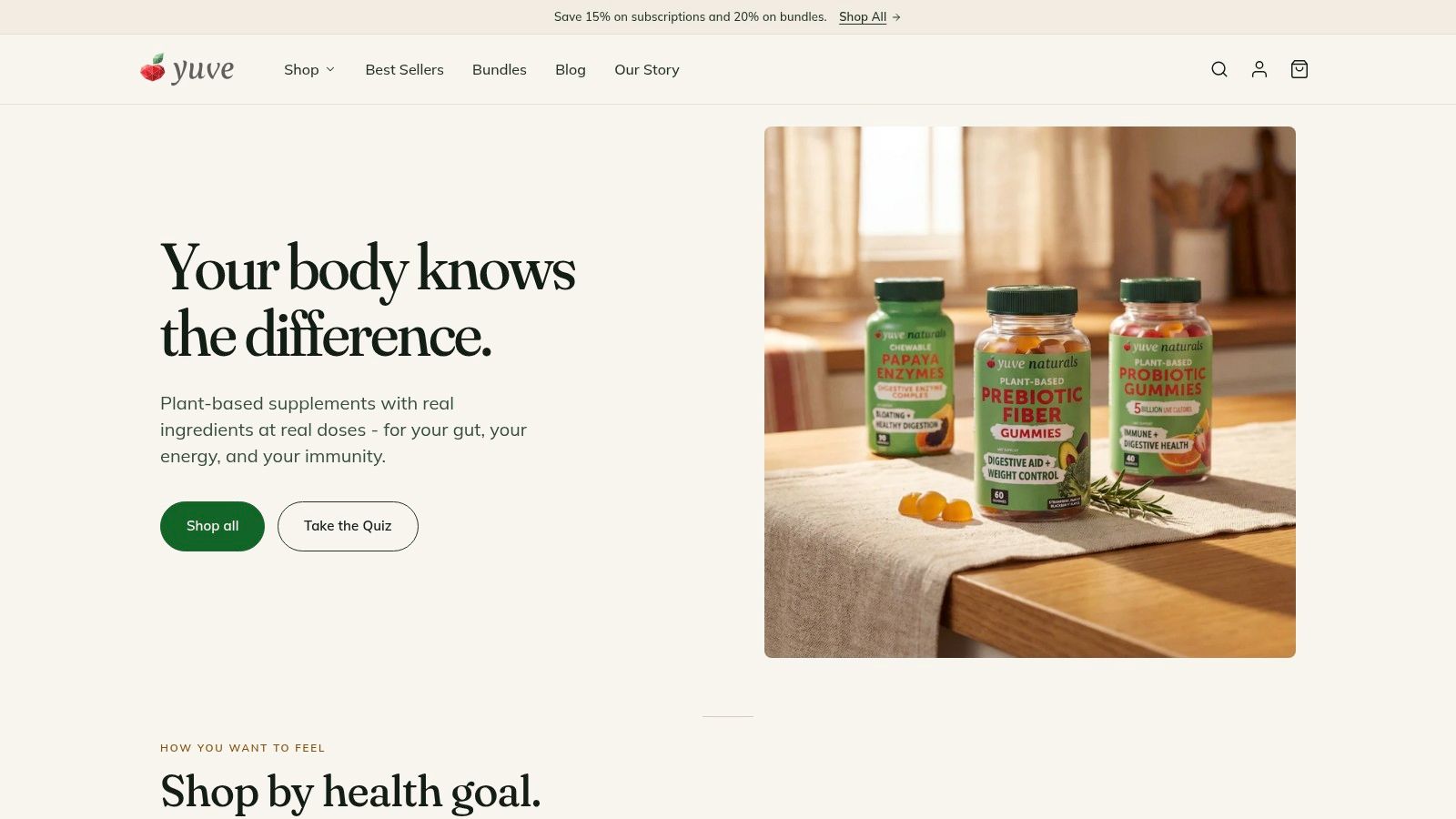
Start with water and a steady breakfast, such as oats with berries, or a simple meal containing cooked fruit and a tolerated grain. If you want convenient support, Yuve's vegan probiotic gummies contain 5 billion live plant-based cultures, while its prebiotic fiber gummy is designed to support digestive health and gut flora. Treat any supplement as a targeted tool, not proof that your microbiome has been fully restored.
Midday
Build lunch around a plant food you digest comfortably. Add cooked vegetables, a modest portion of legumes, or a whole grain, then notice how your body responds over the following hours. If symptoms flare, reduce the portion or simplify the meal rather than abandoning fiber altogether.
A short walk after eating may also help you feel more comfortable. Keep sleep and stress in the conversation, because digestive symptoms can feel more intense when you're exhausted or tense, even though those factors don't replace medical evaluation.
Evening
Include a small serving of fermented food if you tolerate it. Plain yogurt, kefir, sauerkraut, or kimchi can fit beside a balanced meal, but you don't need to force them. People with dairy intolerance, histamine concerns, immune compromise, or significant digestive symptoms should ask a clinician or dietitian for personalized guidance.
For readers exploring a broader clinical framework, gut healing with functional medicine can provide context on how practitioners assess persistent digestive concerns. Testing isn't automatically necessary after every antibiotic course, and a test result should lead to an appropriate clinical decision rather than a pile of supplements.
Your repeatable checklist
- Keep the prescription clinical: Don't stop or alter antibiotics unless the prescribing clinician tells you to.
- Feed gradually: Add prebiotic and fiber-rich foods in portions your digestion can manage.
- Choose one change: Introduce one new food or supplement at a time.
- Observe patterns: Note bloating, stool changes, pain, and food tolerance without judging yourself.
- Stay realistic: Improvement may be gradual, and symptom relief doesn't prove every microbial feature has returned.
Consistency beats perfection here. A simple breakfast, a plant-rich lunch, and a tolerable fermented food at dinner can be more useful than a dramatic plan you can't sustain.
When to Seek Professional Help and Next Steps
Most post-antibiotic digestive changes improve with time, but some symptoms need prompt medical attention. Contact a clinician urgently for persistent or severe diarrhea, especially if you feel dehydrated or unwell, because antibiotic-associated diarrhea can involve C. difficile. Seek medical care for blood in the stool, severe abdominal pain, fever, or unexplained weight loss.
Don't use probiotics, fermented foods, or fiber to delay evaluation of red-flag symptoms. People who are pregnant, immunocompromised, seriously ill, very young, or managing complex medical conditions should get individualized advice before starting a supplement routine.
Your next step can be small: finish treatment exactly as prescribed, choose one tolerable fiber-rich food, drink fluids, and track how your symptoms change. Restoring gut microbiome after antibiotics is personal, and the goal isn't perfection. It's a steady return to comfort, nourishment, and confidence in your body.
FAQ
How long does gut recovery take after antibiotics?
There isn't one universal endpoint. The microbiota may move near baseline within weeks, while particular species, functions, or resistance-related features can remain altered for months or longer. Your symptoms and microbial measurements may not change together.
Should everyone take a probiotic after antibiotics?
No. Evidence depends on the strain, timing, person, and outcome. Probiotics may help reduce some antibiotic-associated diarrhea risk, but they aren't a guaranteed way to recreate your original microbiome, and some regimens have delayed recovery in controlled research.
What foods support recovery?
Start with foods you tolerate, especially oats, vegetables, legumes, fruit, garlic, onions, leeks, asparagus, berries, and other plant foods. Increase fiber gradually, because a sudden jump can worsen gas and bloating.
Can yogurt restore my microbiome?
Yogurt can be a nutritious fermented food for people who tolerate dairy, but it can't be assumed to replace every organism affected by antibiotics. Use it as one food within a varied eating pattern, not as the entire recovery strategy.
What if bloating continues?
Persistent, severe, or worsening symptoms deserve clinical review. A dietitian or physician can help distinguish post-antibiotic changes from lactose intolerance, IBS, infection, inflammatory disease, or another condition.
Yuve offers vegan probiotic gummies with 5 billion live plant-based cultures and a prebiotic fiber gummy designed to support digestive health and gut flora. Visit Yuve to explore these options and choose a practical addition to your post-antibiotic routine.