Meta title: Soy Free Lecithin Guide for Sensitive Stomachs
Meta description: Learn what soy free lecithin is, why sunflower lecithin stands out, and how to read labels with confidence if you have a sensitive stomach.
You eat carefully. You choose the “clean” snack bar, the vegan supplement, the dairy-free creamer. Then your stomach feels off anyway, and you’re left squinting at a label wondering what you missed.
For a lot of people, the surprise ingredient is lecithin. More specifically, soy lecithin. It shows up in foods and supplements that otherwise seem gentle, and that can feel frustrating when you’re already trying so hard to avoid bloating, digestive discomfort, or allergy worries. If you’ve ever felt betrayed by a tiny ingredient line, you’re in the right place.
The Hidden Ingredient Wrecking Your Gut Peace
You’re doing all the “right” things. Breakfast is balanced. Lunch is safe. You skip the obvious triggers. Then mid-afternoon hits and, dun, dun, dun, your stomach starts acting like something snuck past security.
That hidden ingredient is often soy lecithin.
It’s common in protein powders, chocolates, nutrition bars, capsules, and drink mixes because it helps ingredients blend smoothly. The problem is that many people don’t even think to look for it. They’re scanning for dairy, gluten, artificial sweeteners, or sugar alcohols, while soy lecithin is present in the fine print.
For some people, soy lecithin may not cause any issue at all. For others, it can create a lot of uncertainty. If you have a sensitive stomach, digestive symptoms, or you’re trying to avoid soy completely, “probably fine” isn’t always comforting.
Practical rule: If a product leaves you feeling bad and you can’t figure out why, start with the small-print ingredients, not just the front-of-package claims.
That’s especially true with supplements. Many formulas are marketed as wellness-friendly, but the ingredient list tells the full story. If your gut tends to be reactive, finding the best diet for your sensitive stomach often starts with spotting the ingredients that hide in plain sight.
Why this matters more than people think
The goal isn’t to fear every additive. It’s to know which ones deserve a second look.
Soy free lecithin gives you another option. It lets manufacturers keep the texture and stability they want without relying on soy. For you, that can mean less label stress and a clearer path to products that match your needs.
What Exactly Is Soy Free Lecithin

Lecithin sounds complicated, but its job is simple. It helps ingredients that normally separate, like oil and water, stay mixed together.
I like to think of lecithin as a peacemaker. Oil wants to float away. Water wants nothing to do with it. Lecithin steps in and helps them cooperate so your drink mix blends better, your chocolate stays smooth, and your supplement powder doesn’t turn into weird clumps.
What lecithin actually is
Lecithin is a fatty substance found in plant and animal tissues. In foods and supplements, it’s used mostly as an emulsifier, which is a science-y word for “helps things mix.”
That doesn’t make it bad. In fact, lecithin can be very useful. The bigger question is where it comes from.
When a label says soy free lecithin, it means the lecithin was sourced from something other than soy. The most common source is sunflower. Some products also use rapeseed, sometimes labeled as canola-derived lecithin.
Why the soy free part matters
For many shoppers, soy free isn’t just a preference. It’s about reducing worry.
Some people avoid soy because of allergy concerns. Others prefer to avoid it because they want non-GMO or cleaner-label products. That helps explain why sunflower lecithin is gaining so much attention. According to this market guide on lecithin supplements, sunflower lecithin is part of the fastest-growing segment in the market, with a projected 10.9% CAGR from 2025 to 2030, driven by demand for allergen-free and non-GMO ingredients.
That projection matters because it reflects a bigger shift in how people shop. They don’t just want a supplement that works. They want one that feels safer, cleaner, and easier to trust.
Where you’ll usually find it
Soy free lecithin often shows up in:
- Powders like greens, protein, and drink mixes
- Capsules and softgels where ingredients need to stay evenly distributed
- Snack foods such as chocolate or creamy fillings
- Plant-based products that need help with texture
A quick visual can make the mixing role easier to understand:
If you remember one thing, let it be this: soy free lecithin is not a different function. It’s a different source. You still get the blending benefits, but without using soy.
Sunflower Versus Rapeseed The Top Soy Free Sources
Not all soy free lecithin is the same. If you’re scanning a label and trying to choose the option that feels best for your body and values, two names matter most: sunflower and rapeseed.
Both avoid soy. That’s the good news. But for many sensitive shoppers, sunflower tends to feel like the more straightforward choice.
Why sunflower gets so much attention
Sunflower lecithin has become popular in premium products because it lines up with what a lot of people are already looking for: allergen-aware ingredients, non-GMO positioning, and a cleaner-label feel.
It also has practical appeal for formulators. The source material and consumer perception both work in its favor, especially in vegan supplements and premium foods.
When people say they want “cleaner” supplements, they usually mean something simple: fewer ingredients that make them pause at the label.
Where rapeseed fits in
Rapeseed lecithin can also be soy free and useful in formulas. But it’s less familiar to many shoppers, and that matters. When you already have a sensitive stomach or a history of reacting to ingredients, unfamiliar labels can make buying feel harder than it should.
This doesn’t mean rapeseed lecithin is automatically a bad choice. It means it may require more label-reading and more brand trust.
Soy Free Lecithin Showdown Sunflower vs. Rapeseed
| Feature | Sunflower Lecithin | Rapeseed (Canola) Lecithin | Soy Lecithin |
|---|---|---|---|
| Soy free | Yes | Yes | No |
| Common shopper perception | Clean-label, allergy-friendly, easy to recognize | Less familiar to many shoppers | Very common, but not suitable for soy-free needs |
| Fit for sensitive consumers | Often preferred for peace of mind | Can work, but may raise more questions | May be avoided by those limiting soy |
| Use in premium products | Common in alternative milks and clean-label products | Less visible to consumers | Still widely used due to familiarity and cost |
| Label clarity | Usually easy to spot and understand | Sometimes less intuitive | Straightforward, but not soy free |
My practical take
If your main goal is true soy avoidance with the least mental friction, sunflower is usually the easiest box to check.
If you also care about the bigger ingredient picture, it can help to learn more about the health benefits of these oils so you can understand the source ingredient in context, not just the buzzwords around it.
For a sensitive stomach, less guesswork matters. A lot.
More Than a Label The Functional and Health Benefits
A lot of people think lecithin is only there to help manufacturers. That’s part of the story, but not all of it.
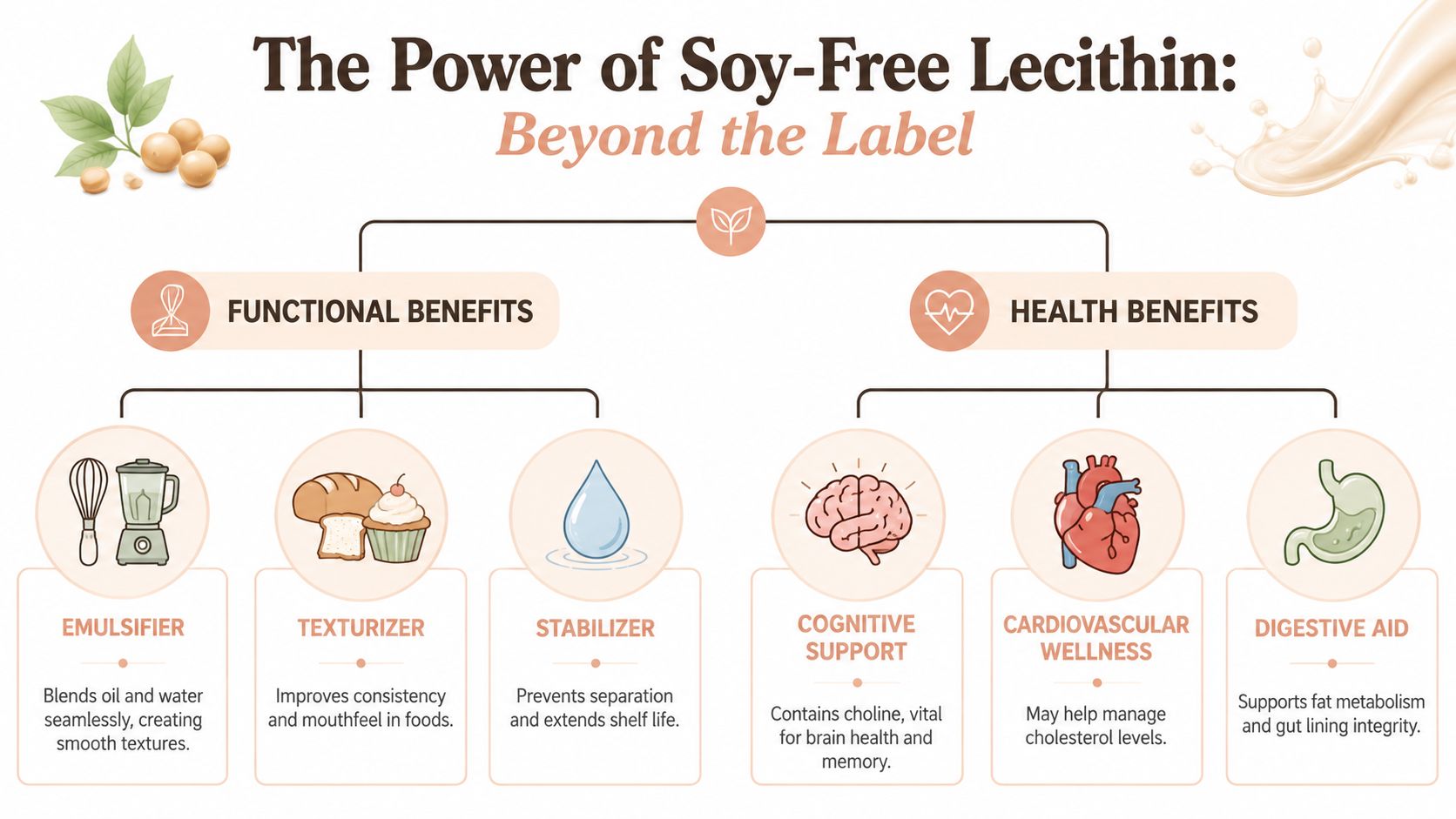
Yes, lecithin helps with texture and stability. It keeps powders from separating as quickly, helps fat-based and water-based ingredients work together, and makes products feel smoother in your mouth. If you’ve ever had a gritty drink mix or a chalky supplement, you’ve seen what happens when formulation goes sideways.
What it does in foods and supplements
In real life, soy free lecithin helps products feel more usable.
- In powders it helps ingredients disperse more evenly
- In chocolates and creamy foods it supports a smoother texture
- In capsules and blends it helps keep oil-based ingredients from separating as easily
That may sound small, but if you take a supplement every day, texture and mixability affect whether you’ll keep using it.
Why sunflower lecithin gets nutrition attention too
Sunflower lecithin isn’t just a blending helper. It also contains phospholipids, including phosphatidylcholine.
That matters because phosphatidylcholine is tied to choline, a nutrient involved in brain and nerve function. According to this review in PMC, de-oiled sunflower lecithin contains 25-35% phosphatidylcholine, compared with 20-30% in soy lecithin.
That doesn’t mean you should treat lecithin like a miracle ingredient. It does mean that when a brand chooses sunflower lecithin, it may be adding more than just a texture fix.
A good ingredient can do two jobs at once. It can make a product easier to use and more thoughtful nutritionally.
What this means for you
If you’re choosing between products that look similar on the front label, the ingredient list can reveal a lot.
A supplement made with soy free lecithin, especially sunflower lecithin, may offer:
- Better fit for soy-free needs
- Smoother formulation
- A source of phospholipids, including phosphatidylcholine
For sensitive shoppers, that’s a nice shift. You’re not just removing something you don’t want. You may also be choosing an ingredient with functional and nutritional upside.
Decoding the Label Allergens GMOs and Your Peace of Mind
When Sam, Yuve’s founder, was dealing with his own digestive struggles, the hard part wasn’t only the symptoms. It was the uncertainty. That low-grade question running in the background all day: “Why does this keep happening when I’m trying so hard to eat well?”
That feeling is familiar to a lot of people with sensitive stomachs. It’s exhausting to play ingredient detective every time you buy a supplement.
The soy allergy question people get confused about
Here’s the nuance. Soy lecithin is not the same thing as whole soy protein, and many soy-allergic people may tolerate it. But “many” and “all” are not the same word.
According to the Food Allergy Research & Resource Program soy guidance, soy lecithin can still contain 100 to 1,400 ppm of protein. The same guidance also notes that most soy-allergic individuals can safely consume soy lecithin, while people with severe soy allergies may still react.
That’s why this topic gets messy online. One person says soy lecithin is harmless. Another says it’s a hard no. Both are flattening a more nuanced reality.
Why some people still choose complete avoidance
If you have a severe allergy, a highly reactive system, or you feel better avoiding gray-area ingredients, soy free lecithin makes sense.
This isn’t fear-based. It’s clarity-based.
- If you need strict soy avoidance, soy-derived lecithin doesn’t offer full peace of mind.
- If you get anxious reading labels, a clearly soy-free source can make daily decisions easier.
- If you’re shopping for a child or a highly sensitive family member, a simpler ingredient story often feels worth it.
Peace of mind counts as a health benefit when food decisions have been stressing you out.
What to look for on the label
A label can tell you more than you think, especially if you know where to focus. If you want a refresher on understanding supplement facts panel, that guide can help you separate active ingredients from the “other ingredients” list that people often skip.
For everyday shopping, check these first:
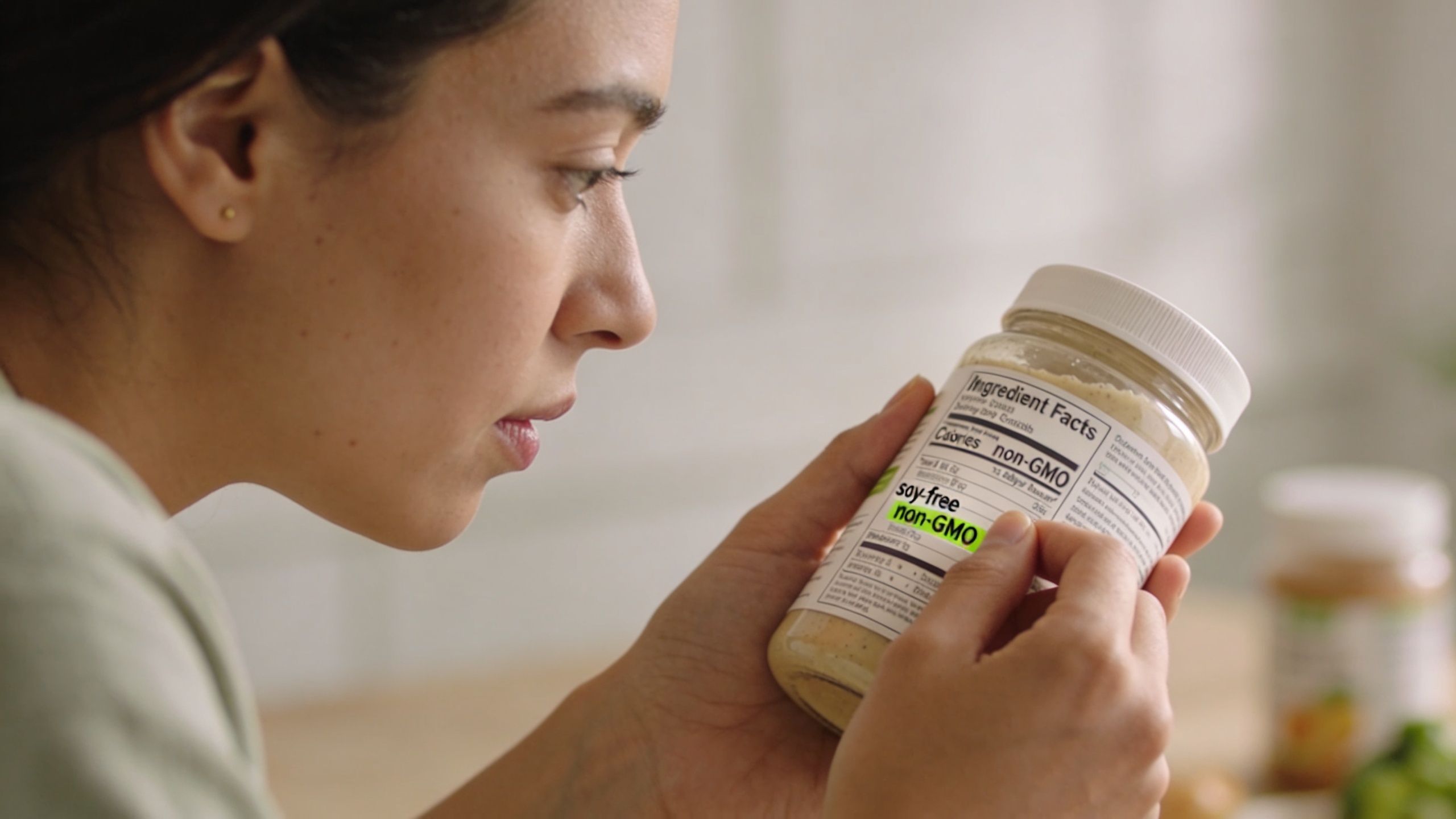
- The exact source - Look for “sunflower lecithin,” not just “lecithin”
- Allergen language - See whether soy is declared or excluded
- Non-GMO positioning - Helpful if that matters to you
- Short ingredient lists - Fewer mystery extras usually means less guesswork
Yuve also has a practical guide on how to read supplement labels if you want to get better at spotting the details that affect how a product fits your body.
How to Choose the Best Supplements with Soy Free Lecithin
Choosing a supplement shouldn’t feel like a scavenger hunt. But when you’re sensitive to ingredients, it can.
The easiest way to cut through the noise is to treat the label like a checklist, not a marketing puzzle.
A quick shopping checklist
Look for these signs first:
- Named source - “Sunflower lecithin” is clearer than a vague “lecithin”
- Non-GMO language - Many shoppers want this alongside soy-free sourcing
- Simple supporting ingredients - Fewer fillers usually means fewer surprises
- A formula that matches your values - Vegan, gelatin-free, and allergen-aware if those matter to you
Why premium formulas often choose sunflower
Sunflower lecithin is often used in premium products because consumers associate it with cleaner, allergen-free choices. As explained in this lecithin overview from Dr. Axe, sunflower lecithin is more expensive than soy, yet its use in alternative milks and clean-label chocolates reflects demand for allergen-free and chemical-free peace of mind.
That’s useful context. Sometimes a higher-quality ingredient costs more because it solves a real concern for a specific group of people. Not because it’s trendy, but because it helps buyers avoid compromise.
One more trust check
If you’re spending money on supplements, ingredient quality is only part of the picture. Testing matters too.
A good next step is learning what brands do to verify what’s in the bottle. This guide to the best third-party tested supplements can help you ask smarter questions before you buy.
The short version is simple. Choose the product that tells you exactly what kind of lecithin it uses and doesn’t make you guess.
Your Soy Free Lecithin Questions Answered
Is soy free lecithin the same as sunflower lecithin
Not always. Soy free lecithin is the broad category. Sunflower lecithin is one specific type within that category. Rapeseed lecithin can also be soy free.
Is soy lecithin always unsafe if you have a soy allergy
No. Some soy-allergic people tolerate soy lecithin. But it can still contain trace soy protein, so people with severe allergies or those who want strict avoidance may prefer soy free lecithin.
Why is lecithin used in supplements at all
It helps ingredients mix, stay stable, and feel smoother. That can improve how a powder blends or how a formula holds together.
Is sunflower lecithin worth looking for specifically
For many people, yes. It’s widely viewed as a clean-label, allergen-aware choice and is commonly used in premium products aimed at non-GMO and soy-free shoppers.
What’s the first thing I should check on a label
Check the source. If the label just says “lecithin,” you still don’t know enough. “Sunflower lecithin” gives you much more clarity.
If you want supplements that fit a cleaner, plant-based routine without the guesswork, explore Yuve. Their vegan formulas are built for people who care about gut health, ingredient quality, and feeling good about what they take every day.