Tuesday night dinner has a way of turning into a four-way tug-of-war. You want something your family will eat, something your budget can handle, something that won't leave you sluggish or bloated, and something that doesn't make you feel like every forkful is part of a climate guilt spiral.
Sustainable nutrition sits right in that messy middle. It's the idea that food has to work for your body, your household, and the world it comes from, not just one of those pieces. That matters because the conversation around diet has shifted from health alone to health and environment together, and the stakes are bigger than most wellness content admits. The WHO's 2018 report noted that nearly one in three people then lived with at least one form of malnutrition, and by 2021 the Global Nutrition Report showed the world still wasn't on track for five of six global maternal, infant, and young child nutrition targets, while 2.2 billion people were overweight or obese and 149.2 million children under 5 were stunted (WHO report).
If that sounds heavy, I get it. The good news is that sustainable eating doesn't start with perfection, and it definitely doesn't start with shame. It starts with a plate, a plan, and a few clear targets you can use.
The Dinner Plate Dilemma Most People Never Name
On a real weeknight, the dinner decision isn't philosophical. You're standing in front of the fridge, trying to make one meal satisfy picky eaters, your own hunger, and that low-grade worry that your choices are either too expensive, too processed, or too wasteful.
That tension is exactly why sustainable nutrition deserves a practical definition. A meal can look healthy on paper and still fail if it's too pricey, clashes with culture, or leans so hard on convenience that it creates avoidable waste. In plain language, the goal isn't to eat like a perfectionist. It's to build meals that you can repeat without blowing your budget or your energy.
For a lot of people, the hidden piece is digestion. If a dinner leaves you uncomfortably full, bloated, or reaching for a second snack an hour later, that meal isn't really supporting you. Food should feel like fuel and comfort, not a nightly debate.
Practical rule: if a meal works only on your best, most organized day, it's not a sustainable meal for real life.
So this guide keeps both feet on the ground. We'll define the term, turn the big ideas into measurable targets, and get honest about the trade-offs so you can make choices that feel livable, not ideological.
What Sustainable Nutrition Means

The clearest working definition comes from the FAO. A sustainable diet is nutritionally adequate, affordable, culturally acceptable, and low environmental impact at the same time (FAO guidance). Each pillar has to hold up on its own. A meal that is gentle on the planet but leaves you short on nutrients is not sustainable. A plate that checks every environmental box but gets ignored by your family is not sustainable either.
The four pillars work like the legs of a chair. If one is too short, the whole thing wobbles.
What each pillar means in everyday life
Nutritionally adequate means the food gives your body what it needs to function well. It should provide enough energy, protein, fiber, vitamins, and minerals to keep you going, not just fill the plate.
Affordable means the meal fits your budget without turning every grocery trip into a stress event. Nutrition advice only works when people can afford to follow it, especially when groceries, rent, and time are all competing for the same dollars.
Culturally acceptable means the food fits your traditions, routines, and taste preferences. A diet that ignores family habits often fails at the table, even if it looks polished in a report or on a wellness feed.
Low environmental impact means the food system behind the meal uses fewer resources and creates less long-term harm. That includes what happens on the farm, how food is processed, and what ends up wasted in the kitchen.
The broader shift happened when nutrition stopped being treated as a health-only issue. The WHO's framing made the combined health-and-environment lens part of the conversation, and that matters because calories alone do not tell the whole story. You need nourishment and feasibility at the same time, or the advice sounds wise and still falls apart in real homes.
Access and equity sit inside the definition too. A recommendation is only as useful as the grocery stores, budgets, cooking space, and family realities people have.
The Science Corner, Measurable Daily Targets
The easiest way to make sustainable eating concrete is to anchor it to targets you can check against an actual meal. The FAO and WHO guidance gives those guardrails clearly, and they're more useful than vague “eat cleaner” advice ever will be (FAO and WHO guidance).
The numbers that matter
- Fruits and vegetables, at least 400 g/day. That's the clearest daily marker because it turns “eat more produce” into something measurable. At dinner, that can look like a generous salad, roasted vegetables, and fruit as dessert instead of trying to force a giant smoothie into your day.
- Free sugars, under 10% of total energy, ideally under 5%. In plain English, sweets and sweetened drinks should stay in a supporting role, not run the whole show. If dessert is part of your family rhythm, keep the portion modest and make the rest of the meal nutrient-dense.
- Salt, under 5 g/day. That means watching the seasoning hand, but it also means paying attention to packaged foods and sauces that push sodium up.
- Total fat, under 30% of total energy. This isn't a call to fear fat. It's a reminder that balance matters, especially when meals rely on rich sauces, fried foods, or heavy cheese.
Simple translation: a sustainable plate is not a punishment plate. It's a plate with enough produce, a reasonable salt load, and a sensible amount of sweetness.
There's also a protein-quality point people miss. When you reduce animal-source foods, the swap works best when legumes, nuts, seeds, and a variety of plant proteins take the lead. That keeps meals satisfying and helps protect nutrient density instead of just removing ingredients for the sake of it (sustainable diet review).
Where the Biggest Environmental Wins Lie
A lot of people focus on the wrong part of the food chain. Packaging, transport, and the reusable bag all matter, but the larger environmental shifts usually happen earlier, at the point where food is grown or raised. Life-cycle assessment, or LCA, is the method researchers use to examine the full path from production to disposal, and it is a standard way sustainable-diet studies estimate greenhouse-gas emissions (LCA review).
Why production matters most
Food production creates many of the biggest environmental impacts. That is why changing a high-impact animal ingredient to a lower-impact plant protein usually changes the footprint more than small retail tweaks. Packaging and transport are not irrelevant, but they are usually secondary compared with what happens on the farm or in the processing line.
A useful way to picture the issue is to look at CO2-equivalents per meal and ask which ingredient carries most of the load. If protein comes from beef, the footprint tends to look very different than when the same role is filled by lentils, beans, or tofu. The goal is not to turn dinner into a spreadsheet. It is to identify the ingredient that matters most.
Bottom line: the biggest food swap is usually at the ingredient level, not the aisle level.
Measurement keeps getting better too. Food-system indicators now increasingly combine environmental, nutritional, and affordability measures instead of relying on one blunt score, which is a better fit for real meals and real households (LCA review).
For a practical packaging reference, Afida's food packaging tips for cafés is useful if you are thinking about waste at the business or meal-prep level. If you are trying to keep omega-3 intake in the picture without relying on fish every day, this guide on how to get omega-3 without fish fits neatly into the same plant-forward approach. If you want a simple next step for daily meals, a plant-based diet meal plan can help turn those ingredient choices into something more practical at home.
The Honest Trade-Offs Nobody Likes to Talk About
“Just eat more plants” sounds tidy until you try to feed an actual household. Plant-forward eating can absolutely support health and environmental goals, but it isn't automatically complete, cheap, or culturally easy. That's the part glossy wellness advice tends to skip.
Affordability and access are part of the definition
The 2025 SOFI report estimated that 2.6 billion people, or 31.9% of the global population, were unable to afford a healthy diet in 2024, even though the average cost of a healthy diet was $4.46 per person per day in purchasing-power-parity terms (SOFI 2025). Earlier global research also found that about 3 billion people, or 38% of the world's population, cannot afford the full cost of nutrient-rich food needed to meet national dietary guidelines (global review). That's why affordability is not a side issue. It's central.
The same report showed rural food insecurity was higher than urban food insecurity, with 32.0% of rural people moderately or severely food insecure in 2024 versus 23.9% in urban areas (SOFI 2025). If your advice ignores those gaps, it's not sustainable. It's just aspirational.
Not every plant-based product is equal
Ultra-processed vegan substitutes can still be high in sodium, low in fiber, or oddly expensive. A box that says “plant-based” doesn't automatically mean nutritionally balanced or environmentally ideal. I do NOT think “plant-based” should be treated like a free pass.
A more honest approach looks like this:
- Use plants as the base, not just the label. Beans, lentils, vegetables, fruit, nuts, seeds, and whole grains do more heavy lifting than novelty products.
- Keep cultural fit front and center. If a meal doesn't resemble what your family eats, it probably won't stick.
- Watch the nutrient gaps. If animal foods go down, iron, B12, and protein quality need a plan, not wishful thinking.
- Respect the budget. A sustainable diet has to survive a normal grocery bill.
That's the trade-off. Sustainable nutrition isn't about choosing the most “pure” version of a meal. It's about choosing the version you can keep doing.
Practical Meal Strategies and Waste-Reducing Habits
A good routine should lower the number of choices you have to make at 6 p.m. That is what makes healthy eating feel repeatable instead of exhausting. If a few meals can carry you through a busy week, you are more likely to meet your daily produce goals without turning dinner into a planning exercise.
Four habits that make a week easier
Half-plate plants. Fill half the plate with vegetables, fruit, or both. That simple rule makes the 400 g/day produce target easier to reach because you are building the meal around plants instead of trying to add them at the end.
Batch-cook one grain and one legume. Rice, quinoa, lentils, or beans cooked once can become lunches, grain bowls, soups, and taco fillings later in the week. The goal is not endless variety. It is to keep a few reliable building blocks ready so takeout does not become the default every night.
Use the “ugly” produce box. Slightly bruised or misshapen vegetables are still food. Choosing them can cut waste and reduce the grocery bill at the same time, which matters when budget and food quality have to fit together.
Plan leftovers as a real meal. Leftovers are not a consolation prize. They are tomorrow's lunch. When you decide that before you start cooking, food is less likely to get pushed to the back of the fridge and forgotten.
A simple dinner structure often works better than a complicated recipe, especially when the week gets loud.
Maria Chen, a school nurse in Portland, described her turning point as making the grocery list before she got hungry. She paired a weekly bean dish with leftover roasted vegetables, and the whole week became easier because she stopped improvising every night. A small system change like that can matter more than a heroic reset.
For a fuller example of how these habits come together in practice, see this plant-based diet meal plan. I also like this short visual reminder for meal planning and waste habits.
Choosing Sustainable Supplements That Fit the Plate
Supplements should support a good plate, not replace it. That idea matters because a plant-forward pattern works best when the basics are in place, and life does not always make that easy. A supplement can fill a gap during busy weeks, limited budgets, or a stretch when family meals are less predictable.
What to look for on the label
A sustainable supplement usually matches the same values you want from your food choices. Look for plant-based, non-GMO, responsibly sourced, and third-party tested products when those details are available. Those signals do not make a product ideal on their own, but they do help you judge whether it fits a broader sustainable nutrition goal.
Label reading becomes easier when you treat it like checking the ingredients in a pantry staple. You are not trying to find perfection, you are trying to see whether the product was made with clear standards and a lower burden on the systems behind it. That includes how the ingredients were sourced and whether the company is willing to explain its process in plain language.
Gut health matters here because digestion affects how well you use the nutrients you eat. If your meals are balanced but your stomach feels unsettled, the routine can become hard to keep up. Supportive habits matter, because a plan only works when your body can live with it day after day.
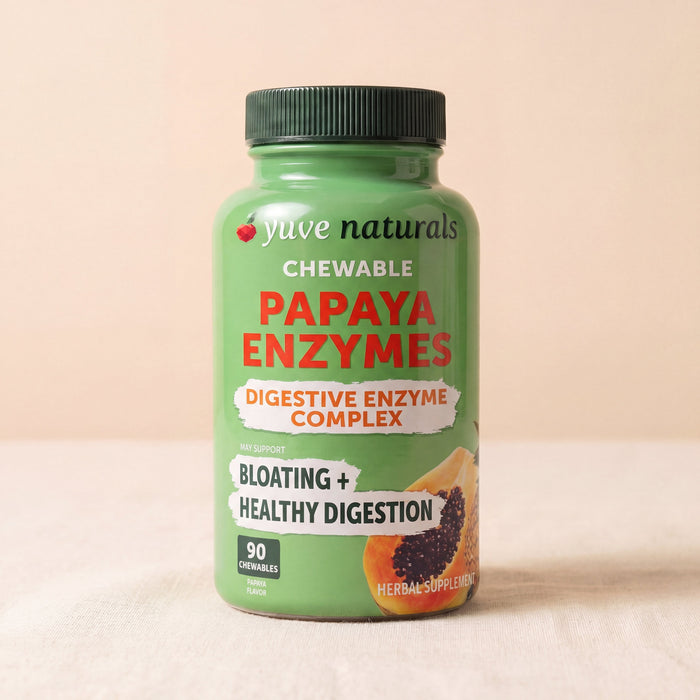
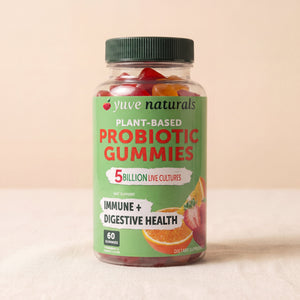
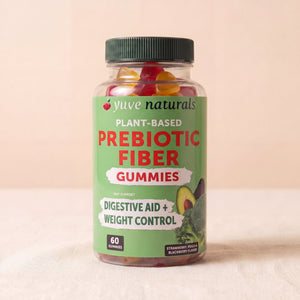
One plant-based option in this space is Yuve's probiotic and prebiotic blends, which fit a plant-forward approach to daily digestion. If you want a closer look at how plant-based support products are framed, Yuve's plant-based vitamin page is a useful companion read.
Reading the label without getting lost
- Plant-based ingredients: useful for people avoiding gelatin or animal-derived capsules.
- Third-party testing: helpful when you want more confidence in quality control.
- Sourcing transparency: shows where ingredients come from and whether the company explains its standards clearly.
These details work like a quick check before you add something to your cart. They do not tell the whole story, but they can help you rule out products that rely on vague wording or thin claims.
The right supplement will not fix a chaotic diet, but it can make a steady one easier to keep. That is the role here, support the plate you are already building, while leaving the main work to real food.
Your First Two Weeks and the Bigger Picture
Start small and keep score in a notebook or notes app. On day one, add a side of legumes. On another day, swap one red-meat meal for a plant-forward dinner. Another night, plan leftovers before you cook. By the end of two weeks, you'll see which habits feel easy and which ones need adjusting.
| Target | Daily Goal | Easy Real-Life Swap |
|---|---|---|
| Fruits and vegetables | 400 g/day | Add a salad, roasted veg, or fruit with dinner |
| Free sugars | Under 10% of energy | Keep dessert small and skip sweet drinks |
| Salt | Under 5 g/day | Flavor with herbs, lemon, garlic, and smaller sauce portions |
| Total fat | Under 30% of energy | Build meals around grains, beans, and vegetables first |
The bigger picture matters too. Sustainable nutrition is a food-systems issue, not a willpower contest. Policy, affordability, and access shape what people can eat, which is why individual choices matter most when they connect to a larger shift in how food is produced and priced.
If you want a simple place to begin, choose one habit, repeat it for a week, and build from there. Then come back, share what worked, and bring your real-life questions into the conversation.
Yuve makes plant-based supplements that fit a sustainable, food-first approach to wellness, including options that support digestion when your meals need a little backup. If you're ready to make your routine easier without losing sight of the planet or your plate, visit Yuve and explore what fits your week.