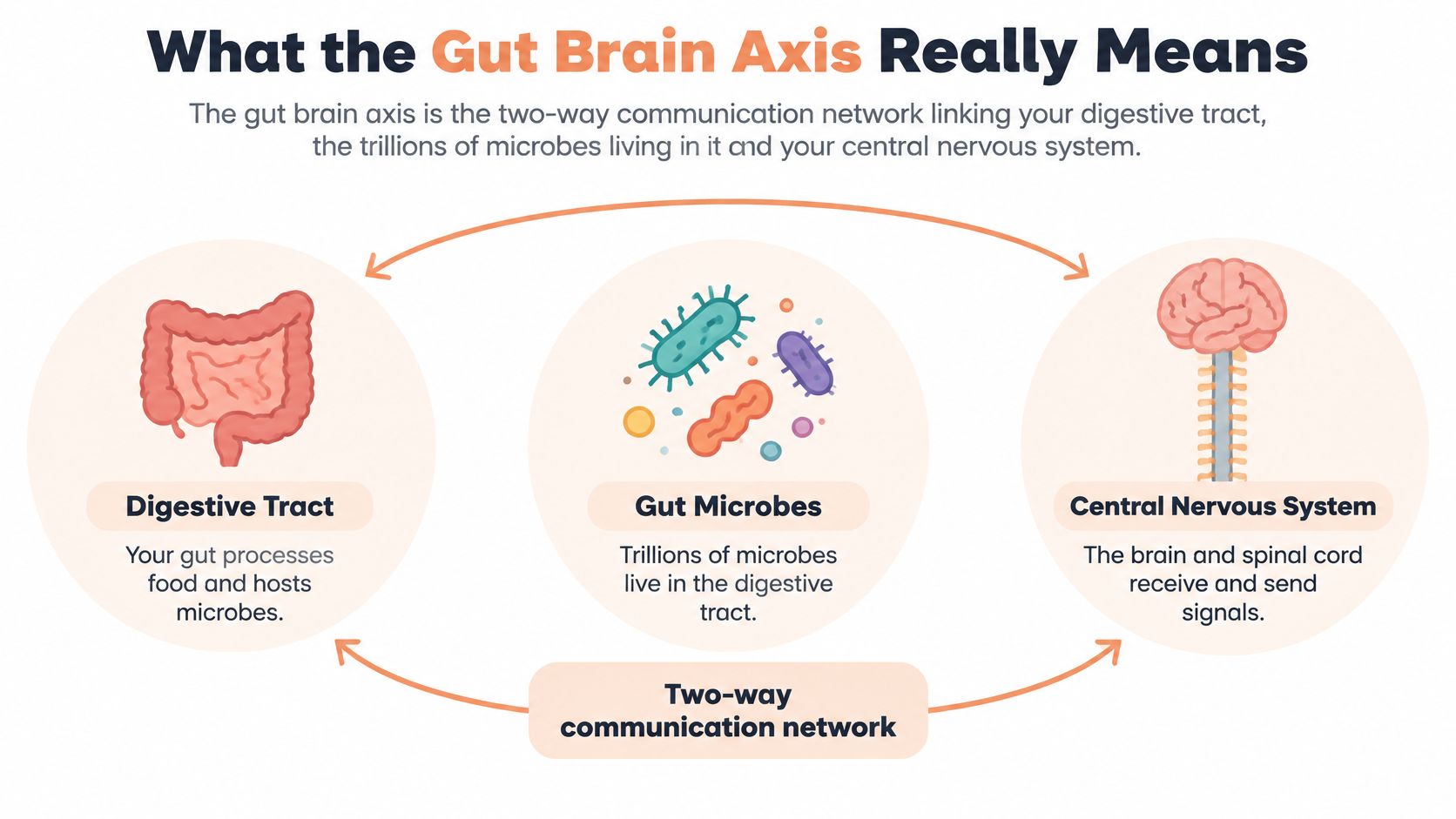
The gut brain axis is the two-way communication network linking your digestive tract, its resident microbes and your central nervous system. Ever feel like your stomach inflates like a balloon by afternoon, especially on a stressful day? You're not imagining that link, and it's not just what you ate.
We'll walk through what is the gut brain axis in plain English, how messages travel, and where the evidence is strong or still shaky. You'll leave knowing why stress can show up as cramps, why fiber matters for more than regularity, and why no single food or probiotic deserves a mood promise.
What the Gut Brain Axis Really Means
Think of a phone line where messages travel both ways. Your gut reports on food, microbes and inflammation. Your brain replies by adjusting how food moves through your stomach and intestines, digestive secretion and immune activity.
Neither side works alone. A rushed, tense morning can change gut movement before lunch. A miserable gut day can leave you distracted, nauseated or on edge.
An Old Idea With a Modern Upgrade
This isn't a new wellness invention. Eighteenth-century clinicians already viewed the gut and brain as organs that continuously communicated, and nineteenth-century observers connected emotional states with digestive activity, as a review of the gut-brain axis in PMC describes.
The formal term emerged in the twentieth century while researchers studied gut-brain peptides such as cholecystokinin and bombesin. In the past 15 years, the same review notes, the concept expanded into the microbiota-gut-brain axis.
That upgrade matters because microbes aren't passengers. The trillions of microorganisms living in and on your body make products, including short-chain fatty acids, branched-chain amino acids and compounds involved in tryptophan metabolism. Those products can influence immune cells, intestinal cells and neural signaling.
The axis is not a digestive idea or a psychological idea. It's one integrated network connecting metabolism, immunity, nerves and behavior.
Germ-free animal studies and vagus nerve research helped establish the system as real biology. Many specific effects in people are still under investigation, though. I do NOT think we should blur that line, so we'll keep separating what's established from what's promising.
The Four Routes That Carry Messages
No single gut hormone runs this system. Several parallel routes carry messages at once, which is why symptoms can feel messy and overlapping.
| Route | What It Carries | Speed and Reach | Everyday Example |
|---|---|---|---|
| Vagus nerve | Nerve impulses from gut sensors to the brainstem | Fast, direct wiring | Feeling full after a meal |
| Enteric nervous system | Local reflex signals run by neurons in the gut wall | Local, works with little brain input | Wave-like gut movement after eating |
| Immune signaling | Cytokines and immune cells | Slower, builds over days | Low energy and appetite during an infection |
| HPA stress axis | Cortisol and gut peptides | Minutes to hours | Cramps during a stressful exam week |
| Microbial metabolites | Short-chain fatty acids and tryptophan derivatives | Hours, via the bloodstream | Gut chemistry shifting after a fiber-rich meal |
The vagus nerve is the fastest physical highway. Sensors in your gut detect stretch, nutrients and microbial products, then send signals up to the brainstem. If that mind-body loop is your main worry, understanding the vagus nerve's role in anxiety is a helpful companion read.
The enteric nervous system is the local control room in your gut wall. It runs reflexes like wave-like movement after eating, often with little input from your brain.
Slower Routes Still Matter
Immune signaling works on a different clock. Cytokines build over days, which helps explain why an infection can flatten your energy and appetite long after the first sniffle.
The HPA stress axis sits in the middle. Cortisol and gut peptides can shift digestion within minutes to hours, so exam week cramps aren't weakness. They're physiology.
Microbial metabolites take the bloodstream route. After a fiber-rich meal, bacteria ferment what you couldn't digest and release chemicals that travel beyond the colon.
Picture a real day instead. You rush lunch, sit through a tense meeting, then grab a late coffee. Your gut hears all three events through different routes, and those routes reinforce each other. That's why digestive symptoms and stress so often feed one another, and why chasing one route rarely explains the whole picture.
How Gut Chemistry Reaches the Brain
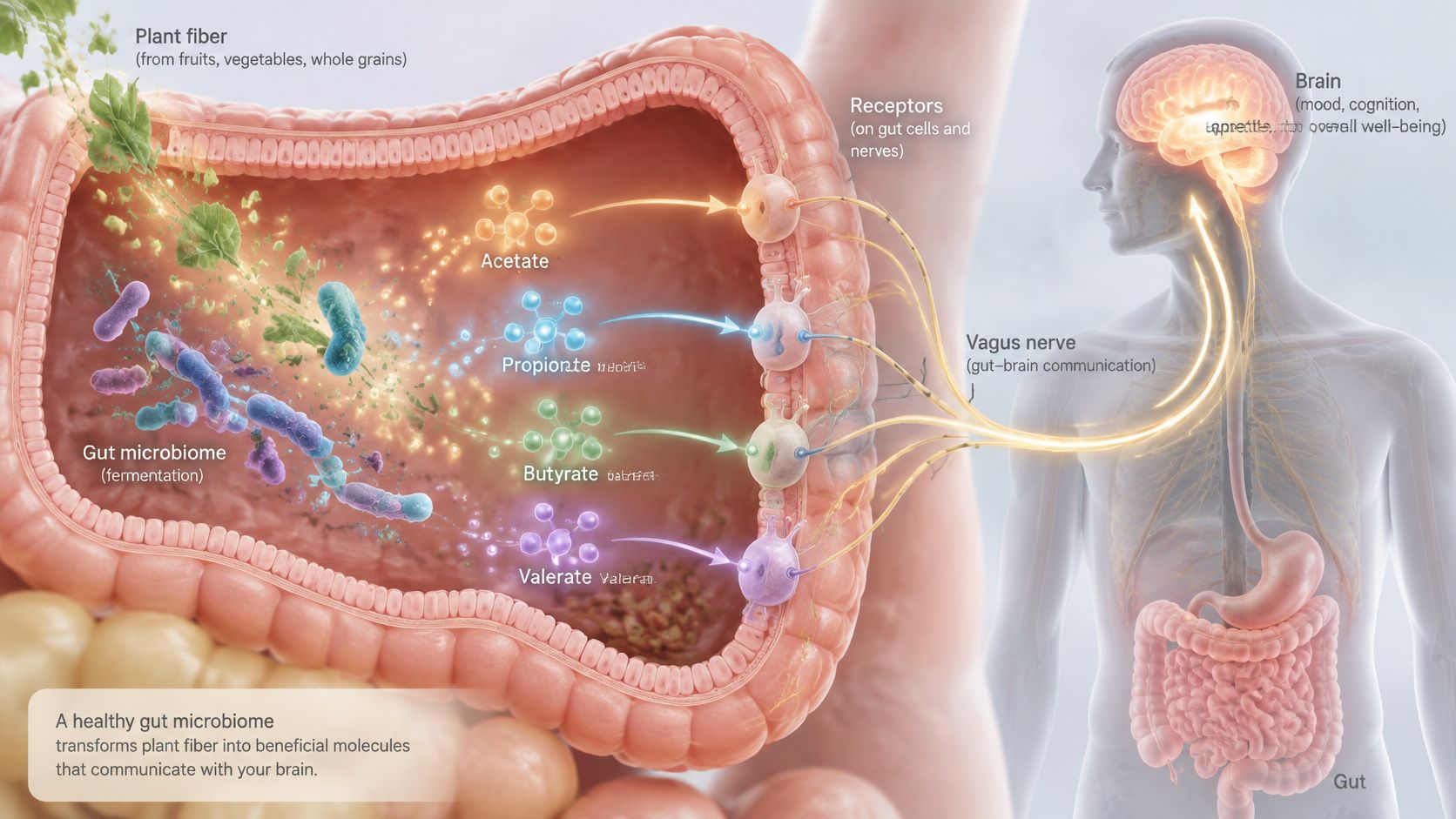
A meal's fiber can become a chemical signal, though the route from gut microbes to brain is indirect. Bacteria ferment some carbohydrates that the body cannot fully digest, including certain fibers, and release compounds that interact with gut cells.
From Fiber to Signal
A review of short-chain fatty acids describes acetate, propionate, butyrate and valerate as products of microbial fermentation. These short-chain fatty acids, or SCFAs, can act on receptors on intestinal lining cells, hormone-releasing cells, immune cells and nerve cells. Through those interactions, they may influence gut movement, secretion, inflammation and appetite signaling.
Microbes also affect how the body processes tryptophan and branched-chain amino acids. The gut microbiome and the organisms it contains help explain why these chemical messages involve more than one route.
Some SCFAs can cross the blood-brain barrier, the selective filter around the brain. Other microbial compounds and immune signals may affect how barrier cells regulate movement across it. The process works like a courier delivering a package: microbes do not always send an electrical message. Some compounds interact with barrier cells, which can then influence what passes through.
The Serotonin Correction
Serotonin is another example of why gut-to-brain communication is easy to oversimplify. A review of serotonin in the gut-brain axis reports that most of the body's serotonin is in the gastrointestinal tract, while a smaller amount is in the central nervous system.
In the intestine, serotonin made by enterochromaffin cells helps regulate movement, secretion, blood flow, nausea, and communication with sensory neurons. Gut serotonin does not flow directly into the brain. The blood-brain barrier largely separates serotonin in the gut and bloodstream from serotonin in the brain.
Gut serotonin biology may still matter to brain-related processes through local receptors, vagal signaling, immune and hormonal pathways, and microbial effects on tryptophan metabolism. Research on many of these mechanisms is better established in laboratory and animal studies than in people.
A fiber-rich eating pattern that includes foods such as beans, oats, onions and vegetables gives gut bacteria material to ferment. That supports gut function, but it is not a direct switch for mood. A single food or supplement cannot be assumed to change brain chemistry through one simple pathway.
What Research Shows About Mood, Anxiety and Thinking
Popular posts often make this sound simple. Gut bacteria make neurotransmitters, neurotransmitters set your mood, done. The human evidence doesn't cooperate with that story.
A 2025 review summarized in a PMC article on the microbiota-gut-brain axis and mental health found inconsistent gut-diversity results across depression and anxiety studies. Some patterns repeat, such as more pro-inflammatory organisms and fewer short-chain-fatty-acid-producing organisms, but diversity alone doesn't diagnose anything.
| Claim | What Research Shows | Confidence | What It Means for You |
|---|---|---|---|
| Probiotics and prebiotics improve mood | Small-to-moderate improvements in some human trials | Moderate, varies by strain | A wellness support, not a treatment for depression |
| Gut diversity signals depression | Inconsistent results across studies | Low | Diversity alone is not a diagnosis |
| Microbial metabolites affect the brain | Shown mainly in animal models | Low for humans | Interesting clues, not proof |
| Stress changes gut function | Stress alters gut movement and immunity | Well supported | Stress care is part of gut care |
Probiotics and prebiotics sit in the promising but uneven camp. Human trials suggest probiotics, prebiotics and synbiotics may produce small-to-moderate improvements in mood or anxiety. Effects vary by strain, formulation, condition, diet, medication use and study design. If a nervous stomach is your pattern, our overview of probiotics for a nervous stomach keeps expectations in that same careful lane.
Microbial metabolites need even more caution. Much mechanistic evidence still comes from animals, so a metabolite that affects a mouse brain can't automatically be assumed to have the same clinical effect in you.
Stress changing your gut is the sturdy finding in the table. Stress can alter gut function, and anxiety can also show up physically in ways people don't expect. This anxiety guidance for Phoenix metro adults explains those body symptoms in accessible terms.
Correlation isn't causation here. A different microbiome alongside depression doesn't prove microbes caused the depression, because sleep, appetite, medication and stress also shift the gut. Supporting gut health is a reasonable wellness goal. Promising a predictable emotional or cognitive outcome overstates current evidence, and supplements shouldn't be read as treatment for depression or anxiety.
Gut-Brain Links in Bloating and IBS
The axis stops feeling abstract here. In irritable bowel syndrome, gut movement, gut sensitivity and stress interact, so a normal amount of gas or stretch can register as painful fullness.
Say you're bloated before a big presentation. As pressure rises, cramps climb with it. Afterward, a calm walk helps things ease. That pattern doesn't mean symptoms are imagined. It means your brain and gut are amplifying each other.
A Short Plan You Can Start Today
- Notice patterns first. Jot down whether symptoms follow stressful days, large meals or poor sleep.
- Keep meals regular and slow. Steady timing gives your gut steadier signals than skipping lunch and inhaling dinner.
- Add fiber gradually. A sudden jump can mean dun, dun, dun, unwelcome gas. Yikes!
- Use a five-minute breathing reset. On hard days, calming the stress route is gut care, not a side quest.
- Bring your notes to a clinician. IBS is diagnosed through medical evaluation, not guesswork.
Our practical guide on how to manage IBS symptoms day to day can help you turn those notes into questions for that visit.
Diet and stress changes help many people feel more comfortable, but they don't cure IBS. Structured gut-directed therapy belongs with clinician guidance. If bloating has been running your afternoons, noticing your pattern is a real first win, not a small one.
Children, Sensitive Digestion and When to Ask a Doctor
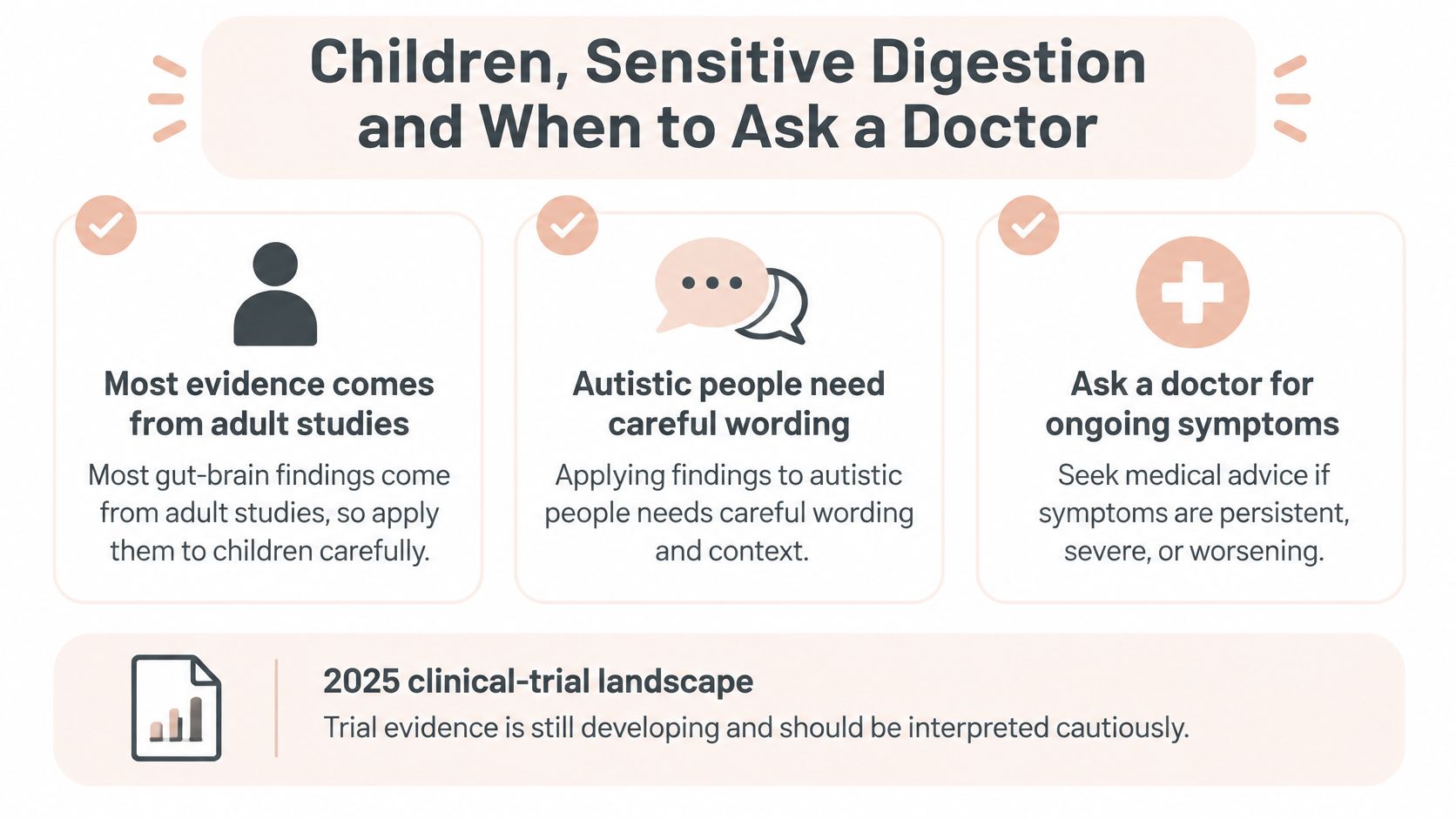
Families often ask the hardest version of this question. Does an adult gut-brain finding apply to my child, or to an autistic family member? Often, we don't know yet, and careful wording matters.
Most findings come from adult studies. Gut communities also differ substantially between individuals and shift with diet, medication and environmental exposure, so there's no universally accepted healthy microbiome profile to aim for.
What Careful Research Looks Like
A clinical-trial summary from 2025 in a PMC table of microbiome intervention trials includes a double-blind, multicenter autism study involving 346 participants over 24 weeks. It measured autistic symptoms alongside intestinal permeability and microbiome diversity.
That design tells you something important. Researchers are testing specific outcomes rather than assuming a microbiome change equals behavioral improvement. Digestive symptoms also need separating from core neurodevelopmental traits. A child can deserve real help for constipation or pain without anyone claiming to change who they are.
Call a Doctor Before Trying a Supplement If You See
- Persistent pain that doesn't settle or keeps returning
- Blood in stool or unexplained weight loss
- Repeated vomiting or symptoms that wake a child at night
Clinician involvement matters for children and for anyone taking medication. Emerging studies don't replace established medical, behavioral or nutritional care. The right questions aren't just which probiotic is best. They're for whom, for which symptom, and with what safety monitoring.
Frequently Asked Questions About the Gut Brain Axis
Can I test my gut-brain axis at home?
There's no standard at-home test that measures the whole axis. Microbiome tests on the market don't yet diagnose mood or digestive conditions. Bring a simple symptom log to a clinician instead, because timing and triggers are often more useful.
How long should I try a gut habit before judging it?
Give a new fiber or fermented food habit about two to four weeks. Judge it by your log, not by one great Tuesday or one rough Friday. Stop and seek advice sooner if symptoms worsen.
Does the gut-brain axis change how I should eat for mood?
A varied, fiber-rich diet supports your gut in general. No single food or probiotic has been shown to treat depression or anxiety. Keep food as one supportive part of a broader plan that can include sleep, movement, therapy and medical care when needed.
Build Gut-Friendly Habits This Week
A busy morning, a rushed lunch, and a restless night can all affect how your gut feels. Start with small habits you can repeat, then notice which ones seem to fit your routine.

- Eat a variety of fermentable plant fibers. Rotate beans, oats, onions, leeks, berries and vegetables across the week. Different plants provide different fibers for gut microbes.
- Add fermented foods you tolerate. Yogurt, kefir, sauerkraut or miso can complement fiber.
- Make room for sleep and daily stress breaks. A short walk, breathing break or earlier bedtime can support a steadier routine.
- Check before supplementing. Ask a clinician first if you take medication, are pregnant or are caring for a child.
- Keep a two-week log. Note bloating, mood and bowel habits, along with meals and daily routines. Patterns over time are more useful than a single good or difficult day.
This short video walks through building the habit loop before you add anything new.
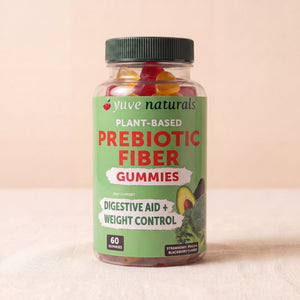
For daily support alongside food, Yuve's Gut Health & Digestion range includes plant-based probiotics, prebiotics and digestive enzymes. Vegan Prebiotic Fiber Gummies are a daily plant-based fiber gummy with chicory-root inulin, formulated to support the growth of beneficial gut bacteria. They cost $22.10 one-time or $18.79 on subscription. Vegan Probiotic Gummies are a daily plant-based gummy with five billion live cultures, priced at $27.49 one-time or $23.37 on subscription. Choose a habit to try, and use your log to track how your routine goes.
Ready to support your gut brain axis with steady, plant-based daily care? Visit Yuve to explore its Gut Health & Digestion range of probiotics, prebiotics and digestive enzymes, and choose a routine that fits alongside fiber-rich habits.