You saw “3000 calories a day” online, got excited, and then realized one annoying detail. Eating that much can feel harder than training for it. If your stomach gets tight, gassy, or weirdly full halfway through the day, you’re not failing. Your plan probably needs better structure, not more force.
A lot of people try to brute-force a high-calorie diet with giant meals, too much fiber, and zero digestive strategy. That’s why this guide is built differently. You’ll get a clear reality check on who needs 3000 calories a day, how to build meals that don’t wreck your gut, and practical ways to make the whole thing feel doable.
Is a 3000-Calorie Diet Right for You
A lot of people treat 3000 calories a day like a magic number for muscle gain. I don’t. It can be a great target, but only if it matches your body, your training, and your daily output.
According to the 2015-2020 Dietary Guidelines for Americans, adult men generally need 2,000 to 3,000 calories per day and adult women generally need 1,600 to 2,400 calories per day to maintain weight. That puts 3000 calories at the upper end for active men, not as a default target for everyone.

Who usually does well on 3000 calories a day
If you train hard, move a lot outside the gym, or work a physically demanding job, 3000 calories a day may be perfectly reasonable. Think athletes, lifters with high training volume, construction workers, and people who are on their feet all day.
If you’re mostly sedentary, this same intake can overshoot your needs fast. That’s where frustration starts. You expect better performance or lean gains, but you end up feeling sluggish, overly full, and confused about why your body isn’t responding the way Instagram promised.
Reality check: 3000 calories is a performance number for some people and an excessive number for others.
Activity matters more than hype
The biggest mistake I see is this: someone picks a calorie goal based on what sounds “serious,” not on what they burn.
Ask yourself:
- Do you train consistently several times a week and recover hard?
- Do you have a physically active lifestyle outside workouts?
- Are you trying to maintain high output or gain weight on purpose?
- Do you naturally lose weight easily when you don’t stay on top of meals?
If you answered yes to most of those, 3000 calories a day could make sense.
If not, don’t force it. You don’t get bonus points for eating beyond what your body can use well.
The honest test
A smart high-calorie plan should do a few things at once:
| Sign it fits | What it feels like |
|---|---|
| Energy is steady | You feel fueled, not wiped out |
| Hunger still shows up | Meals feel substantial but not miserable |
| Training benefits | Better recovery and stronger sessions |
| Digestion stays manageable | Some fullness is normal, constant bloat is not |
If your stomach feels like a brick by lunch and your appetite disappears for the rest of the day, the issue may not be the goal itself. It may be how you’re trying to hit it.
That matters even more for plant-based eaters. A “healthy” high-volume approach can bury you in fiber before you’ve eaten enough calories to support training or weight gain. We’ll fix that.
Your Personal Calorie Blueprint
You do not need to become a human calculator to figure out whether 3000 calories a day fits you. You just need one concept: TDEE, or Total Daily Energy Expenditure. That’s the total energy your body burns in a day.
Think of it in two layers. First, there’s the energy your body uses at rest. Then there’s everything you pile on top of that, like walking, lifting, working, training, and general life.

Start with your maintenance estimate
For highly active people training several times a week, a 3000-calorie intake often matches maintenance rather than a surplus. That same source also notes that 65% of active users under-eat by 400-700 kcal per day, which can look like overtraining because it shows up as fatigue and slow recovery.
That’s why guessing is a bad plan.
Use a reputable TDEE calculator to get a starting estimate. Then compare it with your actual results over time. If you want to get better at the food side too, this guide on how to track macros for fat loss is also useful for understanding intake patterns, even if your goal isn’t fat loss.
A simple way to use the number
Here’s the practical version:
- Estimate your maintenance
- Eat near that number consistently
- Watch your body for a couple of weeks
- Adjust based on weight, performance, recovery, and appetite
If your maintenance appears close to 3000, then 3000 calories a day is your baseline, not your bulk.
If you want to gain, increase from there slowly. A small bump is usually easier on your gut and easier to maintain than jumping straight into giant portions.
A calorie target only works if you can repeat it. Consistency beats one heroic day of overeating.
A relatable example
Let’s say you’re an active person who lifts regularly and also moves a fair amount during the day. If your estimated maintenance lands around 3000, eating 3000 calories a day may merely keep you stable.
In that case:
- For maintenance - stay there and monitor
- For gradual gain - add a little more food, not a second dinner that leaves you miserable
- For performance support - time more of your calories around training so you feel the fuel where you need it most
This is also where a lot of people get tripped up emotionally. They think, “I’m eating a lot, so why am I not gaining?” Sometimes the answer is simple. You’re not eating above maintenance. You’re finally eating enough to support the workload you’ve been doing all along.
Building Your 3000-Calorie Meals Without Stress
Eating 3000 calories a day can feel like a part-time job if you build it badly. If every meal is huge, super fibrous, and low in calorie density, your stomach taps out before your calorie goal does.
The fix is not “eat cleaner” or “just push through.” The fix is better construction.
Use a flexible macro range
A 3000-calorie intake aligns with the AMDR ranges of 45-65% carbohydrates, 20-35% fats, and 10-35% protein. That works out to approximately 338-488g carbs, 67-117g fat, and 75-263g protein.
That’s a wide range on purpose. It gives you room to build around your appetite, training style, and food preferences.
Here’s the takeaway:
- Carbs give you the easiest path to training fuel
- Fats help you raise calories without massive food volume
- Protein supports recovery and muscle maintenance, but you don’t need to cram it into every bite
The three rules that make this sustainable
Eat more often, not just more at once
Three giant meals sounds efficient. In real life, it often feels awful.
A better rhythm for many people is:
- Breakfast
- Mid-morning snack
- Lunch
- Afternoon snack
- Dinner
- Optional evening snack
That setup spreads the workload across the day. Your gut gets smaller jobs. Your energy stays steadier. Your appetite has a chance to come back between meals.
Prioritize calorie density
If you’re trying to eat more without feeling stuffed, your food needs to do more work per bite.
Good examples include:
- Nut butters stirred into oats or smoothies
- Olive oil added to cooked grains or vegetables
- Seeds and nuts sprinkled over bowls
- Avocado in wraps, toast, or rice bowls
- Dried fruit for quick carbs without huge volume
- Granola instead of relying only on plain oats
This is especially useful if whole-food volume is crushing your appetite.
Stop building “perfect” meals
Perfection is a digestion trap. A giant bowl with lean protein, heaps of raw vegetables, beans, whole grains, and fruit may look impressive. It can also sit in your stomach like wet cement.
Build meals around comfort plus calories.
Practical rule: If a meal is healthy but you dread eating it, it’s not a good mass-gain meal.
A gut-friendly meal formula
Try this simple structure:
| Meal piece | What to include |
|---|---|
| Base | Rice, oats, pasta, bread, potatoes, or another easy carb |
| Protein anchor | Eggs, yogurt, chicken, tofu, tempeh, beans, or lentils |
| Calorie booster | Oil, nut butter, seeds, avocado, cheese, or dressing |
| Produce | Fruit or cooked vegetables, not giant raw piles |
| Easy extra | Smoothie, toast, trail mix, or a meal replacement when needed |
That last point matters. Some days, chewing your way to 3000 calories a day is not realistic. A simpler option can keep you consistent. If that sounds familiar, Yuve’s guide to organic meal replacement drinks is a practical place to start.
Make the plan fit your body, not your fantasy
If you have a smaller appetite, use more liquid calories and more fats.
If you train hard and digest carbs well, build around rice, oats, bread, potatoes, and fruit.
If you eat plant-based and struggle with fullness, stop piling every meal with bulky vegetables “for health.” Cook them down, scale the volume, and use denser add-ins. That’s still a healthy approach. It’s just smarter.
Sample 3000-Calorie Meal Plans You’ll Actually Enjoy
Theory is nice. Food on a plate is better.
These sample plans are built to show what 3000 calories a day can look like in real life. They are examples, not rules. Swap foods you enjoy, keep the general structure, and aim for meals you can repeat without dread.
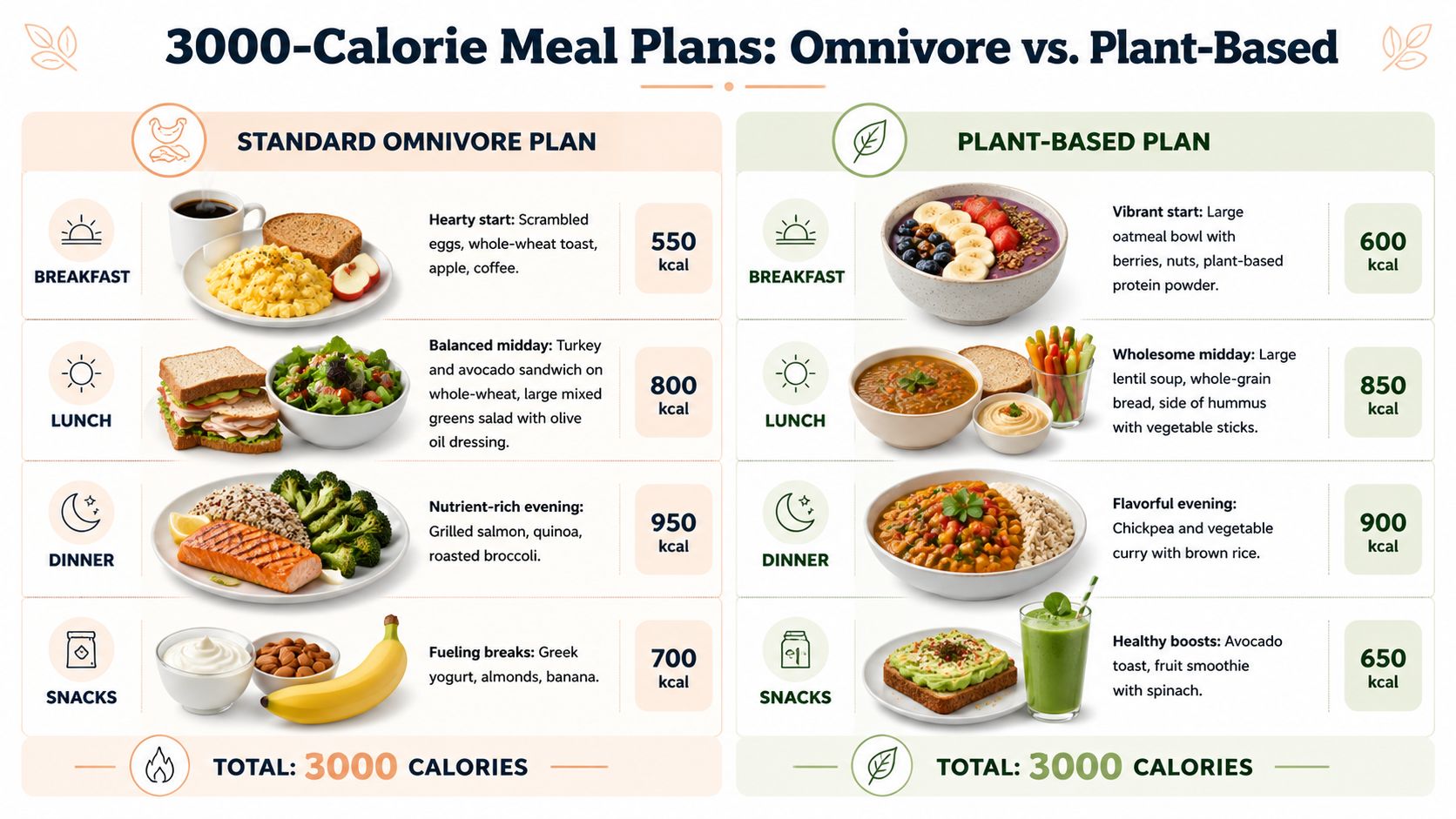
Standard omnivore plan
Breakfast
- Scrambled eggs
- Whole-wheat toast with butter or avocado
- Greek yogurt with granola
- Banana
Why it works: solid protein, easy carbs, and enough fat to make breakfast carry real energy.
Mid-morning snack
- Protein smoothie with milk, oats, peanut butter, and fruit
This is one of the easiest ways to add calories without adding a mountain of chewing.
Lunch
- Turkey and avocado sandwich on whole-grain bread
- Large serving of rice or roasted potatoes
- Mixed greens salad with olive oil dressing
Helpful swap: chicken, tuna, or lean beef all work here.
A visual plan can make this easier to save and use later. The video below is also a handy reference if you like seeing meal ideas in action.
Afternoon snack
- Cottage cheese or yogurt
- Almonds
- Apple or grapes
Dinner
- Grilled salmon
- Quinoa or pasta
- Roasted broccoli
- Olive oil or sauce for extra calories
Evening snack
- Toast with nut butter
- Glass of milk
- Dark chocolate or fruit
Build snacks like mini meals. A snack that’s only produce won’t move the needle much when you’re trying to eat 3000 calories a day.
High-energy vegan plan
This version matters because many plant-based meal plans are technically nutritious but practically exhausting. Too much fiber, too much volume, not enough payoff.
If you want more plant-based meal inspiration, Yuve’s plant-based diet meal plan is a useful companion.
Breakfast
- Large bowl of oatmeal
- Plant protein powder mixed in
- Berries
- Nut butter
- Chopped nuts
- Maple syrup if needed
This meal works because it packs calories into a familiar base.
Mid-morning snack
- Smoothie with soy milk, banana, oats, peanut butter, and spinach
Keep the spinach modest if giant green smoothies bloat you.
Lunch
- Lentil soup
- Whole-grain bread with hummus
- Side of avocado
- Fruit
Afternoon snack
- Trail mix
- Toast with almond butter
- Plant yogurt if tolerated
Dinner
- Chickpea and vegetable curry
- Brown rice
- Coconut milk in the curry for extra density
- Cooked vegetables instead of a huge raw salad
Evening snack
- Bagel with peanut butter
- Soy milk or a simple shake
Food swaps that keep the plan flexible
| If you don’t want | Try this instead |
|---|---|
| Salmon | Chicken, turkey, tofu |
| Greek yogurt | Lactose-free yogurt or plant yogurt |
| Rice | Pasta, potatoes, bread |
| Lentils | Tofu, tempeh, beans |
| Huge salads | Cooked vegetables, soups, roasted veg |
The best 3000-calorie meal plan is the one you can eat tomorrow too. That sounds obvious, but people forget it all the time.
Conquering the High-Volume Bloat
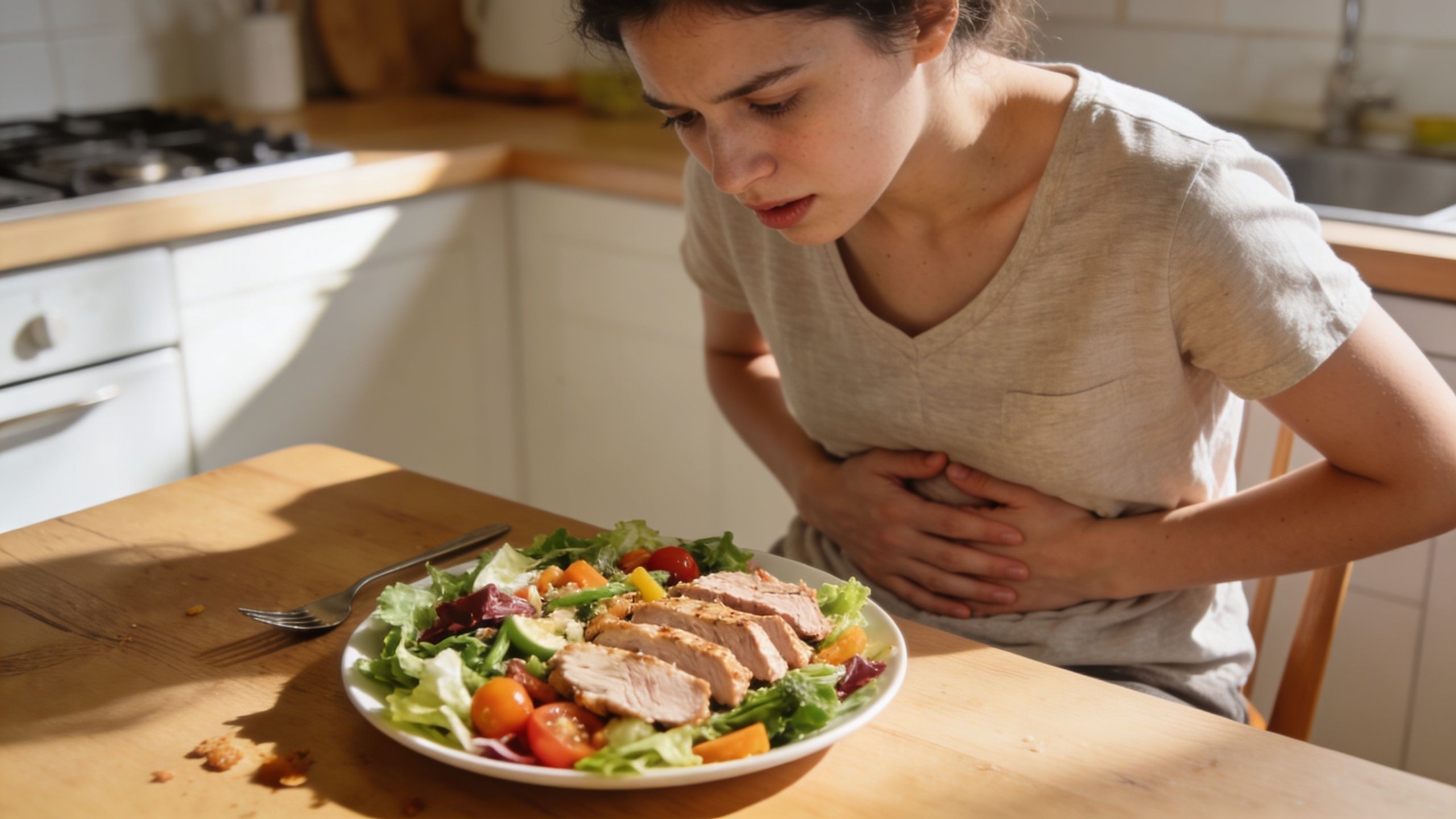
You’re eating all this healthy food, and by mid-afternoon your stomach feels stretched, tight, and loud. That’s common on a high-calorie plan, especially if you’re plant-based.
A common but overlooked issue is the digestive strain that comes with high-volume vegan eating. According to this review of 3000-calorie planning for vegans, the large fiber load from whole grains and vegetables can drive bloating and poor absorption, and up to 25% of vegan athletes report GI distress on high-calorie plans.
Why “healthy” can still feel terrible
People often get discouraged. They think, “But I’m eating oats, beans, vegetables, fruit, and whole grains. Why do I feel worse?”
Because your gut still has to process the volume.
High-fiber foods are nutritious. They’re not always easy when you suddenly raise both meal size and meal frequency. If your old intake was lower and your new plan is built on giant bowls of legumes, cruciferous vegetables, and dense whole grains, bloat is almost a predictable outcome.
A simple story I hear all the time
A lot of plant-based eaters start with good intentions and accidentally create a digestion nightmare.
Breakfast is oats with chia and berries. Lunch is a giant grain bowl with beans and raw vegetables. Dinner is lentil pasta with broccoli and salad. On paper, that looks fantastic. In a real digestive tract, it can feel like too much bulk too fast.
You don’t need less discipline. You need less friction.
What helps right away
Try these changes first:
- Cook more of your vegetables instead of relying on giant raw salads
- Use lower-volume calorie boosters like olive oil, tahini, avocado, and nut butter
- Split beans and lentils across the day instead of stacking them into every meal
- Use smoothies strategically so every calorie doesn’t require a full stomach
- Increase intake gradually if 3000 calories a day is a big jump for you
If dairy is part of your plan but it leaves you uncomfortable, switching protein sources can help too. This guide to lactose-free protein options is useful if whey or standard dairy shakes make things worse.
For more practical digestion support around meal choices and daily habits, Yuve’s article on how to reduce stomach bloating is worth bookmarking.
The blunt advice
Stop rewarding yourself for eating the highest-volume version of every healthy food. That approach works great for people trying to feel fuller on fewer calories. It’s often a terrible fit for someone aiming for 3000 calories a day.
Choose foods your gut can handle repeatedly. That’s not laziness. That’s smart nutrition.
Your Smart Supplement Strategy for All-Day Support
People often assume calorie management is just math. Eat the number. Hit the goal. Done. Real life is messier.
The CALERIE 2 trial is a good reminder. Even in a controlled research setting, people struggled to stick closely to calorie targets. Post-study analysis showed participants achieved 12-15% calorie reduction rather than the 25% target. Different goal, same lesson. Adherence is hard even when people are motivated.
Why gut comfort affects consistency
If eating feels physically unpleasant, consistency falls apart.
That’s true whether someone is trying to eat less or eat more. A high-calorie plan that leaves you bloated, cramped, and full for hours is much harder to repeat than one that feels calm and manageable.
Supplements can make sense as part of a wider strategy:
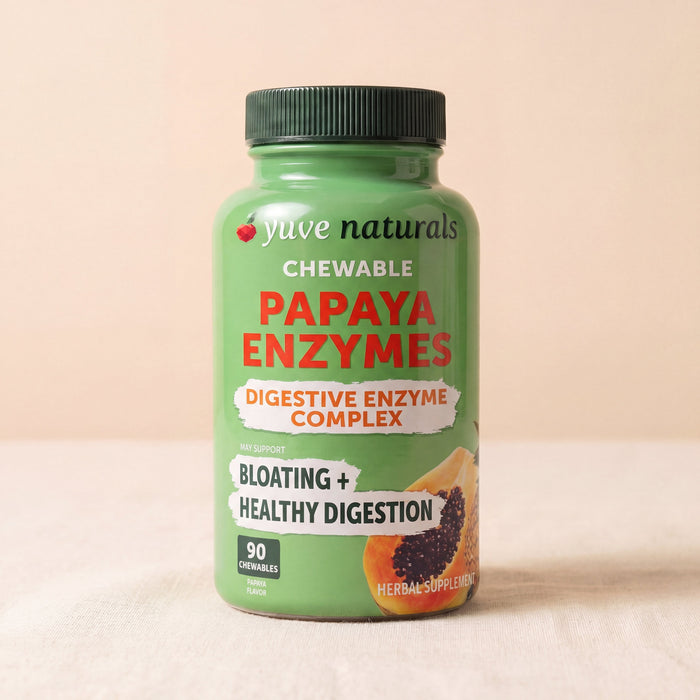
- Digestive enzymes can support meal-by-meal breakdown, especially when meals are larger or richer
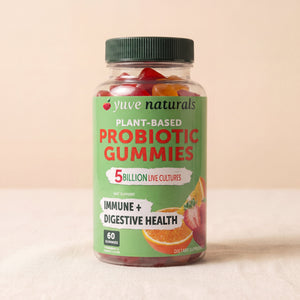
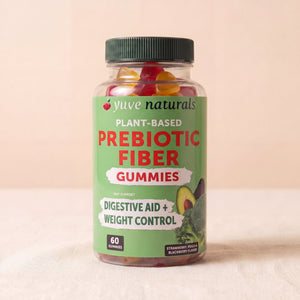
- Probiotics and prebiotics support the broader gut environment over time
- A consistent routine matters more than random “rescue mode” use after a huge meal
Enzymes and probiotics do different jobs
People lump everything into “gut supplements,” but the roles are different.
| Supplement type | Main role |
|---|---|
| Digestive enzymes | Support digestion around meals |
| Probiotics | Help support a balanced gut microbiome |
| Prebiotics | Feed beneficial gut bacteria |
If your issue is, “I feel wrecked after bigger meals,” enzyme support may be the more immediate consideration.
If your issue is, “My digestion feels unpredictable all the time,” broader microbiome support may be worth looking at alongside your food choices.
A good supplement strategy doesn’t replace better meals. It makes better meals easier to tolerate and repeat.
Keep your expectations realistic
Supplements are not permission to ignore your body’s limits. If every meal is huge, rushed, and built from foods you barely tolerate, no capsule is going to save the plan.
Use them like an intelligent support system. Build digestible meals first. Then make the routine easier to sustain.
Your 3000-Calorie Shopping Lists & Quick Wins
If you want this to work, keep it simple enough to repeat.
Quick wins
- Eat more often if large meals shut down your appetite
- Use calorie-dense add-ons like oils, nut butters, avocado, granola, and sauces
- Cook vegetables more often if raw produce leaves you bloated
- Drink some of your calories when chewing everything feels exhausting
- Keep snacks substantial to help you reach 3000 calories a day
Standard shopping list
- Produce - bananas, apples, berries, avocado, broccoli, potatoes, mixed greens
- Proteins - eggs, Greek yogurt, chicken, turkey, salmon
- Grains and carbs - oats, whole-grain bread, rice, quinoa, pasta, granola
- Healthy fats - olive oil, almonds, peanut butter
- Pantry staples - dressings, sauces, seasonings
Vegan shopping list
- Produce - bananas, berries, spinach, avocado, cooked vegetables, fruit
- Proteins - tofu, tempeh, lentils, chickpeas, plant protein powder, soy yogurt
- Grains and carbs - oats, bread, rice, pasta, bagels, granola
- Healthy fats - olive oil, tahini, nuts, seeds, nut butters, coconut milk
- Pantry staples - hummus, curry paste, dried fruit, trail mix
Frequently Asked Questions
Is 3000 calories a day too much for most people
It depends on your maintenance needs. For active people, it may be appropriate. For sedentary people, it can be excessive. The right answer comes from your body size, activity level, and real-world results.
Can you lose weight on 3000 calories a day
Yes, if your body burns more than that. No, if your body burns less. That’s why your TDEE matters more than the calorie number by itself.
How do I eat 3000 calories a day without bloating
Use smaller eating occasions, increase calorie density, reduce unnecessary fiber overload, cook more of your vegetables, and rely on some liquid calories. Don’t jump from low intake to huge volume overnight if your gut clearly hates it.
Is a vegan 3000-calorie diet harder
For many people, yes. Not because it’s unhealthy, but because whole plant foods can get bulky fast. A smart vegan plan uses denser foods, cooked meals, and less all-or-nothing thinking around fiber.
Do I need supplements on a 3000-calorie diet
Not always. But they can help if digestive discomfort is the main thing stopping you from being consistent. The goal is better tolerance and easier adherence, not chasing perfection.
If you’re trying to make 3000 calories a day feel easier on your stomach, Yuve is a smart next stop. Their vegan, gut-focused supplements fit the exact problem many high-calorie eaters run into. You want more fuel, but you also want a calmer gut. Explore Yuve if you’re ready to support digestion, stay consistent, and make your nutrition plan feel better day after day.