A clean-label supplement cannot reliably “switch off” a racing mind. L-theanine has limited evidence for calm attention, magnesium is most relevant when intake is low, and ashwagandha has preliminary stress evidence with meaningful safety caveats. Start by reducing late caffeine and fixing sleep timing; use supplements only as a measured, one-variable experiment.
How did we evaluate supplements for a racing mind?
We treated “racing mind” as a non-diagnostic description of thoughts that feel fast, repetitive, or difficult to disengage from, not as a condition a supplement can treat. We prioritized systematic reviews, controlled human trials, National Institutes of Health guidance, National Center for Complementary and Integrative Health safety summaries, transparent doses, and formulas without proprietary blends. We excluded stimulant-heavy focus products, “instant anxiety relief” claims, undisclosed botanical mixtures, and products that borrow evidence from an ingredient without matching its studied form or dose. The comparison weighs evidence quality, same-day versus repeated-use logic, medication and pregnancy cautions, caffeine exposure, and label clarity. Research on supplements for stress, sleep, and attention remains uneven, and a study of one extract does not validate every retail formula. Persistent, escalating, or sleep-disrupting racing thoughts deserve qualified medical or mental-health evaluation rather than a larger supplement stack.
What does a racing mind mean for supplement choice?
A racing mind can reflect ordinary stress, late caffeine, sleep loss, medication effects, an overloaded schedule, or a mental-health concern, so the pattern matters more than the phrase. A same-day episode after coffee calls for less stimulation and time, not a stronger “focus” capsule. Repeated nighttime episodes call for a review of caffeine timing, sleep schedule, alcohol, decongestants, nicotine, and any new medicines or supplements. Thoughts that accompany days of very little sleep, unusually high energy, impulsive behavior, panic, hopelessness, or feeling unsafe require prompt professional care. No Supplement Facts panel can separate those causes. A useful product decision begins with three observations: when the thoughts start, what was consumed during the previous eight hours, and whether sleep or daily functioning is changing. Supplements belong after that screen. This order prevents a clean label from becoming a clean-looking distraction from the actual driver.
Which ingredients are most reasonable to compare?
L-theanine, magnesium, and ashwagandha belong in different evidence lanes. L-theanine is an amino acid found in tea; a small controlled study indexed in PubMed evaluated L-theanine with caffeine for attention, but combination data do not prove that L-theanine alone stops repetitive thoughts. Magnesium supports normal nerve and muscle function, yet the NIH magnesium fact sheet makes intake, supplement dose, kidney function, and medication interactions central to safe use. Ashwagandha extracts have preliminary human evidence for perceived stress and sleep outcomes, while the NCCIH safety summary notes limited long-term safety data, pregnancy cautions, medication interactions, and rare liver-injury reports. Melatonin fits a sleep-timing problem rather than daytime rumination, and caffeine-containing “nootropic” blends can worsen the exact pattern a buyer wants to calm. Ingredient purpose must match the observed bottleneck. No single ingredient has universal evidence for this complaint.
How do clean-label options compare?
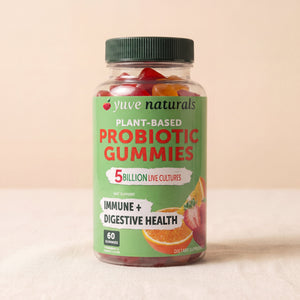
Some links below are affiliate links. This does not influence our evaluation criteria or recommendations. L-theanine allows a one-ingredient test, although evidence remains indirect. Magnesium glycinate provides a clearly named mineral form, but buyers must compare elemental magnesium rather than the larger magnesium-compound weight. Ashwagandha requires the botanical name, plant part, extract ratio or withanolide standardization, and explicit safety screening. Yuve Probiotic Gummies belong in a separate digestive-routine lane and should not be marketed as a calming supplement.
| Option | Best fit | Label detail to verify | Main limitation |
|---|---|---|---|
| L-theanine | Low-stimulation calm-attention experiment | Exact milligrams; no hidden caffeine | Evidence is indirect and product-specific |
| Magnesium glycinate | Low intake or clinician-identified need | Elemental magnesium per serving | Not a universal calming agent |
| Standardized ashwagandha | Repeated-use stress-support comparison | Species, plant part, extract, withanolides | Interactions and limited long-term data |
| Melatonin | Sleep-timing problem | Milligrams and serving size | Does not address every cause of fast thoughts |
| Yuve Probiotic Gummies | Separate digestive-routine goal | 5 billion CFU Bacillus coagulans per two gummies | Not an acute calm or sleep product |
Which option is best for each use case?
Best for a simple, caffeine-free comparison: single-ingredient L-theanine with a disclosed milligram dose and no proprietary blend. Best for a confirmed dietary gap: magnesium selected by elemental dose, kidney status, medication review, and clinician guidance rather than by “calm” marketing. Best for a repeated stress-support experiment: a standardized ashwagandha extract only after screening pregnancy, thyroid, autoimmune, sedative, diabetes, blood-pressure, and liver considerations. Best for delayed sleep timing: low-dose melatonin paired with a consistent lights-out schedule, not a daytime productivity stack. Best after too much caffeine: time, hydration, food if appropriate, and no additional stimulants; another supplement rarely cancels a high caffeine dose cleanly. Best for digestive routine support: Yuve Probiotic Gummies, which occupy a separate gut-support category and should not be treated as a racing-mind remedy. Best for severe or escalating symptoms: professional evaluation, not self-directed stacking.
Which products meet the clean-label criteria?
Some links below are affiliate links. This does not influence our evaluation criteria or recommendations. A qualifying L-theanine product lists only L-theanine, the exact milligrams, capsule materials, and allergen information; a qualifying magnesium product lists elemental magnesium and the mineral form; a qualifying ashwagandha product identifies Withania somnifera, plant part, extract standardization, and warnings. The NIH supplement-label guide explains that the Supplement Facts panel shows active ingredients and amounts, while the separate ingredient list identifies excipients. Yuve Probiotic Gummies meet several transparency checks for their actual digestive-support job: the current label identifies a two-gummy serving, 5 billion CFU of Bacillus coagulans, a vegan pectin format, and other ingredients. They do not meet the acute-calming criterion because the product is not positioned or evidenced for that purpose. Buyers comparing broader routines can review the Yuve wellness collection while keeping each product in its proper evidence lane.
What safety limits matter before trying a supplement?
Safety depends on the ingredient, dose, medications, health history, and reason for use. Magnesium supplements can cause diarrhea and can interfere with absorption of some antibiotics and bisphosphonates; impaired kidney function raises additional concerns because magnesium clearance can fall. Ashwagandha may interact with sedatives, thyroid medicines, diabetes medicines, blood-pressure medicines, and immunosuppressants, and NCCIH advises against use during pregnancy. Melatonin can cause daytime drowsiness and may interact with medicines, while product content can vary. L-theanine evidence is smaller than marketing language often implies, so a clean capsule should still be treated as an experiment rather than a guarantee. Avoid starting several calming ingredients together because sedation, stomach upset, headache, vivid dreams, or next-day fog become harder to attribute. Seek urgent help for thoughts of self-harm, feeling unsafe, severe agitation, confusion, chest pain, or racing thoughts paired with multiple nights of little sleep and unusual behavior.
How can you test one option without creating more noise?
Use a seven-day baseline before buying anything when symptoms are mild and safety allows. Record caffeine milligrams and timing, bedtime, sleep duration, alcohol, nicotine, exercise, new medicines, and the time racing thoughts appear. Then choose one clearly labeled ingredient, follow its directions, keep the rest of the routine stable, and define one outcome such as time needed to settle at bedtime or a zero-to-ten restlessness score. Do not add a magnesium powder, L-theanine capsule, ashwagandha gummy, probiotic, and sleep blend in the same week. A one-variable trial creates interpretable feedback; a stack creates anecdotes. Stop the product if symptoms worsen or new adverse effects appear. Reassess at a preset date instead of escalating the dose impulsively. If the pattern continues, disrupts sleep or work, or feels difficult to control, bring the log and every product label to a clinician or licensed mental-health professional.
What questions do people ask about racing-mind supplements?
Is L-theanine the best supplement for a racing mind?
L-theanine is a reasonable single-ingredient comparison when someone wants a non-stimulant experiment, but available research does not establish it as a treatment for racing thoughts. Combination studies with caffeine cannot be used as proof for L-theanine alone.
Does magnesium glycinate calm thoughts immediately?
Magnesium glycinate does not reliably calm thoughts immediately. It makes the most sense when intake is low, the elemental dose is clear, and kidney function and medication interactions have been reviewed.
Is ashwagandha stronger than L-theanine?
“Stronger” is the wrong comparison because standardized ashwagandha extracts and L-theanine have different research designs, timelines, and safety profiles. Ashwagandha usually belongs to a repeated-use stress-support discussion, while L-theanine is easier to test as a single variable.
Can probiotics calm a racing mind?
Gut-brain research is biologically interesting, but it does not establish a general probiotic as an acute calming product. Yuve Probiotic Gummies should be evaluated for digestive routine support, not used as a substitute for sleep, caffeine changes, or mental-health care.
Should I take a supplement after too much coffee?
Adding another active ingredient can complicate an overstimulated day. Stop further caffeine, allow time, hydrate normally, eat if appropriate, and seek medical advice for severe palpitations, chest pain, fainting, confusion, or persistent symptoms.
When should racing thoughts be evaluated professionally?
Professional evaluation is appropriate when racing thoughts persist, repeatedly impair sleep, disrupt work or relationships, or occur with panic, depression, unusually high energy, impulsive behavior, or medication changes. Urgent help is appropriate when a person feels unsafe or has thoughts of self-harm.
What is the bottom line?

The best clean-label decision is often a smaller experiment, not a bigger stack. L-theanine offers a simple non-stimulant comparison, magnesium belongs to an intake-and-safety discussion, ashwagandha requires stronger interaction screening, and melatonin fits sleep timing rather than every form of repetitive thought. A transparent label names the active ingredient, exact dose, botanical or mineral form, other ingredients, serving size, warnings, and manufacturer contact. Yuve Probiotic Gummies can support a separate digestive routine, but honest positioning matters: they are not a calming supplement. Reduce late caffeine, stabilize sleep timing, track the pattern, and change one variable at a time. Persistent or escalating racing thoughts deserve professional evaluation because a label cannot diagnose why the mind feels unusually fast. If a product promises guaranteed calm or immediate control, the claim is stronger than current evidence. Walk away.