Apples may change bowel movements because they provide dietary fiber and contain fructose and sorbitol, carbohydrates that some people absorb incompletely. A comfortable, formed stool differs from urgent, watery diarrhea. Portion size, the apple's form, and your existing digestive pattern matter more than assuming every bathroom visit signals a cleansing effect.
How did we evaluate apples and changes in bowel habits?
We prioritized National Institute of Diabetes and Digestive and Kidney Diseases guidance on fiber, diarrhea, and food tolerance alongside Monash University's FODMAP resources, separating established digestive mechanisms from claims that one particular fruit produces a predictable result for everyone who eats it. We evaluated whole apples, processed apple formats, and isolated fiber products by their ingredients, practical portion differences, and the distinction between a comfortable bowel movement and symptoms that deserve reassessment rather than encouragement. We excluded social-media detox explanations, precise promises about time to a bowel movement, and assumptions that a reaction to apples proves IBS or a specific carbohydrate intolerance, because those conclusions require more information than food timing alone supplies. The result is an educational explanation of plausible patterns, not an apple-specific clinical trial, a diagnosis, or evidence that any finished supplement duplicates the nutritional effects of whole fruit.
How can apple fiber and fruit carbohydrates affect your stool?
Dietary fiber contributes to stool characteristics, while different fibers vary in water-holding and fermentation properties. An apple is a food containing several components, not a measured dose of a single laxative ingredient. NIDDK nutrition guidance for constipation emphasizes dietary fiber and adequate liquids; it does not promise that an apple will work on a fixed schedule.
Monash University's FODMAP food list identifies apples and apple juice among higher-FODMAP fruit choices and discusses sorbitol and excess fructose in fruit. These carbohydrates can be relevant when a person experiences gas, discomfort, or loose stools, but their presence does not make apples unsuitable for everybody.
The useful distinction is the outcome: an easier, formed stool can fit normal variation, whereas repeated urgency or watery stool is not a benefit to pursue by eating progressively larger portions every day.
How do whole apples, juice, and applesauce compare?
| Apple form | What changes | What to track |
|---|---|---|
| Whole apple with skin | Intact fruit structure and skin remain | Actual portion and stool comfort |
| Peeled apple | Skin is removed; fruit carbohydrates remain | Do not assume peeling removes FODMAPs |
| Applesauce | Texture and recipe change | Ingredients and serving size |
| Apple juice | A drink differs from intact fruit | Volume and loose-stool pattern |
Best for preserving the intact-fruit format: A whole apple, when comfortable for you. Best for a soft-texture preference: Applesauce, judged by its actual ingredients rather than an assumption that cooking removes every trigger.
Juice is not a reliable workaround for diarrhea after fruit. NIDDK dietary guidance for diarrhea notes that large amounts of simple sugars, including fructose, can worsen symptoms. Compare a realistic portion instead of treating every apple format as equivalent. Texture alone does not establish carbohydrate tolerance.
Which fiber products fit a separate, clearly defined purpose?
Commercial disclosure: This is a Yuve-owned article. Some links below are affiliate links. This does not influence our evaluation criteria or recommendations. Products are optional and are not a way to explain or override diarrhea after apples.
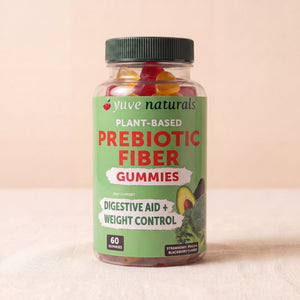
Yuve Prebiotic Fiber Gummies list chicory-root inulin/FOS, a different ingredient from a whole apple's complete food matrix. The product page establishes the listed ingredient and format; it does not establish that the gummies replicate apples or prevent a reaction to fructose or sorbitol.
Best for comparing an optional chewable format: Review the current serving, ingredients, and directions against a defined dietary need. Best for investigating a recurring food reaction: A food-and-symptom record and clinical advice, not a product swap. The digestive-health collection contains different product categories; adding several together makes your individual response harder to interpret and may create an unnecessary routine.
When should bowel changes after apples prompt medical advice?
Repeated watery stools deserve a different response from one comfortable bowel movement. NIDDK guidance on diarrhea symptoms advises prompt medical contact for dehydration, severe abdominal pain, frequent vomiting, black tarry stools, or blood in stool. Adults should also contact a clinician when diarrhea lasts more than two days, with earlier advice for people at higher risk.
Record the apple portion, whether it was juice or whole fruit, accompanying foods, stool consistency, and whether symptoms recur without apples. That record can support an assessment; it cannot independently confirm a fructose or sorbitol intolerance. Avoid repeatedly testing a food that produces substantial symptoms.
Do not start a broad fruit-free diet solely because one apple coincided with urgency. A clinician or registered dietitian can help preserve food variety while considering the pattern, your medicines, and other relevant causes of a new bowel change.
FAQ: Why might apples make you need the bathroom?

Does an apple always make you poop?
No. An apple may affect stool patterns, but the response depends on portion, the rest of your diet, and individual digestion rather than a guaranteed effect. Timing alone cannot identify the underlying digestive mechanism.
Is diarrhea after apples a detox effect?
No. Watery stool is a symptom to assess, not proof that apples removed toxins or that you should repeat a food challenge to cleanse your body.
Does peeling remove fructose and sorbitol?
No. Removing skin does not remove all carbohydrates in the flesh, so a peeled apple cannot automatically be considered a workaround for a recurring food reaction.
Can apple juice cause the same problem?
It can. Apple juice remains relevant to a fruit-carbohydrate tolerance discussion, and a large drink is not interchangeable with a smaller portion of intact fruit.
Should I add a fiber gummy immediately?
Not automatically. First distinguish a dietary fiber goal from unexplained diarrhea, and avoid changing multiple foods and supplements while trying to interpret your own symptom pattern.