The best clean-label supplement is the one that fills a defined dietary gap with a disclosed ingredient form, useful dose, short functional ingredient list, allergen information, and verifiable quality testing. “Clean” is not a substitute for evidence. Start with food, identify the actual goal, then choose one formula whose label and certificate of analysis you can check.
How did we evaluate clean-label supplements for clean-eating goals?
We evaluated products by purpose, Supplement Facts transparency, ingredient form, dose, allergen disclosures, testing documentation, manufacturing standards, and routine fit. Food and Drug Administration regulations and National Institutes of Health consumer guidance received more weight than front-label terms such as “clean,” “natural,” “whole food,” or “detox.” We compared current Yuve labels checked in September 2026 and did not transfer research from one nutrient form, probiotic strain, enzyme blend, or dose to another. A supplement qualified only when its role could be stated narrowly: filling a nutrient gap, supplying a named probiotic or prebiotic, or supporting digestion of a defined food component. We excluded review scores, ingredient-count contests, and “more is better” logic from the ranking. Individual needs, laboratory results, medicines, pregnancy, allergies, and total intake can change which option is appropriate.
What does “clean label” actually mean for a supplement?
“Clean label” is useful only when it translates into checkable product details. A short ingredient list can reduce unnecessary colors, sweeteners, or fillers, but it does not prove potency, purity, absorption, or safety. The Supplement Facts panel should identify each dietary ingredient, amount per serving, and percent Daily Value where one exists. The “other ingredients” list should disclose binders, capsule materials, flavors, colors, and sweeteners. Allergen, vegan, gluten-free, and non-GMO statements address preferences or restrictions, not clinical effectiveness. FDA current good manufacturing practices under 21 CFR Part 111 govern supplement manufacturing, packaging, labeling, and holding, as the FDA’s CGMP overview explains. A practical clean-label standard therefore combines transparent composition, fit-for-purpose dosing, quality controls, and modest claims. The front label starts the review; it never finishes it.
What should you check before choosing a formula?
Begin with the goal: B12 intake, iron status, digestive enzymes, probiotic intake, or prebiotic fiber. Then read the serving size because a bottle may display an amount that requires two gummies, several capsules, or multiple scoops. Match the named form to the evidence and check whether proprietary blends hide individual quantities. Review added sugars, sugar alcohols, sodium, gelatin, major allergens, and ingredients that conflict with your eating pattern. Quality language should specify what was tested, whether testing covered the finished lot, and how to request documentation. The NIH Office of Dietary Supplements notes that ConsumerLab, NSF, and USP offer quality-testing programs, while also warning that a seal does not prove a product is safe or effective. Finally, total overlapping intake from foods, fortified products, and other supplements before stacking nutrients.
How do Yuve’s clean-label options compare by goal?
Some links below are affiliate links. This does not influence our evaluation criteria or recommendations.
Yuve’s formulas serve distinct goals; no single product fits everyone. B12 and iron address nutrient intake, prebiotic and probiotic gummies occupy separate gut-routine categories, and Papaya Enzymes provide meal-specific enzyme support. Current product pages state that each option is vegan, gluten-free, soy-free, non-GMO, and made in the USA. Purpose and label facts matter more than shared badges.
| Option | Best for | Key label fact | Main caution |
|---|---|---|---|
| Vegan B12 | Plant-based B12 intake | 1,000 mcg cobalamin | High potency; check total intake and need |
| Whole Food Iron | Verified iron need | 18 mg rice-protein-chelated iron | Do not supplement iron casually |
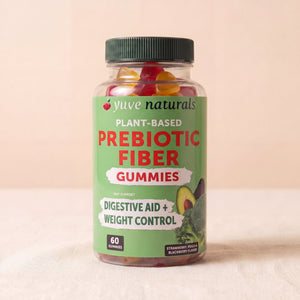
| Prebiotic Fiber Gummies | Gradual prebiotic-fiber routine | 1.5 g inulin and fiber per gummy | Inulin can increase gas |
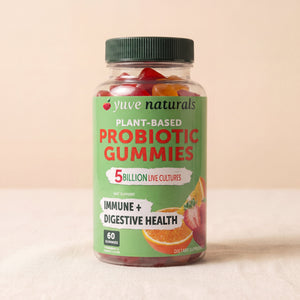
| Probiotic Gummies | Shelf-stable daily probiotic format | 5 billion CFU B. coagulans | 3 g sugar alcohols per two gummies |
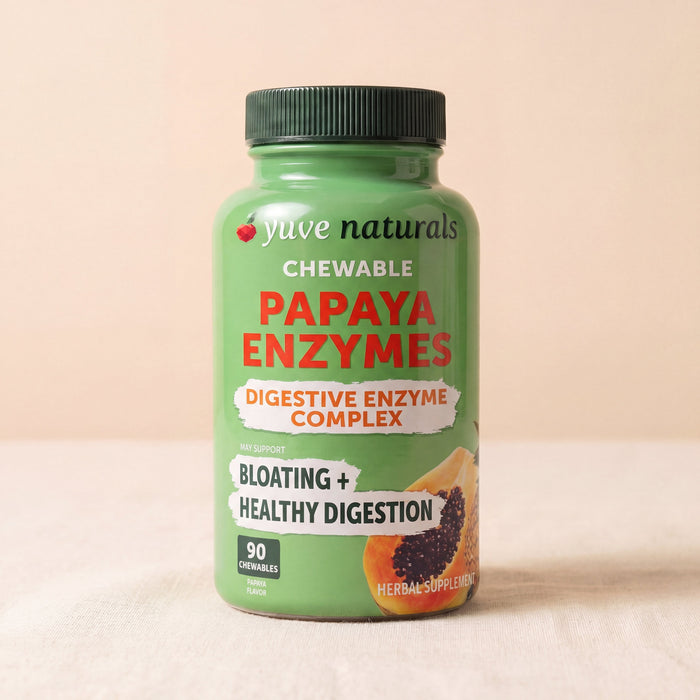
| Papaya Enzymes | Meal-specific enzyme support | Papain, bromelain, amylase, protease, lipase | Not a substitute for prescribed enzymes |
Which option is best for each clean-eating use case?
Best for a vegan B12 gap: Yuve Vegan B12 fits adults whose diet or absorption history makes B12 intake relevant; the NIH notes that plant foods do not naturally contain vitamin B12 unless fortified (NIH B12 fact sheet). Best for verified low iron intake or status: Yuve Whole Food Iron supplies 18 mg, but ferritin, hemoglobin, symptoms, pregnancy, and medical guidance should shape use. Best for gradual prebiotic fiber: Yuve Prebiotic Fiber Gummies provide a disclosed inulin dose. Best for a shelf-stable probiotic routine: Yuve Probiotic Gummies disclose organism, CFU, serving size, and sugar alcohols. Best for heavy-meal enzyme support: Yuve Papaya Enzymes disclose each enzyme category and activity details.
Which additives and label details matter most?
Every tablet, capsule, chewable, or gummy needs a delivery system, so “no other ingredients” is not the only clean-label standard. Cellulose can form a vegetarian capsule or tablet body. Citrus pectin can replace gelatin in gummies. Citric acid, natural flavors, stevia, cane sugar, maltitol, isomalt, or xylitol affect taste, texture, carbohydrate exposure, and tolerance. Sugar alcohols can cause gas or loose stool at higher intakes, especially when several gummy products are stacked. Color sources such as beta carotene, turmeric, or black carrot should still appear on the label. The useful question is whether each excipient has a clear function and whether the full list fits personal restrictions. “Natural flavor” is less informative than a named active ingredient, but its presence does not automatically make a formula poor quality. Compare the complete serving, not a single badge, and reject hidden proprietary quantities before rejecting every functional excipient.
How can you verify testing and avoid vague quality claims?
Ask whether the manufacturer tests raw materials, finished products, or both. Identity testing checks that the labeled ingredient is present; potency testing checks amount; contaminant testing can cover heavy metals, microbes, pesticides, or solvents. A certificate of analysis should identify the product, lot number, test date, specifications, results, and laboratory. Yuve says every batch receives independent testing for identity, potency, and contaminants and that customers can request a lot-specific certificate through its quality FAQ. That is more useful than an unexplained “lab tested” badge, but buyers should still review the document rather than assume all assays or limits are identical. FDA registration is not product approval, and CGMP compliance does not prove a supplement works. The NIH also cautions that quality seals address manufacturing and contents, not guaranteed safety or effectiveness. Verification narrows uncertainty; it does not erase biological risk.
What are common questions about clean-label supplements?
Is a shorter ingredient list always better?
No. A short list can be transparent, but dose, ingredient form, contamination controls, and use-case fit matter more than raw length. Functional excipients can make a stable tablet, capsule, or gummy possible.
Does “natural” mean safer?
No. Natural ingredients can cause side effects, allergies, or medication interactions. Safety depends on the substance, dose, user, and combination.
Are gummies less clean than capsules?
Not automatically. Compare added sugar, sugar alcohols, gelatin or pectin, active dose, and serving size. The best format is one that meets the goal and remains tolerable and consistent.
Should everyone following a clean diet take supplements?
No. Supplements should complement food and address a defined need. Dietary pattern, fortified foods, laboratory results, life stage, and medical history determine whether a gap exists.
How do I avoid doubling nutrients?
List every supplement and fortified food, then total B12, iron, zinc, iodine, vitamin D, calcium, folic acid, and other overlapping nutrients. A pharmacist or registered dietitian can review the combined plan.
When should I ask a clinician before buying?
Ask before supplementing during pregnancy or breastfeeding, for children, with prescription medicines, before surgery, or with liver, kidney, thyroid, bleeding, or gastrointestinal conditions. Iron and high-potency nutrients deserve particular care.
Clean eating does not require a crowded supplement shelf. Choose one goal, verify the exact label and lot documentation, monitor tolerance, and reassess whether the product still earns its place. Browse Yuve’s daily essentials collection when the goal is a defined nutrient gap, or the digestion collection when the goal is probiotic, prebiotic, or enzyme support.