If you're tired of chasing the latest Candida fix and ending up with the same bloating, itching, or gut drama, I get it. The blunt truth is that probiotics are not a replacement for antifungals, and the smartest question isn't “What's the single best probiotic brand?” It's “Which strain fits my specific Candida problem, and how should I use it?”
That shift matters. The best available human evidence points to adjunct use, especially for short-term symptom support and relapse prevention, not probiotic solo missions. In practice, that means the best probiotics for Candida are the ones that match the site of the problem, whether that's vaginal, oral, or somewhere else, and that support the treatment plan you're already using.
Why Probiotics Alone Won't Fix Candida
Candida symptoms are miserable, and that's exactly why the internet keeps selling miracle cures. I do not think that's helpful, and the evidence backs me up. In a 2017 Cochrane review of vulvovaginal candidiasis in non-pregnant women, adding probiotics to conventional antifungal treatment improved short-term clinical cure by 14% overall, with a risk ratio of 1.14 across 5 trials and 695 participants. The same review found a one-month relapse reduction with probiotics, risk ratio 0.34 across 3 trials and 388 participants, which works out to about a 66% lower relapse risk in the short term, but the evidence quality was low to very low and long-term cure wasn't clearly better (Cochrane review).
That's the whole ballgame right there. Probiotics can help alongside antifungals, especially if you're trying to calm things down and keep the problem from bouncing back. They do not show up as a stand-alone cure you can use instead of medicine, and that's the honest answer most product pages skip.
The better question
When you stop asking for a magic capsule, the conversation gets more useful. You start asking:
- What site is involved? Vaginal, oral, or gut concerns are not interchangeable.
- What strains were studied? The letters and numbers matter, not just the species name.
- Am I trying to treat an active infection or prevent recurrence? Those are very different goals.
Practical rule: if you're in an active flare, probiotics are support, not rescue.
That's also why a lot of “candida detox” content misses the mark. The evidence is strongest when probiotics are used to support conventional treatment, not to replace it. If you're still trying to decide between a probiotic bottle and a prescription, the bottle is the wrong first move.
How Probiotics Actually Fight Candida Overgrowth
Candida behaves like a weed problem, and probiotics work by making the terrain less welcoming for it. Antifungals clear the infection. Probiotics help reduce the conditions that let Candida settle in and come back, especially in the places where lactobacilli normally dominate.

Three mechanisms that actually matter
First, competitive exclusion. Helpful bacteria take up space and use available nutrients, which leaves Candida with fewer places to establish itself. That is basic microbiology, and it matters because crowded microbes do not get to expand as easily.
Second, acid production. Lactobacilli make lactic acid and related compounds that lower pH, which makes the environment less friendly to Candida. In plain language, they change the local chemistry so yeast has a harder time thriving.
Third, biofilm pressure. Some strains have shown the ability to suppress Candida growth and interfere with biofilm development in laboratory work. That matters because Candida biofilms are harder to clear than free-floating cells, which helps explain why some cases keep coming back.
A meta-analysis of oral candidiasis found probiotics had a significant protective effect, with an odds ratio of 0.38 (oral candidiasis meta-analysis). Earlier reviews also reported favorable oral Candida outcomes, with the clearest signal in the randomized trials (2019 and 2020 reviews). The practical takeaway is straightforward. The strongest probiotic-Candida signals show up where Lactobacillus-based products can influence the local microbial balance.
What “gut microbiota” means in real life
It means the collection of microbes living in your digestive tract. When that community gets pushed off balance, Candida can take advantage. When the ecosystem is more stable, Candida has a harder time spreading.
That is the whole point. Probiotics do not act like antifungals, they act like environmental management.
The Most Studied Probiotic Strains for Candida
The question is not which probiotic brand sounds strongest. It is which strain matches the site of Candida overgrowth. Vaginal, oral, and gut Candida do not respond to the same playbook, and that is where a lot of buying mistakes start.
Comparison table
| Strain | Best Studied For | Evidence Strength | Key Notes |
|---|---|---|---|
| L. rhamnosus GR-1 | Vaginal health support | Repeatedly studied | Often paired with RC-14 |
| L. reuteri RC-14 | Vaginal health support | Repeatedly studied | Common partner strain with GR-1 |
| Multi-strain Lactobacillus formulas | Oral candidiasis | Strongest signal in higher-risk groups | Especially relevant for older adults and denture wearers |
| L. paracasei, L. rhamnosus, L. reuteri, L. delbrueckii, L. bulgaricus | Oral Candida suppression in lab studies | Mechanistic support | Linked to Candida growth and biofilm suppression |
| Saccharomyces boulardii | Gut-related probiotic discussions | Commonly discussed, but not interchangeable with Lactobacillus data | Different evidence base from oral or vaginal Lactobacillus work |
For vaginal health, the pairing that shows up again and again is L. rhamnosus GR-1 and L. reuteri RC-14. That combination keeps appearing because the vaginal microbiome is normally dominated by lactobacilli, and these are the names worth recognizing on a label.
For oral candidiasis, the stronger signal comes from lactobacilli-rich, multi-strain formulas, especially in older adults and denture wearers. Reviews of oral candidiasis have reported favorable outcomes with probiotics, and the clearest results came from the randomized trials (oral candidiasis reviews). That does not make every oral probiotic useful, but it does tell you where the evidence is strongest.
If you want a hands-on food-based experiment, the guide on make reuteri yogurt at home is worth a look. Just do not confuse a kitchen project with a treatment plan for Candida.
Product labels that actually tell you something
A label that says “probiotic blend” tells you almost nothing. A label that names the strain, not just the species, gives you something usable. That is the difference between guessing and choosing with intent.
For anyone comparing bacterial probiotics with yeast-based options, the internal explainer on what is Florastor is a useful companion. It helps separate a Saccharomyces boulardii product from the Lactobacillus strains that matter most for vaginal and oral Candida.
Bottom line: the strain matters more than the marketing headline.
How to Dose and Time Probiotics for Best Results
Timing and tolerance matter more than most brands admit. A clinical guidance article on candidiasis and probiotics recommends starting gradually, and says some people begin with only 5,000 million CFU to reduce gas and bloating. It also advises taking probiotics in the morning on an empty stomach or between meals, and waiting until the strict antifungal phase has ended before starting (clinical guidance on candidiasis and probiotics).

A simple way to start
- Start low: if your stomach is sensitive, begin with a modest dose instead of diving in headfirst.
- Take it consistently: probiotics work better as a routine than as a random experiment.
- Use the right window: morning before food, or between meals, is the cleanest practical rule.
- Don't stack too many changes at once: switching strains every few days makes it impossible to know what helped.
Why people get this wrong
Many people blame the probiotic when they started it during an already chaotic antifungal phase, or they quit before their body had any chance to settle. Others take one bottle, get a little gas, and assume the whole category is a bust.
That's usually not the full story. Your gut can be reactive when it's already irritated, and a slow ramp is the smarter play. The video below is a helpful visual reset if you like a quick walkthrough.
If you want a clean summary of routine timing, the internal guide on best time to take probiotics is worth a look.
Practical rule: if you're bloated already, start lower than the label suggests and build up only if you feel okay.
How to Evaluate Any Probiotic Product
Many individuals shop for probiotics like they shop for cereal, then wonder why the results are fuzzy. Don't do that. You want a product that tells you exactly what it contains and how it's supposed to survive the trip through your digestive tract.

The four checks I'd use
1. Named strains, not fuzzy blends. If the label doesn't show the strain designation, you can't compare it to the studies. L. rhamnosus GR-1 is not the same thing as a random “rhamnosus blend.”
2. CFU at expiration, not just at manufacture. That number tells you more about what you're getting when the bottle is in your kitchen, not when it left the factory.
3. Delivery format that matches the goal. Some people do better with capsules, some with enteric-coated formats, and some with shelf-stable products that fit their routine better. If storage instructions are vague, that's a yellow flag.
4. Transparency and clean labels. Vegan, non-GMO, gluten-free, and filler-light formulas matter because quality shouldn't force you to compromise on your dietary preferences. That's also where a brand's values show up in the fine print.
For a broader buyer's lens, the internal guide on what to look for when buying probiotics is a helpful companion. And if you want a wider supplement-shopping perspective, best gut health supplements 2026 is a useful resource for comparing categories without getting lost in hype.
What I'd skip
I'd skip any product that hides behind generic language, oversells “detox,” or promises results without naming strains. I'd also skip anything that ignores your food preferences, because a supplement you won't take is just expensive optimism.
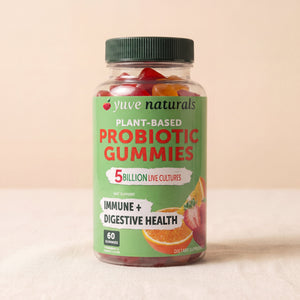
One Yuve option that fits the broader gut-support conversation is its vegan probiotic gummy supplement, which is relevant if you prefer a gummy format over capsules. That doesn't make it a Candida cure, but it does make it a practical way to keep a daily probiotic habit in place.
Vaginal, Oral, and Gut Candida Are Not the Same
This is the error I see constantly. People grab one probiotic recommendation and apply it to every Candida problem, then act surprised when nothing changes. That approach ignores the site of the issue, and the evidence is much more specific than the marketing.
Vaginal Candida
Probiotics have their clearest role here as an adjunct. Use them alongside antifungal treatment, because that is where the human evidence is strongest. The names that keep coming up are GR-1 and RC-14, since they have been studied repeatedly in vaginal health settings.
Oral Candida
The oral evidence is solid enough to pay attention to, especially in older adults and denture wearers. The pattern that makes sense is lactobacilli-rich, multi-strain formulas, not a generic probiotic that claims to do everything. Oral candidiasis analyses have looked more favorable recently than earlier reviews suggested, which makes this area more promising than most product pages admit (oral candidiasis meta-analysis, earlier reviews).
Gut-related Candida
This is the least clear category. Marketing treats gut Candida like a neat diagnosis with a neat supplement answer, but the actual evidence is much messier, and the claims run ahead of the data fast.
Plain truth: a probiotic that fits a vaginal flare may have little relevance for oral concerns, and neither one automatically solves gut symptoms.
That is why the actual gap is not another brand list. It is a more honest framework that says, match the strain to the site, and do not expect probiotics to do antifungal work they were never built to do. That is the part people usually need most.
Your Action Plan and When to See a Doctor
Keep this simple. First, identify the Candida site. Second, choose strains that have been studied for that site. Third, start low, stay consistent, and don't expect overnight magic. Fourth, if you're using an antifungal, let it do its job and treat the probiotic as support, not a replacement.
If you're building a daily foundation, a quality probiotic can be part of a calmer routine, and Yuve's vegan probiotic gummy supplement is one format people use for that kind of steady support. That said, if you're dealing with an active infection, don't let a supplement delay proper treatment.
Watch for the red flags that need medical attention:
- Recurrent infections that keep coming back
- Symptoms that don't improve with appropriate care
- Underlying conditions like diabetes or immunosuppression
- Severe or unusual symptoms that don't fit your usual pattern
I know the frustration of feeling like your body is working against you. Small wins matter here, and the right plan is usually more boring than the internet makes it sound.
If you want a cleaner, evidence-first way to support digestion and choose supplements without the hype, visit Yuve and explore products and resources built for people who want practical gut support, not wishful thinking.