Your stomach feels tight by mid-afternoon, your waistband leaves a mark by dinner, and the chicory root fiber you started last week has made things either better or worse. You can't tell which.
Let's settle it. We'll sort the chicory root fiber benefits by how strong the evidence is, name the grams behind each one, and build a ramp that gets you to a helpful dose without the balloon.
The honest version up front: chicory fiber is one of the better-studied prebiotic fibers on the shelf, and nearly everything claimed for it traces back to a small number of defined doses. Match the dose, match the form, and you'll know within a few weeks whether it's earning its place in your routine.
What Chicory Root Fiber Is and How Your Gut Uses It
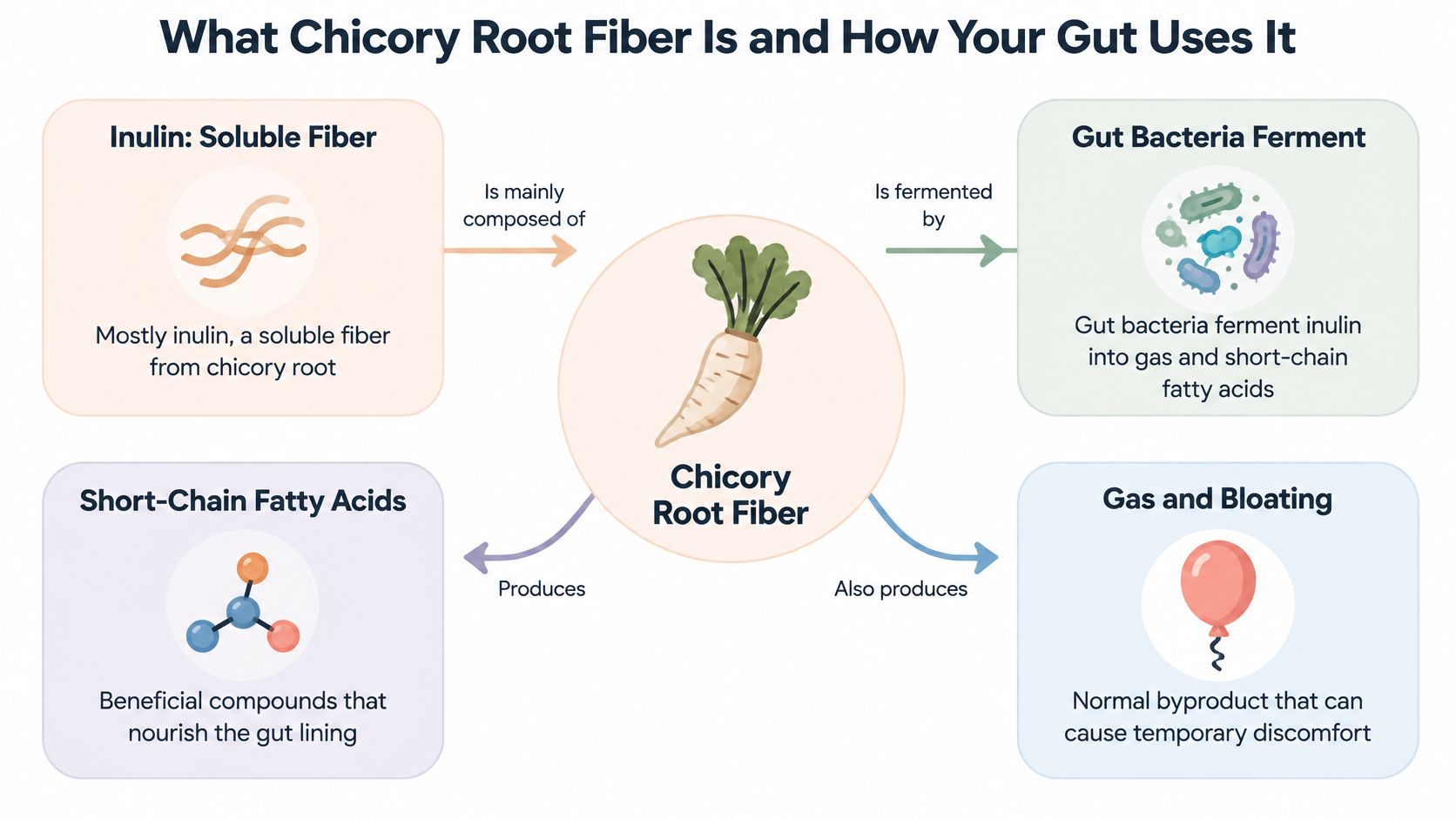
Turn over a bar, a gummy, or a powder that lists chicory and one word usually shows up: inulin. It's a soluble fiber stored in the root of the chicory plant, part of a carbohydrate family called fructans. That family name is worth remembering, because fructans are the reason a serving that feels harmless to one person can leave another reaching for a looser waistband.
Your stomach acid and small intestine enzymes can't break inulin apart, so your body absorbs almost none of it on the way to your colon (chicory monograph from Drugs.com). It arrives intact, and the bacteria living down there take over.
Bacteria ferment the fiber. Everything that follows, the good and the gassy, comes from that single reaction.
Fermentation is what makes inulin a prebiotic: food for microbes already living in your gut, especially bifidobacteria. A probiotic adds live organisms, while a prebiotic feeds the ones you already carry. That difference explains why two people can take the same dose and report different results: you're each feeding a slightly different crowd.
The three forms you'll meet on a label
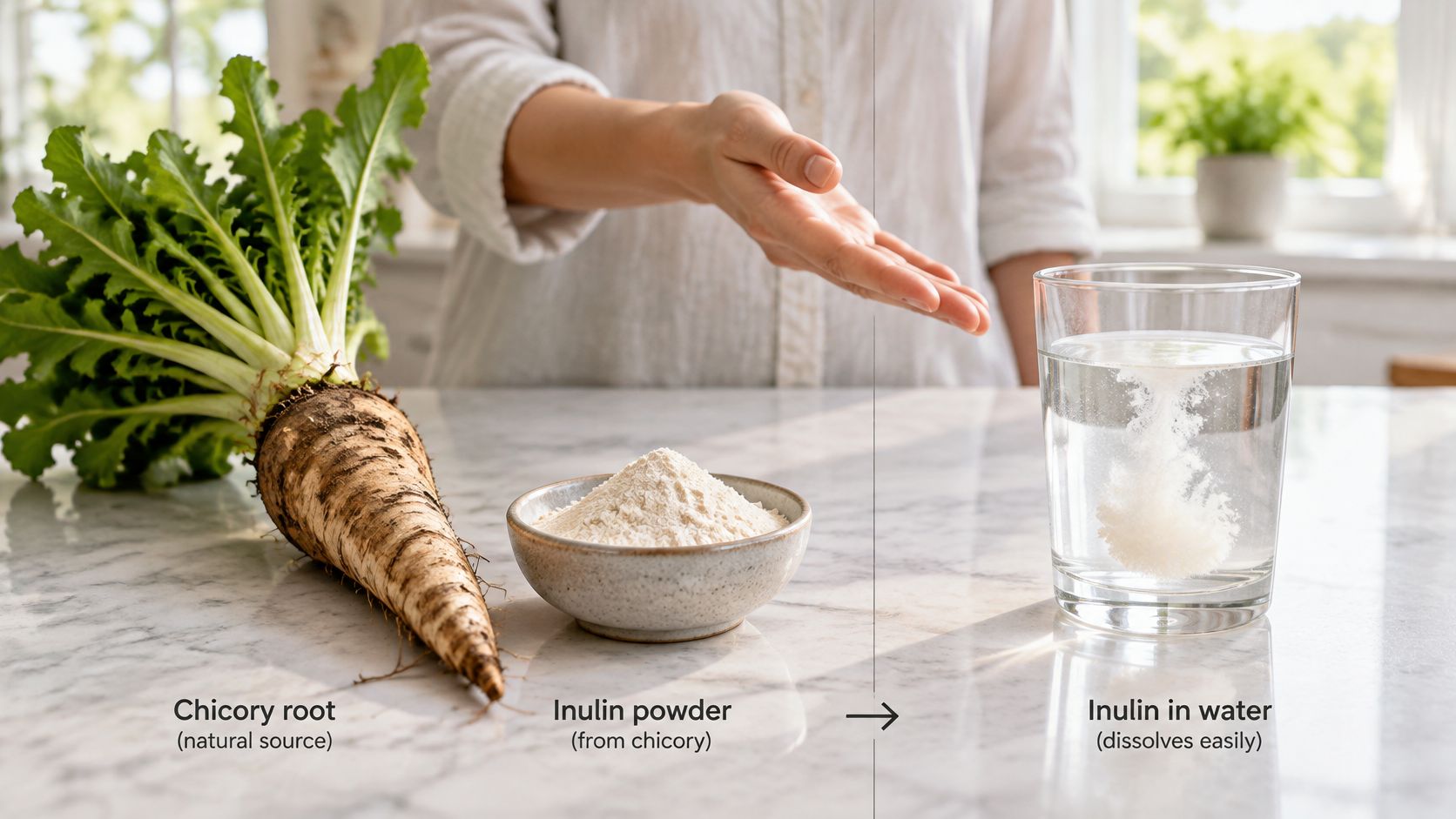
Isolated chicory inulin powder is the extracted, purified fiber. Dried chicory root is the whole root, ground and dried, so the fiber arrives alongside other plant compounds. Chicory fiber inside a finished food can be either one, at whatever dose the manufacturer chose, which is why the grams per serving matter more than the word "chicory" on the front panel.
Fermentation also produces gas as a byproduct. That's normal and typically temporary, but the size of the serving and the form it arrives in decide whether you notice it at all.
So before anything else on a label, we read the dose line. Two products can both say "chicory" while one delivers a light sprinkle of fiber and the other delivers several times that amount, and your gut will treat them as different products. The claims worth trusting all trace back to a defined gram amount of a defined form.
Chicory Fiber Benefits and the Doses Behind Them
The question worth asking about chicory root fiber is narrower than "is it good for you." Ask instead: how many grams, in which form, changed what? Regularity is where that question has the clearest answer, because it's the one benefit that cleared a regulatory bar rather than surviving on headlines alone.
In a 2015 scientific opinion, the European Food Safety Authority reviewed six studies involving 86 participants and found that consuming at least 12 grams of native chicory inulin per day consistently increased stool frequency, concluding that a cause-and-effect relationship had been established with maintenance of normal defecation (EFSA opinion on chicory inulin and stool frequency). That finding informed European Union Regulation 2015/2314, adopted in December 2015, which permitted a health claim linking native chicory inulin with increased stool frequency at 12 grams daily.
Read that claim carefully, because it covers less ground than "fiber is good for digestion." It attaches a named fiber, at a named dose, to a named outcome.
Where the doses came from
Chicory fiber doses in research and what changed
| Daily dose | Study setting | What changed |
|---|---|---|
| At least 12 g per day of native chicory inulin | EFSA 2015 review of six studies with 86 participants | Stool frequency consistently increased, supporting a cause-and-effect link to normal defecation |
| 3 to 20 g per day | Meta-analysis of randomized trials in adults | Bifidobacterium abundance rose significantly |
| 8 g per day for four weeks | Controlled research on gas and gut bacteria, reported in a 2025 review in BMC Gastroenterology | Bifidobacteria increased and gas retention fell 22 percent in a gas-challenge test, though the difference versus placebo wasn't statistically significant |
| 12 g per day for two weeks | Double-blind crossover against maltodextrin, adults with constipation | Stool frequency increased while bloating and discomfort stayed statistically similar to placebo |
| 15 g and 30 g per day of dried chicory root for three weeks | Randomized placebo-controlled trial in adults at risk of type 2 diabetes (full trial) | Stool softness rose 1.1 points on the Bristol Stool Scale at 30 g (P = 0.034), and changes returned toward baseline after washout |
Two patterns stand out. In the dried-root trial, the documented softness gain sits at the 30 gram dose, the higher of the two tested. And when a study stopped the fiber and washed it out, the effects drifted back toward baseline, which tells you this is a daily-habit benefit rather than a one-time fix.
What this means for your routine
Here's the caution that matters more than any dose in that table: the evidence concerns defined doses of specific chicory-derived inulin preparations. A product with "chicory fiber" somewhere in a blend isn't automatically the same material those trials used, and it may not deliver anything close to 12 grams per serving.
If regularity is your goal, aim for the 12 gram range, check the grams per serving on the label, and give it weeks rather than days. Tolerance still counts, because pushing fermentable fiber up quickly is the most common reason people blame the fiber and quit.
Benefits Beyond Regularity Like Calcium and Gut Bacteria
Regularity gets the headline, but two quieter benefits deserve your attention: a measurable shift in gut bacteria and support for calcium absorption. Both come with grams attached, which is what makes them useful when you are sizing a dose.
What those grams do to gut bacteria
Researchers pooled 50 randomized controlled trials with 2,525 participants and found that chicory-derived inulin-type fructans, taken at 3 to 20 grams per day, significantly increased Bifidobacterium abundance, with a standardized mean difference of 0.83 (95% CI, 0.58 to 1.08; P < 0.01) (meta-analysis in Critical Reviews in Food Science and Nutrition).
Two details in that range matter for your label math. The bifidobacteria gains were measured across 3 to 20 grams daily, and the low end sits well below the 12-gram dose associated with regularity, so a modest serving can still feed those microbes. The effect is also selective: inulin works like a targeted feed for bifidobacteria rather than a buffet for every bacterium you carry.
Your mileage will still vary. Baseline diet, habitual fiber intake, and the microbes already living in your gut all shape the response, so the same dose can shift one person's bacteria and barely register for someone else.
Where calcium fits
An FDA review concluded that the available evidence supports a beneficial physiological effect of inulin-type fructans extracted from chicory root, including effects on bone-mineral density and calcium absorption (FDA review of non-digestible carbohydrates). If you eat plant-based and rely on fortified foods for calcium, that is a useful finding.
Keep it in proportion. Chicory fiber does not replace calcium-rich foods, vitamin D status still drives how much calcium you absorb, and no evidence turns a prebiotic into a treatment for bone disease.
One adjacent point helps frame all of this: prebiotics feed the bacteria you already have, while probiotics add new strains. If you are pregnant and weighing a probiotic alongside your fiber, this guide to choosing a women's prenatal probiotic covers the strain and dose questions to ask before buying.
The honest scorecard
- Well supported: bifidobacteria abundance across 3 to 20 grams daily, calcium absorption with bone-mineral density, and stool frequency.
- Early signals: blood sugar readings and intestinal immune markers, mostly from short trials in specific groups.
- Not shown: treating or preventing any disease.
Whole Root Versus Purified Inulin and Why the Form Matters
Two products can both say "chicory root fiber" and behave differently in your body, and most articles skip that part entirely.
A 2025 comparative study found that purified inulin and lyophilized scorzonera, another inulin-rich root, both changed gut microbial composition and increased bifidobacteria, but their downstream effects split. Purified inulin was associated with improved liver-fat outcomes, while the whole-food source increased intestinal immune markers and antimicrobial-peptide expression (2025 comparative study on inulin forms).
A separate randomized controlled trial in adults at risk for type 2 diabetes found that intrinsic chicory-root fiber altered microbial butyrate-production pathways, increased fecal short-chain fatty acids, and improved whole-body insulin sensitivity. Peripheral insulin sensitivity only showed a trend, and the study was not proof of diabetes prevention.
Early findings, in other words, not a verdict. But they do explain why the form matters.
Reading the form on a label
Name the fiber, not the plant. Look for chicory inulin, chicory root powder, or chicory root extract. "Chicory root" inside a proprietary blend tells you almost nothing about the amount.
Find the grams per serving. That number, not the ingredient list, decides whether you're anywhere near the studied doses.
Decide purified versus food matrix. Isolated inulin is predictable and easy to dose. A whole-root product brings the plant's other compounds along with it.
Match the form to the goal. Regularity and bifidobacteria point toward purified inulin. If you're curious about the broader food-matrix effects, a whole-root product is the one those early trials used.
If you're comparing fiber types more broadly, this psyllium husk versus inulin comparison is a useful side-by-side on how the two behave in the gut.
How to Build Up to Your Daily Dose Step by Step
Dose is where people often get into trouble, in both directions: too little and nothing happens, too much too fast and you're bloated by Tuesday. The ramp below is a practical plan, not a trial protocol, so adjust it to what your body tells you.
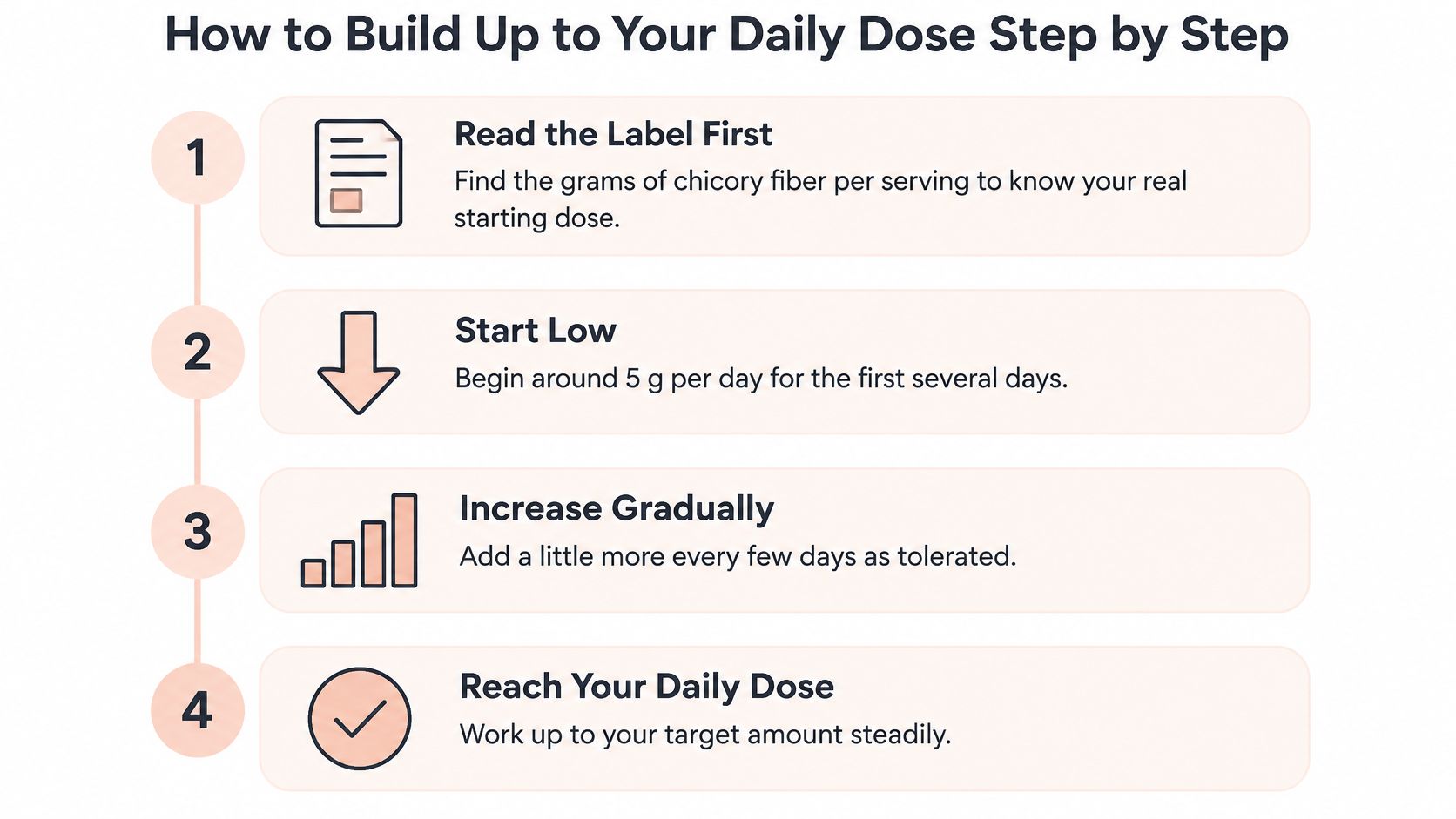
- Read the label first. Find the grams of chicory fiber per serving. That's your real starting dose, and it's often smaller than the scoop suggests.
- Start low, around 5 grams a day. In tolerance research, healthy young adults generally handled up to 10 grams per day of native inulin and up to 5 grams per day of oligofructose (FDA safety review of inulin), so starting small keeps you within a range commonly tolerated without symptoms.
- Add roughly 2 to 3 grams every three to four days. That pace gives your gut bacteria time to adjust to more substrate arriving, which is the whole point of going slowly.
- Hold the dose when symptoms appear. Gas, cramping, or loose stools mean fermentation is outpacing adaptation. Stay at the last comfortable amount until things settle, then step up again.
- Drink water steadily through the day. Fiber needs fluid to keep stools soft and moving, and a sudden fiber increase without enough water is a common reason regularity doesn't improve.
- Split the daily amount across meals. Two smaller servings spread the fermentation load instead of dropping it all at once.
- Review after two to four weeks. Check whether stools are softer and more regular and whether gas has faded. No change at all usually means the dose is too low; worsening gas usually means it climbed too fast.
Practical rule: increase on a schedule you can actually hold, not one you can brag about.
More is not automatically better. In studies the FDA reviewed, cramping, bloating, flatulence, and diarrhea appeared at inulin intakes of approximately 14 to 18 grams per day, which is the ceiling to respect rather than a target to chase.
Total daily fiber still matters beyond chicory alone. If you're unsure where you sit, this guide to how much fiber per day you actually need puts chicory in the context of your whole day.
Why Chicory Fiber Causes Bloating and How to Calm It
Bloating is miserable, and it is not a sign you failed at fiber. Your gut is doing exactly what fermentation does, just faster than your body has adapted to.

A randomized, double-blind, placebo-controlled crossover trial put adults with constipation on 12 grams of chicory inulin daily for two weeks, then compared it with 12 grams of maltodextrin after a two-week washout. Stool frequency increased. Reported bloating scored 1.1 versus 0.9 and abdominal discomfort 0.6 versus 0.4, both statistically similar to placebo (crossover trial on chicory inulin and digestive comfort).
So a 12 gram daily amount may support more regular bowel movements for some people without a meaningful rise in discomfort. Individual tolerance still varies, and the people around you at the dinner table aren't a control group.
Who should go slower
Constipation-predominant symptoms are the ones this evidence speaks to most directly, and even there the response depends on dose and starting microbiome.
Diarrhea-predominant or highly fermentable-carbohydrate-sensitive symptoms call for more caution. Evidence for relief is condition-specific, so don't assume a study in constipation translates to your situation.
Anyone brand new to fiber supplements should treat the first two weeks as information gathering rather than a verdict. Transient gas doesn't mean the ingredient is harmful. Persistent pain does deserve attention.
Chicory fiber symptoms, likely causes and fixes
| Symptom | Likely cause | What to do |
|---|---|---|
| Gas and bloating in the first week | Fermentation rising faster than your gut has adapted | Return to the last comfortable dose, then increase more slowly every few days |
| Cramping or bloating after reaching about 14 g per day | Dose above many people's tolerance; studies reported these symptoms around 14 to 18 g | Lower the dose to a level you tolerate and split it across meals |
| Loose stools or diarrhea | Dose too high for your gut, or a diarrhea-predominant pattern | Reduce the dose, keep fluids steady, and check with a clinician if it persists |
| Constipation not improving after 3 to 4 weeks | Dose too low, low fluid intake, or a different cause | Confirm steady daily intake and fluids, then talk with a clinician |
| Gas that fades within days to weeks | Normal adaptation to fermentation | Keep the same dose and give your gut time; no need to stop |
Here's a short walkthrough of the build-up approach in video form, in case you'd rather watch it than read it.
Timing tells you most of what you need to know. Gas that fades within days or weeks is usually adaptation. Pain that persists, blood in your stool, unexplained weight change, or symptoms that drag on for weeks should prompt a conversation with a clinician rather than another dose adjustment.
If you want the deeper explanation of why prebiotics produce gas in the first place, we covered it in do prebiotics cause gas.
Confirm the Label Before You Start Your Trial
Four checks, then you're ready to begin.
- Confirm the ingredient name. Chicory inulin or chicory root fiber, spelled out, not buried in an unnamed fiber blend.
- Check the grams per serving. Compare it with the 10 to 12 gram range from the regularity studies, or with a dose you can build toward using the steps above.
- Choose the form that fits your goal. Purified inulin for regularity and microbe support, whole-root fiber if the broader food-matrix effects are what interest you.
- Track for two to four weeks. A simple daily note on stools, gas, and comfort beats trying to remember how last Tuesday felt.
Reading the rest of the panel matters too, and this guide to how to read supplement labels covers what else to look for.
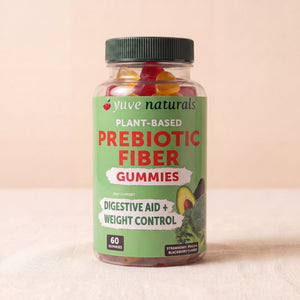
If you'd like a starting point that already states its fiber source and dose, our Vegan Prebiotic Fiber Gummies are a daily plant-based fiber gummy with inulin from chicory root, formulated to support the growth of beneficial bacteria in the gut. They're $22.10 one-time or $18.79 on subscription, and the 60-day money-back guarantee gives you room to see how your gut responds before you commit to a routine. Most Yuve products are designed to be stacked, so Probiotic Gummies with Prebiotic Fiber Gummies can run together as one daily habit.
Tell us in the comments how your own ramp went. The details other readers share are often the most useful part.
Chicory Root Fiber Questions Answered
Is chicory root fiber a probiotic? No. It's a prebiotic, which means it feeds bacteria already living in your gut rather than adding new ones.
How much should I take? Studies used 3 to 20 grams a day, with regularity results landing around 12 grams. Start lower, around 5 grams, and build up over a few weeks.
Will it cause gas? It can, because fermentation produces gas. Going slowly usually keeps it mild.
Does the label matter? Yes. Check the grams of chicory fiber per serving, since a food labeled chicory may deliver nowhere near the studied doses.
Who should check with a clinician first? People taking diabetes medication, anyone with IBS or another digestive condition, pregnant or breastfeeding readers, and anyone allergic to daisy-family plants such as ragweed.
How long until I notice? Regularity changes usually take weeks, not days. Track stools and comfort in a simple daily note.
If you want to put all of this into practice without assembling a shelf of powders, Yuve's gut health range is built around exactly this kind of daily, plant-based routine, including our prebiotic fiber gummies with inulin from chicory root. Start with one serving a day, use the ramp above, and give your gut the full 60 days our guarantee allows before you judge the results. Visit Yuve to see the full range and pick the starting point that matches your goal.