If Chromium and Cinnamon really worked like the labels promise, wouldn't your doctor already have told you to take them? That question is worth sitting with, because the gap between popular claims and clinical evidence is exactly where smart, safe choices get made.
Why Chromium and Cinnamon Keep Coming Up
You know the afternoon slump. Lunch was fine, you did not do anything wild, and yet your energy dips, your stomach feels puffy, and you start hunting for something sweet.
Then you see Chromium and Cinnamon on a supplement shelf or in a video, paired with words like blood sugar, cravings, and metabolic support. It sounds natural, simple, and appealing. Who would not want a gentle nudge instead of another complicated routine?
I get why this pair grabs attention. One is a trace mineral linked to how insulin works, and the other is a familiar kitchen spice with a long history. Together, they feel less clinical than medication and more doable than overhauling every meal.
The Promise I Want to Make You
You will not get hype here. You'll get a clear walkthrough of what Chromium and Cinnamon are, what human research shows, where results are mixed, and how to spot a safer, better labeled product.
Think of Sam, who started Yuve after his own digestive struggles made everyday eating feel unpredictable. Like a lot of us, he learned that feeling better rarely comes from one magic capsule. It comes from understanding your body, reading labels with fresh eyes, and building small habits you can keep.
A useful mindset: Treat Chromium and Cinnamon as possible supporting players, not as treatments that replace prescribed care.
That distinction matters if you take glucose lowering medicine, live with liver or kidney issues, or just feel tired of confusing claims. By the end, you'll have a practical checklist for food sources, supplement forms, safety questions, and the exact label details worth checking before you buy anything.
We'll also talk about bloating, because dun, dun, dun, unwelcome gas has a way of showing up when you least want it. Chromium itself can upset some stomachs, so more is not automatically better. Let's slow down, sort fact from marketing, and give you confidence to decide what fits your body and your goals.
What Are Chromium and Cinnamon
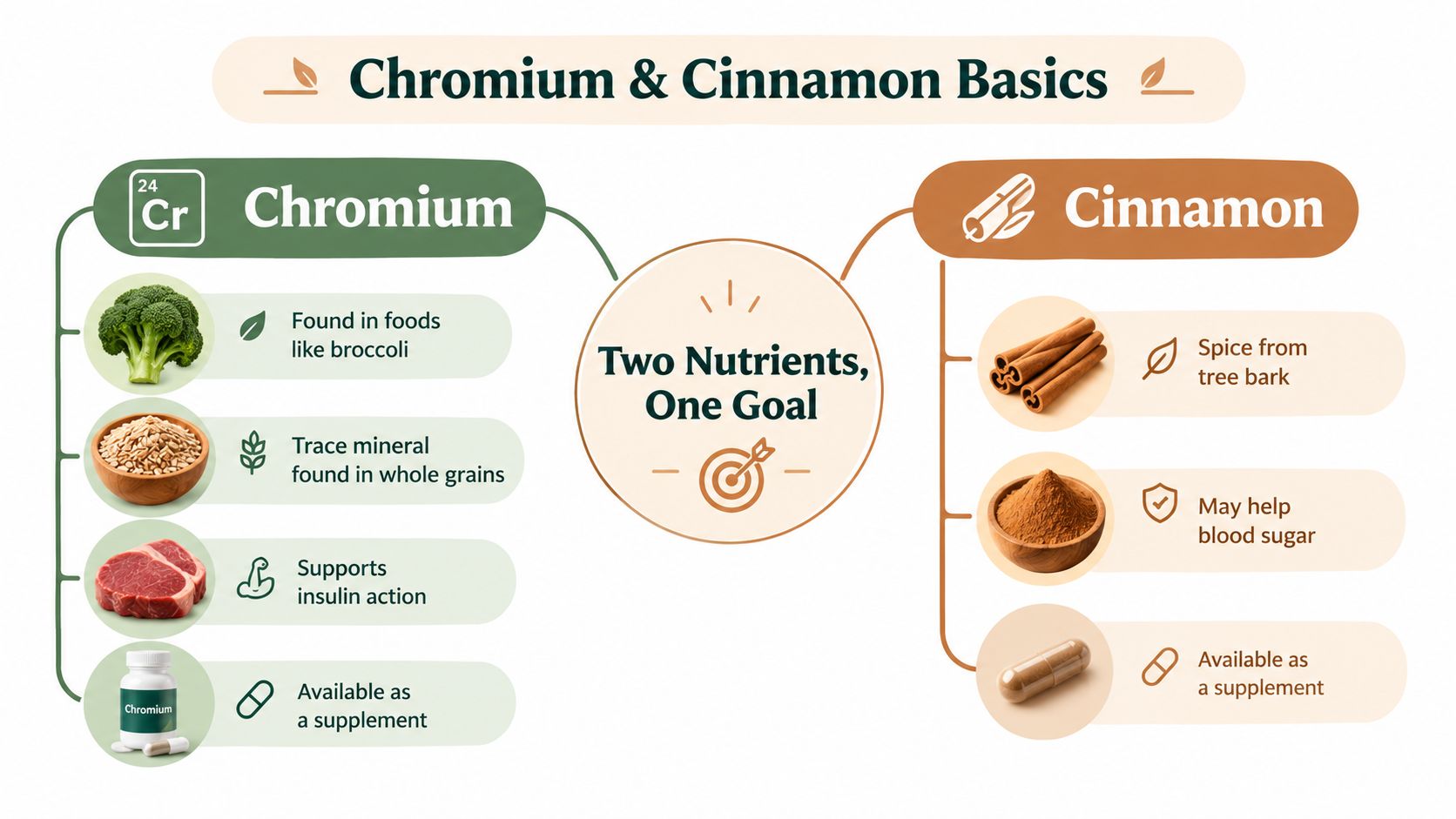
Chromium and cinnamon come from very different places, and that is part of why they're paired so often. One supports a nutrient pathway in tiny amounts, while the other is a plant spice used for flavor and traditional wellness.
Chromium in Plain Language
Chromium is a trace mineral found naturally in foods and sold as a supplement. Its status has been debated more than many vitamins, but in 2001 the Food and Nutrition Board concluded that chromium(III) should be considered essential because of its effects on insulin action, and set a Daily Value of 35 micrograms per day for ages 4 and older, as summarized in the NIH Office of Dietary Supplements chromium fact sheet.
Picture insulin as a key that helps move glucose from your blood into your cells for energy. Chromium is proposed to help that key turn more smoothly in the lock. It does not replace insulin, and it does not force the door open on its own.
You get chromium from foods like broccoli, whole grains, and meats, though amounts vary a lot. That variability is one reason people look at supplements, and it's why a curated place to find supplements can be helpful when you're comparing forms instead of guessing in a store aisle.
Cinnamon Is Not One Single Plant
Cinnamon is dried bark from several Cinnamomum species. Human use goes back roughly 4,800 years, with records around 2800 BC and later use in ancient Egypt, according to a historical and botanical review of cinnamon.
That same review notes more than 250 species in the genus. The two you'll see most are Cinnamomum verum, often called Ceylon cinnamon, and Cinnamomum cassia, often called cassia cinnamon.
- Ceylon cinnamon: Usually milder in flavor and naturally much lower in coumarin.
- Cassia cinnamon: Bold and common in North American kitchens, but coumarin content can vary widely.
- Generic cinnamon labels: A red flag, because species changes both safety and standardization.
So when a product says only cinnamon, you're missing key information. Species, extract details, and coumarin testing tell you far more than a pretty spice photo ever will.
What the Research Says About Their Effects
The evidence for Chromium and Cinnamon is real enough to discuss, but not strong enough to oversell. Let's look at each one separately before we talk about combining them.
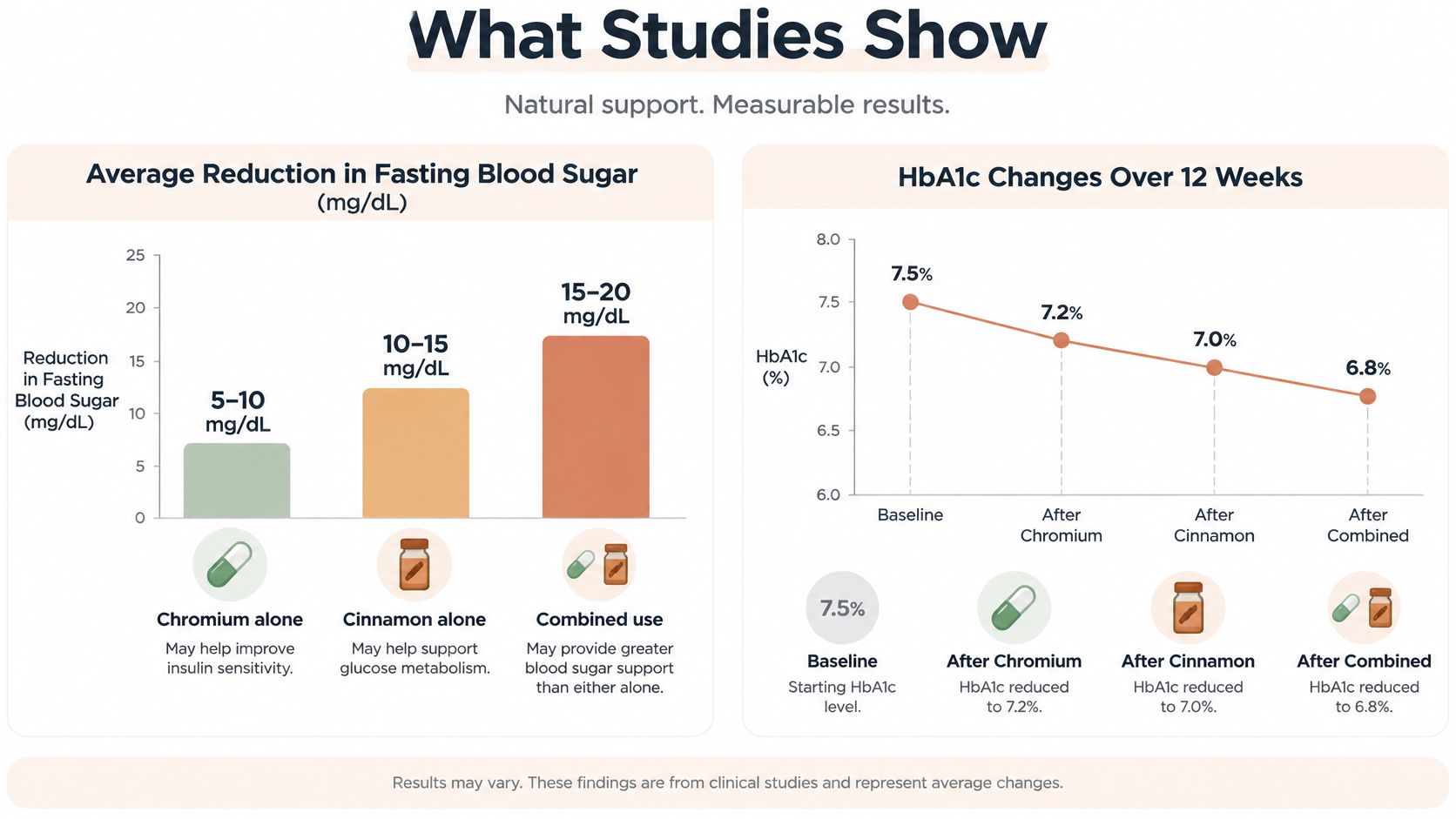
This chart gives a visual snapshot of the kinds of outcomes researchers track, like fasting glucose and longer term markers.
Chromium Results Are Mixed
Chromium is proposed to potentiate insulin signaling, meaning it may help insulin do its job. In a 24-week randomized trial of 137 adults aged 30 to 70 years with type 2 diabetes, 1,000 mcg per day of chromium picolinate produced no significant improvement in insulin sensitivity, fasting glucose, or HbA1c versus placebo, as described in the NIH chromium review on metabolism.
Other reviews report small improvements in some glycemic markers. A 2022 review covering 16 studies and 868 participants suggested possible improvements in HbA1c, fasting blood glucose, and insulin resistance in type 2 diabetes, yet the American Diabetes Association does not recommend chromium because overall benefit is not clear, according to NCCIH guidance on diabetes and dietary supplements.
What that means for you is simple. Chromium might help some people slightly, but it is not reliable enough to count on as a stand alone blood sugar strategy. If you already work with a clinician for ongoing care, resources for chronic diabetes support in New Jersey show the kind of supervised support that supplements should never replace.
Cinnamon Shows a Signal With Caveats
A pooled analysis of 35 clinical trials found average reductions of about 11.39 mg/dL in serum glucose, 1.27 μIU/mL in insulin, 16.27 mg/dL in triglycerides, and 6.36 mg/dL in LDL cholesterol, though reviews note substantial heterogeneity and inconsistent HbA1c effects, as summarized in the NCCIH scientific digest on type 2 diabetes supplements.
Those are averages across different species, doses, and extracts, not a promise for any one person. If you want to see how we think about evidence overall, our guide to science backed supplements worth considering walks through that filter.
This short video adds helpful context before you decide whether a combined product makes sense for you.
As for synergy, I do NOT think we should claim Chromium and Cinnamon multiply each other's effects. The pairing is popular and biologically plausible, but strong human evidence for a special combined boost is limited. Honest expectations protect both your health and your wallet.
How to Use Chromium and Cinnamon Safely
Start with food, then decide if a supplement fills a real gap. That order keeps you grounded and makes labels easier to judge.
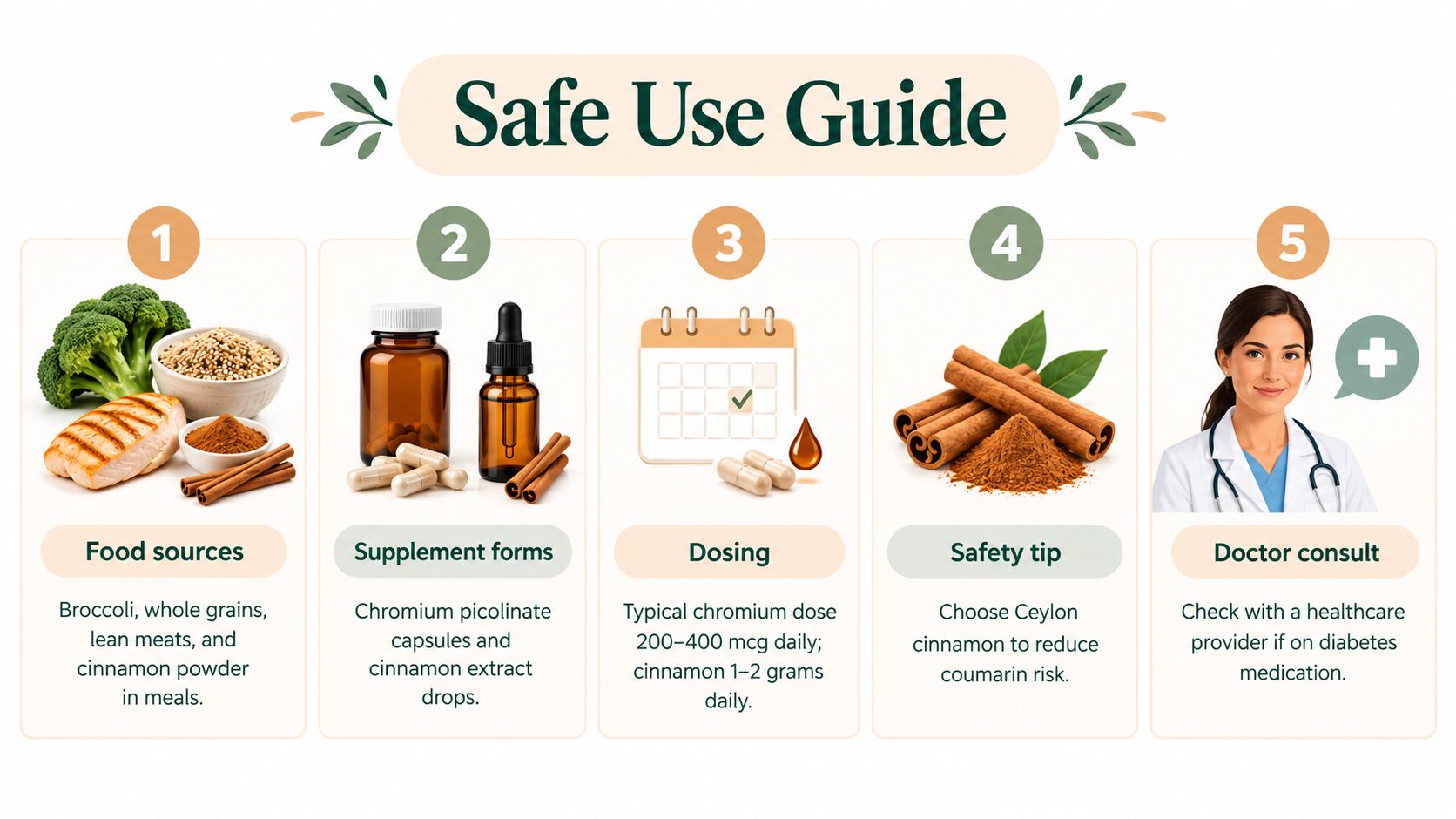
Use this guide as a quick visual checklist before you add anything concentrated to your routine.
Food First Options
For chromium, build meals around broccoli, whole grains, green beans, nuts, and meats if you eat them. You won't hit an exact target at every meal, and that's okay. Variety matters more than chasing one mineral on a spreadsheet.
For cinnamon, stir it into oatmeal, smoothies, yogurt alternatives, roasted sweet potatoes, or warm drinks. Culinary amounts add flavor without the concentrated exposure you get from capsules or extracts. That everyday use is very different from taking a high strength supplement daily.
What to Check on a Supplement Label
A trustworthy chromium label names the chemical form, such as chromium picolinate, and lists elemental chromium clearly. Without the elemental amount, you can't compare products fairly. Our walkthrough on how to read supplement labels with confidence breaks that down step by step.
For cinnamon, look for three specifics.
- Species named clearly: Ceylon or cassia should be spelled out, not hidden behind a blend.
- Extract standardization disclosed: The label should explain what the extract is standardized to, not just total weight.
- Coumarin quantified by testing: A number from validated testing beats vague purity language every time.
If a brand cannot tell you the species and coumarin level, that is your answer. Choose a different product.
Be extra careful if you take glucose lowering medication, have liver or kidney disease, are pregnant, or already use several supplements. A quick pharmacist check can catch overlaps you might miss. Safe use is not about fear, it's about matching the product to your personal risk.
Safety Concerns and Common Misconceptions
Natural does not mean universally safe. That might be the most important sentence in this whole article, especially with Chromium and Cinnamon.
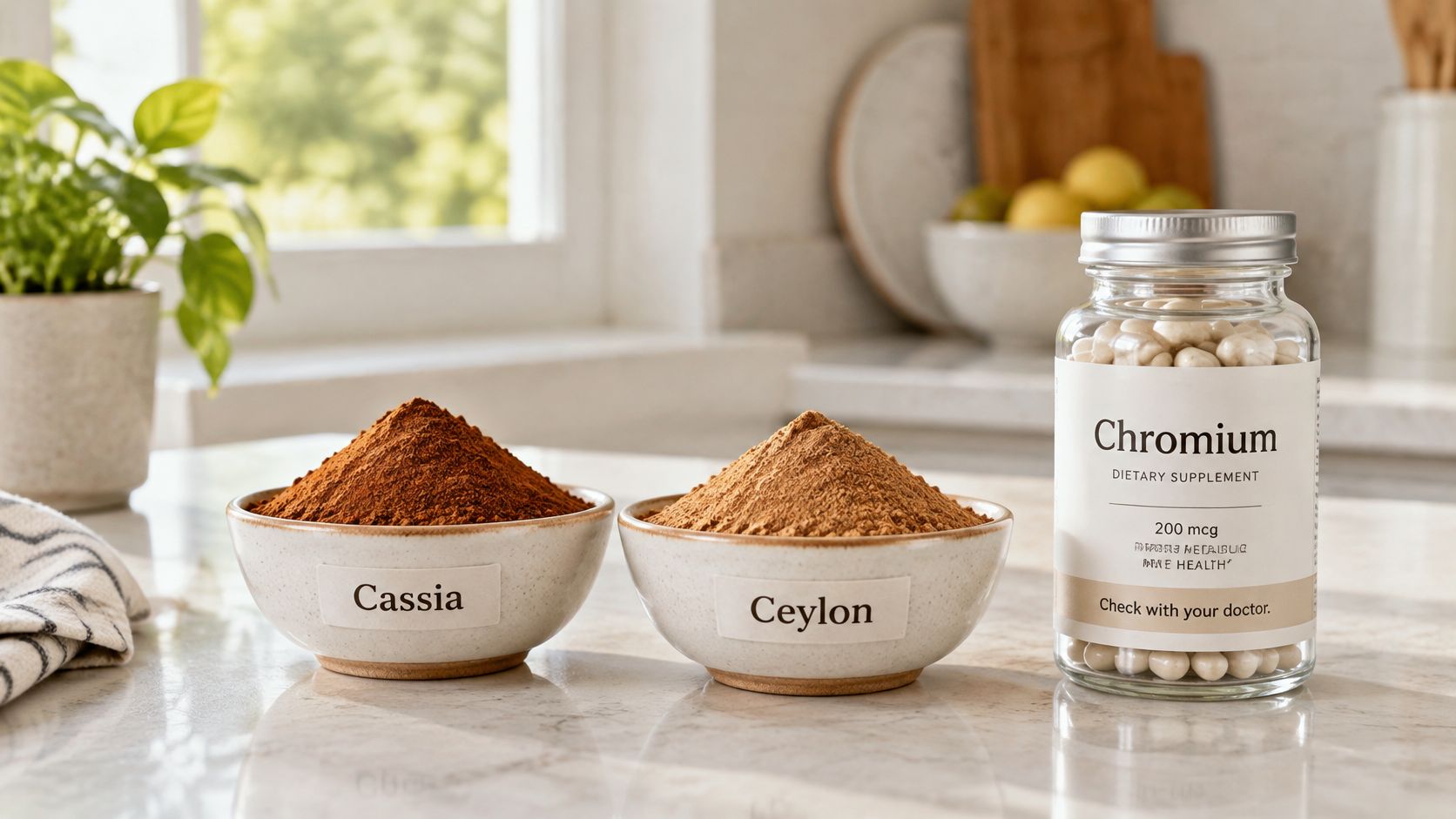
These two powders may look similar in a kitchen, but their risk profiles are not identical once you use concentrated amounts.
The Coumarin Issue With Cassia
Cassia cinnamon generally contains far more coumarin than Ceylon cinnamon. Sustained high exposure can increase liver injury risk in susceptible people, and safety guidance also flags possible interactions with warfarin and drug metabolizing enzymes.
The EFSA tolerable daily intake for coumarin is 0.1 mg per kg body weight per day, a limit noted in the NCCIH scientific summary cited earlier. You do not need to memorize that number, but you do need a product that reliably measures coumarin. Without testing, you're guessing about cumulative exposure from food plus supplements.
Chromium Side Effects People Miss
Reported adverse effects of chromium include stomach pain and bloating, while rare reports involve kidney, liver, muscle, and skin problems after large doses, with extra caution advised for people with kidney or liver disease, according to NCCIH safety guidance for diabetes supplements.
That bloating point surprises readers who came here hoping for digestive relief. Chromium's proposed role is tied to glucose use, not directly treating bloating, so an upset stomach is a sign to pause and reassess. If trace minerals interest you more broadly, our article on colloidal minerals and their benefits explains why form and dose matter there too.
Myths Worth Dropping
- More is better: Megadoses raise risk without proven extra benefit.
- Supplements can replace medication: They should not replace clinically supervised therapy.
- All cinnamon is the same: Species and coumarin make that claim false.
- No side effects means it is working: Silence from your body is not proof of benefit.
A safer approach is boring in the best way. Identify the species, confirm testing, avoid stacking similar products, and ask a clinician when medicines or chronic conditions are in the picture.
How Yuve Fits Into Your Daily Routine
After reading mixed evidence, you might wonder where a routine fits at all. That is exactly where Yuve's philosophy helps, because we focus on steady gut support and daily nourishment rather than miracle claims.
Yuve makes vegan, non GMO, gluten free, and gelatin free supplements designed to support gut health, immunity, and energy. Those basics connect to why many readers explore Chromium and Cinnamon in the first place. When digestion feels calmer and meals sit better, balanced eating gets easier to maintain.
A Proactive Step, Not an Extra
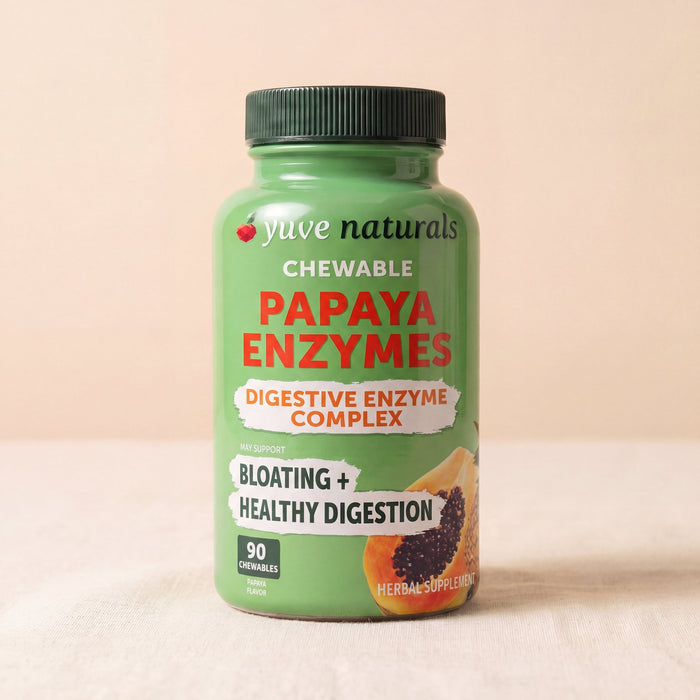
Think of a Yuve routine like keeping good shoes by the door for your walk. It does not do the walk for you, but it removes friction. Our Papaya Enzymes support daily digestion, making balanced eating easier, and Yuve Lactase Enzymes are a go to for dairy nights when you want to enjoy food without discomfort.
That practical support matters on real days. Pizza night, a work lunch you did not choose, or travel food can all leave you bloated and frustrated. Having a trusted enzyme or probiotic routine ready is a smart, proactive step to feel great and enjoy food without second guessing every bite.
Sam built Yuve from that lived frustration, and our community keeps sharing small wins back with us. A meal enjoyed without unbuttoning your jeans by afternoon might sound minor, but you know it is not. Comfort changes your mood, your energy, and your willingness to keep healthy habits going.
Gentle reminder: The best routine is the one that is clean, transparent, and simple enough to repeat tomorrow.
We back that trust with a 60 day money back guarantee, so trying a product feels low risk. Pair that kind of daily gut support with the label skills you just learned, and you're no longer buying on hype. You're building a routine that fits your values, your body, and your actual life.
Practical Takeaways for Your Health Journey
You do not need to remember every study detail. You need a short decision process you can use in a store, online, or at your kitchen table.
Start here before you buy Chromium and Cinnamon, together or separately.
Your Five Point Checklist
- Set the right expectation: Possible modest metabolic support, not diabetes treatment.
- Name the cinnamon species: Prefer clear Ceylon identification when coumarin is a concern.
- Demand label specifics: Look for elemental chromium, chemical form, extract standardization, and quantified coumarin.
- Add up total exposure: Count food, drinks, and other supplements, not just one capsule.
- Check personal risk first: Talk with a clinician or pharmacist if you use glucose lowering drugs or have liver or kidney disease.
If a product fails two or more of those checks, skip it. That simple rule will save you money and reduce avoidable risk. If it passes, start conservatively, pay attention to stomach pain or bloating, and stop to reassess if something feels off.
Food still does heavy lifting. Regular meals with fiber, protein, and whole foods, plus sleep and movement, shape blood sugar far more reliably than any single spice or mineral. Supplements work best when they support those foundations instead of trying to rescue them.
I know it can feel discouraging when popular claims shrink under scrutiny. But clarity is empowering, friend. You now know how to choose safer forms, ask better questions, and invest in habits that help you feel steadier day after day. Share your own gut health journey with us, because your small win might be the encouragement someone else needs today.
Frequently Asked Questions
Can I Get Enough From Food Alone
For many people, food can cover basic chromium needs, but intake data are limited and food content varies. In one small U.S. study of 8 men and 11 women, average intakes were about 54 micrograms per day for men and 29 micrograms per day for women, figures noted in the NIH chromium fact sheet cited earlier.
Cinnamon from food is mainly about flavor at culinary amounts. Concentrated supplements create a different level of exposure, which is why species and coumarin testing matter more there. If your diet is varied and you have no specific concern, food first is a reasonable place to start.
What Is the Practical Difference Between Ceylon and Cassia
In everyday terms, Ceylon is the lower coumarin choice and cassia is the stronger tasting, more variable choice. For occasional baking, that difference may feel minor. For daily concentrated use, it becomes a safety decision, especially if you have liver concerns or take medicines affected by coumarin.
Are These Supplements Safe During Pregnancy
Do not assume they are. Pregnancy changes the risk calculation for concentrated botanicals and minerals, and generic online dosing advice rarely addresses it. Talk with your obstetric clinician before using Chromium and Cinnamon supplements, and bring the exact label so species, form, and amount can be reviewed.
How Do I Know if a Supplement Is Good Quality
Look for transparency you can verify. A quality product names the chromium form and elemental dose, identifies the cinnamon species, discloses extract standardization, and quantifies coumarin with validated testing.
Also check for clear allergen statements, realistic claims, and a company that invites questions. If the marketing promises rapid blood sugar control or medication replacement, walk away. Good quality sounds calm, specific, and honest about limits, just like good health advice should.
Ready to support steadier digestion and everyday energy with clean, plant based supplements you can understand? Explore probiotics, enzymes, and herbal blends from Yuve, choose the routine that fits your meals and your body, and try it with confidence knowing you're taking a proactive step toward feeling lighter, calmer, and more in control.