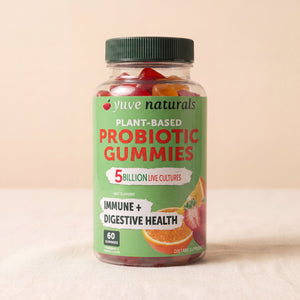
Probiotic gummies can work. The gummy is not why they work.
People blame the candy shape and miss the core issue. Some spore-forming strains survive gummy manufacturing well. Other gummy formulas lose live bacteria during storage. Survival depends on which strain is in the product and how many cells are still alive when you eat it, plus whether that strain was ever studied for your problem.
"Take a probiotic every day for a month and see" is bad advice. Probiotic is a category, not a plan. A chewable that only promises gut support does not tell you the organisms survived the shelf or that anyone measured a result after you swallowed them. Skip the category. Read the lines that separate a supplement from a sweet: a named strain, a count that still holds at expiry, and a goal a study tested.
Convenient to chew is a reason to buy a gummy. It is not proof that it works.
The Short Answer on Probiotic Gummies
Three conditions have to line up before a gummy earns a place in your routine.
- The exact strain, named. Not "probiotic blend", not "Lactobacillus" on its own. Genus, species and strain code, like Saccharomyces boulardii or Lactobacillus reuteri, so you can look up whether that organism was tested for your complaint.
- A dose that matches human studies. Counts swing wildly between products, and the number on the front only helps if you know what it refers to.
- Live cultures through the shelf life. The count that matters is the one on the day you swallow it, not the day it was manufactured.
Miss any one of those and the product is unproven for you. That verdict holds whether the delivery format is a gummy, a capsule, or a scoop of powder.
The gummy is neither the cause nor the cure. Heat and moisture during manufacturing stress live bacteria, and some strains handle that stress far better than others. But you can also buy a capsule full of organisms that died in a hot warehouse, or a powder that clumped in a humid kitchen cabinet. Format sets the difficulty of the task. Strain and storage decide whether you pass it.
If you've chewed two bright gummies a day for a month and felt exactly nothing, you're not imagining it and you didn't do it wrong. The usual explanation is simpler: the label never named a strain anyone had tested for your symptom. A gummy that tastes like strawberry candy is easier to take every day, and sticking with a daily habit matters. Pleasant is not the same as effective, though, and palatability has never been shown to make a microbe work.
The decision rule: if the label names the strain, states the CFU through expiry, and that strain has human data behind your specific goal, a gummy is a perfectly reasonable trial. If it only says "gut support", treat it as unproven and keep your money.
That leaves the format question. Who is a gummy for? Adults who want a habit they won't skip, families whose kids refuse capsules, vegans avoiding gelatin shells, and anyone who has a cupboard full of half-finished bottles they hated taking.
Gummies Compared With Capsules, Powders and Chewables
Pick the format for the job it is good at. A sealed capsule protects fragile strains. A gummy is easier to finish. Powder, chewables, and refrigerated liquids each fail in a different, predictable way.
| Format | Live culture survival | Ease of daily use | Best fit |
|---|---|---|---|
| Gummy | Moderate. Heat in processing and room-temperature storage both cut the count | High. It tastes like a treat | Adults and children who skip pills |
| Capsule | High for fragile strains. The shell blocks moisture and oxygen | Medium. You have to swallow it | Adults who want a fixed, measured dose |
| Powder | Falls once an opened container meets humidity | Medium. Stirred into food or drink | Families who can add it to meals |
| Chewable tablet | Moderate. Tableting uses heat and compression | High | Children and people who dislike gummies |
| Refrigerated liquid | High while the cold chain holds. Poor once it breaks | Low. It needs cold storage | People following a strict clinical-style routine |
Survival is the trade-off that matters. A gummy is cooked, set, and then stored at room temperature. A sealed capsule in a dry box has an easier job.
Open flour behaves the same way. It is fine on day one. Leave the bag open in a humid pantry and you are not baking with the same product. CFU at manufacture and CFU at expiry are two different numbers. Buy against the expiry figure, or follow storage instructions that keep the manufactured figure honest.
What the stability research actually shows
A 2024 food-science study tested the spore-forming strain Bacillus coagulans BCP92 and found 99.67% relative viability through gummy processing (Applied Food Biotechnology). That figure shows the bacteria survived the manufacturing line. It does not show better digestion or immunity in a person. A separate probiotic fruit-gummy formulation lost detectable viability after time on a warm shelf, so a pretty jar is not proof the label is still true.
A separate small study of 24 healthy adults, summarized by VitaGlobe, found viable bacteria in every participant's stool after two weeks. The summary does not name the strain. Organisms in stool after two weeks are not a broad clinical benefit.
The format question is narrower than the marketing: will this gummy still hold an effective count of its named strain on the day you eat it?
Gummy upside: no swallowing, easy for kids, easy to remember, and no mixing or measuring.
Gummy downside: heat and humidity, added sugar or syrups, and fewer strains with data in gummy form.
The gelling base changes the product. Pectin-based gummies differ from gelatin ones in both stability and texture, and a shelf-stable pectin formula can hold its count or lose it depending on the recipe. Before you buy, read the storage instructions and the CFU stated through expiry.
Strain and Dose on the Label
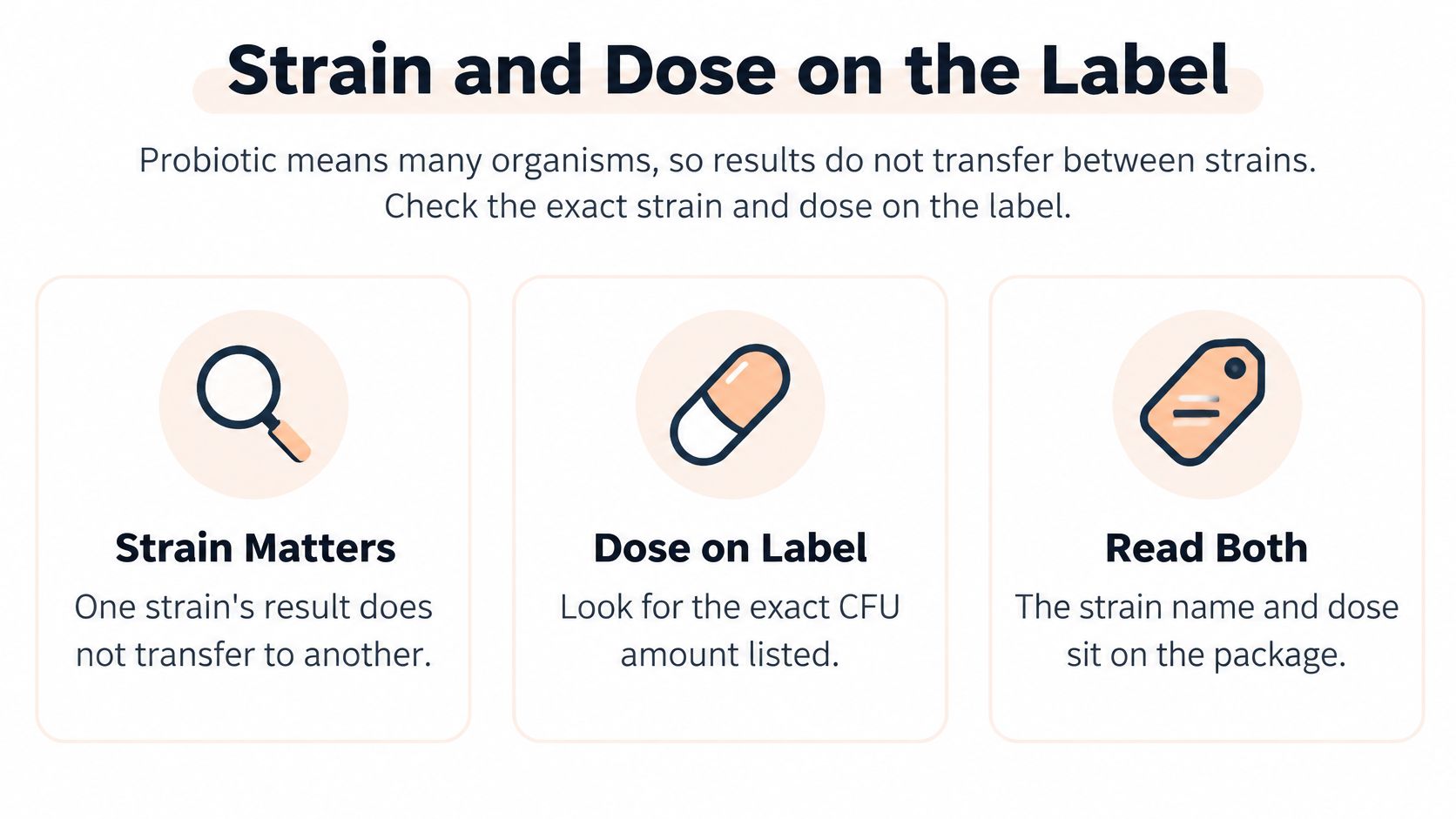
A gummy can deliver live bacteria and still miss your goal. The verdict is the label: a named strain, the CFU that remains at expiry, and a human study of that pair for the problem you have. Format is only how the dose arrives.
The word probiotic covers dozens of genera and hundreds of strains, and a result for one does not transfer to the next. The NIH spells this out: benefits depend on both the specific microorganisms a product contains and its colony-forming-unit count, which is why those two facts belong side by side on the same label (NIH Office of Dietary Supplements).
| Strain | Study setting | Result and limit |
|---|---|---|
| Saccharomyces boulardii | Review of randomized trials in adults and children | Fewer cases of antibiotic-associated diarrhea than placebo or no treatment. Relevant to antibiotic use, not general bloating |
| Lactobacillus reuteri | 2023 randomized clinical study (the published trial) | Indigestion score 4.34 points versus 1.78 with placebo, a symptom score and not a diagnosis |
| Bacillus coagulans BCP92 | 2024 food-science study of gummy processing | The strain survived gummy manufacturing. That is processing survival, not a change in digestion or immunity |
| Bacillus coagulans, strain not named in the summary | 2024 study of a small group of healthy adults | Live organisms were recovered after a short course. You cannot match an unnamed strain to a bottle |
The antibiotic result and what it does not cover
The Saccharomyces boulardii finding is the one with a clear job. People who get loose stools on antibiotics have a studied strain for that problem. Buy it for that reason, at the dose the trials used, for the length of the antibiotic course.
It says nothing about a hard, distended belly after lunch, nothing about constipation, and nothing about IBS. Evidence for one condition does not prove a gummy will fix another.
The Lactobacillus reuteri trial is narrower still. Supplementation moved an indigestion score further than placebo. Read that as a symptom score in a trial, not a diagnosis being solved.
The gummy study summarized by VitaGlobe's write-up of the 2024 research is useful for a different reason. Live organisms can make it through a gummy and show up afterward. The summary does not name the strain, the group was small, and the window was short. A delivery result you cannot match to a strain code is not a reason to pick a jar.
If you want to see how a bacterial cell functions before you buy anything, this is a clear six-minute primer.
Reading CFU without getting fooled
CFU is the count of live organisms in a serving. The strain name is which organism that count refers to. The expiry date is whether the count still holds when you eat the gummy, not the day it was made. A high count of the wrong strain, or a count that has already died on the shelf, does not become a benefit.
The NIH notes that commonly used supplement amounts are about 1 billion CFU and 10 billion CFU, while clinical studies vary widely. In one evidence summary, 15 studies used more than 10 billion CFU per day, 26 used 10 billion or less, and 22 didn't clearly report the dose at all (NIH dose guidance). Use a strain, a dose, and a duration that human studies have already tied to your goal.
A huge CFU on an unstudied strain is weaker than a modest dose of a proven one. Matched beats bigger.
Run this four-step label routine every time you shop. It takes about ninety seconds:
- Find the genus, species and strain code. If the code is missing, the human data probably is too.
- Read the CFU through expiry, not at manufacture.
- Match strain and dose to a human study for your actual goal.
- Take that same dose daily and track the symptom you chose for a set trial period.
For a fuller bottle-to-bottle comparison, our guide to what to look for when buying probiotics walks through the label in more detail.
Bloating, Gas and How Long to Wait
You eat a normal lunch, and by mid-afternoon your waistband is digging in. Or the gas gets so predictable you start planning around it, then wonder whether the supplement you started is making everything worse. That second question is worth taking seriously, because it sometimes is.
Probiotics can cause gas. A few days of extra rumbling while your gut adjusts is common, and it often fades on its own. Day two discomfort is a weak reason to quit. Day ten that is clearly worse than day one is a reason to stop calling it an adjustment.
For IBS-type bloating, keep expectations modest. A probiotic is not routine care for every adult or child with irritable bowel syndrome. Marketing that promises to end bloating for good is ahead of what studies show when the strain and the goal do not line up. Your own log is the verdict, not the claim on the jar.
A four-week trial beats a one-week verdict
Take the labeled dose every day for four weeks. Write one line a night about bloating, gas, and bowel habits. Digestive support products, enzymes and probiotics included, often show results within one to two weeks of consistent use. The rest of the month tells you whether that early shift holds or fades.
Keep a scrapbook, not a spreadsheet. If you're unsure which changes count as real, spotting improvements in digestive comfort lays out the signals worth watching before you declare the trial a flop.
Dairy is a different problem. No probiotic breaks down milk sugar, so neither a gummy nor a capsule will fix a lactose-heavy meal. Yuve's chewable Lactase Enzymes help the body break down dairy sugars when taken with or before dairy foods. Take them with the meal. Hours later, the dinner is already a data point you regret.
When to call a doctor instead of switching brands
Red flags end the supplement conversation. Persistent, severe, or worsening bloating, blood in the stool, or unexplained weight loss need a medical evaluation rather than another jar. Cycling through brands while symptoms escalate spends months you could use getting a real answer.
If gas is the main worry, the post on whether probiotics can cause gas and bloating covers what is normal in the adjustment window and what is not.
Vegan, Kids and Sensitive Stomach Fit
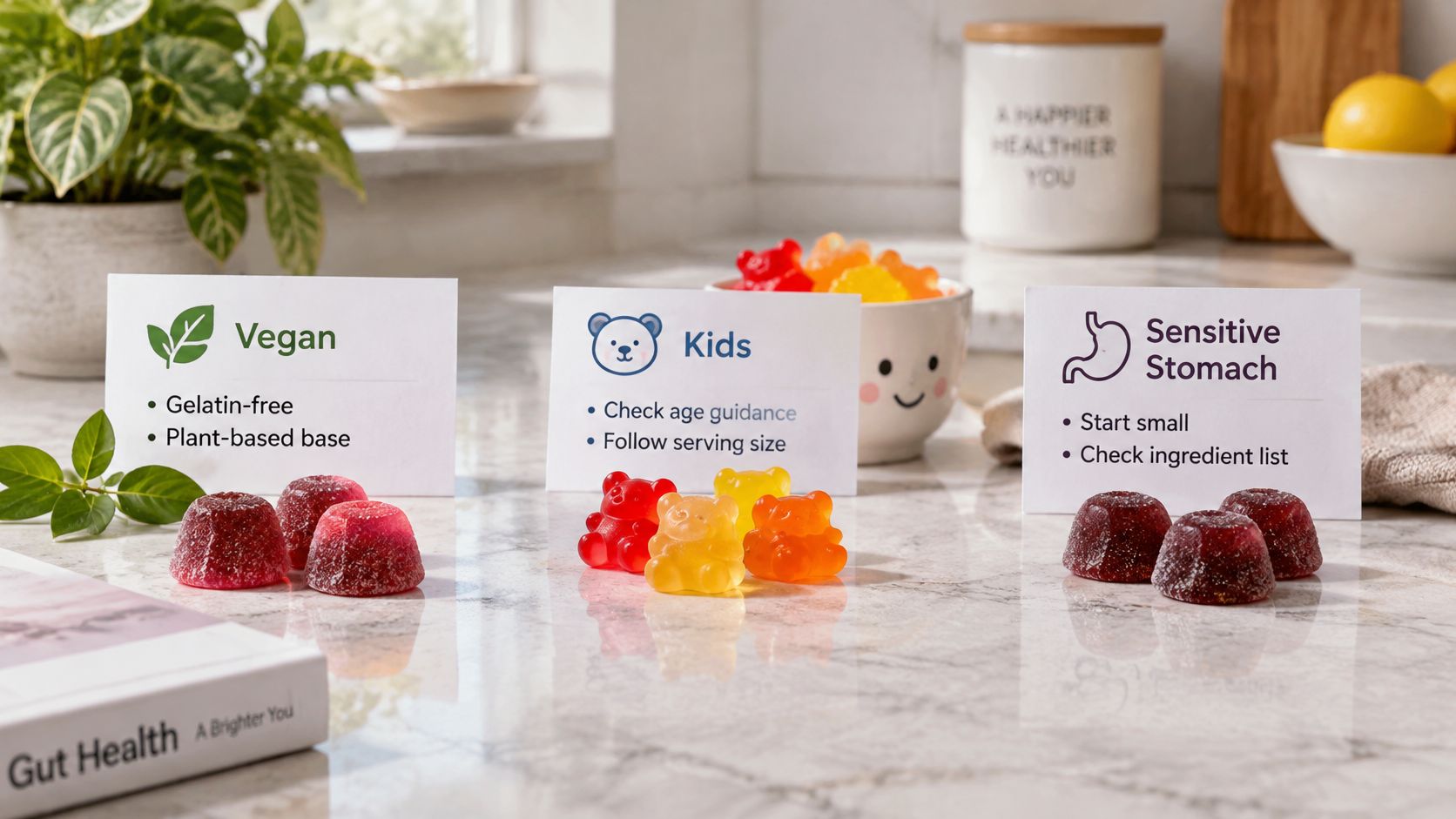
Three groups ask me the same question in different words, and each needs a slightly different answer.
If you're vegan or vegetarian
Check the gelling agent first, because gelatin is still the default in plenty of chews. Look for pectin or another plant base, then read the whole ingredient list for animal-derived extras like gelatin, carmine or shellac. Remember that plant-based and shelf-stable formats carry their own stability trade-offs, so the brand's storage instructions matter more, not less.
If you're buying for a child
A gummy solves the swallowing problem, which is why parents reach for it. It also creates two new ones. First, pediatric dosing is studied far less than adult dosing, so ask a pediatrician before a child starts any probiotic. Second, treat the bottle like medicine and store it out of reach, because a jar of fruit chews looks exactly like candy to a four-year-old.
If your stomach reacts to everything
Start with a lower daily intake than the label suggests, change one thing at a time, and keep a symptom diary for at least two weeks before you judge anything. Sensitive guts respond to slow, single-variable changes. Two new supplements and a fiber overhaul in the same week tells you nothing.
Some people should get medical advice before touching any of this: anyone who is seriously ill, anyone immunocompromised, and anyone whose symptoms are severe or getting worse.
Suitability comes down to three variables, the strain, the dose and your own health status. The word "gummy" on the bottle settles none of them.
For vegans and vegetarians who want a daily habit without gelatin, our Vegan Probiotic Gummies are built on a plant-based base and skip the animal-derived shell entirely. The label checks in this article still apply. Ours pass them, and so should anything else you buy.
Choose a Gummy and Run a Four-Week Trial
Here's the part the marketing pages leave out. The FDA does not have authority to approve dietary supplements for safety and effectiveness before they're sold, and it generally doesn't approve supplement claims or labeling in advance (FDA on dietary supplements). The NIH's complementary health arm says the same thing about probiotics specifically, and adds that strong evidence is missing for many proposed uses.
That doesn't make supplements worthless. It makes the label your job. A bottle promising "gut support" is not proof that the gummy prevents disease or clears your bloating, and nobody checked that claim before it went to print.
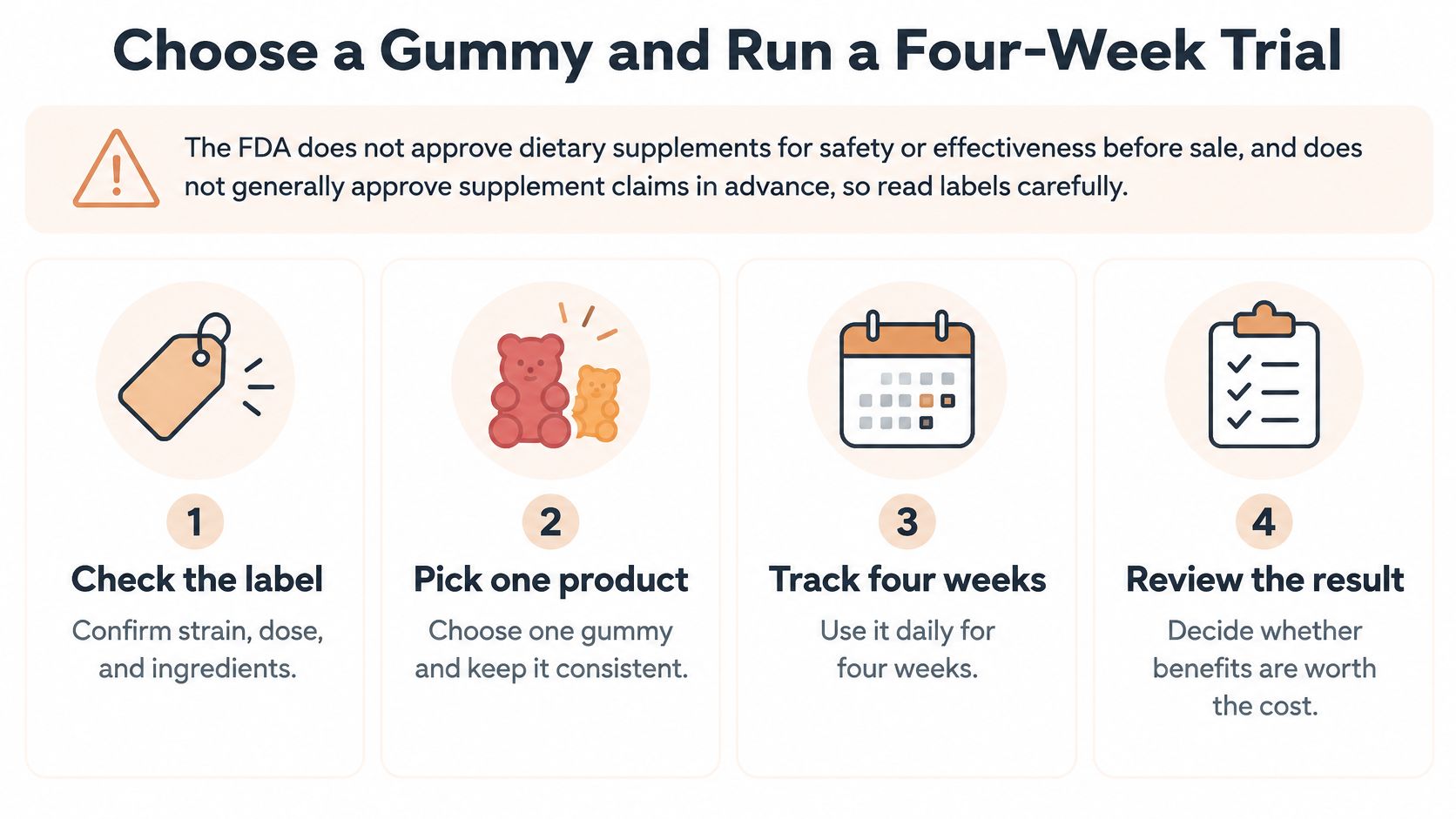
So buy like a skeptic and test like a scientist.
- Check the label against the strain, expiry-CFU and storage rules from earlier. No strain name, no purchase.
- Pick one product and stop rotating. One gummy, one dose, every day.
- Track four weeks with a single daily line about bloating and gas after meals.
- Review the result at the end of the month and decide whether the benefit is worth the cost, then stop if symptoms worsened.
Our Vegan Probiotic Gummies fit that plan neatly: five billion live cultures in every gummy, plant-based, at $27.49 one-time or $23.37 on subscription, covered by our 60-day money-back guarantee. That guarantee is the reason a four-week trial is low risk. You either notice something or you get your money back.
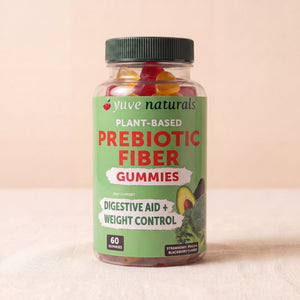
If you want to feed the bacteria you're adding, stack them with our Prebiotic Fiber Gummies, which use inulin from chicory root to support the growth of beneficial bacteria in the gut. Probiotic plus prebiotic is a more complete routine than either one alone.
Not sure what a realistic timeline looks like? Our breakdown of how long probiotics take to work sets clear expectations. When your month is up, come back and tell us what your diary said. The comment section is where label intel lives.
Probiotic Gummies FAQ
Do probiotic gummies work?
Sometimes. They work when the named strain, the CFU through expiry and your specific goal all match a human study. They don't work when the label just says "probiotic blend" and skips the strain.
Are gummies as effective as capsules?
Format matters less than survival through heat, moisture and time. A capsule shields fragile bacteria better, a spore-forming strain survives either way. Check the expiry CFU whichever format you choose.
Can probiotic gummies cause bloating?
Some extra gas and abdominal discomfort can appear while your gut adjusts, and it usually settles. Persistent, severe or worsening bloating needs a doctor, not a different brand.
How long should I try one?
Give it a consistent four-week run with a one-line daily diary, then review. Stop early if your symptoms get worse rather than better.
Are probiotic gummies safe for kids and vegans?
Ask a pediatrician before giving a child any probiotic, and store the bottle out of reach because it looks like candy. For vegan options, confirm the gummy is gelatin-free and built on a plant base such as pectin.
If you've read this far, you already know more about strain codes and expiry dates than most of the shelf talkers you'll meet. Yuve makes plant-based gut health simple to start: a gelatin-free probiotic gummy with five billion live cultures, prebiotic fiber gummies to feed what you add, and chewable lactase enzymes for dairy nights, all backed by a 60-day money-back guarantee. Head to Yuve to build the routine, run your four weeks, and let us know how it goes.