Ever feel like your stomach inflates like a balloon by afternoon, even after a normal lunch? You're standing in the probiotic aisle, two bottles in hand, and both promise digestive support in big cheerful letters.
We're going to slow that moment down. You'll learn the one split that matters in Bacillus coagulans vs Lactobacillus, why an old name on some labels is not a third probiotic, and how to judge a bottle by its strain code instead of its slogan.
Bacillus Coagulans vs Lactobacillus Side by Side
That balloon-by-afternoon feeling is exactly why this comparison gets confusing. You want relief, dun, dun, dun, unwelcome gas shows up, and suddenly every genus name sounds like an answer.
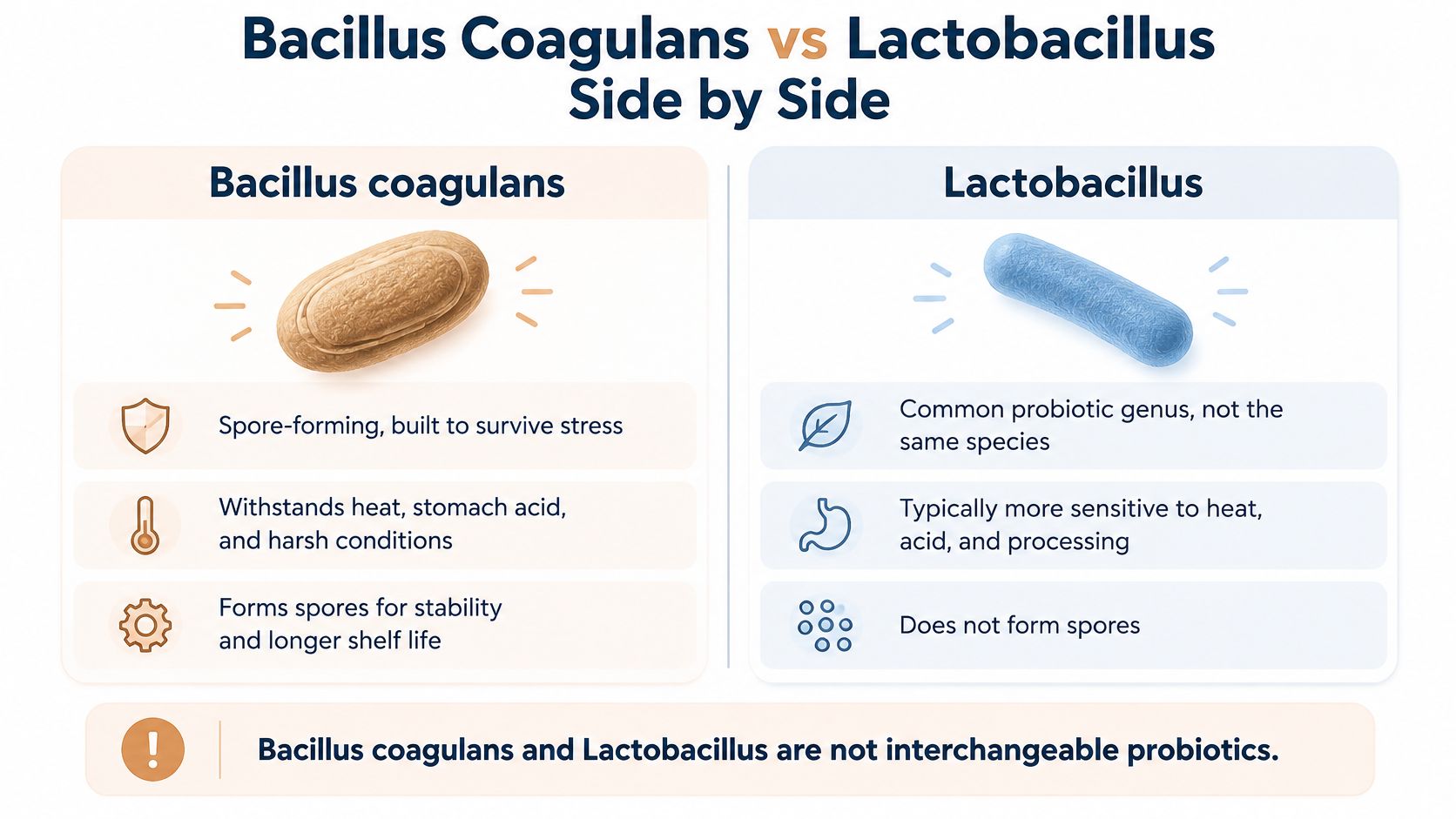
Here's the verdict in one breath. Bacillus coagulans and Lactobacillus are not interchangeable probiotics. Bacillus coagulans is an endospore-former, while classic Lactobacillus species are non-spore-forming lactic-acid bacteria sold as living cells. That's spore versus live cell, and it's the useful place to start.
Bacillus Coagulans vs Lactobacillus at a Glance
| Criterion | Bacillus coagulans | Lactobacillus |
|---|---|---|
| What it is | Gram-positive endospore-forming rod; old name Lactobacillus sporogenes | Non-spore-forming lactic-acid bacteria, usually live cells |
| In the capsule | Dormant spores that germinate later | Metabolically active vegetative cells |
| Storage and heat | Spores tolerate heat, drying, and storage stress | Needs tighter moisture, oxygen, and temperature control |
| Stomach transit | Stronger acid resistance in tests; about 85% of spores may reach the intestine | Strain and delivery system set survival; look for acid protection on the label |
| Studied example | MTCC 5856 at 2 billion spores daily for 4 weeks for gas and bloating | Judge L. rhamnosus GG or L. acidophilus only on their own trials |
| Best everyday fit | Shelf-stable foods and supplements, travel, and temperature swings | Refrigerated or well-protected live cultures matched to a named strain |
If you're skimming, keep this. The spore column wins on shelf life. A Lactobacillus column still wins when that exact strain has the evidence for your goal. A higher colony count is not proof of a better product, and a familiar name isn't evidence either.
Read the strain code. If a label hides it, you can't match the bottle to any study.
The NIH Office of Dietary Supplements fact sheet explains that probiotic effects are often strain-specific, so results from one strain can't automatically be applied to every member of the same genus or to a different genus. Keep Lactobacillus rhamnosus GG, Lactobacillus acidophilus, and Bacillus coagulans MTCC 5856 in separate buckets. Pooling different strains can invent a false verdict on benefit or safety.
That's also why a label that says only "probiotic," "Bacillus," or "Lactobacillus" hides which evidence applies. If the prebiotic side of the shelf confuses you too, prebiotics and probiotics explained is a helpful plain-language primer on how feeding gut bacteria differs from adding live ones.
Next, we'll follow one dose through heat and stomach acid, look at the bloating trial behind one named strain, check what honest Lactobacillus evidence looks like, and finish with real-life fit and safety. No genus gets crowned on toughness alone.
Meta title: Bacillus Coagulans vs Lactobacillus Guide
Meta description: Compare spore versus live-cell probiotics, read the strain code, and choose Bacillus coagulans or Lactobacillus for gas and bloating with confidence today.
How Spores Handle Heat and Stomach Acid
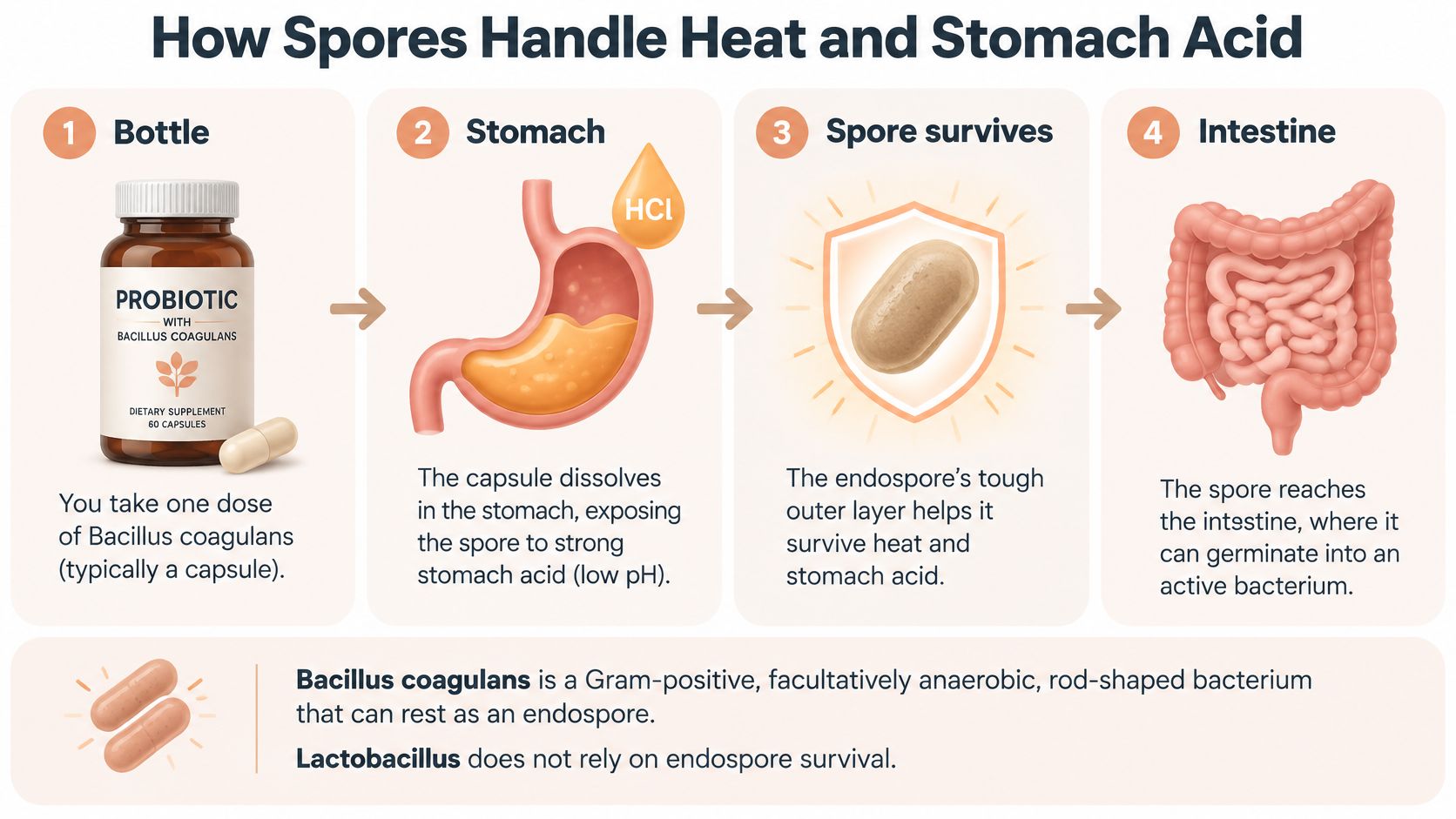
Follow one dose from bottle to intestine and the difference gets physical. Bacillus coagulans is a Gram-positive, facultatively anaerobic, rod-shaped bacterium that can rest as an endospore. Think of that spore as a dormant seed with a tough coat, not an awake cell trying to stay alive in the bottle.
Lactobacillus products generally start as awake cells without that dormant coat. Most Lactobacillus probiotics deliver living, active cells that produce lactic acid, a function Bacillus coagulans shares. Their weak point is survival in the bottle and the stomach, which depends on moisture, oxygen, temperature, and the specific strain.
From the Stomach to the Duodenum
Spores can cross the stomach, withstand gastric juice and bile, and begin germinating in the duodenum, where conditions are friendlier. One report estimates germination takes about 4 to 6 hours after oral administration and that approximately 85% of spores reach the intestine, according to a review of Bacillus coagulans biology.
That timing matters for expectations. You're not swallowing cells that go to work the second they dissolve. You're swallowing dormant spores that wake up later, further along the tract.
In simulated gastric testing, B. coagulans strains showed significantly higher resistance than Lactobacillus strains at pH 1.3, 1.5, and 2.0, and one spore preparation retained approximately 66% survival at pH 3 after 3 hours, as described in a FEMS Microbiology Reviews analysis. Plain translation: more of the labeled organisms may get through acid. It does not, by itself, prove less bloating.
What the Heat Numbers Actually Prove
Heat tells a similar story, with limits. A separate thermal comparison found B. coagulans MTCC 5856 had a D-value of 35.71 minutes at 90°C, retained 98.52% viability during the reported pasteurization test, and maintained 88.94% viability in chapati and 94.56% in wheat noodles, per a Springer stability study.
In that same line of work, an edible film containing approximately 7 log10 CFU/g left B. coagulans at 6.67 log10 CFU/g versus Lactobacillus plantarum at 6.53 log10 CFU/g under 9% glycerol, -16°C, and 7 days. Those are strain and matrix figures. They explain why spore products suit shelf-stable foods, not why every spore bottle works for your belly.
- Spore advantage: tolerates heat, pH shifts, salt, drying, and storage stress better than vegetative cells
- Live-cell requirement: tighter control of moisture, oxygen, and temperature from factory to your kitchen
- Reality check: finished products still need their own real-time and accelerated stability testing
B. coagulans can also produce coagulin, a heat-stable substance reported to act against some Gram-positive bacteria. Treat that as a strain-specific trait, not a feature you can assume in every product or transfer to Lactobacillus.
A tough spore is not the same thing as a calmer afternoon. Survival gets organisms to the intestine. Human studies tell you what happened after they arrived.
Bloating Studies Tied to One Named Strain
The symptom that brings people here is specific: gas that builds through the day, a tight full belly, and a waistband that feels rude by 3 p.m. For that complaint, shop by the one trial that tested that exact problem, not by genus slogans.
In the MTCC 5856 bloating trial report, 70 adults with functional gas and bloating and a gastrointestinal symptom rating scale indigestion score of at least 5 were split into 35 people taking 2 billion Bacillus coagulans spores daily and 35 taking placebo for four weeks, with the probiotic group finishing with a significantly better median global evaluation score reported as 3.0 to 9.0 versus 3.0 to 4.0 and a P value below .001. In kitchen-table terms, this named strain, at this dose, for one month, beat placebo on a global symptom score.
That is real and useful. It is also narrow.
Human Studies to Read by Strain
| Study | People and problem | Dose and duration | What it showed |
|---|---|---|---|
| MTCC 5856 bloating trial | 70 adults with indigestion score of at least 5 | 2 billion spores daily for 4 weeks vs placebo | Median global score 3.0-9.0 vs placebo 3.0-4.0, P below .001 |
That trial does not bless every Bacillus product, a different strain code, a different amount, or a blend. It also gives no head-to-head result against Lactobacillus, so it cannot crown a winner in Bacillus coagulans vs Lactobacillus.
Label reading matters here. If a bottle says Lactobacillus sporogenes, read it as Bacillus coagulans; that is an older name, not a separate third probiotic. If you are comparing a shelf product against this trial, a listing like Zenwise Daily No Bloat veggie caps is useful only as a label-reading exercise: check whether its strain and dose match what was studied before borrowing any conclusion.
Wanting one clear champion is understandable when you are tired of guessing. The evidence does not crown one. The habit that protects you is simpler: keep each product's strain code tied to its own study, population, dose, duration, and outcome, then decide whether your afternoon matches the people who were studied.
What Lactobacillus Evidence Looks Like
Now give the other side the same honesty. Most Lactobacillus probiotics are living, metabolically active cells that produce lactic acid in the gut. Bacillus coagulans shares that acid-producing story once its spores germinate.
So the difference sits in delivery and survival, not in a blanket claim that one genus works and the other doesn't. That surprises a lot of readers. They expect a fight. What they get is two different ways of getting lactic-acid-producing bacteria into the intestine.
One Strain and One Goal at a Time
Take Lactobacillus rhamnosus GG as your mental model. You judge it the way you judge MTCC 5856, by trials that name that strain, in a defined population, at a defined dose, for a defined outcome. If you want strain-level detail before you buy, our guide to a Lactobacillus rhamnosus supplement walks through how to read that kind of label.
Here's where readers get tripped up. A trial on one Lactobacillus strain for one purpose doesn't support a different Lactobacillus strain for bloating. It doesn't support a multi-strain blend either. If no trial matches your goal, say so plainly and don't stretch a result from another population to fit your afternoon.
- Named strain on the label: you can look for its human evidence
- Genus and species only: you still don't know which strain's evidence applies
- Just the word probiotic: you know almost nothing about benefit or track record
What about immunity, since so many bottles hint at it? Human evidence for immune effects is strain-specific and limited, so promise yourself no general immunity boost from either genus. If a product claims one, ask which strain, which people, and which outcome. Silence is your answer.
A Lactobacillus label with no strain code tells you nothing about the evidence behind it. The same is true for Bacillus.
That symmetry matters. We're not asking Lactobacillus to clear a bar that Bacillus gets to skip. Both sides earn trust one coded strain at a time, and anyone in a higher-risk group should check the safety notes below before starting either.
Which Option Fits Your Gut Day
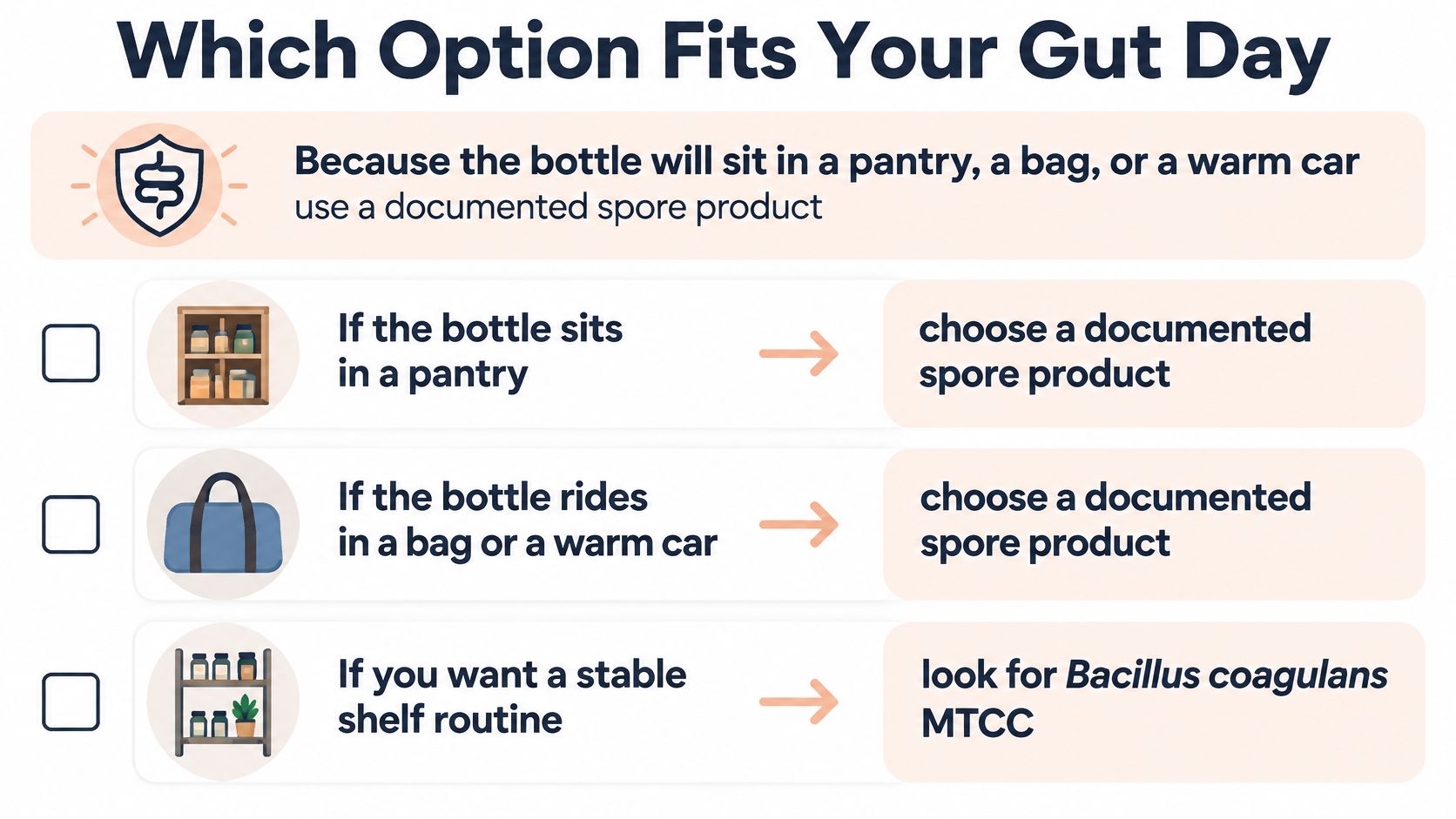
Forget fan votes. Use because-then choices based on your actual day, your actual bottle, and your actual trigger.
Because the bottle will sit in a pantry, a bag, or a warm car, choose a documented spore product such as one built around Bacillus coagulans MTCC 5856, since spores handle heat and storage stress better. Temperature swings are where dormant spores earn their keep.
Because a specific Lactobacillus strain was the one studied for your goal and you can keep it cold and dry, stay with that named strain. Don't switch just because spores sound tougher. Matched evidence beats a toughness story.
When Dairy Is the Real Trigger
Because milk, ice cream, or pizza night is the trigger, treat it as a lactose problem first. Yuve Lactase Enzymes are a go-to for dairy nights, taken before the meal, and that choice doesn't require switching genera at all.
Say your note shows bloating only after lattes and cheese-heavy dinners, but calm days after oatmeal and rice bowls. That's not a probiotic identity crisis. That's a pattern pointing at dairy sugar, and an enzyme fits the pattern.
Your Daily Checklist
- Name the symptom: write down what hits and when it hits
- Find the strain code: look past the genus name on the label
- Match the study: compare dose and weeks with the trial you trust
- Check storage: confirm refrigeration or shelf storage before you buy
- Judge fairly: digestive support products often show results within 1 to 2 weeks of consistent use, so don't verdict-shop after one bad day
Keep the note short, just a few words on your phone after meals. Patterns show up faster than you expect. And we'd love to hear from you, drop the strain printed on your label in the comments and tell us whether you could find its study.
Safety Rules and Dose Reality Checks
Pause first if you're medically vulnerable. That's the part of Bacillus coagulans vs Lactobacillus that marketing skips, and it's the part that matters most for the wrong reader.
The NIH Office of Dietary Supplements consumer fact sheet says probiotics may cause gas in healthy people and are generally unlikely to cause serious problems, but they may be unsuitable for people who are seriously ill, immunocompromised, or otherwise medically vulnerable. It also notes the FDA has warned that probiotics can cause infections or life-threatening illness in preterm infants.
Neither genus gets a safety pass because the word probiotic is on the label. Rare infectious complications have occurred in high-risk patients, and outcomes depend on the particular strain, clinical indication, and patient characteristics. Our plain-language guide on who should not take probiotics is worth reading before anyone in those groups starts a product.
Ordinary Startup Gas Versus Warning Signs
For a generally healthy adult, a few gassy days can happen with either kind while your gut adjusts. That early rumble isn't proof the other genus would've been perfect. It's a common startup effect, and it usually settles.
- Usually ordinary: mild temporary gas in the first days of a new product
- Call a clinician first: pregnancy, immune problems, serious illness, or caring for an infant
- Get medical care: blood, fever, weight loss, severe pain, or symptoms that persist
Persistent or severe symptoms are a medical issue, not a cue to keep switching genera until something feels different.
On dose, resist copy-paste thinking. The clearest studied bloating example sits in the trials section above, so use it as a researched example for that strain and population, not as a dose to copy onto every product or give a child. Read your own bottle's identified strain and studied dose, and if either is missing, that's a reason to choose a better-documented product.
You're not being difficult by asking these questions. You're being careful with a body that's already uncomfortable, and that's exactly the right posture here.
Quick FAQ on Labels and Storage
Is Lactobacillus sporogenes a third probiotic?
No. It's an old name for Bacillus coagulans, which Iowa researcher B. W. Hammer tied to coagulated condensed milk in 1915, before the organism was moved into Bacillus in the 1957 seventh edition of Bergey's Manual, according to an FDA GRAS notice history. Seeing that name means you're looking at b. coagulans history, not a separate species.
Does it need refrigeration?
Spore products tolerate storage stress better than live cells, but always follow the label, because finished products need their own stability testing. If you're weighing fridge space against a pantry shelf, our explainer on whether probiotics have to be refrigerated covers the practical storage rules. When in doubt, the bottle in your hand outranks general advice.
Can I take both genera together?
Don't assume a combined benefit. Mixed products and mixed-strain studies can't prove that stacking genera helps your specific symptom. Ask a clinician before combining them, especially if you take medication or manage a health condition.
How long before I judge a product?
Give it 1 to 2 weeks of consistent use, then reassess with your symptom note. Judge the pattern, not one restaurant meal. You've got this, friend.
Choose a Named Strain and Start Daily
Use this decision path in the store aisle. It takes about a minute and it beats reading front-of-bottle poetry.
Step one, if the label hides the strain, leave it on the shelf. Step two, if shelf stability matters and the strain was studied for gas, Bacillus coagulans is the coherent pick. Step three, if a clinician or a past good response points to a named Lactobacillus strain, keep that strain instead of switching because spores sound tougher.
Making It a Daily Habit
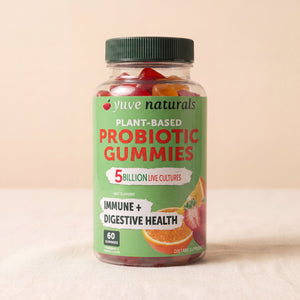
For the daily habit itself, Yuve Vegan Probiotic Gummies are a simple plant-based step with five billion live cultures, priced at $27.49 one-time or $23.37 on subscription. Before buying any product, including ours, check that the product page names its strain. If it doesn't, treat the gummy as a daily habit, never as a strain claim.
Take it with a meal you already tolerate and keep a short bloating note on your phone. If timing your dose is the part you keep second-guessing, this overview of morning versus nighttime probiotic use helps you pick a slot you'll stick with. Consistency you enjoy beats a perfect schedule you abandon.
Practical safety nets help you start without pressure. We offer a 60-day money-back guarantee and free shipping over $75, so you can judge the routine by your own notes instead of a deadline. Pair that with your food pattern work, notice which meals trigger bloating, and reintroduce dairy slowly with enzyme support on dairy nights.
Start daily, track honestly, and let your strain code and your symptom note make the decision together.
Share your strain code in the comments when you find it. Small wins count here, a calmer afternoon, jeans that stay comfortable after lunch, one less evening spent guessing. That's progress worth building on, one named strain and one ordinary day at a time.
Ready to stop guessing in the probiotic aisle? Visit Yuve to explore our plant-based probiotic gummies and lactase enzymes, built for everyday digestive comfort and dairy nights without the dread. Pick your daily step, start today, and track how your afternoons feel over the next two weeks.