You finish a protein shake because you’re trying to do something good for your body. Then your stomach starts pushing back. Tight, gassy, heavy. Not exactly the wellness moment you signed up for.
That disconnect is why so many people end up Googling garden of life protein shakes with one big question in mind. Will this help me feel better, or leave me bloated again? If you’ve had that experience, you’re not being dramatic. You’re paying attention to your gut, and that matters.
That Post-Shake Bloat Is Real and You're Not Alone
A lot of “healthy” shakes look perfect on the label. Plant-based. Organic. No added sugar. Probiotics. Enzymes. It sounds like a dream if you’re trying to support energy, build meals around protein, or recover after a workout.
But your gut doesn’t read marketing copy. Your gut responds to ingredients, dose, texture, and how your body handles a protein blend in real life.

Why protein shakes can feel so confusing
Protein powder often gets treated like a simple swap. Add scoop. Shake. Done. But for people with sensitive digestion, it’s rarely that simple.
A shake can bother you for a few different reasons:
- Protein source matters - Pea, rice, seed, and legume blends don’t land the same for every stomach.
- Extras can change the experience - Greens, fibers, gums, sugar alternatives, and even probiotics may help some people and irritate others.
- Fast drinking can backfire - A shake goes down quickly, which sometimes means your gut gets hit with a lot at once.
- “Clean” doesn’t always mean gentle - Organic and non-GMO are useful labels, but they don’t guarantee comfort.
Practical rule: If a shake looks healthy on paper but leaves you puffy, noisy, or uncomfortable, your body is giving you useful information.
What readers usually want to know
Many individuals aren’t asking whether Garden of Life is “good” or “bad.” They’re asking more personal questions:
- What’s inside it?
- Why do some people feel great on it and others feel awful?
- Do the probiotics and enzymes make it easier to digest?
- Is there a better option if bloating is your main issue?
Those are the right questions.
I’ve worked with enough sensitive-stomach eaters to know this pattern well. You want a shake that supports your goals without turning your afternoon into a bloat-fest. Dun, dun, dun. Unwelcome gas. Yikes.
That’s why it helps to slow down and read these products for what they are. Not what the front of the tub promises.
What Is Inside a Garden of Life Protein Shake
Garden of Life makes several protein powders, and the formulas usually follow the same pattern. You get a plant-based protein blend first, then a long supporting cast of add-ins such as greens, sprouts, probiotics, enzymes, and sometimes recovery ingredients.
On paper, that can sound reassuring. More pieces. More wellness. More digestive support.
For a sensitive gut, though, a crowded ingredient list can feel less like a helpful team and more like rush-hour traffic.
A good starting point is the brand’s own Raw Organic Protein product page. It shows the basic formula style clearly. A sprouted protein blend built largely from pea protein and brown rice protein, plus added ingredients meant to round out the product’s nutrition story.
The common protein setup
Garden of Life often markets these shakes as “complete” plant proteins. That means the blend is formulated to provide all the essential amino acids your body needs. For someone comparing plant protein with whey, that matters.
The bigger digestion question is different. It is not just whether the amino acids are there. It is how your body handles the route they take to get there.
Many Garden of Life products use a mix of sprouted legumes, grains, and seeds. Sprouting can improve texture and may help some people tolerate plant foods better. But sprouted does not automatically mean low-bloat. If pea protein already tends to make you feel heavy or gassy, adding more plant components around it does not always solve the problem.
What shows up again and again
Across the line, you’ll usually see a few repeating categories:
- Protein from peas, brown rice, and other sprouted plant ingredients. This creates the amino acid profile, but pea-heavy blends can still be tough for some sensitive stomachs.
- Greens and veggie powders. These add a whole-food, health-forward feel, though they also increase the overall complexity of the formula.
- Probiotics and digestive enzymes. These are included to support digestion, at least in theory. In real life, they do not guarantee comfort.
- Extra functional ingredients. Some formulas add recovery support or broader meal-replacement style ingredients, which can make the shake feel denser.
That density matters. Your gut is not reading the front label. It is responding to the full formula.
Why these ingredients are there
Each ingredient group has a job:
| Product element | Why brands include it |
|---|---|
| Sprouted protein blend | To provide plant protein with a complete amino acid profile |
| Pea protein | To raise protein content efficiently in a dairy-free formula |
| Brown rice and seed proteins | To help balance amino acids and support texture |
| Greens and sprouts | To make the shake feel more whole-food based |
| Probiotics | To add a gut-health halo and potential digestive support |
| Digestive enzymes | To help break down parts of the formula |
| Meal-style extras | To make the product feel more filling or multifunctional |
If you’ve ever looked at one of these tubs and felt unsure what matters, this guide on how to read supplement labels helps sort marketing language from ingredients that affect your experience.
A few product examples, read through a digestion lens
Garden of Life’s line includes options such as Raw Organic Protein, Protein & Greens blends, sport formulas, and meal-style powders. They differ in calories, protein amount, and extras, but the overall theme stays familiar. Plant protein first. Then added wellness ingredients.
That matters because the digestion experience often comes from the stack, not from one ingredient in isolation.
A protein-and-greens product may look cleaner than a dessert-style shake, but greens powders can still be a lot for a reactive gut. A formula with probiotics and enzymes may sound gentler, but those additions do not cancel out the effect of pea protein, fiber, gums, or concentrated plant blends if those are your triggers.
This is why I always tell bloated clients to read labels in layers. Start with the protein source. Then look at fibers, greens, sweeteners, gums, and digestive add-ins. If you want practice with that skill, deciphering food facts is a useful companion.
Where people get tripped up
Garden of Life’s ingredient philosophy makes sense for people who care about organic sourcing and broad plant variety. That is a real strength of the brand.
But from a digestive-distress perspective, “clean” and “gentle” are not synonyms.
A formula built around pea protein, sprouted blends, greens, and digestive extras can work well for a sturdy stomach. For someone prone to bloating, that same formula can feel like too many variables in one scoop. That is the key thing to understand before you assume the probiotics or sprouting automatically make it easier on your gut.
Decoding The Labels and Sustainability Claims
Garden of Life has a strong front-of-package identity. You’ll often see certifications and claims that create a clean, trustworthy feel right away. That isn’t meaningless. These labels do tell you something.
But they don’t tell you everything.
What the certifications actually help with
Some Garden of Life products are presented with certifications such as USDA Organic, Non-GMO Project Verified, NSF Gluten-Free, Certified Vegan, kosher status, and in some sport products, NSF Certified for Sport. In practical terms, those labels can help you quickly screen for sourcing standards, dietary fit, and testing standards.
That’s useful if you’re trying to avoid certain ingredients or want a product that matches your values.
A good rule is to separate labels into two buckets:
- Sourcing and standards - organic, non-GMO, vegan
- Body experience - whether your stomach feels good after drinking it
Those are not the same thing.
What these labels do not promise
The health halo can sometimes be misleading. A product can be organic and still make you bloated. It can be vegan and still feel too dense. It can be gluten-free and still trigger discomfort if your issue is legumes, fiber load, or certain additives.
That’s why I like using resources on deciphering food facts alongside a slower read of the ingredient list itself. It helps you stop at the label, then ask the next question your gut cares about. “Okay, but how will this likely feel for me?”
A better way to read the package
If you want a more realistic read on a powder, check the claims in this order:
-
Protein source first
Is it based on pea, rice, seeds, or a broad blend? -
Add-ins second
Are there greens, fibers, probiotics, enzymes, gums, or sweeteners? -
Certifications third
These help with quality standards, but they don’t predict tolerance. -
Your body’s history last
This part matters most. If legume-heavy powders usually bother you, that personal pattern counts.
For a helpful supplement-focused version of that process, Yuve also has a solid guide on how to read supplement labels.
A clean label can tell you a product is carefully made. It cannot promise your digestion will be happy with it.
What about sustainability
Garden of Life’s brand identity leans hard into organic, plant-based, and traceable nutrition. For many shoppers, that signals a lighter environmental footprint and a more values-aligned purchase.
That may be a real plus for you. Still, sustainability and digestibility are different questions. A product can check the eco-conscious box and still miss the mark for someone with bloating, IBS-like symptoms, or a stomach that doesn’t love concentrated plant blends.
That distinction matters more than most labels admit.
The Bloat Truth Why 'Clean' Protein Can Still Hurt Your Gut
You finish a shake because it looked like the safe choice. Organic. Plant-based. Sprouted. Then an hour later, your stomach feels tight, your jeans feel smaller, and you start wondering if the problem is you.
It usually is not you. It is often the mismatch between a product’s health halo and your gut’s real tolerance.

Pea protein is not automatically easy for every gut
Pea protein has a “gentle” reputation, and sometimes that fits. But pea is still a legume protein, and some sensitive stomachs react to legume-heavy powders with gas, pressure, or that heavy, stuck feeling.
The why matters here. Protein powders concentrate food into a smaller volume, so your digestive system is dealing with a dense hit of protein all at once instead of a slower meal. If your gut already tends to feel overwhelmed by beans, fibers, or large portions, a pea-based shake can trigger the same pattern in a more concentrated form.
That does not make pea protein bad. It makes it a poor fit for some bodies.
Garden of Life also builds many formulas with multiple plant ingredients in the same scoop. For some people, that variety feels fine. For a bloat-prone gut, it can feel like too many variables at once, especially when you are trying to figure out what keeps setting you off.
Sprouted does not mean symptom-free
Sprouting can improve how some people handle grains and legumes. It may reduce certain compounds that make plant foods harder to digest, which is one reason brands highlight it.
Still, “sprouted” is a processing detail, not a comfort guarantee.
If your gut is reactive, the bigger question is simpler. How does the full formula behave once it hits your stomach and intestines? A product can be organic, raw, and sprouted and still feel like a lot if it also packs in fibers, greens, probiotics, enzymes, and sweeteners all at once.
That is why people with IBS-like symptoms often do better with fewer moving parts. A simpler formula gives your gut less to sort through.
Why the label can sound calmer than the shake feels
This is the gap many shoppers run into. The front of the tub speaks the language of wellness. Your body gives the final review.
Customer questions and reviews across retail sites often mention gas or bloating with pea-protein blends, especially in products that combine several functional extras in one serving. That pattern does not prove every Garden of Life shake will cause discomfort. It does explain why a “clean” ingredient list can still leave someone feeling worse instead of better.
Probiotics on the label can add to the confusion. Many people assume they automatically make a protein powder easier on the gut. Sometimes they help. Sometimes they do not change much, because the main issue is the overall formula load, not the presence or absence of a probiotic strain.
If you are trying to sort out which type of digestive support makes sense, this guide to digestive enzymes vs probiotics can help you understand the difference.
The real issue for sensitive stomachs
A lot of plant proteins are built to sound impressive. Sensitive guts usually need something else. They need a shake that feels boring in the best possible way. Easy to drink, easy to digest, and unlikely to hijack the rest of the day.
That is the opening Yuve is trying to fill. Instead of treating more ingredients as automatically better, the formula aims for a gentler experience for people who are tired of the bloating cycle that can come with pea-forward or kitchen-sink blends.
If you have ever felt discouraged because a very healthy-looking powder still made you miserable, your body is giving you useful information. Comfort is not a bonus feature. For many people, it is the whole point.
A Truly Gut-Friendly Alternative Yuve vs Garden of Life
People with digestive issues usually aren’t looking for the flashiest tub on the shelf. They’re looking for a product they can finish without regret.
That’s where a comparison helps, especially when the primary question is not “Which shake has more wellness language?” but “Which one is more likely to feel manageable day after day?”
The big difference is philosophy
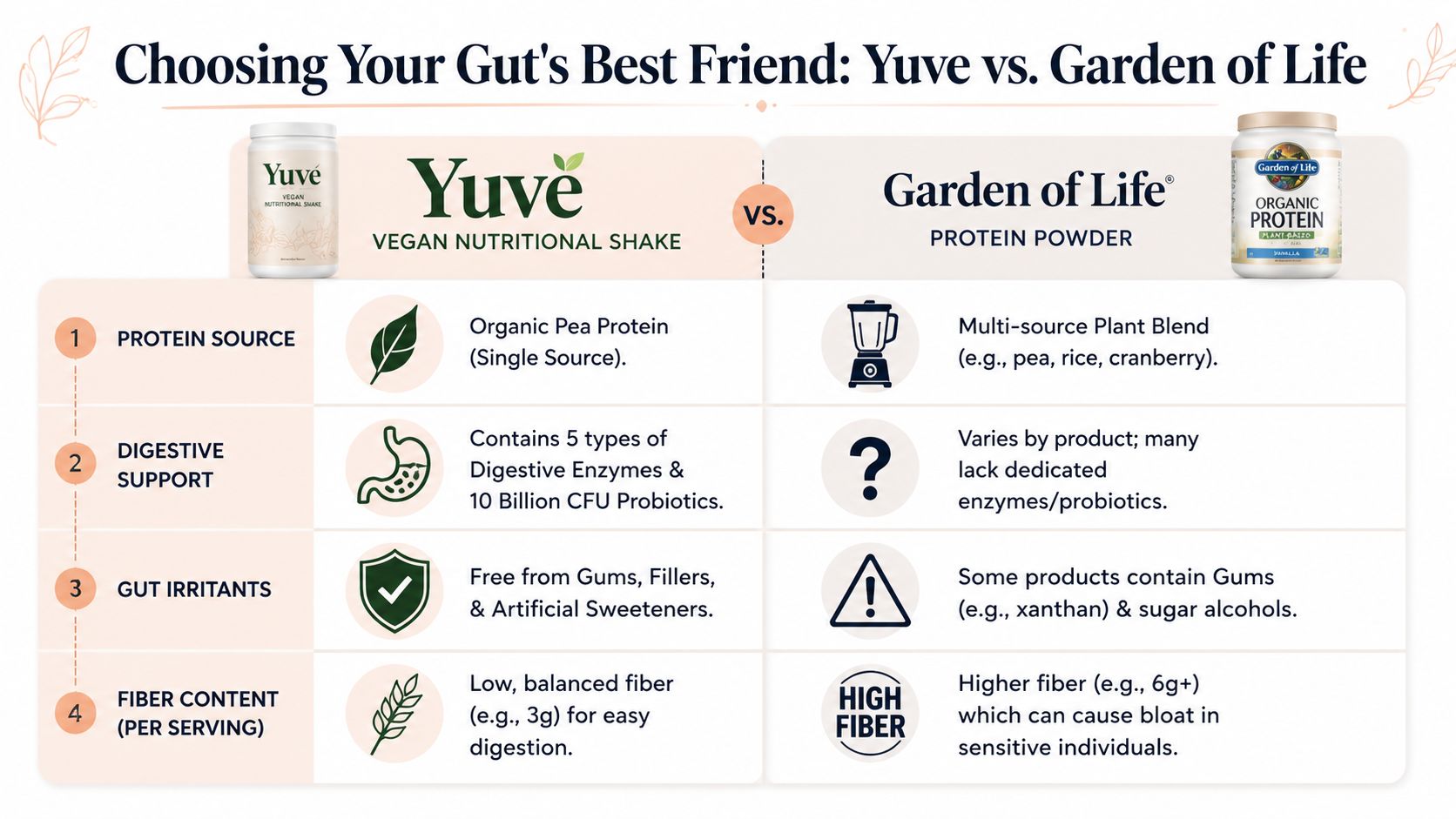
Garden of Life often builds around broad plant blends, sprouted ingredients, and a whole-food wellness story. That appeals to people who want layered nutrition in one scoop.
Yuve takes a more comfort-first approach. The formula is positioned around digestive support and a simpler experience for people who don’t want their shake to feel like a science experiment in their stomach.
That difference matters because some guts do better with less complexity, not more.
Digestive-Friendliness Showdown Yuve vs. Garden of Life
| Feature | Yuve Nutritional Shake | Garden of Life Raw Organic Protein |
|---|---|---|
| Overall approach | Built around gut-friendly daily nutrition | Built around raw, sprouted, plant-based nutrition |
| Digestive support | Designed with dedicated digestive support in mind | Some products include probiotics or enzymes, depending on the formula |
| Who it may suit | People who want a gentler everyday shake experience | People comfortable with denser plant protein blends |
| Formula feel | Simpler, comfort-oriented positioning | More layered ingredient story with blends and add-ins |
| Best use case | Daily nutrition with gut comfort top of mind | Protein-focused routines where plant-based sourcing is the priority |
Why sensitive people often need a different standard
For a lot of readers, the usual buying advice falls short. It focuses on grams of protein and certifications, but not on what happens three hours later when your stomach feels distended.
A more useful standard looks like this:
- Can I drink it consistently?
- Does it sit well without making me gassy?
- Does it feel supportive on busy mornings?
- Will I dread it after a week?
Those are everyday-life questions. They matter more than branding.
Gut check: The best protein shake is the one that supports your nutrition goals without asking your digestive system to “just deal with it.”
Where Garden of Life still has strengths
To be fair, Garden of Life does a lot right for the right customer. It offers meaningful protein, plant-based sourcing, and strong certifications. Some people love the broad, nutrient-dense feel of its formulas.
If you’re not especially sensitive to pea protein or mixed plant blends, it may work well enough for you.
Where Yuve makes more sense
If your digestion is the main story, Yuve is the stronger direction to explore. The brand is built around vegan wellness and gut support, not just protein quantity.
That’s especially relevant if you’ve already tried the “healthy” powders and keep ending up with bloating. At that point, it’s not about trying harder. It’s about switching the criteria you use to judge a shake.
If you want to compare options built around all-in-one convenience, Yuve’s all-in-one shakes collection is the most relevant place to start.
Who Is Each Protein Shake Really For
You finish a workout or rush through breakfast, drink a shake that looks healthy on the label, and then spend the next hour wondering whether the fullness in your stomach is normal. That reaction changes who a protein shake is for.
The best match depends on what you need the shake to do after you drink it. For some people, the priority is sport certification and higher protein for training. For others, the test is much simpler. Can I get through my morning, commute, or meeting without feeling puffy, cramped, or distracted by my gut?
When Garden of Life may fit better
Garden of Life can work for someone who wants a plant-based shake built around performance cues and does not usually react to pea-forward blends. One example is the Sport ready-to-drink line, which offers plant protein, includes MCTs, and carries NSF Certified for Sport verification, according to Prepared Foods coverage of the product.
That profile makes the most sense for people who care first about training support and third-party sport testing.
A Garden of Life shake may fit you better if you are:
- Training seriously and need sport certification
- Comfortable with pea protein and mixed plant blends
- Focused more on workout nutrition than digestive gentleness
- Using protein mainly around exercise or recovery, including fueling your body after running
When a gentler option makes more sense
A clean ingredient list does not automatically mean an easy digestion day. That is where many sensitive eaters get tripped up. A formula can be organic, plant-based, and packed with extras, yet still feel like too much if your gut already struggles with legumes, fiber-heavy blends, or "healthy" powders that sit like a brick.
Garden of Life is often a better fit for the person who says, "I want a certified plant protein and my stomach usually handles these blends fine."
A gentler option is often better for the person who says, "I have tried clean proteins before, and I still end up bloated."
That difference matters.
If your gut is sensitive, Yuve is the more practical direction because the goal is not just hitting protein. The goal is getting nutrition in a form your body is more likely to tolerate day after day. For anyone with IBS-like symptoms, recurring post-shake gas, or a history of reacting to pea-heavy products, that usually matters more than how impressive the front label looks.
A gentler shake may suit you better if you are:
- Prone to bloating after protein drinks
- Trying to replace breakfast and still feel comfortable
- Sensitive to pea protein, sprouted blends, or dense legume formulas
- Looking for daily nourishment, not just gym macros
- Tired of guessing whether "clean" will feel good
A simple way to decide
Choose Garden of Life if your stomach is usually pretty flexible and you want a sport-focused plant protein with strong certifications.
Choose a gentler formula such as Yuve if digestion is the deciding factor. For a sensitive gut, the right shake is the one you can drink regularly without bracing for the aftermath.
Your Action Plan for Choosing a Happy-Gut Protein
A good protein powder should support your day, not hijack it. If you’ve been burned by bloating before, use a gut-first checklist instead of chasing the most impressive-looking label.
Start with what your body already knows
If you’ve reacted badly to pea-heavy blends, don’t keep buying them because the tub says organic or clean. Repeating the same experiment usually gives you the same result.
Your own symptom pattern is data.
Use this quick screen before you buy
- Read the protein source first - If the formula leans heavily on ingredients that have bothered you before, pause there.
- Check how busy the formula is - A long list of greens, fibers, probiotics, and extras can be fine, but it can also overwhelm a sensitive gut.
- Watch the fiber load - More fiber isn’t always better in shake form if you tend to get gassy.
- Notice the texture helpers - Gums and fillers don’t bother everyone, but they can be a clue if shakes routinely feel heavy.
- Don’t over-credit probiotics - A probiotic on the label doesn’t guarantee a calmer stomach.
- Test with a small serving first - Half a serving gives you useful feedback without committing to a full digestive event.
The smartest protein choice is often the least dramatic one. Simple, steady, and easy to tolerate beats impressive and miserable.
Think about how you actually use protein
A post-workout shake, a breakfast replacement, and a travel-friendly meal backup are not the same thing. If you’re using protein after long runs, this guide to fueling your body after running can help you think beyond just the scoop and look at the full recovery picture.
Here’s a quick visual refresher you can save for later:
Your happy-gut checklist
Before you buy your next powder, ask:
- Does this protein source usually sit well with me?
- Is the formula simple enough for my digestion?
- Am I choosing this for my body, or for the marketing?
- Would I feel comfortable using this several days in a row?
If the answer to those questions feels shaky, keep looking. Your stomach is allowed to have standards.
Frequently Asked Questions About Plant Protein
Is sprouted protein always easier to digest
Sprouting can help some people, but it is not a free pass for a sensitive gut.
A sprouted blend is a little like soaking beans before cooking them. It may make the ingredients easier to handle, but it does not change what they are at the core. If a powder still leans heavily on pea protein, brown rice protein, and a long list of plant ingredients, your digestive system still has to process all of that at once.
That is why a product can look very clean on the label and still leave you feeling puffy or uncomfortable. As noted earlier, Garden of Life uses a large sprouted plant blend. For some stomachs, that works fine. For others, the blend itself is the problem.
Are more probiotics in a shake always better
More is not always better. Fit matters more than hype.
Probiotics only help if the strains are useful for you and if your body responds well to them. Some people do well with probiotic-added powders. Others notice no difference, or feel worse when a shake already contains several ingredients their gut finds hard to break down.
If you are dealing with bloating, gas, or urgency after protein shakes, it helps to separate the variables. A simpler formula often gives you clearer answers than a powder trying to do five jobs at once.
Why do I bloat from a healthy protein powder
Because healthy and gentle are not the same thing.
A powder can be organic, plant-based, and packed with extras, yet still feel rough on digestion. Common reasons include legume-heavy protein sources, dense fiber blends, gums, sugar alcohols, and oversized servings. Even ingredients with a health halo can be too much if your gut is already irritated.
This is the part many people miss. The label may promise cleanliness, but your stomach cares more about tolerance than marketing language.
Is Garden of Life better for athletes or for sensitive stomachs
Garden of Life makes more sense for people who want a plant-based protein with a broad ingredient profile and do not usually react to pea-forward blends.
Sensitive stomachs often need a narrower target. If you already know peas, sprouted mixes, or heavily blended powders tend to make you bloat, Garden of Life may feel impressive on paper but frustrating in real life. That is where a gentler formula like Yuve stands out. It is built for people who care less about ingredient drama and more about drinking a shake without regretting it an hour later.
Can I mix plant protein with just water
Yes, and it is one of the smartest ways to test a new powder.
Water gives you a cleaner read on the protein itself. Once you add oat milk, banana, nut butter, or chia seeds, it gets harder to tell what caused the bloat. Start simple, use a smaller serving, and see how your stomach responds before building a bigger smoothie around it.
That small test can save you a very uncomfortable afternoon.