Ever eat something that seemed harmless, then spend the next hour wondering why your stomach feels tight, noisy, and wildly uncooperative? That kind of bloating can make a normal meal feel like a gamble, especially when you're trying to eat carefully and still feel like yourself.
Gluten free digestive enzymes get talked about like a quick fix, but this is more useful than that. Some enzyme formulas can help with certain kinds of gluten exposure or digestive discomfort, while others don't come close to doing what the label implies. If you've ever stared at a supplement bottle and thought, “Is this helping me, or am I just hoping it will?”, you're in the right place.
Why Your Stomach Feels Like a Balloon After a Simple Meal
You can eat a meal that looks ordinary on paper and still end up feeling stretched, tight, and uncomfortably full. That kind of bloating is frustrating because the food seemed harmless, yet your body acts like it got a very different message. Gluten, cross-contact, dairy, and other ingredients that do not agree with you can all leave you piecing together the cause after the meal is over.
The hard part is that bloating does not point to one single problem. For one person, it may fit celiac disease. For another, it may fit non-celiac gluten sensitivity. For someone else, the trigger may be completely different, but the sensation still lands the same way, with a stomach that seems to protest at the worst possible time.
If you are trying to sort out what is behind your symptoms, it can help to compare your experience with other food reaction resources too. A straightforward guide like InchBug's nut allergy guide can be useful because it shows how different food reactions can look similar on the surface, even when the cause is not the same. That is the kind of confusion many people live with for years.
Practical rule: do not assume “bloating” automatically means gluten. The symptom matters, but the cause matters more.
For readers who have been dealing with recurring bloating, this Yuve guide on constant bloating is a helpful companion piece. It pairs well with the bigger question here, which is whether enzymes belong in your routine at all.
The good news is that enzyme support can fit into the picture for some people. The catch is that the science is more specific than most supplement marketing, and that specificity matters if you want to support your gut without buying something that cannot do the job.
What Digestive Enzymes Actually Do in Your Body
Think of digestive enzymes like tiny scissors. They cut big food molecules into smaller pieces your body can absorb, which is why they matter so much when digestion feels sluggish or incomplete. Your body naturally makes enzymes such as amylase for carbohydrates, protease for protein, and lipase for fats.

Gluten is a tougher case. Reviews of gluten-degrading therapy explain that gluten is rich in proline and glutamine, which makes important fragments resistant to normal digestion, and the enzymes that work well in theory still have to survive the stomach's acidic environment and keep working in the duodenum PMC review. In plain language, the enzyme has to be strong, stable, and fast enough to matter before the peptides move farther along.
That's why the gluten-free label on a supplement and the ability to digest gluten are not the same thing. A supplement can be made without gluten-containing ingredients and still have little to no useful effect on gluten fragments. The label tells you something about the product's composition, not automatically about its performance.
The FDA's gluten-free labeling threshold is 20 ppm, which is the number people often want when they're checking whether a supplement fits a gluten-free diet. An industry source notes that enzyme products can be processed so their finished gluten content stays below that level, using methods like fermentation, digestion, separation, and filtration Nutritional Outlook. That's a label issue, not proof of digestion.
The Main Types of Digestive Enzymes and What They Target
Not every enzyme does the same job, and that's where a lot of people get misled. If your symptoms are tied to dairy, a gluten-focused enzyme won't be the same as a lactase product. If your discomfort follows rich meals, fats may be part of the picture, which points you in a different direction again.
Match the enzyme to the food
- Amylase: breaks down carbohydrates, so it's most relevant when starchy foods like bread, rice, or pasta leave you feeling heavy.
- Protease: breaks down proteins, and this is the category most think about when they hear “gluten enzyme.”
- Lipase: breaks down fats, which can matter when greasy meals sit poorly.
- Lactase: breaks down lactose, the sugar in dairy, so it's the one to look at for milk or ice cream discomfort.
Here's the important part. Gluten lives in a protein structure that ordinary proteases don't always break down well enough, especially the disease-relevant fragments. A 2015 PubMed-indexed study found that currently available commercial digestive enzyme supplements left the major 26-mer and 33-mer gliadin epitopes largely intact, and a PLOS ONE paper reported that the products removed only a few N-terminal amino acids while leaving the nine immunogenic epitopes intact PubMed study, PLOS ONE study. In real-life terms, the bottle may sound promising, but the lab data said the main troublemakers were still there.
That's why the best question isn't “Does it have enzymes?” It's “Which enzymes, and are they suited to the problem I'm trying to solve?”
| Digestive Enzyme Types and Their Food Targets | Breaks Down | Helps With |
|---|---|---|
| Amylase | Carbohydrates | Starchy meals, bread, pasta |
| Protease | Proteins | Protein digestion, some gluten-focused formulas |
| Lipase | Fats | Heavy or greasy meals |
| Lactase | Lactose | Dairy-related discomfort |
What the Research Actually Says About Gluten-Digesting Enzymes
The research story is encouraging in a few places, but it is also pretty clear about limits. Commercial enzyme blends have not earned a place as a substitute for a gluten-free diet, especially for celiac disease. That conclusion comes from the evidence, not from marketing language.
A landmark 2015 study found that currently available digestive enzyme supplements left the major gluten epitopes largely intact, which is why the authors concluded those supplements were ineffective at degrading immunogenic gluten fragments PubMed study. A celiac.org summary of that work makes the practical point even more directly, current commercial enzyme supplements were unable to degrade the amino-acid chain that causes celiac disease symptoms celiac.org summary.
Where newer enzymes look more promising
More targeted enzymes have shown narrower benefits in specific situations. In a 2017 double-blind, placebo-controlled study of AN-PEP, the prespecified success criterion was met in 10 of 13 available comparisons, and the stomach-specific comparisons succeeded more often in both the high-dose and low-dose arms Nature article. Another clinical study reported symptom improvement in some people with non-celiac gluten sensitivity, a group estimated to account for about 6% of the U.S. population.
That matters, but it does not turn gluten enzymes into a free pass. For celiac disease, they do not replace strict avoidance, and the stronger evidence still points to them as support for accidental exposure, not routine gluten eating.
Bottom line: enzymes may help with cross-contact anxiety or accidental exposure, but they do not make gluten safe for celiac disease.
For readers who want a broader gut-health comparison, this Yuve explainer on digestive enzymes versus probiotics helps separate two tools people often mix up.

How to Read Labels and Choose a Truly Gluten-Free Product
A supplement label can look reassuring and still leave important questions unanswered. The first thing to check is a clear gluten-free statement or certification from the manufacturer, ideally with third-party testing. That tells you the product itself was made to fit a gluten-free standard, not just that it sounds healthful.
What to check before you buy
- Look for certification: a recognized gluten-free seal is more helpful than vague wording.
- Scan the full ingredient list: wheat, barley, and rye should not appear in the formula or the “other ingredients” section.
- Check the capsule or tablet format: gelatin capsules may be fine for many people, but if you need a vegan or gelatin-free option, read carefully.
- Confirm the product's purpose: some blends are designed for general digestion, while others are aimed at specific triggers like dairy.
- Ask whether the product is meant for support or replacement: those are very different claims.
A lot of people get tripped up here. The enzyme blend itself may be gluten-free, but the surrounding ingredients can still matter if you're highly sensitive or have celiac disease. A clean label helps, but it still doesn't change what the enzymes are capable of doing once they're in your digestive tract.
If you want a practical way to think about meal planning and label checking outside the supplement aisle, TopFoodApp's allergen menu tool can make restaurant choices easier because it puts common allergen questions in one place. That kind of support can reduce the mental load before you ever get to the supplement shelf.
How to read supplement labels is worth bookmarking if you want a deeper walkthrough. It pairs nicely with this checklist, especially if you're shopping while tired and trying to avoid yet another “wait, what's in this?” moment.
The one product detail many readers miss is the difference between gluten-free ingredients and a formula that's designed for real-world digestion. That's where a product's structure matters as much as its label.

Safety, Side Effects, and Who Should and Shouldn't Use Them
Digestive enzymes are usually well tolerated, but your body can still push back a little when you start them. Mild nausea, diarrhea, or abdominal cramping can happen, especially early on. That does not automatically mean the product is wrong for you, but it does mean your gut is sending a clear signal to slow down and pay attention.
Some people are more likely to need caution from the start. If you have a sensitive stomach, a new enzyme blend can feel a bit like changing the fuel in a car that already runs rough, you may notice the reaction before you notice any benefit. That is usually a sign to check the formula, the serving size, and whether the product matches what you need.
Who needs extra caution
People with celiac disease should not use enzymes as protection for intentional gluten exposure. For celiac disease, enzymes don't provide the protection some shoppers hope for, strict avoidance remains the only reliable approach PMC review. That line matters because celiac disease is not a condition where you can test the waters and see how it goes.
People with non-celiac gluten sensitivity may describe a different experience, and some formulas may help with symptoms for certain users. Even so, that kind of support is about reducing friction, not giving you a pass to ignore the foods that set you off. If gluten leaves you bloated, foggy, or crampy in a pattern that feels familiar, enzymes may be one tool, but they are not a substitute for paying attention to your triggers.
A few groups should check with a clinician first:
- Pregnant or breastfeeding people, because supplement choices deserve a careful review.
- Anyone on prescription medication, especially if timing or absorption could matter.
- People who have both food reactions and unexplained symptoms, because not everything that feels like gluten is gluten.
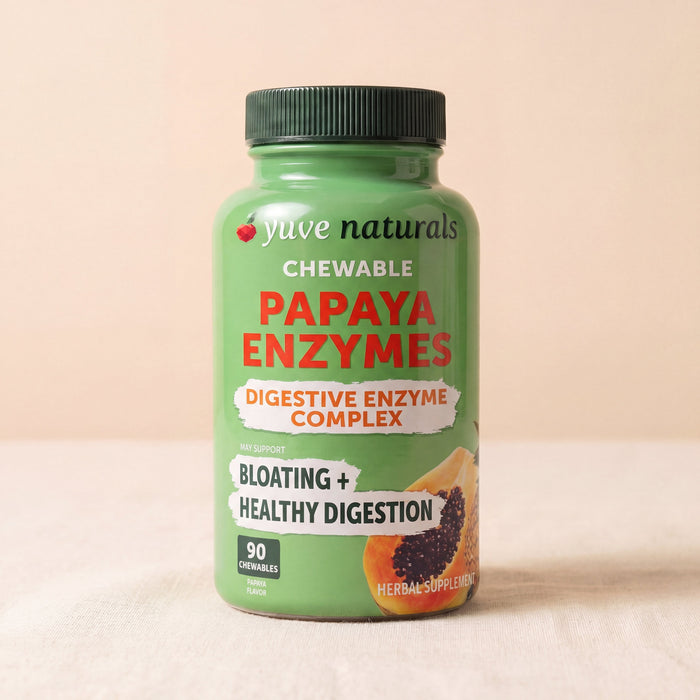
Some people want a safety net. For celiac disease, enzymes do not give that safety net. If you are comparing products for general digestive support, one option in the market is a chewable enzyme blend like Digestive Enzyme Pro Blend formula, which is positioned as gluten-free and gelatin-free. A format like that can be easier to remember and use consistently, but the label still has to match your actual goal.
Your Practical Next Steps for Bloat-Free Digestion
One of the most useful things you can do is stop treating all digestion problems like one giant mystery. If dairy is your issue, look for lactase. If heavy meals slow you down, broader digestive support may make more sense. If you're managing celiac disease, the priority stays on strict gluten avoidance, with enzymes used, if at all, only with a clear understanding of their limits.
A reader once described it to me like this, “I didn't need a miracle, I needed fewer bad surprises.” That's the right mindset. You're not trying to hack your body, you're trying to give it less to fight with.
A simple action plan
- Track your trigger pattern: note whether symptoms follow gluten, dairy, rich foods, or mixed meals.
- Match the supplement to the problem: choose the enzyme type that fits the food you're reacting to.
- Read the label like it matters, because it does: check gluten-free status, capsule ingredients, and the formula's purpose.
- Start with one change at a time: that makes it much easier to tell what's helping.
- Give your body a few days to settle: your gut often needs a little consistency before you know whether a product is useful.
If you want a comparison point while you shop, the Digestive Enzyme Pro Blend formula is a useful example of how brands position multi-enzyme support for meal-time digestion. I'd still keep the same rule in mind, the formula has to match your symptoms and your dietary needs, not just sound like a complete solution.
Yuve offers plant-based digestive support options that fit a gluten-free, gelatin-free routine, and that can be a practical starting point if you want a cleaner label without a lot of guesswork. If you're ready to compare formulas and choose one that fits your digestion goals, visit Yuve and take a look at what's available for your next meal with less bloating and less second-guessing.