Ever hit three o'clock after a tense morning, reach for another coffee and a chocolate bar, and then wonder why your stomach feels like a balloon? That craving may involve more than willpower. Your gut and brain are in constant two-way communication, and stress, digestion, mood, and appetite can all influence one another.
That doesn't mean every probiotic or herbal capsule can sharpen your focus or lift your mood. The smarter question is: which gut brain axis supplements have human evidence, what outcomes have researchers measured, and how can you choose a product that suits your body and your values? This guide focuses on those practical questions, with special attention to strain-specific evidence and vegan-friendly label choices.
When Your Gut and Brain Tag-Team Your Afternoon
By midafternoon, your brain may feel foggy, your inbox may feel personal, and your hand may reach automatically for caffeine and sugar. A stressful morning can change appetite, alter how quickly food moves through the digestive tract, and make a quick energy source feel especially appealing. Then digestive discomfort can add another layer of distraction. Unwelcome gas, anyone? Yikes.
That back-and-forth is the gut-brain axis, a communication network linking the digestive system and central nervous system. The gut microbiota contains trillions of microorganisms, and research describes communication through nervous, endocrine, and immune channels (Physiological Reviews research). In everyday language, your gut sends updates to your brain, while your brain sends instructions back.
A useful reframe: Your afternoon craving may be a conversation between stress, energy needs, appetite, and digestion, not a personal failure.
Stress can also make existing symptoms feel louder. You might notice more bloating after a rushed meal, less interest in a full lunch, or a stronger pull toward familiar comfort foods. If brain fog and fatigue are part of that pattern, this guide to brain fog and fatigue offers useful context without reducing every symptom to the gut.

The supplement category now includes probiotics, prebiotics, synbiotics, postbiotics, omega-3 fatty acids, B vitamins, and selected herbal ingredients. They don't all target the same pathway, and they don't all have the same human evidence. As you read, notice your own gut-brain moments: Does stress show up as nausea? Does poor sleep change your appetite? Does bloating make concentration harder? Those details matter when you decide what, if anything, deserves a place in your routine.
How the Gut and Brain Communicate
Your gut operates like a local radio station, gathering updates about food, microbes, immune activity, and movement before sending them through several channels. The brain responds, and the digestive tract adjusts in return. This ongoing exchange helps explain why a supplement's effects cannot be judged from gut changes alone. Human trials also need to show whether people experience changes in mood, attention, sleep, or another relevant outcome.
The nervous channel
The vagus nerve acts like a two-way phone line between the digestive tract and brain. It carries information about fullness, discomfort, and the digestive environment in both directions. The enteric nervous system, a network of nerves embedded in the digestive tract, manages much of the local work, including how food moves through the stomach and intestines.
Probiotics may affect this conversation through microbial metabolites and shifts in gut conditions. A stool test can show that the microbial community changed, but that result alone cannot establish that someone feels calmer or thinks more clearly.
The immune channel
Immune signaling works like a stream of messages. Gut microbes interact with immune cells, and those cells release signals that may influence the wider body. A 2024 review describes proposed probiotic mechanisms involving reduced inflammation, fewer pathogenic microbes, lower intestinal pH, and changes in cell-to-cell signaling, along with possible effects on brain-derived neurotrophic factor (Frontiers in Pharmacology review).
It is more accurate to say researchers are studying whether particular organisms and their products can help shape inflammatory responses, the gut environment, and the messages exchanged with the brain.
The endocrine channel
Hormones and related chemical messengers carry another set of signals. The gut participates in tryptophan metabolism, while cortisol and other stress-related endocrine signals help coordinate appetite, digestion, and the stress response. Gut microbes also produce or influence short-chain fatty acids, which can act as supporting messengers throughout this system.

Here's a visual walkthrough of those channels:
This communication helps explain why digestive discomfort can feel emotionally draining, while anxiety can leave the stomach unsettled. If worry is becoming difficult to manage, Interactive Counselling Kelowna anxiety may offer support that supplements cannot replace. For plain-language guidance on live microorganisms and product terminology, see Yuve's explanation of what live cultures are.
The Six Supplement Categories That Target the Gut-Brain Axis
A crowded supplement shelf can make every bottle look equally promising. A better filter is narrower: connect one category, one clearly identified ingredient, and one measurable mood or cognitive outcome. Human-trial evidence is uneven, so this guide focuses on what has been studied rather than listing every product on the market.
| Supplement Category | Key Human-Study Outcome | Typical Daily Dose Range |
|---|---|---|
| Probiotics | A probiotic complex was associated with improvements in memory, attention, executive performance, sleep quality, cortisol, skin conductance, and anxiety. | Study-specific. One healthy-adult trial used Bifidobacterium breve M-16V at 20 × 10^9 cells daily for 6 weeks. |
| Prebiotics | Reviews describe prebiotics as gut-brain modulators with potential relevance to mood and cognitive health. | No general range established in the verified data. |
| Postbiotics | The category focuses on microbial products rather than live organisms, but human gut-brain dosing varies by compound. | No general range established in the verified data. |
| Omega-3 fatty acids | Omega-3s are discussed as nutrients that support neuroplasticity and inflammation-related processes, but no specific human gut-brain dose is provided here. | Product and formulation specific. |
| B-complex vitamins | B vitamins support processes involved in nervous-system function, but no verified gut-brain trial dose is provided here. | Product and nutrient specific. |
| Herbal actives | Ashwagandha and saffron are discussed for stress and mood support, but no verified gut-brain-specific dose or outcome is established in the current evidence base. | No general range established in the verified data. |
Probiotics
Probiotics are the most strain-dependent category. A capsule labeled only “probiotic blend” does not tell you whether its organisms match the research. One clinical study identified Lactobacillus reuteri PBS072 and Bifidobacterium breve BB077 as candidate strains for stress resilience and cognition, alongside reported improvements in short-term memory, attention, executive performance, sleep, cortisol, skin conductance, and anxiety (PubMed study).
Another randomized study used B. breve M-16V at 20 × 10^9 cells per day for 6 weeks in healthy adults. Participants showed lower heart rate under stress, with improved mood and sleep among those with high anxiety. A separate college-student trial used a multi-strain probiotic at 8 × 10^9 CFU per strain for 3 months and reported reduced hyperactivity, better gastrointestinal symptoms, and improved academic performance.
These findings are promising, but they describe particular formulas and study groups. They do not establish that every probiotic will improve mood or concentration.
Prebiotics and postbiotics
Prebiotics are fibers or compounds that feed selected microbes. Postbiotics are preparations made from inactivated microorganisms or their components. They are related, but they are not interchangeable. A prebiotic label calls for different questions from a probiotic label, while a postbiotic's evidence depends heavily on the specific compound.
A 2023 review describes probiotics and prebiotics as gut-brain modulators with potential relevance to depression, anxiety, autism, schizophrenia, and Alzheimer's disease. That wording identifies an active research area. It does not mean a supplement can treat a diagnosed condition by itself.
Omega-3s, B vitamins, and herbs
Omega-3 products may suit vegan shoppers when they use algae-derived DHA. For B vitamins, vegans can look for clearly labeled, plant-compatible sources such as methylated B12. “Methylated” describes a form, though it does not prove that the finished product has gut-brain clinical evidence.
Ashwagandha and saffron often appear in conversations about mood and stress. Treat each as a separate ingredient requiring its own evidence and safety review, rather than assuming it strengthens a probiotic formula. The same careful matching applies to symptoms: digestive stress, jaw tension, anxiety, and poor sleep may overlap without having the same supplement solution.
Readers who experience jaw tension alongside digestive stress may also appreciate these gut health resources for jaw pain from Pain and Sleep Therapy Center. For vegan shoppers, the practical checklist is simple: identify the studied ingredient, match the outcome you care about, check the product's source and excipients, and avoid treating a category label as proof of effectiveness.
How to Read a Gut-Brain Axis Supplement Label Like a Pro
A polished front label can hide the details that matter. Turn the bottle around and ask whether the human research on the ingredient, species, or strain matches the product in your hand. A phrase such as “probiotic blend” does not identify enough information to connect the formula with a specific mood or cognitive outcome.
Read the label beyond the headline
Start with the Supplement Facts panel and the lot details. For a probiotic, look for genus, species, and strain, such as Lactobacillus rhamnosus GG. “Lactobacillus” alone is too broad for a strain-specific choice. Then check whether the CFU amount is guaranteed through the expiration date, not only when the product was made, because storage can affect potency.
Quality marks answer a narrower question. Verification from USP, NSF, or ConsumerLab may provide information about identity or contamination screening. It does not show that the product will improve mood. Also look for a batch or lot number, an expiration date, and a way to contact the manufacturer if the label or seal raises questions.
A vegan label needs the same close reading. Check whether the capsule contains gelatin, whether dairy appears in the ingredients, and whether the cross-contact statement fits your needs. A green package does not establish vegan status. Look for a named certification, such as the Vegan Society logo, when that distinction matters.

Compare two labels
A more useful label names each strain, states when the CFU count is guaranteed, lists allergens and capsule materials, shows a lot number and expiration date, and points you toward human research on the same ingredient or strain.
A red-flag label uses “proprietary blend,” hides the amount of each organism, promises a dramatic mood transformation, or makes broad sustainability claims without explaining materials, sourcing, or certification.
Save this guide to reading supplement labels for your next comparison. The goal is a traceable match between the evidence, the product, and your reason for taking it.
Three Myths That Deserve to Be Retired
Myth one, more CFUs always mean better results
More CFUs do not guarantee better results. The clinical examples discussed earlier used specific organisms, doses, and treatment periods, including 20 × 10^9 cells daily for 6 weeks in one study and 8 × 10^9 CFU per strain for 3 months in another. Those findings do not establish one ideal dose for every person or product.
A higher count may also feel excessive for a sensitive digestive system. If a new formula causes uncomfortable bloating, increasing the amount is unlikely to solve the problem.
Myth two, all probiotics behave the same
Species and strains differ in survival, metabolites, and interactions with the gut environment. A systematic review found that probiotics may modify resting-state brain activity and functional connectivity in networks involved in emotional regulation, cognitive control, and sleep. It also emphasized that effects are highly strain-specific (Frontiers in Nutrition review).
Swapping one Lactobacillus strain for another can therefore change the result you should reasonably expect. Read the complete identity on the back of the label, not only the broad name on the front.
Myth three, gut-brain supplements are pure hype
Human research has reported measurable changes in memory, attention, executive performance, sleep, stress physiology, anxiety, mood, and gastrointestinal symptoms after specific probiotic interventions. A clinical-trial summary describes this kind of evidence, while also showing why results should be tied to the tested formulation rather than generalized to every supplement.
The practical conclusion sits between dismissal and overconfidence: some formulations have human signals, while context, diet, sleep, medical care, and expectations still shape the result.

Safety, Dosing, and When to Talk to Your Doctor
A slow, trackable approach works best. Start one new product, keep the rest of your routine steady, and allow enough time to notice changes in digestion, sleep, mood, or bloating. Adding several products at once makes it difficult to identify which ingredient helped, or which one caused loose stools.
Temporary gas, rumbling, or looser bowel movements can happen as the gut adjusts to a new probiotic or prebiotic. Live microorganisms may pose more serious risks for people who are immunocompromised, so speak with a clinician before using products containing live bacteria. Safety guidance for probiotics in higher-risk groups should be considered alongside the individual product and medical history (clinical review of probiotic safety).
Pause and ask first if you
- Take prescription medicines: Ask a pharmacist or clinician about SSRIs, immunosuppressants, blood thinners, antibiotics, or MAOIs. Interactions depend on the product, ingredient, and medication.
- Are pregnant or nursing: Safety information can vary by strain and ingredient.
- Have a central line or recent surgery: Discuss live microorganisms and herbal products before starting.
- Have persistent or severe symptoms: A supplement should not delay evaluation of bleeding, severe pain, unexplained weight change, fever, or ongoing vomiting.
Your interaction checklist
Bring the complete Supplement Facts panel and medication list to your appointment. Include the product name, strain names, serving size, allergens, and herbal ingredients. Stop the product and contact a clinician if you develop a concerning reaction instead of trying to push through it.
Benefits may take time, and available evidence does not support one universal timeline for every formula. Track symptoms consistently, then judge a product by its actual study design and safety information, not by promises printed on the bottle.
A Simple Daily Routine and Where Yuve Fits In
A busy morning, a rushed lunch, and an exhausted evening can make even a sensible supplement plan hard to maintain. Many people find that a simple daily routine makes gut support easier to continue. Yuve's focus on plant-based supplement options fits that practical need, while the label still deserves a careful review.
For vegan readers, product details matter. A plant-based probiotic may suit the probiotic category, prebiotic fiber can provide food for beneficial microbes, algae-derived DHA offers a vegan omega-3 source, and a B-complex with methylated folate can fit a plant-based plan. These features describe what a product contains. They do not promise a particular mood or cognitive result.
Use the framework from earlier sections to assess Yuve's gut-health products. Check the listed organisms, serving instructions, capsule or gummy ingredients, allergen statement, and available quality documentation. A product with human-trial evidence for a specific strain or ingredient deserves a different kind of confidence than one supported only by broad wellness language.
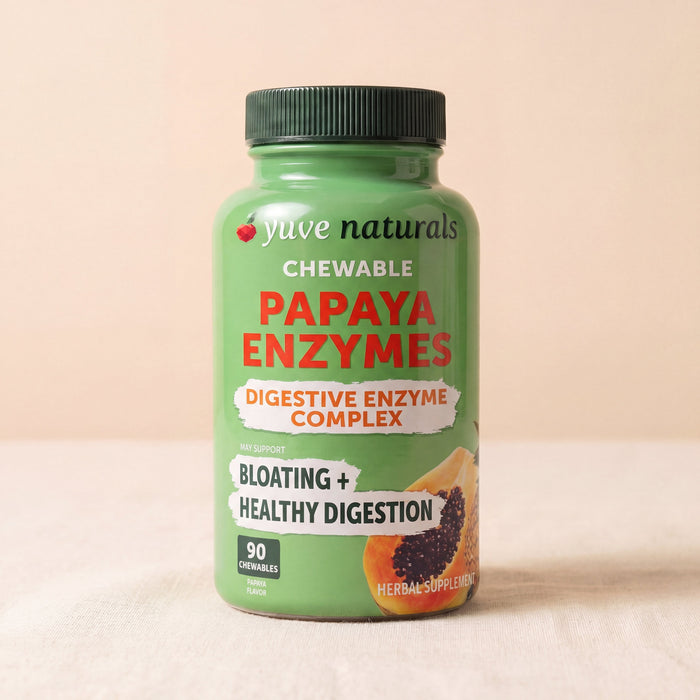
Match the formula to the goal. For dairy-related bloating, lactase or another digestive enzyme addresses a different issue than psychobiotic research. An enzyme formula therefore should not be treated as interchangeable with a strain-specific probiotic.
A realistic routine
- Morning: Follow the product label. Take it with food if the instructions recommend that, keep water nearby, and note your starting symptoms.
- Midday: Build a meal around fiber-rich foods you tolerate. Eating slowly can make fullness and discomfort easier to notice.
- Evening: Record digestion, sleep quality, stress, and mood in a few words. Patterns are more useful than conclusions drawn from one difficult afternoon.
- Over time: Change one variable at a time. That gives you a fairer comparison between products or habits.
Research continues to examine personalized psychobiotics, microbiome biomarkers, and postbiotic metabolites. These areas may shape future supplement choices, but they do not establish a treatment for everyone today. A grounded approach is to choose a clearly labeled product connected to human evidence, then use it consistently alongside ordinary gut-health habits.
Frequently Asked Questions
What is the gut-brain axis?
It's the two-way communication system connecting the gut and brain through nervous, endocrine, and immune pathways. Gut microbes participate in this system through metabolites and interactions with the intestinal environment.
Can gut brain axis supplements improve mood or cognition?
Some human trials have reported improvements in outcomes such as memory, attention, executive performance, anxiety, sleep, mood, and stress-related measures with specific probiotic formulations (PubMed-indexed research). Results depend on the strain, dose, duration, participant group, and outcome measured.
Are probiotics useful for bloating?
They may help some people. A 2025 umbrella meta-analysis reported a 26% lower risk of bloating, with a risk ratio of 0.74 and a 95% confidence interval of 0.64 to 0.84 (umbrella meta-analysis). A separate IBS review found that specific probiotics may reduce bloating and distension and improve bowel movement frequency and consistency in some patients, with evidence described as moderate (IBS systematic review).
Do vegans need a special probiotic?
Not necessarily, but vegan shoppers should verify capsule material, dairy ingredients, gelatin, allergen statements, and relevant certifications. Vegan status tells you about sourcing and formulation. It doesn't, by itself, prove that a strain has the outcome you want.
Should I choose a single strain or a multi-strain product?
Choose based on the evidence for your goal and the product's complete label. A multi-strain formula isn't automatically better, and a single strain isn't automatically weaker. The human trial should match the organism and formulation as closely as possible.
Can supplements replace treatment for anxiety, depression, or IBS?
No. Supplements may be studied as supportive tools, but they shouldn't replace medical assessment or prescribed treatment. If symptoms affect daily life, involve a healthcare professional.
Yuve offers vegan-focused gut health and digestion supplements that can be evaluated through the same strain, ingredient, allergen, and quality checks discussed here. Visit Yuve to explore the available formulas, then choose one product that matches your needs and introduce it thoughtfully.