You're staring at your screen in the middle of the afternoon, rereading the same sentence and wondering why your second coffee isn't helping. Your stomach feels heavy, your focus has wandered, and the promise of “more energy” seems to have become another thing you're too tired to chase.
The connection between gut health and energy levels is more practical than it sounds. Your gut helps process parts of food you can't digest alone, produces compounds your body can use, communicates with immune and nervous systems, and may influence how fatigue feels. It also matters how we interpret the evidence. A little afternoon tiredness isn't automatically a microbiome problem, and persistent fatigue shouldn't be treated with supplements alone.
By the end, you'll understand the microbiome-to-energy pathway, what fatigue research shows, and a concrete routine for supporting digestion, energy, and bloating relief without turning your kitchen into a laboratory. If digestive discomfort and low energy keep appearing together, start with this guide to fatigue and digestive issues.
Why Your Afternoon Slump Might Start in Your Gut
At 2 p.m., low energy can look like a calorie problem. You skipped breakfast, grabbed a packaged snack, and now your body wants a quick lift. But sometimes you've eaten enough and still feel foggy, sluggish, or uncomfortably full.
That's where digestion enters the picture. Food doesn't become useful energy because it reaches your plate. Your body has to break it down, absorb nutrients, and coordinate with the microbes living in your intestines. Those microbes can ferment certain carbohydrates and create compounds that add to the energy your body can extract from food.
This doesn't mean every slump comes from an “imbalanced gut.” Sleep, stress, illness, medications, hydration, iron status, thyroid function, and eating patterns can all matter. I do not think a probiotic is a substitute for investigating fatigue that keeps interrupting your life.
A useful starting point: Ask whether your tiredness appears alongside bloating, constipation, diarrhea, food intolerance, or a noticeable change in digestion. The pattern matters more than one sleepy afternoon.
The path we'll follow is simple. First, we'll trace how fiber moves through the gut and becomes microbial fuel. Next, we'll look at concrete fatigue findings involving citrate, adenosine, GABA, and tyramine. Finally, we'll turn that information into food, movement, sleep, and supplement decisions.

The goal isn't to promise instant energy. It's to help you recognize the mechanism, weigh the evidence, and follow a practical protocol long enough to notice useful patterns.
How the Gut Powers Your Energy Step by Step
Think of your digestive system as a kitchen pipeline. You put ingredients in at one end, but several teams have to prepare, process, and distribute them before your cells can use what's available.
Step one starts with the microbiome
The microbiome is the community of microorganisms living in your digestive tract. Some of these microbes help process components of food that your own digestive enzymes can't fully break down, especially fermentable fibers.
Fiber is the raw ingredient. Beans, lentils, vegetables, fruit, nuts, seeds, and whole grains contain carbohydrates that travel farther through the digestive tract than easily digested sugars. When microbes ferment them, they produce short-chain fatty acids, including butyrate, propionate, and acetate.

Step two delivers microbial fuel
Short-chain fatty acids aren't just waste products. They can fuel cells lining the colon and influence metabolic processes throughout the body. Butyrate is especially important as a fuel for colon cells, while acetate and propionate participate in broader energy and signaling pathways.
A 2025 randomized clinical trial reported that gut microbes contributed about 2% to 5% of daily energy use for people eating Western diets, and up to 10% for people eating diets with more complex carbohydrates and fewer ultra-processed foods (clinical trial details). The same study found that more than 90% of microbe-produced fatty acids were used by the human body.
For you, the practical meaning is modest but important. A fiber-rich diet may give your body more usable microbial fuel, but it won't erase sleep deprivation or an untreated medical condition.
Step three connects digestion with cellular output
Your mitochondria are the structures inside cells that help convert available fuel into usable energy. Gut-derived compounds, absorbed nutrients, and signals from digestion all contribute to the environment in which that work happens.
Gut microbes can also make or modify certain B vitamins. Those vitamins participate in reactions involved in energy metabolism and ATP production, which is the chemical energy currency your cells use. The exact contribution varies by diet, absorption, microbial community, and individual health.
Step four keeps the inflammation valve from sticking
Inflammation is part of your immune system's defense process. When immune signals stay high, the body may redirect resources toward protection and repair. That can feel like heaviness, low motivation, poor concentration, or an energy crash after ordinary activity.
A disrupted gut barrier can allow more irritating material to interact with the immune system. That doesn't prove that all fatigue comes from intestinal permeability, but it explains why gut symptoms and whole-body tiredness can appear together.
What to notice: Energy support begins before the mitochondria. It starts with what you eat, what reaches your microbes, what they produce, and how your immune system responds.
The diagram below shows the pipeline in motion. Use it as a mental model, not a diagnosis.
What the Science Says About Fatigue and the Microbiome
The strongest fatigue evidence doesn't say, “One bacterium causes tiredness.” It points to a more complicated relationship involving microbial communities, metabolites, immune signals, and the way people perceive energy.
A 2026 study of fatigued healthy adults found lower levels of the energy-related metabolites citrate and adenosine, alongside higher levels of tyramine and GABA. The participants also showed microbial shifts that overlapped most strongly with datasets involving ME/CFS and psychiatric disorders. These findings don't diagnose any reader, but they suggest that fatigue may have biologically distinct patterns rather than being one generic symptom.
Earlier human research also connected particular bacteria with energy and fatigue traits. A 2022 study reported that Anaerostipes correlated positively with mental energy, with a correlation of 0.048 and p = 0.032, and negatively with mental fatigue, with a correlation of −0.532 and p = 0.016, and physical fatigue, with a correlation of −0.448 and p = 0.048 (human microbiome research).
Those findings are associations, not proof that taking a product containing one organism will fix fatigue. Diet, sleep, illness history, medications, physical activity, and mental health can all affect the gut and energy at the same time.
Microbial metabolites linked to fatigue
| Metabolite | Microbial source | Proposed energy effect |
|---|---|---|
| Citrate | Involved in cellular energy metabolism, with levels associated with fatigue in the 2026 study | Lower levels may reflect altered energy-related metabolism |
| Adenosine | A molecule involved in cellular signaling and energy regulation | Lower levels were associated with fatigue in the 2026 study |
| Tyramine | Produced through microbial processing of amino acids by some bacteria | Higher levels were associated with fatigue in the 2026 study |
| GABA | A neuroactive compound influenced by microbial activity and host signaling | Higher levels were associated with fatigue in the 2026 study |
A separate expert summary explains that microbial fermentation products supply about 2% to 5% of daily energy use in Western diets and about 10% in higher-fiber, non-Western diets (Stanford summary of microbial energy). That gives fiber a physiological rationale, though it doesn't turn a single food into an energy cure.
For readers, the takeaway is directional. If your diet contains very little fermentable carbohydrate, gradually adding diverse plant foods is a reasonable experiment. If fatigue is persistent, severe, or unrelated to digestion, testing and clinical guidance belong in the plan too. You can also review practical strategies for restoring your gut microbiome without assuming that every symptom has one microbial explanation.
Foods and Habits That Feed Your Energy
The most useful gut-health changes are usually repeatable, not dramatic. You don't need to overhaul every meal on Monday morning. Pick one lever, make it comfortable, and build from there.
Give microbes more variety
Aim for a broad range of plant foods across the week. A chickpea-and-berry bowl at lunch can combine legumes, fruit, seeds, and leafy greens in one meal. If your current diet is low in fiber, increase gradually and pay attention to bloating. A sudden jump can make you feel worse before your digestive system adapts.
Try rotating:
- Legumes: Chickpeas, lentils, and beans provide fermentable carbohydrates.
- Colorful produce: Berries, greens, carrots, peppers, and squash bring different plant compounds.
- Nuts and seeds: Add walnuts, chia, pumpkin seeds, or almonds to meals.
- Whole-food starches: Oats, potatoes, and other minimally processed options can add useful carbohydrate variety.
Add fermented foods carefully
A daily tablespoon of sauerkraut or four ounces of kefir is a concrete place to begin. Choose an option you tolerate, especially if acidic foods, dairy, or high-fermentable foods worsen your symptoms.
Fermented foods aren't interchangeable with probiotics in a capsule. They can contain live cultures, but the organisms and amounts vary by product, storage, and preparation.
Feed the microbial garden with color
A handful of blueberries or a square of dark chocolate can add polyphenols, plant compounds that gut microbes may process. Green tea is another practical choice. These foods work best as part of meals, not as permission to ignore the rest of your diet.
Remove one ultra-processed snack
You don't have to label packaged food “bad.” Swap one packaged snack for nuts or fruit and see whether your afternoon digestion feels different. This approach gives you a clear comparison without creating an unnecessarily restrictive plan.
Hydration also matters for comfortable digestion. Drink consistently rather than waiting until you feel depleted, and leave enough space between meals to notice hunger and fullness instead of grazing continuously.
Small win: Chew thoroughly, eat more slowly, and reduce screen distraction when you can. Better eating mechanics won't replace food quality, but they can make a meal easier to process.

These habits support gut health because they provide material for microbes that produce short-chain fatty acids. They also make meals more predictable, which helps you identify whether a specific food pattern is contributing to bloating or low energy.
Everyday Tiredness vs Real Fatigue and Why It Matters
A normal afternoon dip usually improves after sleep, a balanced meal, gentle movement, or a change of task. Clinical fatigue tends to be more persistent, less proportional to your day, and harder to reverse with ordinary recovery.
The distinction matters because gut-focused support should match the pattern.
| Fatigue pattern | Key signals | Gut-focused response |
|---|---|---|
| Everyday tiredness | Improves with rest, food, movement, or routine changes | Begin with regular meals, plant diversity, hydration, sleep, and gentle activity |
| Post-viral fatigue | Begins or persists after an infection and may include digestive changes | Favor tolerable, nutrient-dense meals and gradual support. Seek clinical guidance if symptoms persist |
| ME/CFS | Unrefreshing sleep and worsening symptoms after exertion, known as post-exertional malaise | Prioritize pacing and clinician guidance before experimenting with probiotics or strenuous exercise |
| Iron- or thyroid-related fatigue | Low energy may occur with other body-wide signs and can resemble digestive trouble | Ask a clinician about appropriate testing before taking targeted supplements |
A 2024 clinical review reported reduced butyrate, acetate, and other microbial metabolites in people with ME/CFS, while a 2025 narrative review concluded that microbiota-targeted nutrition may support fatigue recovery, with effects depending on dose, duration, fitness level, diet, and baseline microbiota (clinical review of ME/CFS and microbial metabolites).
That evidence supports careful experimentation, not aggressive self-treatment. Someone with post-viral fatigue may need a gentler approach than someone with a routine-related energy dip. Someone with ME/CFS may become worse after pushing through symptoms, so pacing deserves priority.
If you coach athletes or monitor training load, a structured fatigue system for coaches and athletes can help organize patterns across sleep, exertion, mood, and recovery. For an individual reader, a simple daily note can do the same: record energy, meals, bowel symptoms, sleep quality, and activity without judging the results.
Stop self-experimenting and seek medical advice for unexplained weight loss, blood in stool, severe abdominal pain, ongoing bowel changes, or fatigue that is worsening or disabling. Gut support can sit beside medical care. It shouldn't replace it.
Probiotics and Enzymes That Actually Move the Needle
Digestive enzymes and probiotics work at different points in digestion. Enzymes break down carbohydrates, fats, or proteins in the digestive tract. Probiotics are live microorganisms that may influence the wider microbial community and the compounds it produces.
The distinction matters because the right tool depends on the problem. If dairy causes gas because lactose is difficult to digest, lactase addresses that specific issue. A probiotic may affect microbial balance instead, so it is not a direct substitute. Your symptoms, usual diet, and health history should guide the choice.
Probiotic labels also need a closer look. “Probiotic blend” does not identify the organisms or show whether the formula matches your goal. Check the strains, live-culture amount, added ingredients, and directions. Energy-related research has included groups such as Lactobacillus and Bifidobacterium, yet results from one strain cannot automatically be applied to every product in the same category.
Dose and duration matter. As noted in the evidence review discussed earlier, a probiotic trial may need consistent use over several weeks rather than a few days (evidence review on probiotics and fatigue). Treat that finding as a framework for observation, not a promise. Track energy, bloating, bowel habits, and tolerance while keeping other supplement changes stable.
Read the label, then read your response: A higher CFU count does not automatically make a product suitable. Strains, ingredients, dose, symptoms, and consistency all affect the decision.
A randomized placebo-controlled trial in people with quiescent inflammatory bowel disease tested a nine-strain probiotic for twelve weeks. The probiotic group did not show a statistically significant fatigue advantage over placebo (randomized probiotic trial). That result gives useful context. A probiotic can be reasonable to evaluate, but it should not be presented as guaranteed fatigue relief.
Enzymes deserve the same practical caution. They are most relevant when a particular food component is difficult to digest, whereas probiotics are selected for their microbial strains and intended effects. This comparison of probiotics and digestive enzymes can help clarify which type fits the question you are trying to answer. Before buying, use this guide to choose the right probiotic supplement and compare the label with your symptoms.
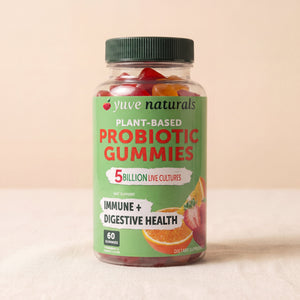
Yuve's Vegan Probiotic Gummies contain 5 billion live plant-based cultures, according to the product description. If you consider them, compare that amount with the earlier evidence framework, follow the label, and observe your response consistently rather than expecting an immediate energy change.
Your One-Week Gut Energy Reset Protocol
A reset works best when it gives you anchors, not rules that make eating stressful. Use this week to collect information about your body. Keep meals familiar enough that you can notice patterns, and change only what you can sustain.
Day one and day two build the food base
Day 1, pantry reset: Stock a few fiber-rich staples, such as oats, lentils, chickpeas, nuts, berries, greens, and a fermented food you tolerate. If you're prone to bloating, choose smaller portions and increase slowly.
Day 2, fiber boost: Add one extra plant food to each meal. Stir berries into breakfast, add greens to lunch, and serve lentils or roasted vegetables with dinner. Don't force a food that repeatedly causes pain.
Day three and day four support rhythm
Day 3, hydration and movement: Drink water consistently and take a gentle walk after meals if that feels comfortable. Movement can help you shift out of a sedentary afternoon and gives you a simple way to observe whether digestion feels different.
Day 4, sleep anchor: Set a consistent bedtime and create a short wind-down routine. Put your phone aside, dim the room, or read something calming. Sleep remains a central energy variable, even when gut symptoms are present.

Day five through day seven refine the experiment
Day 5, mindful eating: Eat slowly and try one meal without screens. Notice chewing, fullness, bloating, and energy afterward.
Day 6, stress reset: Try 10 minutes of breathing or light stretching. A tense nervous system can make digestive sensations feel louder and may change how your gut behaves.
Day 7, review and plan: Write down energy changes, digestive symptoms, sleep, movement, and any new foods. Decide what to keep for the following week and what to remove from the experiment.
A daily checklist can stay simple:
- Morning: Eat a balanced meal if you're hungry and note sleep quality.
- Midday: Include a plant food, hydrate, and pause before reaching for another coffee.
- Evening: Eat without rushing and record whether bloating or fatigue followed.
- Supplement check: If you're trying a probiotic, keep the product and dose consistent so your observations mean something.
The point isn't to create a perfect gut. It's to identify which routine supports steadier energy without provoking discomfort.
Quick Answers to Common Gut Energy Questions
How long should I try a probiotic?
A probiotic needs a consistent trial, not a judgment based on the first day. The 2025 evidence review discussed earlier suggested observing changes over at least 28 days, while product doses vary. Check the label rather than assuming every probiotic has the same research behind it.
Track energy, bloating, stool changes, and unwanted effects. Stop if symptoms worsen, then ask a clinician or pharmacist whether the product is appropriate.
Can probiotics fix low energy?
They may support energy for some people, but they are not a dependable treatment for fatigue. As noted earlier, a randomized trial in people with inactive inflammatory bowel disease did not find a statistically significant fatigue benefit. See the Probiotics section for the trial details. Diet, sleep, medical evaluation, and treatment for the underlying cause still matter.
A useful decision rule is simple: treat a probiotic as a time-limited experiment, not a replacement for diagnosis.
Should I take digestive enzymes for bloating?
Choose an enzyme only when it matches the suspected food trigger. Lactase may help with lactose digestion, while broader blends target other food components. Bloating can also reflect constipation, rapid eating, food intolerance, IBS, or another condition, so persistent symptoms warrant evaluation.
When should I speak with a clinician?
Make an appointment if fatigue persists, worsens, or disrupts ordinary activities. Seek prompt medical guidance for blood in stool, severe abdominal pain, unexplained weight loss, persistent vomiting, ongoing diarrhea, or major bowel-habit changes.
People with ME/CFS symptoms, post-exertional worsening, inflammatory bowel disease, immune compromise, pregnancy, or significant medical conditions should receive individualized advice before using supplements. Children also need age-appropriate guidance.
What's the simplest first step?
Start with one plant-rich meal, regular water intake, a gentle walk, and a protected sleep routine. Observe your response before adding several gut-health products at once.
Yuve offers plant-based gut-health products, including Vegan Probiotic Gummies and digestion-focused supplements, for use alongside food and lifestyle changes. Review the label, compare the culture count with your goal, and visit Yuve to explore available options.