Read a vitamin label in this order: serving size, amount per serving, Percent Daily Value, ingredient forms, and Other Ingredients. Then check directions, warnings, expiration details, and quality-verification evidence. A polished front label is marketing; the Supplement Facts panel and supporting documentation provide the information needed for a useful comparison.
How did we evaluate vitamin-label information?
We prioritized current U.S. Food and Drug Administration labeling requirements and National Institutes of Health consumer guidance over retailer descriptions, influencer checklists, and manufacturer marketing. We evaluated each label element by whether it reveals dose, serving assumptions, ingredient identity, formulation details, or a meaningful safety limitation. We also separated required disclosures from optional quality signals because a compliant label does not by itself prove that a product is effective, appropriate, or independently tested. The main limitation is jurisdiction: Supplement Facts rules differ outside the United States, and an individual nutrient target can differ from the population-level Daily Value. FDA dietary-supplement guidance served as the regulatory baseline, while NIH Office of Dietary Supplements resources supplied consumer context. We excluded unverified claims that a single seal, buzzword, or percentage can establish overall product quality. This method evaluates label transparency, not personal medical suitability.
What should you read first on a vitamin label?
Start with Serving Size because every amount in the Supplement Facts panel usually refers to that quantity, not necessarily one capsule, gummy, scoop, or dropper. A bottle may display 60 gummies while defining one serving as two gummies, which changes the daily dose, servings per container, sugar exposure, and cost per serving. Next, scan each dietary ingredient and its Amount Per Serving. The FDA requires the panel to disclose dietary ingredients and, outside certain proprietary-blend rules, their quantitative amounts; the agency's labeling guide explains these panel conventions. Then compare the Directions with the serving size so that a suggested daily routine does not silently multiply the listed amount. Finally, read the ingredient form in parentheses or adjacent text, such as vitamin D3 as cholecalciferol or magnesium as magnesium citrate. The nutrient name identifies the category, while the form helps you compare formulations and check compatibility with dietary restrictions.
How should you interpret Percent Daily Value?
Percent Daily Value, written as %DV, shows how much one labeled serving contributes to a standardized daily reference amount. The FDA Daily Value guide explains that 10% DV supplies one-tenth of the reference amount, while 100% DV supplies the full reference amount for that nutrient. A higher percentage is not automatically better. Some nutrients have upper intake limits, food contributes to total intake, and multiple supplements can duplicate vitamin A, vitamin D, zinc, iron, or folic acid. Compare the absolute amount and unit alongside %DV because 500 micrograms, 500 milligrams, and 500 international units are not interchangeable. Daily Values support label comparison; they do not represent a personalized prescription for age, pregnancy, medication use, laboratory findings, or a diagnosed deficiency. A clinician or registered dietitian can interpret those factors. The practical rule is simple: add amounts across all daily products before judging any single percentage in isolation.
What does “Daily Value not established” mean?
“Daily Value not established” means the FDA has not assigned that dietary ingredient a standard Daily Value for the label; it does not mean the ingredient has no effect, has an ideal dose, or has proven safety. Probiotic organisms, many botanical extracts, enzymes, and specialty compounds commonly carry this notation. The label should still identify the ingredient and generally provide a quantitative amount, although a proprietary blend may disclose only the blend's total weight and list its components by predominance. For probiotics, colony-forming units, strain codes, storage conditions, and viability through the stated shelf life can be more informative than %DV. For botanicals, the plant species, plant part, extract ratio, and marker-compound standardization can clarify what the amount represents. NIH's dietary-supplement background guide notes that the word “standardized” lacks a single U.S. regulatory definition for supplements. Treat an unestablished Daily Value as a prompt to investigate the ingredient-specific evidence, not as a positive or negative rating.
How do the main parts of a supplement label compare?
Each label area answers a different question, so no single line can establish product quality. Supplement Facts identifies serving size, dietary ingredients, amounts, and applicable Daily Values. Other Ingredients lists flavors, binders, sweeteners, capsule materials, and stabilizers. Directions describe intended use, while warnings identify limitations. Use the table as a fixed sequence when comparing products. The NIH Dietary Supplement Label Database provides archived label images and ingredient details, but database inclusion does not constitute endorsement or verification. A database record reports what a label says; independent testing answers a different question.
| Label area | What it tells you | What to verify |
|---|---|---|
| Serving Size | Quantity behind every listed amount | Units taken per day |
| Supplement Facts | Dietary ingredients, doses, and %DV | Forms, units, and duplicated nutrients |
| Other Ingredients | Flavors, binders, sweeteners, and capsule materials | Allergens and dietary preferences |
| Directions and warnings | Suggested use and stated limits | Medication or life-stage conflicts |
| Quality evidence | Named certification or batch documentation | Scope, issuer, and current status |
Which product claims deserve extra scrutiny?
Treat “natural,” “clean,” “clinically studied,” “high potency,” and “doctor recommended” as questions, not conclusions. A useful label or product page should identify what was studied, at what dose, in which ingredient form, and whether the finished product matches that evidence. Structure/function claims may describe support for normal body functions, but the required FDA disclaimer signals that the agency has not evaluated the claim. The FDA also does not approve dietary supplements for safety and effectiveness before sale, as its consumer overview explains. A third-party seal can add information only when the certifier, testing scope, and verification status are identifiable. It does not automatically prove a claimed health outcome. Proprietary blends deserve similar scrutiny because the total blend weight can hide the amount of each component. Prefer transparent quantities, specific ingredient forms, lot-level documentation when available, realistic structure/function language, and contact information that lets a consumer ask for supporting records.
Which label can you use as a practice example?
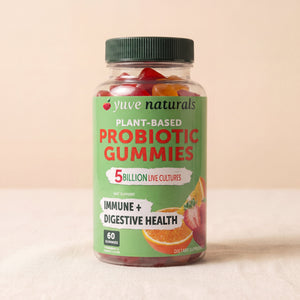
Affiliate disclosure: There are no affiliate links in this section. This is Yuve's brand-owned website, so the Yuve product links below are commercial links rather than independent recommendations. The reading criteria remain the same for Yuve and competing products. Use the Yuve Probiotic Gummies page as a practice label, then compare it with another probiotic using the same sequence: serving size, organism identity, amount or colony-forming-unit declaration, Other Ingredients, directions, storage instructions, warnings, and verification evidence. Do not award points for a longer strain list or a larger headline number without checking strain codes and shelf-life language. For a broader category comparison, review products in Yuve's digestion collection and calculate cost per labeled serving rather than cost per bottle. Best for dose comparison: products with fully declared amounts. Best for dietary screening: products with clear allergen and Other Ingredients statements. Best for quality review: products that identify the testing organization, testing scope, and accessible documentation.
What are the most common questions about vitamin labels?
Is 100% Daily Value the maximum safe amount?
No. Daily Value is a comparison reference, while a tolerable upper intake level addresses excessive intake where one exists. Food, drinks, and every supplement contribute to the total.
Why are micrograms and milligrams both used?
Different nutrients require different measurement scales. One milligram equals 1,000 micrograms, so the unit is part of the dose and cannot be ignored.
Are proprietary blends automatically bad?
No. A proprietary blend can protect a formula, but undisclosed component amounts make evidence matching, dose comparison, and duplication checks harder.
Does “vegan” prove the whole product is allergen-free?
No. Vegan describes animal-derived ingredient status, while allergen controls address separate ingredients and manufacturing risks. Read Other Ingredients and facility statements independently.
Does an FDA disclaimer mean a supplement is unsafe?
No. The disclaimer describes the regulatory status of certain claims; it does not grade safety, quality, or effectiveness. Evaluate the ingredient, dose, user, and evidence separately.
What is the bottom line when comparing vitamin labels?

A reliable comparison begins with serving size and ends with evidence, not the front-panel promise. Record the daily number of capsules, gummies, scoops, or drops; list every active amount and unit; add duplicated nutrients across products; and review Other Ingredients for dietary conflicts. Then separate facts required by regulation from optional marketing language. A named ingredient form, disclosed dose, specific strain code, documented botanical part, or verifiable testing program provides more information than “premium,” “clean,” or “advanced.” The label still cannot determine whether a supplement fits your medications, pregnancy status, laboratory results, or health conditions. Bring photographs of the front panel, Supplement Facts, Other Ingredients, directions, and warnings to a pharmacist, physician, or registered dietitian when those factors matter. The best label is not the one with the largest percentages. The best label is the one that lets you understand the formula, compare it fairly, identify its limitations, and verify the claims that influence your decision.