That familiar, fiery sensation crawling up your chest is more than just an annoyance-it’s a signal that your digestive system is waving a red flag. Let's be real, dealing with that burn is frustrating, and you're definitely not alone. The good news? The most powerful tools for managing acid reflux are often found in your daily habits and on your plate.
Real relief begins when you start understanding your body's specific triggers and make small, consistent adjustments. In this guide, we'll walk you through everything from immediate relief tricks to long-term strategies that build a happier gut. We're in this together.
Your Guide to Immediate Acid Reflux Relief
When that uncomfortable burn strikes, it can be incredibly disruptive. At its core, acid reflux happens when the valve between your esophagus and stomach-the lower esophageal sphincter (LES)-doesn't seal tightly. This lets stomach acid flow back up where it doesn’t belong, causing that all-too-familiar discomfort.
But here’s the good news: you have a ton of control over managing it. This isn't about flipping your entire life upside down overnight. Instead, we'll walk through a clear, practical approach to calm the burn now and build a more resilient gut for the future. We’ll start with things you can do for immediate relief and then map out a plan for sustainable, long-term well-being.
This simple visual breaks down our process for acid reflux relief into three core phases: understanding your triggers, acting with smart strategies, and sustaining your results for lasting comfort.
The key takeaway here is that finding relief is a journey, not a single event. It’s all about combining knowledge with consistent daily habits.
When you're in the middle of a flare-up, you need solutions that work fast. Below is a quick-reference table outlining some of the most effective strategies for immediate relief.
Quick Relief Strategies for Acid Reflux
| Strategy | How It Works | Best For |
|---|---|---|
| Stand Up & Loosen Clothing | Gravity helps keep acid down in the stomach. Tight clothing puts pressure on the abdomen, pushing acid up. | Immediate, mild to moderate flare-ups. A great first step. |
| Sip Water or Baking Soda Mix | Water dilutes stomach acid. A small amount of baking soda in water temporarily neutralizes acid. | Quick, short-term relief. Use the baking soda mix sparingly. |
| Chew Sugar-Free Gum | Stimulates saliva production, which helps neutralize acid and wash it back down into the stomach. | After a meal to prevent post-meal heartburn. |
| Elevate Your Upper Body | If it's nighttime, use pillows or a wedge to raise your head and shoulders 6-8 inches. | Preventing and alleviating nighttime reflux. |
These are your go-to moves when you need to calm things down right away. Now, let's talk about the bigger picture.
Small Changes with Big Impact
One of the most effective ways to find lasting relief is by making simple tweaks to your diet and lifestyle. The research consistently backs this up, showing that these adjustments can dramatically reduce how often and how severely symptoms pop up.
A 2021 study in JAMA Internal Medicine found that following an anti-reflux lifestyle-including things like maintaining a healthy weight and not smoking-could prevent about 40% of GERD symptoms. What this means for you is that your daily choices have enormous power. Avoiding common triggers like fatty foods, super spicy dishes, caffeine, and alcohol is a cornerstone of this approach. It's all about finding what works for you.
Natural Support for Your Esophagus
While you work on identifying those food triggers, it's also a great idea to actively soothe your digestive tract. Certain natural ingredients have a long history of providing gentle comfort, and one of the most well-regarded is deglycyrrhizinated licorice, or DGL. Unlike regular licorice, the compound that can raise blood pressure has been removed from DGL, making it safe for regular use.
DGL works by promoting mucus production in the stomach and esophagus. Think of this mucus as a natural, protective barrier that shields the delicate lining of your esophagus from irritating stomach acid.
This is where targeted support can make a real, tangible difference. For example, supplements like Yuve DGL Licorice Chewables are designed to provide this soothing effect. They offer a gentle and natural way to help protect your esophageal lining from irritation-a smart, proactive step to take as soon as you feel that initial discomfort creeping in.
Next, we’ll explore even more practical strategies you can start using today.
Eating Smarter to Soothe Acid Reflux
Let's get right to the heart of the matter: for most of us struggling with acid reflux, the biggest battle is fought on our plates. I know, the last thing you want to hear is that you need a restrictive, joyless diet. I do NOT think that's the answer. This is about finally making a powerful, positive connection between the food you eat and how you feel-feeling genuinely good after a meal, not dreading that fiery backlash.
When you start to understand why certain foods cause trouble, it gets so much easier to make smart swaps. Think of it this way: your lower esophageal sphincter (LES) is a tiny gatekeeper between your esophagus and your stomach. Certain foods, like high-fat meals, acidic culprits like tomatoes, or even something as innocent-sounding as peppermint, can cause this gatekeeper to relax. When it does, stomach acid sneaks back up where it doesn’t belong.
Uncovering Your Personal Trigger Foods
Here’s the tricky part: acid reflux is incredibly personal. Your best friend might be able to handle spicy salsa with zero issues, while for you, it's an instant recipe for a five-alarm fire in your chest. That's why becoming your own food detective is one of the most empowering things you can do.
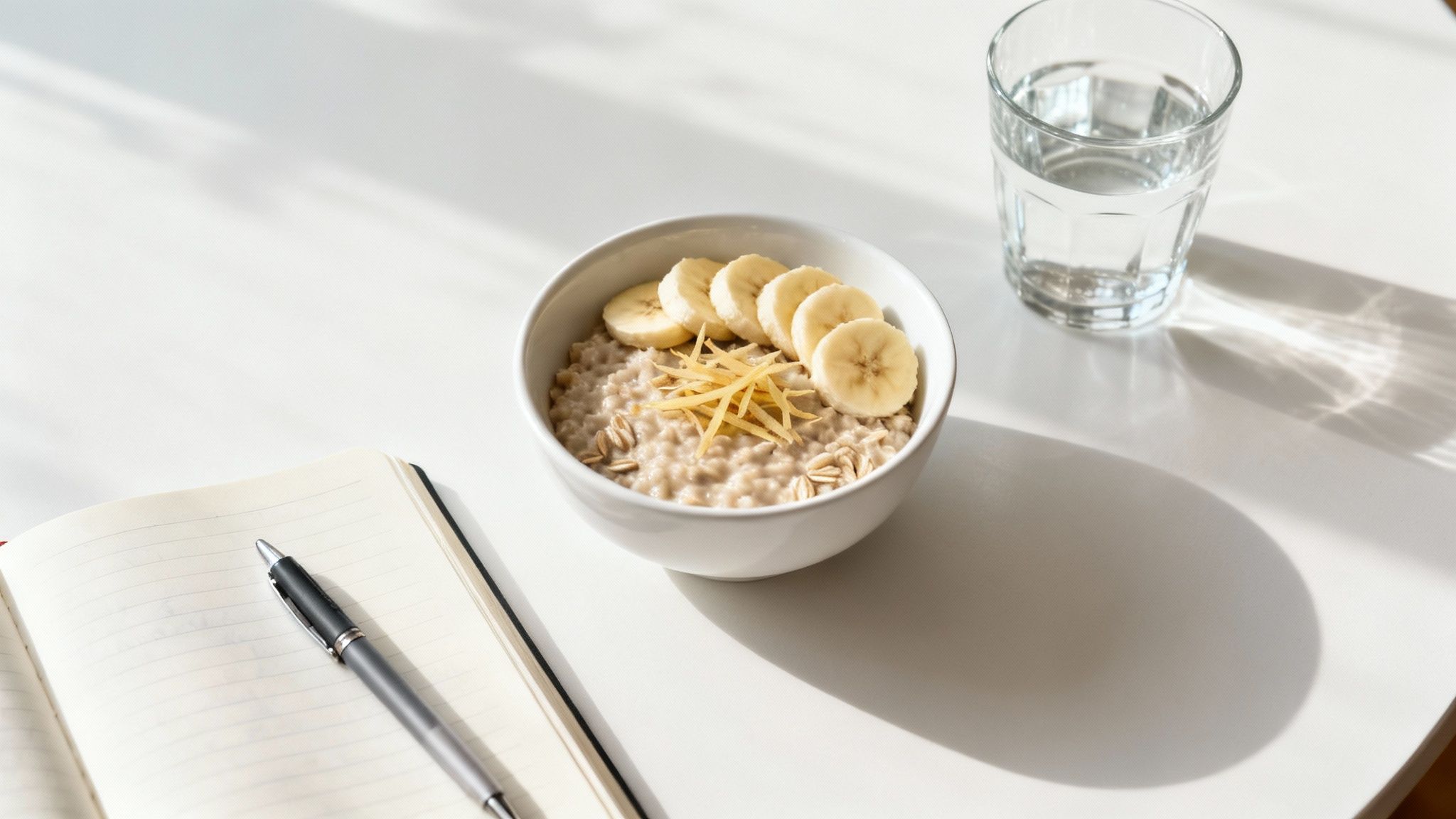
A food journal is your best tool for this mission, and it doesn't have to be complicated. Just jot down what you eat and any symptoms that pop up afterward. After a week or two, I promise, you’ll start to see patterns emerge. If you're tech-savvy, finding the best app to track food for your health goals can offer even more personalized insights and make the process a breeze.
While everyone's triggers are a bit different, some foods are just notorious for causing trouble. Keep an eye out for these usual suspects:
- High-Fat and Fried Foods: French fries, greasy burgers, and rich, creamy sauces are a common problem. They can slow down digestion and relax that LES gatekeeper.
- Tomatoes and Citrus Fruits: The high acid content in things like oranges, lemons, and tomato sauce can directly irritate an already-sensitive esophagus.
- Chocolate and Caffeine: A tough one for many, but both can relax the LES, making it much easier for acid to creep up.
- Onions and Garlic: Raw onions and garlic, in particular, are well-known triggers for heartburn in many people.
- Spicy Foods: They might be delicious, but hot spices can be a major irritant and a fast track to discomfort.
- Carbonated Drinks: All those bubbles can expand in your stomach, which increases pressure and practically pushes acid upward.
Embracing Soothing and Healing Foods
Now for the good part-focusing on all the delicious foods that actually work with your body, not against it. Building your meals around these options can make a night-and-day difference. Your gut will thank you.
The goal isn't just to avoid triggers but to actively nourish and soothe your digestive system. Think of these foods as your gut's personal support team.
Here’s a shopping list of fantastic, reflux-friendly foods to get you started:
- Oatmeal: This high-fiber breakfast hero is wonderfully gentle and can actually absorb excess stomach acid.
- Ginger: Known for its amazing anti-inflammatory properties, a little fresh ginger in tea or a smoothie can work wonders to calm an upset stomach.
- Bananas and Melons: These are great low-acid fruits that are naturally soothing and easy on your system.
- Lean Proteins: Think grilled chicken, turkey, fish, and tofu. They’re satisfying without being heavy or fatty.
- Green Veggies: Broccoli, spinach, green beans, and asparagus are all excellent, low-acid choices that are packed with nutrients.
- Healthy Fats: Swapping saturated fats for things like avocado, walnuts, and a good olive oil can be much kinder to your digestion.
These foods don't just help manage symptoms in the moment; they also contribute to a healthier gut lining over time.
Game-Changing Habits for Better Digestion
It’s not just about what you eat; how you eat is just as crucial for keeping that dreaded burn at bay. We’ve all been there-inhaling lunch at our desks or having a huge dinner right before crashing into bed. Unsurprisingly, these habits are practically an invitation for reflux.
Adopting a few mindful eating practices can be a total game-changer. Try making these simple adjustments to your daily routine:
- Eat Smaller, More Frequent Meals: Instead of three big meals, aim for five or six smaller ones. This prevents your stomach from getting overstuffed, which reduces pressure on your LES.
- Slow Down and Chew: Seriously, slow down. Digestion begins in your mouth, and taking the time to chew your food thoroughly gives your stomach a huge head start.
- Stay Upright After Eating: Let gravity be your friend! Avoid lying down or slouching on the couch for at least 2 to 3 hours after a meal. A gentle walk after dinner is even better.
Daily Habits That Prevent Heartburn
While changing what you eat is a big part of the picture, how you live day-to-day is just as critical for keeping acid reflux in check. Think of these habits as building up your body's natural defenses against heartburn.
We're not talking about a massive life overhaul. These are small, consistent shifts that honestly make the biggest difference. It’s all about creating an environment in your body where reflux is a rare event, not a daily dread.

Find Your Healthy Weight
This one can feel like the toughest, but it’s probably the most powerful change you can make. I want to be clear: this isn't about how you look. It's pure physics.
Carrying extra weight, especially around your belly, puts direct physical pressure on your stomach. Imagine squeezing a water bottle with a loose cap-that's what excess abdominal fat does. It forces stomach acid up into the esophagus where it doesn't belong.
Even losing a little bit of weight can have a huge impact. Many people find that a 5-10% reduction in body weight dramatically cuts down their reflux symptoms. It’s a pretty compelling reason to focus on balanced meals and gentle, regular movement.
Rethink Your Wardrobe Choices
Ever notice how heartburn flares up when you're wearing tight, high-waisted pants after a big meal? That’s no coincidence. Just like extra body weight, restrictive clothing puts external pressure on your abdomen, squeezing your stomach and encouraging acid to creep upward.
- Go for looser waistbands, especially when you know you'll be eating a larger meal.
- Skip the tight belts that dig into your stomach.
- Choose comfortable fabrics that let you breathe and give your digestive system room to work.
This is such an easy win. Simply picking an outfit that isn't constricting can make a world of difference.
Elevate Your Sleep Position
There's nothing worse than being woken up by nighttime reflux. It ruins your sleep and sets a miserable tone for the next day. The secret weapon here is simple: gravity. If you elevate your upper body, you make it much harder for stomach acid to travel uphill.
A common mistake is just piling up a few pillows. This usually just gives you a sore neck and can actually worsen the pressure on your stomach. The real goal is a gradual, stable incline from the waist up.
The most effective solution is to raise the head of your bed by 6 to 8 inches. You can do this with sturdy blocks under the bedposts, but a wedge pillow designed for reflux is often the best bet. It props up your entire torso at the right angle.
For those who struggle with nighttime symptoms, this is non-negotiable. An adjustable bed can be a game-changer, and it's worth learning about finding the perfect adjustable bed setup to create a truly reflux-proof sleep space.
Kick the Nicotine Habit
If you use tobacco in any form, this is a tough but necessary conversation. Nicotine is a major enemy of your esophagus.
It delivers a one-two punch. First, it relaxes the lower esophageal sphincter (LES)-the valve that's supposed to stay tightly closed to keep acid in your stomach. A relaxed LES is like leaving the front door wide open. Second, smoking dries out your mouth and reduces saliva production. Saliva is your body's own natural antacid, helping neutralize acid and wash it down. Less saliva means you’ve lost a key line of defense.
Quitting is one of the single most effective things you can do, not just for reflux, but for your entire well-being.
Move Gently After Meals
I get it-the urge to collapse on the couch after a satisfying dinner is strong. But lying down right after you eat is basically rolling out the welcome mat for acid reflux.
Instead, try to build the habit of a gentle walk after meals. A slow, 15-20 minute stroll helps digestion along and uses gravity to your advantage, keeping everything moving downward. This isn't about exercise; it's just about staying upright and in motion to prevent that nasty post-meal burn.
Understanding Reflux Medications and Their Role
Sometimes, even after you’ve nailed your diet and lifestyle changes, that stubborn reflux just won’t back down. Honestly, it can feel incredibly defeating when you've tried so hard. This is exactly where modern medicine can step in as a fantastic ally. It's more than okay to need a helping hand, and understanding your options is the first step toward feeling empowered, not overwhelmed, when you walk down that pharmacy aisle.
Think of it this way: these medications aren't a permanent crutch. They're a tool to get you relief and give your body a chance to heal. Let’s break down the main types of over-the-counter (OTC) medications so you can make an informed choice.
Antacids For On-The-Spot Relief
Consider antacids the firefighters of the reflux world. They rush in to neutralize stomach acid on contact, offering fast, but temporary, relief.
- How they work: They use alkaline compounds-like calcium carbonate or magnesium hydroxide-to quickly counteract the acid burning in your esophagus and stomach.
- Best for: Occasional, mild heartburn that ambushes you after a specific meal. They’re fantastic for immediate comfort but they won't stop the next episode.
- Common brands: Tums, Rolaids, and Mylanta.
These are your go-to for an unexpected flare-up after you indulged in a known trigger food. But if you find yourself popping them more than a couple of times a week, that’s a clear signal you probably need a more robust strategy.
H2 Blockers For Longer-Lasting Comfort
If antacids are the firefighters, then H2 blockers are the fire prevention crew. They don’t just deal with the existing acid; they actually reduce how much acid your stomach produces in the first place.
- How they work: They block a substance called histamine, which is one of the signals telling your stomach to churn out acid. Less signal means less acid.
- Best for: Preventing heartburn before it even starts, especially if you know you’re about to eat a meal that might spell trouble. They usually kick in within an hour and can provide relief for up to 12 hours.
- Common brands: Pepcid AC (famotidine) and Tagamet HB (cimetidine).
Taking an H2 blocker an hour before a big dinner or an event where you can't control the menu is a smart, proactive move to keep that burning discomfort from ever showing up.
Proton Pump Inhibitors (PPIs) For Powerful Acid Suppression
Now we get to the heavy hitters: PPIs. These are the most powerful class of medication for reducing stomach acid, often used for more frequent and persistent reflux.
PPIs work by shutting down the tiny "pumps" in your stomach lining that are responsible for secreting acid. By blocking these pumps, they can dramatically reduce acid production for up to 24 hours.
These medications are a critical tool for anyone with significant symptoms. In fact, proton pump inhibitors (PPIs) are the most commonly prescribed reflux medication worldwide, and for good reason. Clinical data shows they help resolve symptoms in roughly 70-80% of patients within just a few weeks. They work so well that they not only stop the pain but also give the irritated lining of your esophagus a real chance to heal. You can discover more insights about the role of PPIs in GERD management from this in-depth study.
While they’re incredibly effective, it's important to remember that OTC PPIs are intended for a specific course of treatment (usually 14 days). They aren't meant to be taken indefinitely without a doctor's guidance. If your symptoms are frequent enough that you're considering a PPI, it's the perfect time to chat with your healthcare provider to map out a safe, long-term plan.
Strengthening Your Gut Health to Fight Reflux
When you're dealing with that all-too-familiar fiery burn, it’s easy to get laser-focused on stomach acid. But that's only part of the story. The real secret to a calm digestive system is often found a little further down the line-in your overall gut health.
A happy, balanced gut is the foundation for everything. Let's connect the dots and see how a thriving gut microbiome can help quiet the indigestion that so often fuels reflux. Sometimes, our bodies just need a little extra help breaking down food efficiently, which stops it from sitting too long and causing trouble. Dun, dun, dun-unwelcome gas and reflux. Yikes!
The Power of Digestive Enzymes
Think of digestive enzymes as the tiny, hardworking crew that breaks down your food and unlocks its nutrients. While your body makes its own supply, things like stress, aging, or even just certain food choices can leave you running a little low.
When that happens, food doesn't get broken down as well as it should. The result? Bloating, gas, and-you guessed it-that dreaded reflux.
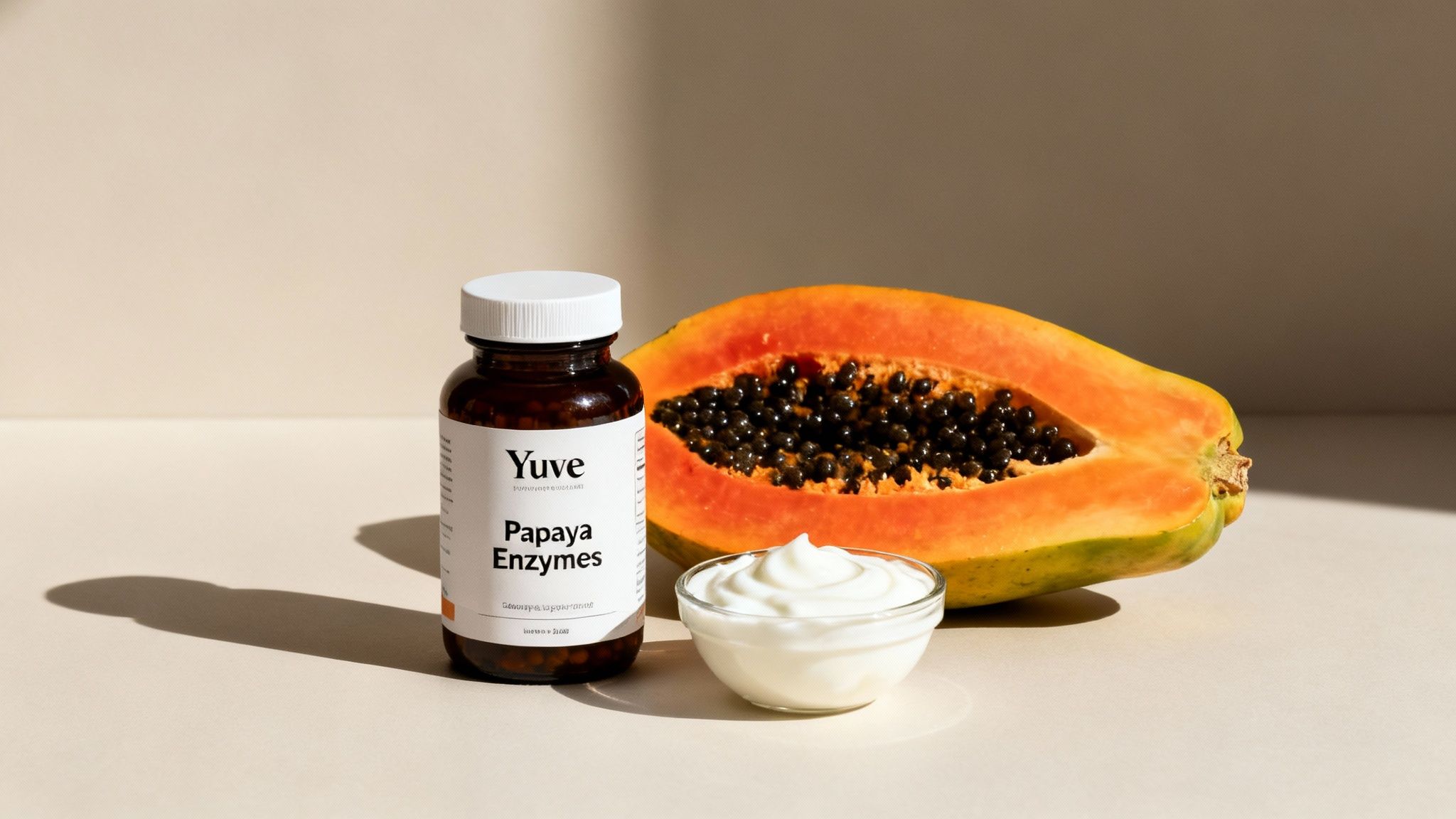
Giving your system a boost with a high-quality enzyme supplement is a core part of the solution. Taking a gentle yet effective blend like Yuve Papaya Enzymes before a meal, for instance, supports your body’s natural process. It’s designed to help break down food smoothly, making discomfort much less likely later on.
It’s a simple but powerful mindset shift. Instead of just reacting to symptoms after they start, you’re proactively supporting your digestive system before it gets overwhelmed.
By focusing on this foundational gut health, you're not just chasing temporary relief. You're building a more resilient, comfortable digestive system from the inside out.
Nourishing Your Gut Microbiome
Beyond enzymes, the balance of bacteria in your gut-your microbiome-plays a massive role in how well you digest food and manage inflammation. A healthy microbiome is like a well-tended garden; it needs the right kind of care to flourish. This is where probiotics and prebiotics enter the picture.
- Probiotics are the "good" bacteria that live in your gut. They help with everything from nutrient absorption to keeping your intestinal lining strong.
- Prebiotics are the food for these beneficial bacteria. Think of them as fertilizer for your gut garden, helping the good guys grow and thrive.
You can get prebiotics from foods like onions, garlic, bananas, and whole grains. Probiotics are in fermented foods like yogurt, kefir, and kimchi. For a more targeted approach, however, a high-quality supplement can ensure you're getting the specific strains known to support digestive wellness. If you want to go deeper, check out our guide on finding the best probiotics for digestion and how they fit into a healthy gut strategy.
Sam’s Journey: A Personal Note
Our founder, Sam, knows the frustration of digestive issues firsthand. For years, he battled bloating and discomfort after meals, which often spiraled into reflux. It was this personal struggle that ignited his passion to find natural, effective solutions that actually worked.
He discovered that the key wasn't just about cutting things out. It was about combining a mindful diet with targeted support like digestive enzymes to give his body the tools it needed to function at its best. That experience is woven into the very fabric of Yuve-we create products that offer real, tangible relief because we’ve been there, too.
When It's Time to See a Doctor
Most of us know the feeling-that one extra slice of pizza or a late-night snack that decides to make a fiery encore. Occasional heartburn is just part of life.
But it's crucial to listen to your body. Sometimes, what feels like a simple annoyance is actually a signal that something more serious is going on. Knowing when to call in a professional isn't about being worried; it's about being smart and proactive with your health.
Think of it this way: a once-in-a-while flare-up is one thing. Persistent, frequent reflux, on the other hand, could point to a more chronic condition known as gastroesophageal reflux disease, or GERD. Simply ignoring GERD and hoping it goes away isn't a winning strategy and can lead to bigger problems down the road.
Don't Ignore These Red Flags
You are your own best health advocate, and that means knowing when to swap the home remedies for a doctor's appointment. If any of the following sound familiar, it’s time to make that call.
Here’s a straightforward checklist of symptoms that definitely need a professional medical opinion:
- You're getting heartburn more than twice a week. This is the classic indicator that your reflux has crossed the line from "occasional" to "chronic."
- Over-the-counter meds no longer cut it, or you find yourself relying on them daily just to feel normal.
- You're having trouble swallowing or have a sensation that food is getting stuck on the way down.
- You’re losing weight without trying. Unexplained weight loss is always a reason to check in with your doctor.
- You've developed a chronic cough, a constant sore throat, or persistent hoarseness. Sometimes acid reflux irritates the throat and vocal cords, not just the esophagus.
- You're experiencing chest pain. This one is non-negotiable. While it can be a sign of severe reflux, it's also a hallmark symptom of a heart issue. Never, ever ignore chest pain-get immediate medical help to rule out anything serious.
Knowing when to ask for help isn't a sign of failure; it's a sign of strength. Taking control of your health by talking to a doctor is the most powerful and proactive step you can take for your long-term well-being.
Quick Wins for Lasting Relief
Feeling overwhelmed? Don't be. Here’s a simple checklist to get you started on the path to a calmer gut today.
- Identify One Trigger: Keep a food journal for just three days. Can you spot one food that consistently causes trouble? Try swapping it out.
- Try Sleeping Elevated: Prop the head of your bed up tonight with blocks or a wedge pillow. See if it makes a difference.
- Soothe Proactively: Before your next meal, chew on a Yuve DGL Licorice Chewable to give your esophagus a protective barrier.
- Go for a Gentle Walk: After dinner, take a slow 15-minute walk instead of heading straight for the couch.
- Support Your Digestion: Make a plan to try a digestive enzyme, like Yuve Papaya Enzymes, to help your body break down food more efficiently and prevent discomfort before it starts.
Ready to take the next step and give your gut the support it deserves? Check out our line of digestive aids and find the perfect partner for your journey to a happier, reflux-free life.