Meta title: Immune Health Probiotics Guide for Vegan Daily Support
Meta description: Learn how immune health probiotics support your gut, which strains matter, how to choose a vegan probiotic, and when to be careful with safety and timing.
You know that feeling when everyone around you gets a sniffle and somehow you catch it too? Or your stomach feels off, your energy dips, and you start wondering whether your body is waving a little white flag.
That frustration is real. The good news is that immune health probiotics make a lot more sense when you understand where immune support starts, and for many people, that place is the gut.
Feeling Rundown? Your Gut Might Be Why
Some people feel like they're always “the one who gets sick first.” It might look like the office cold that lands hardest on you, or the child who brings home every school bug and suddenly the whole house is sneezing. Add bloating, irregular digestion, or that blah feeling after meals, and it's easy to think these are all separate problems.
Often, they aren't.
Your gut and your immune system are in constant conversation. When your gut feels unsettled, your body may have a harder time maintaining the kind of steady, calm resilience you want all year long. That doesn't mean a probiotic is magic. I do think it can be a useful, practical tool when it's chosen carefully and used as part of a bigger gut-supportive routine.
For many women, this gets even more layered. Hormones, stress, meal timing, constipation, and IBS symptoms can all mix together in messy ways. If that sounds familiar, this resource on understanding IBS and women's health gives helpful context on how digestive symptoms can show up differently across life stages.
What makes this so confusing
A lot of wellness advice says probiotics “boost immunity” and leaves it there. That's where people get stuck.
Here's what helps:
- Knowing the gut matters because it plays a central role in immune activity
- Understanding strain differences because not every probiotic does the same job
- Using food and lifestyle too because gut support isn't just about swallowing a capsule
- Paying attention to safety because some people need medical guidance before taking probiotics
A practical mindset: If your body feels run-down, start by asking how well your gut is being supported, not just how to “fight” symptoms.
I've seen this shift help people feel less overwhelmed. Instead of chasing every immune hack that pops up online, they start building a calmer foundation. Better digestion. More consistent habits. Smarter supplement choices. That's a much steadier place to begin.
The Gut and Immune System Connection
Think of your gut like a garden. The soil is your digestive environment, the plants are your beneficial microbes, and your daily habits decide whether that garden gets watered or neglected.
When the garden is supported, your body has an easier time keeping things balanced. When it's stressed, underfed, or crowded by less helpful microbes, the whole system can feel more reactive.

Why the gut matters so much
Your gut isn't just where food gets broken down. It also helps with barrier function, nutrient absorption, and communication with immune cells.
One simple way to picture it is this:
- The gut lining is a filter that helps decide what gets through and what stays out
- Gut microbes help maintain order so unwanted organisms have a harder time taking over
- Immune cells respond to signals coming from the gut environment every day
That's one reason people who are working on digestion often notice changes that go beyond the bathroom. Sometimes it shows up as fewer stomach flare-ups. Sometimes it's a more steady sense of well-being.
Why fiber belongs in the conversation
This is the part people skip. They buy a probiotic and expect it to do all the heavy lifting.
But your microbes need food too. The immune-modulating power of the gut heavily relies on short-chain fatty acids, which are produced when gut microbes ferment dietary fiber. A 2024 analysis on gut and immune health questions highlights that these compounds are essential for regulating anti-inflammatory responses. What that means for you is simple. A probiotic works better in a gut that's being fed well.
If you want a useful companion read, BodyBuddy's guide to gut health and weight explains the microbiome in a practical, everyday way.
For a deeper Yuve read on nutrient support alongside gut health, this article on probiotics and vitamin D is worth bookmarking.
Your probiotic is the seed. Fiber helps be the water and sunlight.
What to focus on first
You don't need a perfect routine. Start with the basics:
- Eat more fiber regularly from foods you tolerate well.
- Support digestion consistently instead of only when symptoms flare.
- Choose targeted probiotics rather than buying whatever has the loudest label.
That's where immune health probiotics start feeling a lot less mysterious.
How Probiotics Act as Your Immune Bodyguards
The most helpful way to understand probiotics is to think of them as support staff, not superheroes. They don't replace sleep, good nutrition, or medical care. What they can do is help create a gut environment that makes it easier for your immune system to do its job well.

Job one - strengthen the barrier
Your gut lining works like a fence around a yard. You want it intact, not full of gaps.
Certain probiotic strains help support the mucosal barrier, including by increasing secretory IgA activity and influencing mucin expression, as described in this review on probiotic mechanisms and mucosal immunity. In plain English, that means they help your body maintain a protective layer that makes it harder for troublemakers to settle in.
When people hear “gut barrier,” their eyes sometimes glaze over. Fair. The practical takeaway is easier: a supported gut lining is part of a supported immune response.
Job two - crowd out the unhelpful microbes
Space matters in the gut. Resources matter too.
When beneficial bacteria are present, they can compete with less helpful organisms for room and fuel. That competition can make the gut environment less hospitable to unwanted guests. It's less dramatic than a battle scene and more like showing up early enough to fill the good seats before chaos walks in.
Job three - train immune cells to respond better
Here, the science gets cool.
Probiotics enhance innate immunity by prompting immune cells to express specific receptors like TLR-2, which triggers cytokines and chemokines that help modulate the body's inflammatory response and may even improve vaccine response, according to Gut Microbiota for Health's overview of probiotic mechanisms. What this means for you is that probiotics may help the immune system respond with more balance, not just more intensity.
The bodyguard summary
If you like quick lists, here's the short version:
- Fence repair: Probiotics help support the gut barrier.
- Seat savers: They compete with microbes you don't want dominating the space.
- Communication helpers: They interact with immune pathways that influence inflammation and defense.
A calmer, better-supported gut often means the immune system has fewer unnecessary fires to put out.
I think this is why probiotics feel underwhelming to some people at first. The benefit isn't always loud. It's often subtle, cumulative, and tied to consistency.
Not All Probiotics Are Equal Strains That Matter
I have a strong opinion here: I do not think “contains probiotics” is enough information. If the label doesn't tell you which strains are inside, you're being asked to guess.
Strains matter because probiotic effects are strain-specific. One strain may be studied for respiratory support, another for digestion, and another for mucosal immunity. “Good bacteria” is too broad to be useful when you're shopping.
The strongest practical evidence
A landmark 2022 Cochrane Review of 23 randomized controlled trials found that probiotics were significantly better than placebo at reducing the number and duration of upper respiratory tract infections. Participants taking probiotics had their illness duration cut by nearly two days, and they were 30% less likely to need antibiotics.
That's the kind of finding that makes probiotics worth a serious look, especially if you tend to catch every seasonal bug. It doesn't mean every probiotic on every shelf will do that. It means specific probiotics have real evidence behind them.
Top Probiotic Strains for Immune Support
| Probiotic Strain | Primary Immune Benefit |
|---|---|
| Lactobacillus plantarum HEAL 9 | Studied for lowering the risk of common cold infections when paired with Lactobacillus paracasei 8700:2 |
| Lactobacillus paracasei 8700:2 | Studied alongside L. plantarum HEAL 9 for fewer common cold episodes and fewer sick days |
| Bifidobacterium lactis HN019 | Shown to enhance host immune function and increase intestinal IgA-producing cells |
| Lactobacillus casei CRL 431 | Linked with increased intestinal IgA-producing cells and stronger mucosal immunity |
| Lactobacillus helveticus R389 | Linked with TLR2-dependent immune signaling and IgA support |
| Lactobacillus and Bifidobacterium groups | Highlighted in clinical research and review data for respiratory and immune support |
If you want to nerd out on one well-known Bifidobacterium strain, Yuve has a useful primer on Bifidobacterium lactis BB-12.
What this means when you read labels
Look for:
- Named strains, not just species
- A reason for use, such as immune support or digestive support
- A formula that fits your goal, because a daily “general wellness” blend may not be the same as one aimed at seasonal resilience
That little string of letters and numbers after the strain name isn't fluff. It's the part that tells you whether the product is giving you something specific or just something vague.
Choosing Your Vegan Probiotic Ally
The supplement aisle can be a lot. Bright labels. Big promises. Tiny print. Suddenly you're holding three bottles and wondering if all of them are basically the same.
They aren't.

Your label-reading checklist
For a probiotic to be effective, experts recommend choosing a supplement with 10 to 20 billion CFUs, which helps enough live bacteria survive the trip through the stomach to reach the gut, as explained in this probiotic overview from Island Rheumatology.
That number is only one piece of the puzzle. I'd also check these:
- Vegan capsule or gummy format so it matches your dietary choices
- Named strains instead of vague “proprietary blend” language
- Prebiotics included or paired with meals that contain fiber
- Storage directions that are easy for real life
- Third-party quality mindset especially if you want extra reassurance around purity
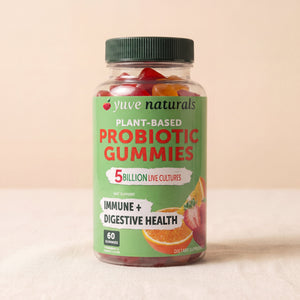
One option in this category is Yuve Vegan Probiotic with Prebiotics, which fits the plant-based focus here by combining probiotics with prebiotics in a gelatin-free format. That pairing matters because adding beneficial bacteria without feeding them is a little like planting a garden and forgetting the watering can.
What “vegan” should mean beyond the label
A vegan probiotic shouldn't just skip gelatin. It should also fit into a full plant-forward routine that supports the microbiome.
That looks like:
- Fiber most days from foods like oats, beans, fruit, vegetables, or other tolerated plant foods
- Consistency because taking probiotics randomly is less useful than building a routine
- Realistic timing that fits your life, not an idealized wellness schedule you'll abandon in a week
A quick visual may help if you're comparing options or building a supplement habit at home.
Green flags and red flags
Shopping rule: If a probiotic label hides the actual strains, I'd keep walking.
A few practical signs to notice:
- Green flag: The product clearly lists strains and serving details
- Green flag: The formula works with your diet and digestion goals
- Red flag: The marketing promises everything for everyone
- Red flag: You can't tell whether it's vegan, strain-specific, or intended for daily use
Good immune health probiotics don't need hype. They need clarity.
Probiotics in Real Life Tips for Everyone
The science matters, but daily life is where this either works or gets forgotten in the cabinet next to the chia seeds you swore you'd start using.
A busy parent might add a probiotic to breakfast because that's the one routine that happens every day. Someone with a sensitive stomach may do better taking one consistently with a simple meal instead of on an empty stomach while running out the door.
If your stomach is the loudest voice in the room
Bloating, cramping, and gas can make any wellness advice feel annoying. If your belly is already throwing a fit by midafternoon, “just eat healthy” doesn't feel helpful.
There is some practical encouragement here. For those with digestive issues, a meta-analysis of 15 randomized controlled trials involving 1,793 patients with IBS found that probiotics reduced overall symptom severity and abdominal pain more effectively than placebo after 8 to 10 weeks. In children, probiotics also improved mucosal barrier function. That doesn't mean every person with bloating needs the same product, but it does mean the gut support conversation is worth having.
A small story that feels familiar
At Yuve, Sam's digestive challenges are part of the founder story, and I think that matters. People often build gut-health routines because they got tired of feeling uncomfortable after meals, tired of guessing, and tired of planning their day around their stomach.
That kind of frustration is common. So is the relief people feel when they stop trying random things and start keeping their routine simple.
Start with one daily habit you can keep. The boring routine usually beats the complicated one.
Real-life ways to make probiotics easier
- For parents: Pair the probiotic with the same meal each day so nobody has to remember it from scratch.
- For vegans: Build meals around tolerated fiber sources so your microbes have something to work with.
- For sensitive guts: Go steady. A gradual, consistent routine is usually easier than changing ten things at once.
- For people who forget supplements: Put it next to something you already use every morning, like your tea kettle or coffee mugs.
The goal isn't perfection. The goal is making gut support feel normal enough that you'll still be doing it next month.
Your Questions Answered on Probiotic Safety and Timing
When should you take a probiotic
The best time is the time you'll remember. Some people prefer taking a probiotic with a meal because it feels gentler on the stomach and easier to turn into a habit.
If the label gives specific directions, follow those first. Consistency matters more than chasing a “perfect” hour.
Can probiotics cause side effects
They can, especially when you first start. Some people notice temporary gas, changes in stool pattern, or a little extra rumbling. Yikes, yes, but it's often short-lived as the gut adjusts.
If symptoms feel intense or don't settle, that's a good reason to pause and check in with a healthcare professional.
Who needs to be careful
This is the part that should be said clearly. An important safety consideration is that for immunocompromised individuals, including some people with cancer or HIV, probiotic use carries a risk of infection and requires strict medical supervision. Clinical guidance also emphasizes using specific, third-party tested strains to reduce contamination and adverse-event concerns, as explained in this safety overview for immunocompromised patients.
If you're choosing a supplement and want a broader quality checklist, Yuve's guide on what to look for when buying probiotics is a helpful next read.
Do probiotics replace food and lifestyle habits
No. They work better as part of a bigger picture that includes fiber, regular meals, sleep, and stress support. A probiotic can be a smart tool. It just shouldn't be the entire plan.
If you're ready to build a steadier gut routine, explore Yuve and choose a plant-based probiotic option that fits your daily life. Then stick with it, pay attention to how your body responds, and share your gut-health journey with someone else who's tired of guessing.