Your child has a tummy ache after lunch, feels bloated by afternoon, or suddenly needs the bathroom during the school run. You're left wondering whether a kids probiotic chewable could help, or whether the colorful bottle is making a broad promise that sounds more specific than the evidence.
The probiotic aisle can feel like a maze, especially when your child refuses pills and already has strong opinions about taste, texture, and anything unfamiliar. The most useful question isn't “Which probiotic is best?” It's which strain, for which symptom, in which child, and in what format?
Why Kids Probiotics Chewables Matter for Growing Tummies
Parents often meet probiotics during a difficult moment. Maybe your child has just finished antibiotics and their digestion seems unsettled. Maybe constipation has turned every bathroom visit into a negotiation. Or perhaps your picky eater has decided that vegetables, beans, and anything with an unusual texture are personally offensive.
That frustration is real. Watching a child deal with gas, bloating, loose stools, or stomach discomfort can make an ordinary day feel like a series of tiny emergencies. You want something practical, gentle, and easy enough to fit between school, snacks, homework, and bedtime.
A chewable can solve one important practical problem: children are more likely to follow a routine they can tolerate. A pill may be too large, a powder may clump in a drink, and a liquid may taste unfamiliar. A chewable gives families another format to consider, but the form alone doesn't determine whether the product is appropriate.
A daily habit needs a clear purpose
“Supports kids' digestion” sounds reassuring, but it leaves out the detail parents need. Probiotics aren't interchangeable. A product may contain live microorganisms and still lack direct evidence for the particular symptom you're trying to address.
That's why label reading matters. You're looking for a named strain and a clearly stated use-case, not only a large front-label promise. If constipation is the concern, for example, pediatric guidance does not recommend probiotics generally for constipation, so a generic chewable shouldn't be treated as a constipation remedy. The pediatric evidence review on probiotics explains why benefits remain tied to particular strains and indications.
Practical rule: A pleasant flavor can make a routine easier, but it can't turn an unstudied claim into proven treatment.
If your child's bowel habits are the immediate concern, you may also appreciate this parent-friendly resource on child constipation relief home remedies. Use home strategies as support, not as a substitute for medical advice when symptoms are persistent, severe, or worrying.
The goal is not to add another stressful task to your day. It's to understand what a chewable can and can't reasonably do, then choose a routine that respects your child's needs, preferences, and health history.
Choosing the Right Probiotic Strains for Children
The word “probiotic” describes a category, not a single treatment. Different microorganisms can behave differently in the body, much like specialized tools in a toolbox. A screwdriver may be useful, but it won't replace a wrench because both belong in the same toolbox.
Pediatric guidance makes the same point in clinical language: evidence is strain-specific and indication-specific. Lactobacillus rhamnosus GG, often abbreviated LGG, and Saccharomyces boulardii are recommended for preventing antibiotic-associated diarrhea. Some strains may help with acute gastroenteritis or infant colic, while no probiotics are recommended for constipation according to the recent guidance summarized in PubMed.

What to look for on the label
Start with the full strain name. A label that says only “Lactobacillus” or “probiotic blend” doesn't give you enough information to match the product to a studied pediatric use. The exact strain matters because two products in the same broad microbial family may not have the same evidence.
Then check whether the label explains the intended use. “Digestive health” is broad. A more useful label identifies the strain and connects it to a specific purpose, such as support during antibiotic use, if that claim is appropriate and supported.
Watch for these details:
- Named strain: Look for an identifiable strain rather than only a genus or species.
- Specific use-case: Match the stated purpose to your child's actual symptom.
- Serving directions: Follow the product label and your child's clinician when medical circumstances are involved.
- Storage information: Live microorganisms may have handling requirements, so read the package carefully.
- Ingredient transparency: You should be able to identify sweeteners, allergens, flavorings, and other added ingredients.
Broad marketing versus direct evidence
Many chewables are marketed for “kids' digestion,” yet the formulation may not clearly name a strain studied for that broad claim. That doesn't automatically mean the product is unsafe. It means you shouldn't assume it will address every type of tummy trouble.
A useful mental filter is simple: the broader the promise, the more carefully you should inspect the details underneath it. If the product doesn't connect its strain to a defined pediatric indication, treat it as a general supplement rather than a targeted therapy. You can also review this guide to prebiotics for kids to understand how prebiotics differ from probiotics and how food choices fit into the bigger picture.
Dosing Guidelines and Safety Considerations by Age
Parents often want a neat age-based dose, but pediatric probiotic dosing doesn't work like a universal chart for vitamins. There are no broadly applicable official dosing recommendations for children, and safety depends on the specific strain, product, child, and reason for use. That's why a clinician or product label should guide the final decision.
The table below is a decision aid, not a prescription. It intentionally avoids inventing a universal CFU range because a safe, evidence-based amount depends on the strain and indication.
Age-Based Probiotic Dosing and Safety Overview
| Age Group | General CFU Range | Key Safety Checkpoints |
|---|---|---|
| Infants | No universal range | Ask the pediatrician before use, especially for colic, diarrhea, or feeding concerns. |
| Toddlers and preschoolers | No universal range | Confirm the product is age-appropriate, follow its serving directions, and monitor tolerance. |
| School-age children | No universal range | Match the strain and intended use to the symptom rather than choosing by marketing language alone. |
| Pre-teens and teens | No universal range | Review the full ingredient list and discuss ongoing symptoms or medications with a healthcare professional. |
When professional guidance comes first
Probiotics are generally well tolerated in healthy children, but caution is important for children who aren't typical healthy-population users. The safety review in this pediatric probiotics article highlights concern for children who were born prematurely, are immunocompromised, are critically ill, have central venous catheters, or have other medical vulnerabilities.
That means a chewable shouldn't become a self-directed experiment for a child with complex health needs. Ask the child's pediatrician before starting one, particularly if your child has a significant medical condition, takes medication, or is receiving hospital care.
Safety checkpoint: Controlled studies usually involve a particular strain, dose, and duration. Their safety findings don't automatically apply to every flavored chewable sold in stores.
Adverse-event information also remains limited and is largely based on controlled studies of specific formulations rather than real-world chewable products. Stop and seek medical advice if symptoms worsen, new symptoms appear, or your child seems unusually unwell.
Navigating Formats, Ingredients, and Taste
The most scientifically suitable probiotic won't help if your child spits it into a napkin. Taste and texture aren't minor details in pediatric nutrition. They determine whether a family can maintain a routine without turning breakfast into a courtroom drama.
Gummies often win the popularity contest because they're sweet and chewy. They may also contain added sugar, gelatin, or other ingredients a family prefers to avoid. Powders can be mixed into familiar foods, but measuring and clumping create their own challenges.

Comparing the everyday options
| Format | Potential advantage | Possible drawback |
|---|---|---|
| Gummies | Familiar candy-like texture and appealing flavor | May include added sugar or gelatin, depending on the product |
| Chewables | Can offer a compact routine and vegan-friendly formulation | Some children notice a chalky texture or stronger flavor |
| Powders | Can mix into a preferred drink or food | Requires measuring and may clump |
A vegan chewable may suit families avoiding animal-derived gelatin, but “vegan” doesn't automatically mean sugar-free, allergen-free, or evidence-matched. Read the entire ingredient panel, including inactive ingredients and flavor systems.
Ingredients deserve a closer look
If your child already experiences bloating, a product with a long list of sweeteners or poorly tolerated ingredients may complicate the picture. Look for transparent labeling and consider your child's known allergies and sensitivities.
Keep an eye out for:
- Artificial colors: These may not fit your family's ingredient preferences.
- High-fructose corn syrup: This is an added sweetener some parents prefer to avoid.
- Milk or soy allergens: Check carefully if your child has an allergy or sensitivity.
- Gelatin: This is animal-derived, so it doesn't fit a vegan routine.
- Unclear blends: A label should make it possible to identify what the child is taking.
The Yuve guide to buying probiotics offers another useful label-reading perspective. The broader lesson is practical: select a format your child accepts, then verify that the ingredients and strain information make sense for your child's needs.
When to Use Probiotics and Real-Life Scenarios
A probiotic routine makes the most sense when it answers a defined question. For example, a child starting antibiotics may prompt a conversation with the pediatrician about whether a strain with evidence for preventing antibiotic-associated diarrhea is appropriate. A child with unexplained, recurring stomach pain needs assessment rather than a supplement chosen from a colorful shelf.
Travel can create pressure to prepare everything in advance, but a new supplement right before a trip may not be the ideal time to test your child's tolerance. The same principle applies during a school transition or a major diet change. Keep the routine familiar, introduce changes thoughtfully, and don't use a probiotic to cover up symptoms that need medical attention.

A gentler way to think about timing
Some families place a chewable beside breakfast items. Others choose after dinner, when the evening routine is calmer. The best time is the one that supports consistency while following the product's directions.
For a child taking antibiotics, ask the prescriber or pharmacist about timing and strain selection. Don't assume that every probiotic can be used in the same way, because the evidence applies to particular strains and situations.
The Yuve founder story began with digestive challenges and the desire for cleaner, more approachable gut-health options. That kind of personal connection can help a brand understand why parents care about more than a supplement facts panel. We want routines that respect real families, including children who are selective about taste and parents who are already carrying plenty of worry.
Here's a simple scenario guide:
- During antibiotics: Discuss targeted probiotic use with the child's healthcare professional.
- For recurring symptoms: Seek an evaluation before trying repeated products.
- For a healthy child: Consider whether the product has a clear purpose and an age-appropriate format.
- For a child with medical vulnerabilities: Get individualized medical guidance first.
A chewable may fit smoothly into a family routine, but the decision should begin with the child's symptom and health history, not the product's front label.
The Yuve Approach to Vegan Kids Probiotics
Families often want a supplement that aligns with their values as well as their practical needs. A vegan, gelatin-free chewable can make the ingredient list easier to understand for households choosing plant-based products, while a non-GMO and gluten-free approach may fit other dietary preferences.
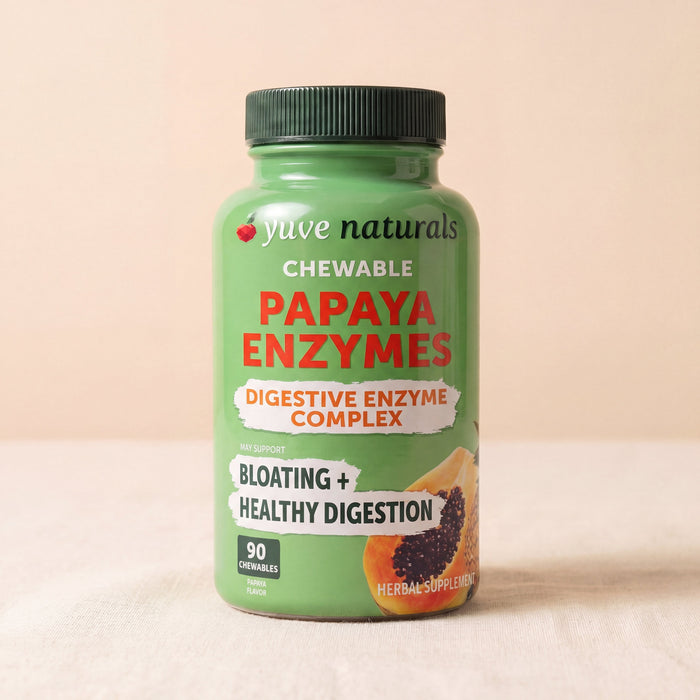
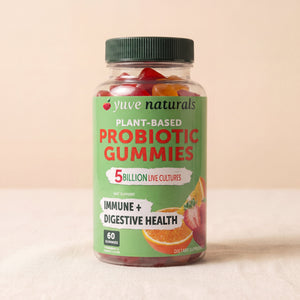
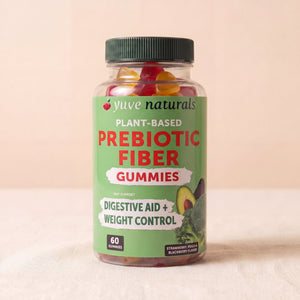
Yuve offers vegan probiotic gummies intended to support digestive health, along with prebiotic fiber gummies described as suitable for kids. Those products belong in a careful routine built around transparent ingredients, age guidance, and realistic expectations. They shouldn't be treated as a cure-all or as a replacement for a pediatric assessment.

Clean ingredients still need careful matching
A plant-based format may be appealing, especially when gelatin, allergens, or artificial colors are concerns. But parents should still check the named microorganisms, directions, serving size, storage information, and any age restrictions before offering a product.
The Yuve overview of vegan probiotic supplements can help families understand how a vegan product fits within a broader supplement routine. The important distinction remains the same: clean ingredients address formulation preferences, while strain-specific evidence addresses clinical suitability.
Yuve also emphasizes sustainability and support for families with autism as part of its wider mission. For parents, those values may matter when choosing a company, but they don't remove the need to ask whether a particular product fits a particular child.
Practical Tips and Quick Wins for Parents
A chewable works best alongside ordinary habits that support comfortable digestion. You don't need a perfect menu or a child who happily eats every vegetable in the produce aisle. Small, repeatable choices count.
Try this family-friendly checklist:
- Offer fiber gradually: Add fruits, vegetables, oats, beans, or whole grains in portions your child can manage.
- Pair unfamiliar foods with favorites: A new food beside a trusted food feels less threatening to a picky eater.
- Keep drinks visible: A refillable bottle can make hydration easier during school and activities.
- Use prebiotic foods naturally: Bananas, oats, onions, garlic, beans, and other fiber-rich foods can support the gut's overall environment.
- Protect calm mealtimes: Stress can make tummy sensations feel more intense, so slow down when the schedule allows.
- Track patterns briefly: Note foods, symptoms, bowel changes, and routines without turning meals into an investigation.
If your child has ongoing pain, worsening symptoms, poor growth, blood in the stool, or a complex medical history, contact the pediatrician rather than relying on supplements alone. Your child deserves an answer that addresses the cause, not only a product that promises general digestive support.
Visit Yuve to explore vegan probiotic and prebiotic options designed for approachable gut-health routines. Choose a product format your child can manage, read the strain and ingredient details carefully, and bring questions to your child's healthcare professional when symptoms or medical needs make the decision less straightforward.