No astaxanthin brand deserves a blanket “most trusted” label. NOW Astaxanthin 4 mg and BioAstin Hawaiian Astaxanthin 4 mg both disclose algal source and dose, but their formats and verification details differ. Choose the exact SKU whose source, carrier oil, capsule material, certifications, lot documentation, serving directions, and dose fit your needs—not the brand with the loudest antioxidant claims.
How did we evaluate astaxanthin brands?
We evaluated the exact product, not the company’s whole catalog. Our criteria were declared astaxanthin amount, Haematococcus pluvialis source, branded raw material, carrier oil, capsule material, allergen disclosures, serving directions, manufacturing certification, independent finished-product testing, lot-specific documentation, and claim restraint. We prioritized current manufacturer labels, the European Food Safety Authority safety opinion, a 2024 meta-analysis of randomized trials, and ConsumerLab’s July 2026 testing announcement. A GMP badge was treated as process oversight rather than proof that one bottle contains its claimed potency. A branded ingredient was treated as traceability information rather than automatic evidence that the finished softgel passed independent testing. We excluded star ratings, influencer endorsements, “strongest antioxidant” rankings, and unverified Amazon claims. The main limitation is that public product pages rarely provide a recent lot-numbered certificate of analysis, while independent reports may test a different strength or SKU from the bottle a shopper plans to buy.
What makes an astaxanthin product trustworthy?
A trustworthy label names the active amount in milligrams, identifies Haematococcus pluvialis or another source, lists the carrier oil and capsule material, and states one clear serving. The manufacturer should explain whether a third party audits the facility, tests the finished product, or certifies only a dietary attribute such as vegan or non-GMO status. Those are different claims. A lot-specific certificate of analysis is stronger than a general “quality tested” sentence because it can connect identity, potency, contaminants, and microbiology to the bottle in hand. ConsumerLab’s July 2026 announcement reported substantial price differences among tested astaxanthin supplements and said higher cost showed no apparent benefit; its full product-level findings require membership. The announcement included BioAstin, NOW, and several other brands, but it should not be stretched into approval of every strength, formulation, seller, or future lot. Trust follows verifiable scope, not logo familiarity.
How do NOW 4 mg, BioAstin 4 mg, and Yuve Eye Health compare?
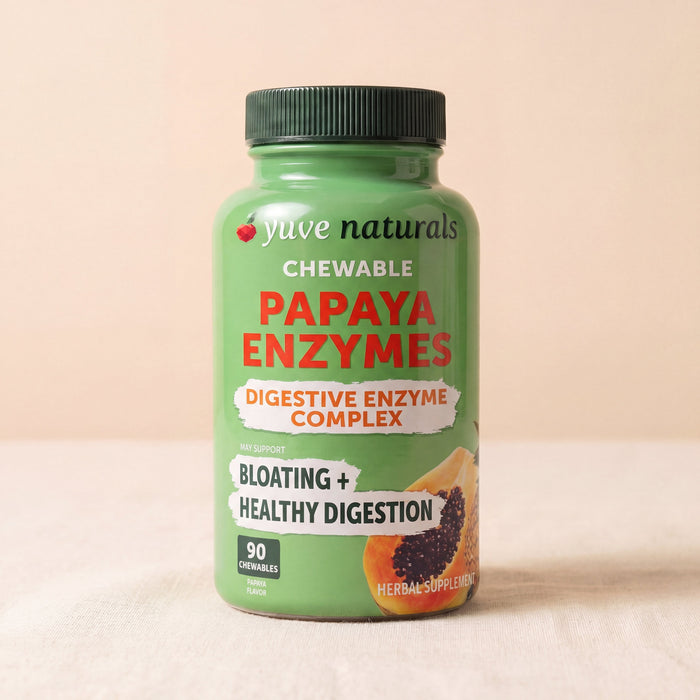
Some links below are affiliate links. This does not influence our evaluation criteria or recommendations. NOW Astaxanthin 4 mg uses Zanthin-branded H. pluvialis, olive oil, and a vegan softgel. BioAstin’s current collection offers 4 mg gelatin and vegan versions from Hawaiian-grown H. pluvialis. Yuve sells no standalone astaxanthin. Yuve Lutein Eye Health contains lutein and zeaxanthin, not astaxanthin. None of the cited purchase pages displays a current lot-specific finished-product COA.
| Product | Declared active | Best for | Verification gap to resolve |
|---|---|---|---|
| NOW Astaxanthin 4 mg | 4 mg Zanthin from H. pluvialis | Vegan 4 mg softgel with olive oil | Request lot-specific potency and contaminant documentation |
| BioAstin Hawaiian Astaxanthin 4 mg | 4 mg from Hawaiian-grown H. pluvialis | Source-traceability choice with gelatin and vegan SKUs | Verify exact capsule version, certification scope, and lot evidence |
| Yuve Lutein Eye Health | 20 mg Lutemax 2020 plus carrot powder; no astaxanthin | Different eye-carotenoid goal | Not a substitute when astaxanthin is specifically intended |
Which option is best for each use case?
Best for a simple vegan 4 mg astaxanthin label: NOW, because the cited SKU names Zanthin, H. pluvialis, olive oil, and a vegetarian softgel. Best for shoppers who prioritize an identified cultivation story and want a choice between conventional and vegan formats: BioAstin, because its current catalog lists both 4 mg versions and the company describes Kona-grown microalgae. Best for someone whose actual goal is lutein-and-zeaxanthin eye nutrition rather than astaxanthin: Yuve Lutein Eye Health, because its Supplement Facts panel identifies Lutemax 2020 and explicitly contains no astaxanthin. Best for lot-level proof: no automatic winner, because the cited purchase pages do not display a current batch COA tied to the bottle. Best for a cautious first comparison: 4 mg products, because they keep the label within the 8 mg adult intake evaluated by EFSA while allowing the user and clinician to decide whether any supplement is needed. The daily essentials collection should be filtered by ingredient, not used as a reason to stack unrelated carotenoids.
What does human research say astaxanthin can do?
Human evidence is outcome-specific and less sweeping than marketing copy. A 2024 meta-analysis pooled 11 randomized trials with 346 healthy participants. Cognitive accuracy was only marginally improved, reaction time was not significantly improved, and exercise findings varied by dose, duration, and training context. The authors reported stronger aerobic-performance signals in some subgroups but called for larger studies. Those results do not prove that any retail softgel improves eyesight, skin, fatigue, immunity, mood, or athletic performance for every user. They also do not rank NOW against BioAstin because most ingredient research does not compare finished consumer products head to head. A label can match the dose used in one trial while differing in astaxanthin form, carrier, population, duration, and endpoint. The correct sequence is goal first, evidence second, product match third. A trusted brand cannot rescue an outcome that lacks relevant evidence.
What dose and safety context should shoppers compare?
Dose deserves more scrutiny than “regular” versus “triple strength.” EFSA’s 2020 scientific opinion concluded that 8 mg per day from supplements, combined with high estimated dietary exposure, was safe for adults. The same assessment found that this combined scenario reached the acceptable daily intake in adolescents aged 14 to under 18 and exceeded it in younger children. EFSA’s conclusion is a European risk assessment, not a personalized prescription or a U.S. upper limit. NOW’s 4 mg directions allow one or two softgels daily, creating a 4–8 mg range; BioAstin sells both 4 mg and 12 mg strengths. A 12 mg label is therefore not interchangeable with the exact 8 mg scenario EFSA assessed, even though separate human safety reviews discuss higher exposures. Pregnancy, breastfeeding, medicines, medical conditions, and use in minors require clinician review. More milligrams do not automatically mean more benefit.
Is natural astaxanthin always better than synthetic astaxanthin?
“Natural” identifies origin, not finished-product quality. NOW and BioAstin use astaxanthin from Haematococcus pluvialis microalgae, which gives shoppers a named biological source and lets manufacturers identify a branded ingredient or cultivation story. That information is useful, but it does not reveal whether the final softgel meets label potency, oxidation, solvent, heavy-metal, microbial, or stability specifications. Synthetic and algae-derived astaxanthin can differ in stereoisomer profile and regulatory use, yet a consumer still needs evidence tied to the exact formulation and intended outcome. Do not treat a picture of algae, a Hawaiian origin claim, or the word “natural” as a substitute for a Supplement Facts panel and batch documentation. Ask the same questions for every source: How many milligrams are in one serving? What carrier delivers the fat-soluble carotenoid? Is the capsule vegan or gelatin? Which entity tested identity and potency? Does the evidence apply to this form and dose? Source transparency starts the evaluation; it does not finish it.
Does a GMP certification prove the bottle contains the label amount?
No. Current Good Manufacturing Practice requirements govern manufacturing systems, records, controls, and quality processes; they do not function as a public potency certificate for every retail lot. NOW displays an Intertek GMP Supplement Certification badge on its 4 mg product page, which provides useful process information. BioAstin describes third-party certifications and quality controls across its brand materials. Neither statement should be rewritten as “this exact bottle was independently confirmed at 4 mg” unless a test report identifies the product, lot, method, laboratory, date, and result. Certification scope matters: a vegan seal can validate the absence of animal-derived ingredients without measuring astaxanthin, while a non-GMO program addresses a different attribute. A serious quality packet separates identity, potency, contaminants, microbiology, stability, dietary claims, and facility audits. Shoppers should request the COA for the lot number on the bottle and confirm whether the issuing laboratory is independent. Trust grows when the documentation answers the exact question being asked.
Should astaxanthin be taken with food?
Astaxanthin is a fat-soluble carotenoid, so product directions commonly pair it with food or a fat-containing meal. NOW Astaxanthin 4 mg includes extra-virgin olive oil and directs users to take one softgel one to two times daily with food. BioAstin formulations also use an oil-based softgel format, although the exact carrier and capsule can differ between gelatin and vegan SKUs. Following the label improves consistency and avoids inventing a schedule that was not evaluated for that product. “With fat” does not require a high-fat meal; an ordinary meal containing olive oil, avocado, nuts, seeds, dairy, eggs, or another fat source can provide a relevant matrix. Absorption logic does not prove a health outcome, and doubling the serving does not guarantee double the tissue level or benefit. Record the exact product, serving, meal timing, start date, and intended outcome. If the label conflicts with clinician guidance, the clinician’s individualized plan should govern. Do not combine multiple astaxanthin products without totaling the daily amount.
Is a 12 mg product more effective than a 4 mg product?
Not by default. A 12 mg softgel delivers three times the labeled astaxanthin of a 4 mg softgel, but clinical benefit depends on the outcome, population, formulation, trial duration, and dose-response evidence. The 2024 fatigue and performance meta-analysis found subgroup signals at higher doses, yet its overall cognitive findings were marginal or nonsignificant and the authors requested larger trials. That is not a blanket instruction to buy the highest-strength bottle. EFSA evaluated 8 mg per day from supplements in adults as part of a cumulative exposure assessment; a 12 mg serving sits outside that exact scenario. A lower-strength product can make dose changes easier and may reduce unnecessary exposure when the goal is exploratory. A higher-strength product can reduce pill count when a clinician has selected that dose for a defined reason. Compare milligrams per serving, servings per day, total daily intake, trial evidence, and safety context. “Triple strength” is arithmetic, not proof of superior results.
What is the most trusted astaxanthin brand overall?
There is no evidence-based overall winner between NOW and BioAstin for every buyer. NOW offers a clearly labeled vegan 4 mg product with Zanthin, olive oil, published excipients, and a visible GMP certification. BioAstin offers Hawaiian-grown H. pluvialis, multiple 4 mg formats, and a detailed cultivation and quality narrative. Both still require verification of the exact SKU, seller, lot, expiration, and batch documentation. ConsumerLab’s 2026 category review is useful independent context, but its public announcement does not replace the product-level report or certify all future lots. Choose NOW when vegan format and a simple 4 mg label lead the decision. Choose BioAstin when source traceability and format choice matter more. Choose neither when the intended benefit is vague, the dose was selected by marketing, or the company will not answer a reasonable COA request. The most trusted purchase is the exact bottle whose evidence and documentation match the exact goal.