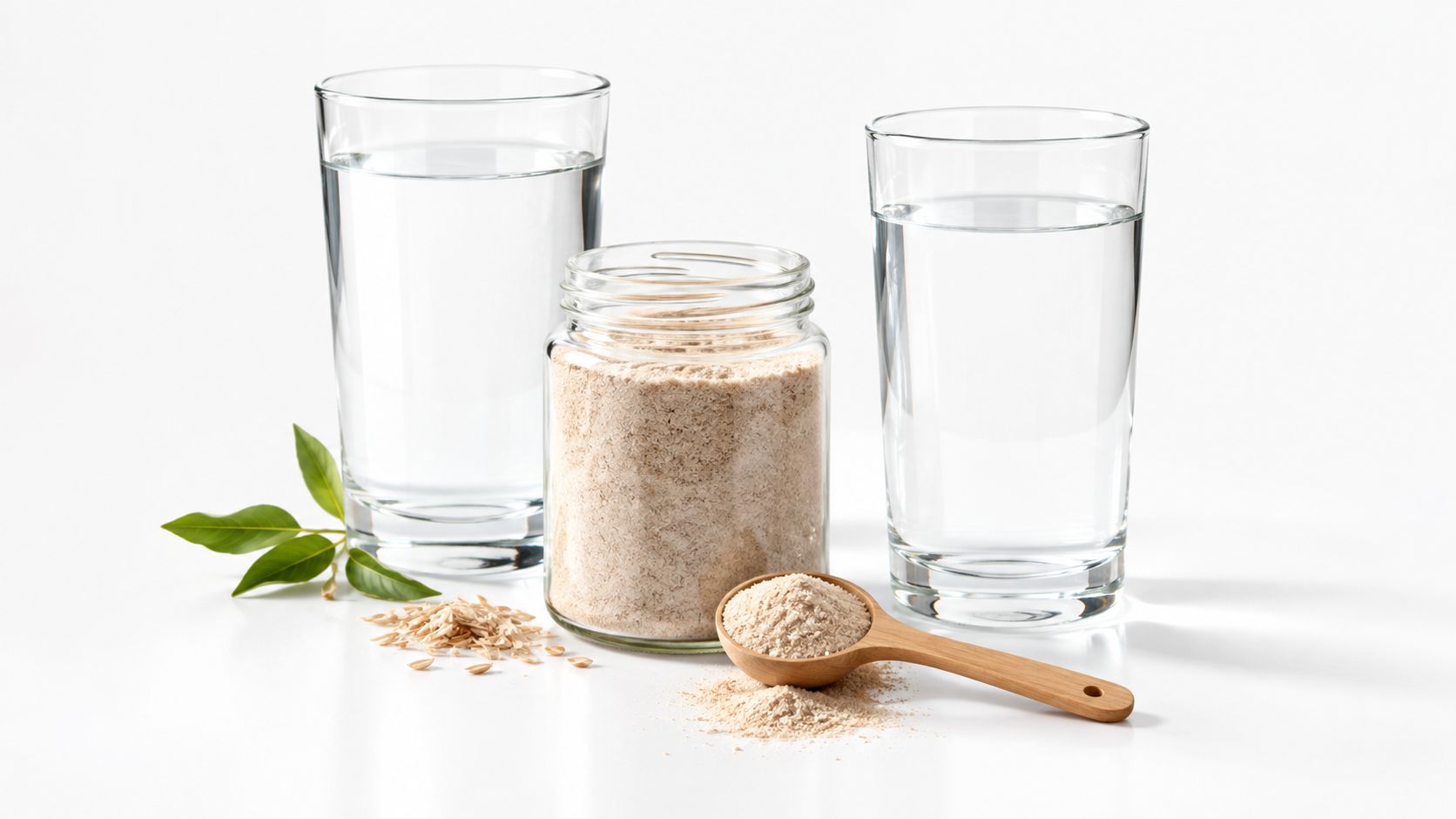
Whole psyllium husk must always be mixed with at least 8 fluid ounces of liquid and consumed promptly, because dry or under-hydrated psyllium can swell in the throat and cause choking. It usually takes 12 to 72 hours to produce its expected effect, so taking more won't make it work faster.
Ever feel like your stomach turns into a balloon by midafternoon, even when you thought you ate carefully? Bloating can leave you uncomfortable, frustrated, and wary of every meal.
Whole psyllium husk can be a useful tool, but it isn't a magic powder and it isn't automatically safe for everyone just because it comes from a plant. Its gel-forming action explains both its benefits and its risks. Used thoughtfully, it can support stool consistency, regularity, cholesterol management, and steadier digestion. Used dry, rushed, or alongside certain medicines, it can create real problems.
Why Your Stomach Feels Like a Balloon and What Actually Helps
By three o'clock, your waistband may feel tighter, your abdomen may feel stretched, and you may be replaying breakfast in your head. Was it the oats? The salad? The snack you thought was harmless? Sometimes bloating reflects what you ate, but it can also reflect how food and stool move through your stomach and intestines, how much water your digestive tract has available, and how quickly you increased your fiber intake.
That's where whole psyllium husk can fit. Psyllium is the seed coat of Plantago ovata, and its soluble fiber absorbs liquid to form a viscous gel. That gel can add moisture and structure to stool rather than acting like a harsh stimulant laxative. It may be especially useful when your symptoms involve occasional constipation or inconsistent stool texture, although no single fiber works for every person.
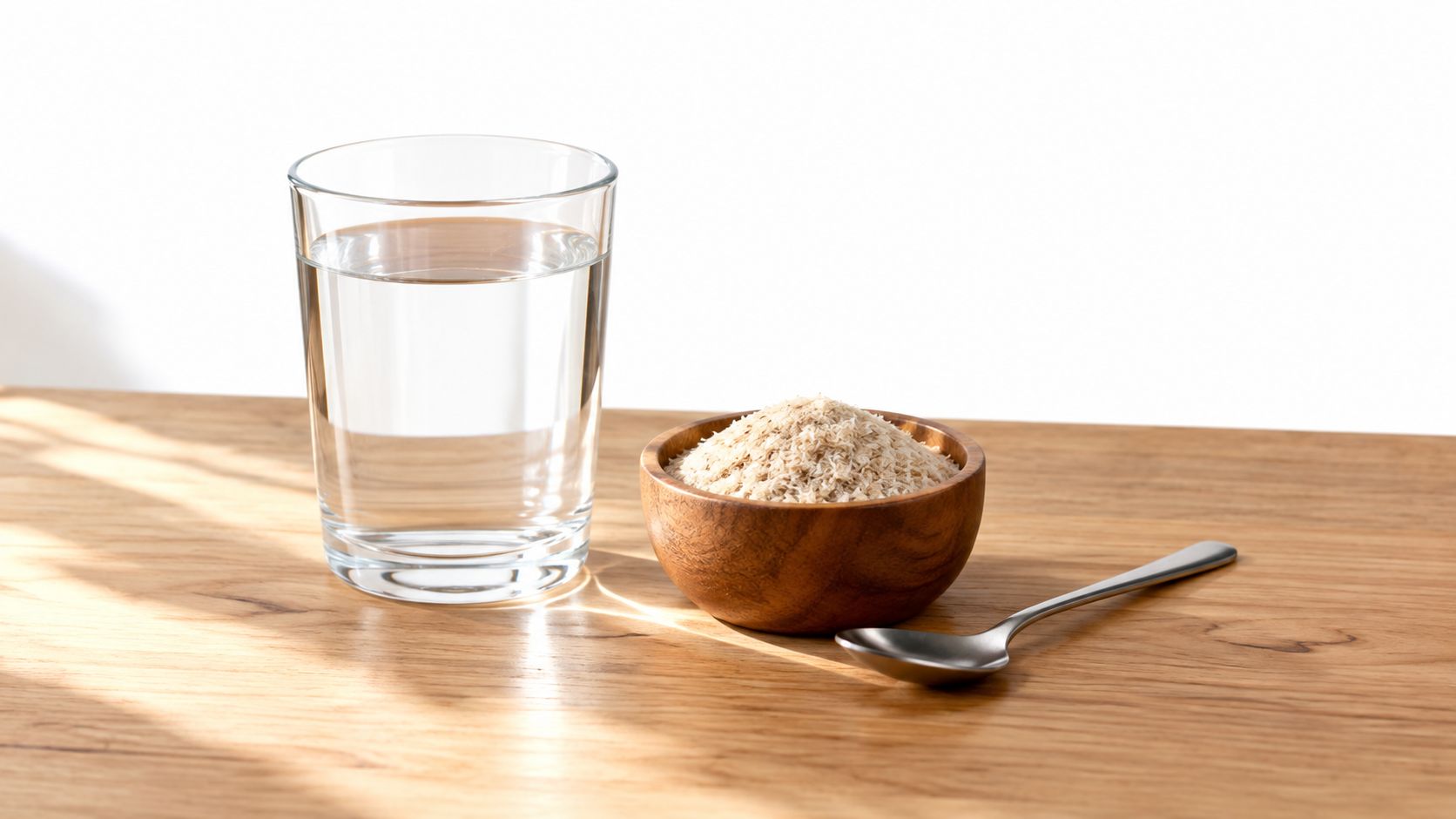
Before you try it, remember the rule that matters most: mix it with at least 8 ounces of liquid, stir, and drink it promptly. Product labeling warns that inadequate liquid can allow psyllium to swell in the throat or esophagus, increasing the risk of choking. People who have difficulty swallowing shouldn't use it without medical guidance. You can find more practical ideas in this guide to natural remedies for bloating, but hydration remains the essential starting point.
A small change can feel very different
If you've tried everything for bloating, you may be tempted to add a large amount of fiber all at once. I don't recommend that. A sudden increase can bring gas, fullness, or cramping, especially if your usual diet is low in fiber or your gut is already sensitive.
Start with the product's directions, use enough liquid, and give your body time to respond. Psyllium isn't an instant rescue for a painful afternoon, and worsening abdominal symptoms deserve attention rather than another scoop. If you're dealing with unexplained pain, persistent vomiting, inability to pass stool or gas, or swelling that keeps returning, speak with a healthcare professional.
What Whole Psyllium Husk Actually Does Inside Your Digestive System
Once whole psyllium husk meets water, it behaves less like a loose powder and more like a water-retaining matrix. Its fiber has an approximately 70:30 soluble-to-insoluble balance. The soluble portion forms the gel, while the insoluble portion adds physical bulk. The same review reports that 2 grams of psyllium dispersed in 100 grams of water produced a viscosity of 48.40 Pa·s. Oat bran measured 1.36 Pa·s, wheat bran 0.51 Pa·s, and rice bran 0.10 Pa·s in the comparison (PMC review).
In practical terms, psyllium produces a much thicker, slower-moving gel than these common brans. That difference can change how a serving feels in your glass and how the mixture moves through your digestive tract.

Why viscosity changes the experience
The gel can retain water in stool and influence how quickly nutrients move through the digestive tract. It can also slow carbohydrate diffusion and help bind and remove bile acids. These actions help explain why psyllium has been studied for bowel regularity, cholesterol, and blood glucose. They also explain the hydration-to-obstruction safety gap: a fiber that thickens strongly needs enough liquid to move safely.
Bran sprinkled over food mainly adds bulk. Psyllium changes the texture and movement of the surrounding mixture, much like turning a thin liquid into a thicker gel. The relevant feature is fiber with strong hydration and thickening behavior, not just a larger amount of fiber.
Whole husk flakes and psyllium powder come from the same plant material, but they do not act identically in a glass. Whole husk generally hydrates more gradually and feels coarser. Powder mixes and thickens faster, leaving less time between stirring and drinking. Neither form removes the need for adequate liquid. This guide to psyllium fiber powder explains the practical difference between the forms.
Practical rule: If the drink becomes difficult to swallow before you finish it, it has thickened too much for that serving. Prepare a fresh mixture according to the label rather than forcing it down.
Digestive symptoms can have several contributors. For context on how another substance may affect regularity, see this overview of cannabis and bowel habits. Fiber may be part of the picture, but it cannot explain every bout of bloating or constipation.
How to Use Whole Psyllium Husk Safely and Effectively
The best psyllium routine is boringly consistent. You don't need to chase a dramatic effect, and you shouldn't copy a high amount from a research paper without considering the product label, your health history, and your fluid intake.
Start with the label
Official U.S. product labeling instructs adults and children aged 12 and older to mix 1 rounded teaspoon with at least 8 fluid ounces of water or another liquid. The labeled dose may be taken up to three times daily, and the expected effect generally occurs within 12 to 72 hours (DailyMed labeling).
Use that timing to set expectations:
- Measure the instructed amount. Don't heap extra fiber into the spoon because you want faster relief.
- Add at least a full glass of liquid. Water is the simplest choice, though the product label may allow another liquid.
- Stir thoroughly. Psyllium starts thickening soon after it contacts water.
- Drink promptly. Don't leave the mixture sitting until it becomes a dense gel.
- Continue your normal fluid intake. One glass at mixing time doesn't replace fluids throughout the day.
- Wait for the expected window. More psyllium isn't a shortcut around the 12-to-72-hour response period.
Make the adjustment gentler
Bloating and gas can occur when you increase fiber abruptly. If that happens, reduce the amount temporarily and let your digestive system adjust before considering a gradual increase. Don't push through worsening pain, trouble swallowing, repeated vomiting, or signs that stool and gas aren't moving.
Whole husk may suit you if you prefer a slower, more textured drink. Powder may be easier to blend into a smoothie or recipe, but it can thicken rapidly. Choose the form you can use correctly, because a theoretically convenient form becomes inconvenient if you can't drink it promptly.
A useful mindset: Psyllium works through patience and preparation, not force. The goal is a tolerable routine, not the biggest dose you can manage.
People often group fiber, probiotics, and other supplements under the broad term “nutraceuticals.” If you're comparing those categories, this guide to nutraceuticals in Aurora provides broader background. For more gut-focused context, explore this resource on a fiber supplement for gut health.
The Safety Details Most Articles Skip Over
“Plant-based” describes an origin. It doesn't guarantee that an ingredient is appropriate for every body, every dose, or every medication schedule. Psyllium's ability to swell and form a gel is useful in the digestive tract, but that same property can be dangerous if the material is swallowed with too little liquid.
Product labeling warns that insufficient fluid can cause psyllium to swell and block the throat or esophagus. People with difficulty swallowing are specifically told not to use it. A dry spoonful, a rushed sip, or a thick drink left sitting too long isn't a harmless shortcut.
Medicines need their own plan
Psyllium may delay or reduce absorption of some oral medicines. This matters particularly if you take levothyroxine, lithium, carbamazepine, warfarin, glucose-lowering medication, or several daily prescriptions.
Practical timing guidance commonly recommends taking medicine at least one hour before or four hours after psyllium, but your prescriber or pharmacist should confirm the plan for your specific medicines. Don't guess with drugs that require reliable absorption or close monitoring.
A simple routine might look like this:
- Morning medicine first: Take the medicine according to its prescribed instructions, then ask your pharmacist when psyllium can follow.
- Separate the fiber: Keep psyllium away from medicines when the label or clinician recommends a separation window.
- Track changes: If your glucose readings, thyroid symptoms, bleeding-related monitoring, or other medication effects change, contact your healthcare team.
- Bring the label: Show your clinician the exact psyllium product and serving directions.
Some people need professional advice first
Speak with a clinician before using psyllium regularly if you're pregnant, caring for a child, an older adult with swallowing concerns, or someone with bowel narrowing, a history of obstruction, or unexplained abdominal symptoms. Children shouldn't automatically receive an adult serving.
Stop and seek medical care for trouble breathing or swallowing, chest pain after taking the product, severe or persistent abdominal pain, repeated vomiting, or inability to pass stool or gas. These symptoms are not a signal to add more fiber.
Safety comes before regularity. A supplement that helps one person feel more comfortable can be the wrong choice for someone with swallowing difficulty, bowel narrowing, or a complicated medication schedule.
Where Your Psyllium Comes From and Why It Matters
Whole psyllium husk is the seed coat of Plantago ovata. Its commercial supply is closely linked to India, especially North Gujarat, where farmers grow it as a post-rainy-season, or rabi, crop from October through March. Rajasthan also has a long history of psyllium production and exports, as described in this agronomic background.
The crop completes its production cycle in approximately 119 to 130 days. Dry, sunny weather before harvest helps because excess moisture can complicate drying and later processing. After the plants mature, workers cut and dry them, then thresh and winnow the material to separate the seed from its husk.
A concentrated crop needs transparent handling
Historical agronomic data report average Indian seed yields often exceeding 1,000 pounds per acre. Milling has produced approximately 250 pounds of husk at 95% purity per acre. The same historical figures indicate that around 75% of Gujarat's psyllium production and 90% of Rajasthan's production was exported, with about 93% of those exports consisting of husk rather than whole seed.
These figures help explain why sourcing and processing deserve attention. A concentrated supply chain makes clear handling practices more important. A vegan or non-GMO label describes part of the product category, but it does not answer every quality question.
Before buying, ask whether the vendor can explain:
- Country and region of origin: Can it identify where the crop was grown?
- Processing controls: How are drying, milling, and storage managed?
- Purity testing: Is the finished husk tested for identity and purity?
- Contaminant screening: Are batches screened for relevant contaminants?
- Consistency markers: Are particle size, hydration time, and viscosity monitored?
For daily use, these details affect how the ingredient performs in your glass and in your routine. Particle size can change how quickly the husk hydrates. Purity and contaminant controls provide greater confidence in what you consume. Traceability also gives you a clearer route to answers if a batch looks, smells, or behaves differently. A reputable product should make those answers easier to obtain, not leave you guessing.
Building a Daily Gut-Health Routine with Yuve
Psyllium can be one part of a broader gut-health routine, but it shouldn't carry the entire burden. A steady pattern of meals, adequate fluids, tolerable fiber sources, movement, and medical guidance when symptoms persist gives your digestive system more support than a dramatic supplement experiment.
That broader view also matters if bloating is your main complaint. Some people need help with constipation, while others react to specific foods, eat quickly, or increase fiber faster than their gut can tolerate. A probiotic or prebiotic product may complement a fiber routine, but it doesn't replace the hydration and medication precautions that come with whole psyllium husk.
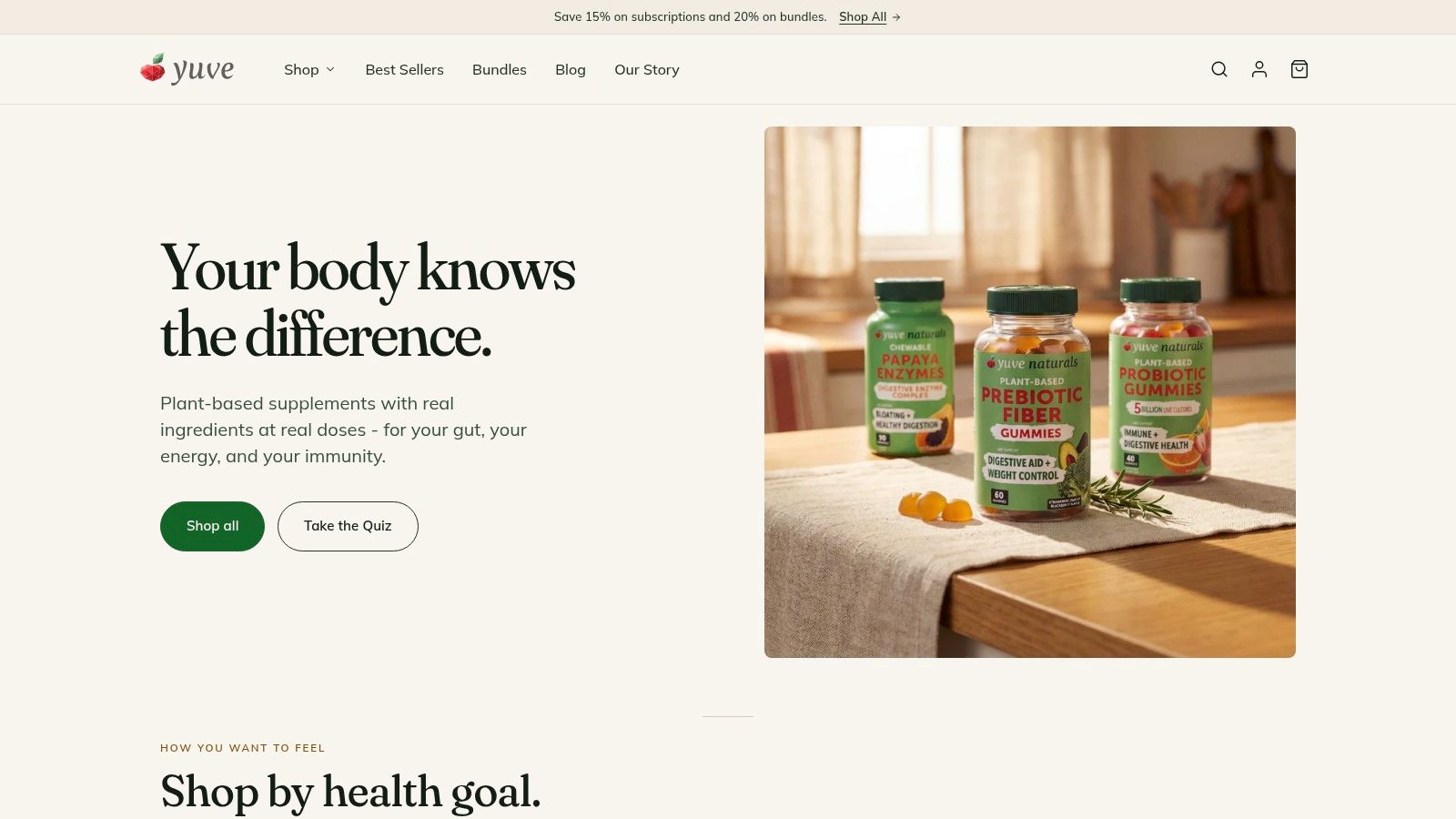
A practical routine might be simple: use psyllium only as directed, keep a consistent meal pattern, and introduce other gut-health products one at a time so you can notice how your body responds. If you're exploring the relationship between digestion and overall wellbeing, this discussion of gut health and mental health offers broader context.
Small habits are easier to evaluate than a cabinet full of new products. Keep notes on the form you use, the amount, fluid intake, stool changes, bloating, and medicine timing. Share that record with a clinician if symptoms continue or become more disruptive.
Your Whole Psyllium Husk Quick-Start Checklist
Use this checklist before your first serving and whenever you change your routine:
- Mix safely: Use at least 8 fluid ounces of liquid, stir well, and drink promptly.
- Respect timing: Expect the labeled effect within 12 to 72 hours, not immediately.
- Start calmly: Follow the product directions and reduce the amount temporarily if gas or bloating develops.
- Separate medicines: Ask a pharmacist about timing, especially with levothyroxine, lithium, carbamazepine, warfarin, or glucose-lowering medicines.
- Check the supplier: Look for origin information, purity testing, contaminant screening, and batch consistency details.
- Know the stop signs: Get medical advice for trouble swallowing, severe abdominal pain, repeated vomiting, or inability to pass stool or gas.
- Ask before sharing: Children, pregnant people, older adults with swallowing concerns, and anyone with bowel narrowing should get individualized guidance.
Whole psyllium husk can be effective when you treat it like a functional ingredient with real hydration, timing, and quality requirements. It deserves respect, not fear, and it should support a plan that fits your body rather than replace one.
Yuve offers plant-based gut-health supplements designed to complement thoughtful routines around digestion, regularity, and daily wellbeing. Explore the Yuve range, then choose your next step with the same care you bring to hydration, medication timing, and ingredient quality.