You can switch to dairy-free and still end up with the same old question staring back at you from the fridge, does this help my gut, or is it just a cultured-looking snack? That's the frustrating part of vegan probiotic yogurt, it can sound functional, taste decent, and still leave you guessing about what's really alive in the cup.
The difference between fermented and clinically effective matters more than most labels admit. If you've been trying to calm bloating, choose better snacks, or support gut health without dairy, the win is learning how to spot products that still carry viable cultures by the time you eat them.
Why Sam Swapped Dairy and What He Learned
Sam didn't give up dairy because it was trendy. He was tired of that heavy, tight feeling after breakfast, the kind that makes you unbutton your jeans before noon and wonder if your stomach has a personal grudge. So he tried dairy-free yogurt, expecting an easy fix.
Instead, he found a strange middle ground. Some cups were pleasant enough, but they didn't feel like much more than a quiet snack, not a meaningful gut-supporting food. That's where a lot of shoppers get stuck, because vegan probiotic yogurt can look like a solution while still missing the essential part.

The label can sound better than the cup performs
A yogurt can be plant-based, fermented, and still not deliver a useful live-culture dose at the time you eat it. That's why the question isn't just whether it says vegan, probiotic, or cultured, but whether it gives you strain names, viable counts, storage guidance, and a shelf-life expectation. Research on plant-based fermented milks points to a practical end-of-shelf-life target of roughly 6 to 7 log CFU/g, which is about 1 million to 10 million viable cells per gram (Wiley study on plant-based yogurt viability).
Sam's mistake was assuming the word fermented meant the same thing as functionally probiotic. It doesn't. Fermentation can improve taste and texture, but that alone doesn't prove the cultures survive in meaningful numbers.
Practical rule: if the package won't tell you what strain is inside and how many live cells remain, treat the probiotic claim as incomplete.
That's why a shopper's job is to dig deeper than the front of the tub. If you want a helpful primer on why cultures and prebiotics get talked about together, the guide on natural probiotics and prebiotics is a solid companion read.
What Makes Vegan Probiotic Yogurt Work
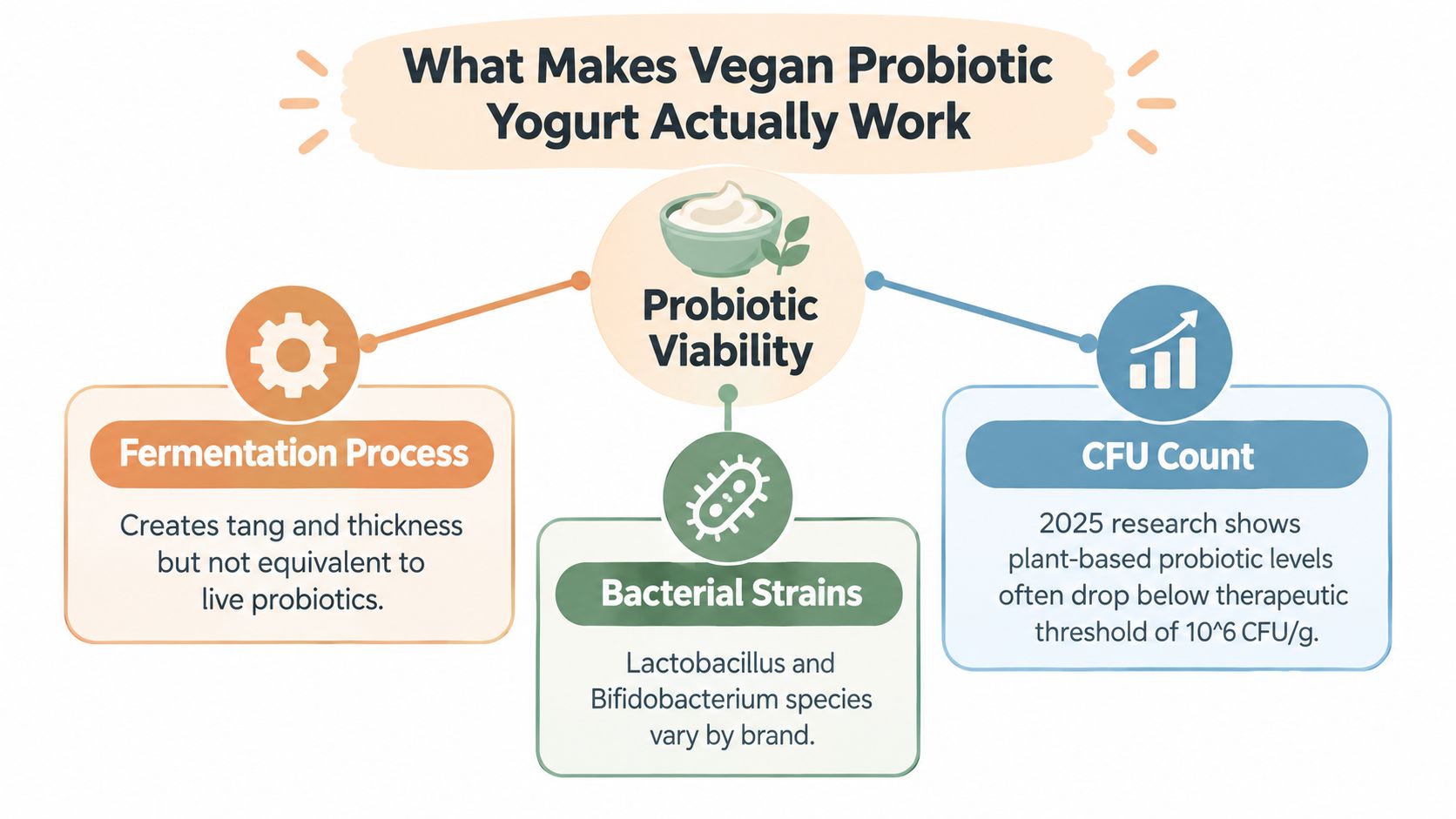
The science is pretty unromantic, and that is what makes it useful. Fermentation creates tang and thickness, but it does not guarantee that the microbes stay alive through storage, refrigeration, or digestion. A vegan yogurt only earns its probiotic reputation if the strains survive long enough to matter.
Survival is the whole game
A 2025 review of plant-based beverages found that probiotic levels often fall to around 10^6 to 10^7 CFU/mL during storage, while many dairy yogurts are reported at roughly 10^8 to 10^9 CFU/mL (PMC review). For shoppers, the practical takeaway is simple. Lower buffering capacity, plant compounds, acidity, oxygen exposure, refrigeration, and storage time can all chip away at viability.
That same review points to a useful way manufacturers can protect cultures. Microencapsulation helped cells hold up in a soy-almond yogurt, where encapsulated cultures reached 6.41 log CFU/g after 30 days and performed better under simulated stomach conditions than free cells. You do not need the lab jargon to use the lesson. Formulation technology can matter as much as the strain list.
What this means for you: a pretty front label does not tell you whether the cultures are still alive at the spoonful stage.
A sensible supplement strategy can help you compare options without assuming every food label is enough. If you want a broader look at digestive supports, the Maximum Health Products supplement guide is a useful companion read. For added context on why cultures and prebiotics get discussed together, the natural probiotics and prebiotics primer is worth a look.
The FDA benchmark gives you a reality check
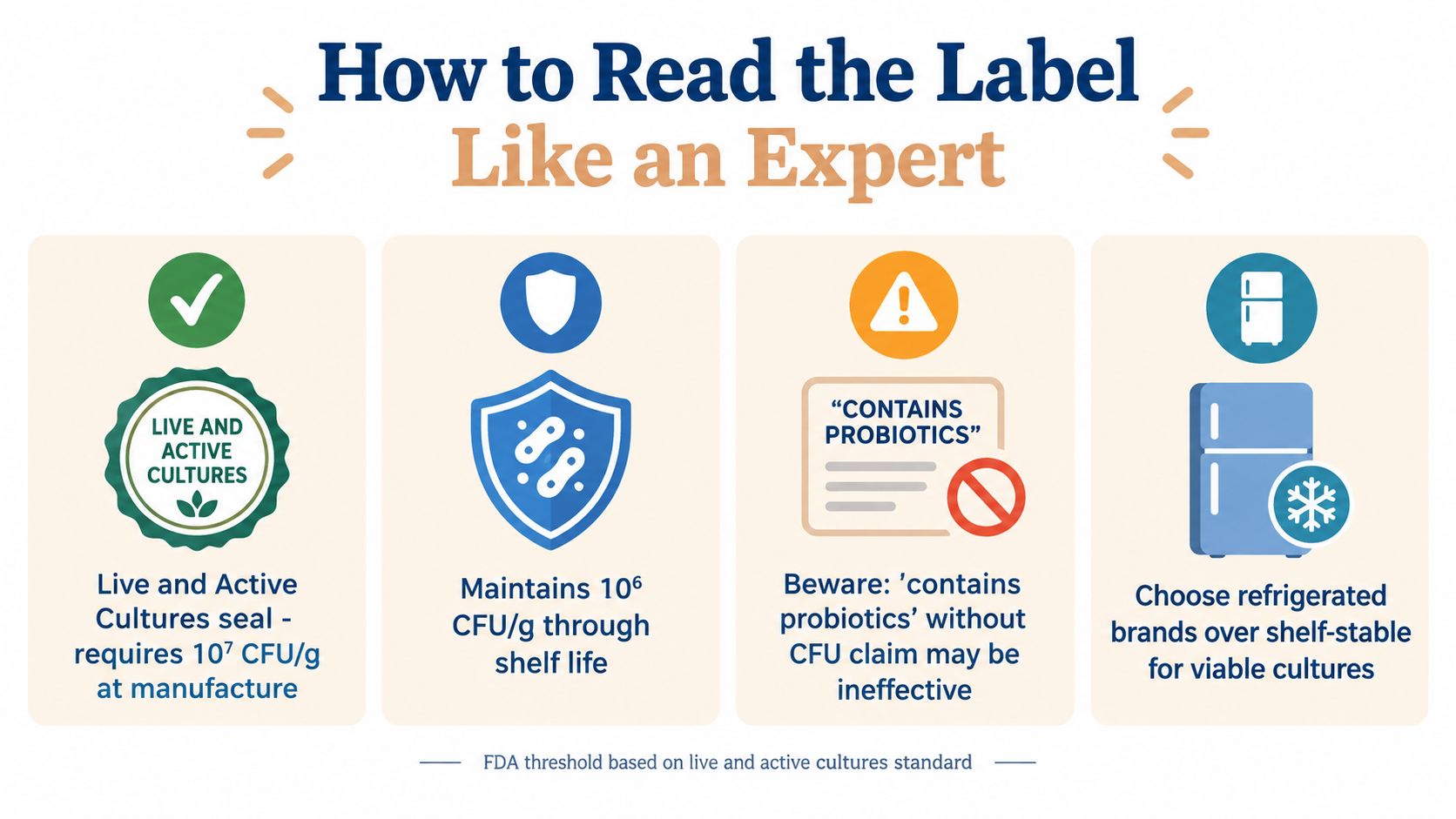
U.S. yogurt labeling gives a clear reference point, even though vegan yogurt is not dairy yogurt. Under the FDA standard, products labeled “contains live and active cultures” must contain at least 10^7 CFU/g at manufacture and reasonably retain at least 10^6 CFU/g throughout shelf life. If a product is heat-treated after fermentation so the microbes are no longer active, the label must say it does not contain live and active cultures.
That benchmark separates marketing language from measurable culture survival. It gives shoppers a practical filter for a vegan option that behaves like a legitimate live-culture food, not just a tangy plant-based substitute.
Soy, Oat, Coconut, or Bean Which Base Wins for Your Gut
There isn't one best base for everyone, because the base changes protein, mouthfeel, and how well cultures tend to hold up. If you care most about gut health plus nutrition, the base deserves as much attention as the probiotic strain.
Compare the trade-offs, not just the flavor
Soy is the most straightforward all-rounder. One analysis of plant-based yogurt-like products found soy yogurt was the only type with protein comparable to dairy yogurt, at about 4.6 grams per 100-gram serving (Everyday Health summary). It also tends to support more stable culturing than thinner, lower-protein bases.
Coconut is usually the creamiest. That texture can be lovely, but creaminess doesn't equal protein, and low-protein options may leave you hungry again sooner.
Oat is often gentle and familiar-tasting. It can work well for people with sensitive stomachs, but some oat-based products may dilute the probiotic upside if the formula leans too far into starch and away from a supportive culture environment.
Bean bases are the interesting newcomer. A 2026 study of common bean yogurts reported high lactic-acid-bacteria viability throughout 28 days of refrigeration (PMC bean yogurt study). That makes legumes worth watching if you want a plant base with more staying power.
| Vegan Yogurt Bases Compared | Protein per 100g | Probiotic Viability | Best For |
|---|---|---|---|
| Soy | About 4.6 g | Often supportive of stable culturing | Higher protein, more filling bowls |
| Oat | Varies by brand | Can be gentler, but stability depends on formulation | Mild taste, easy everyday use |
| Coconut | Usually lower than soy | Can work, but nutrient support is less consistent | Creamy texture and dessert-style cups |
| Bean | Varies by bean type | Promising, with strong viability in newer research | People wanting a newer high-potential plant base |
The smartest move is to separate best for probiotics from best for nutrition. If you want a more filling bowl, soy usually gives you a better shot. If you want creaminess, coconut may win. If you want to experiment with emerging options, bean-based yogurts are worth a look.
How to Read the Label Like an Expert
The front of the carton is built to sell. The back panel is where you find whether the product is worth buying. If you want a yogurt that earns the probiotic label, read for viability, not marketing language.
Start with the FDA benchmark
In the United States, yogurt labeled contains live and active cultures must contain at least 10^7 CFU/g when manufactured and reasonably expect to retain at least 10^6 CFU/g through shelf life. That gives you a concrete yardstick instead of a vague wellness promise.
The gap shoppers miss is simple. “Contains probiotics” is not the same as a verified live-culture guarantee. A product can be fermented and still be vague about strain identity or count by the time you eat it. If the package does not name the organism, does not state a count, and does not explain storage conditions, the claim is thin.
Read for these signals
- Named strains: Look for specific organisms, not just a broad culture claim.
- CFU at end of shelf life: That matters more than a number that only applies at manufacturing.
- Refrigeration: Chilled products are often easier to verify for live cultures than shelf-stable ones.
- Heat treatment warning: If the product was heat-treated after fermentation, live cultures may no longer be present.
A quick check is to scan the package as if you were auditing it for honesty. If the yogurt cannot tell you what is alive, how much is alive, and how long that is expected to last, you do not have much to go on. You have a marketing claim, not much more.
For a deeper consumer checklist on choosing better probiotic products, the guide on what to look for when buying probiotics is worth saving.
Keep the label simple in your head, name, number, storage, shelf-life expectation. If one of those is missing, be skeptical.
Store-Bought Convenience Versus Homemade Control
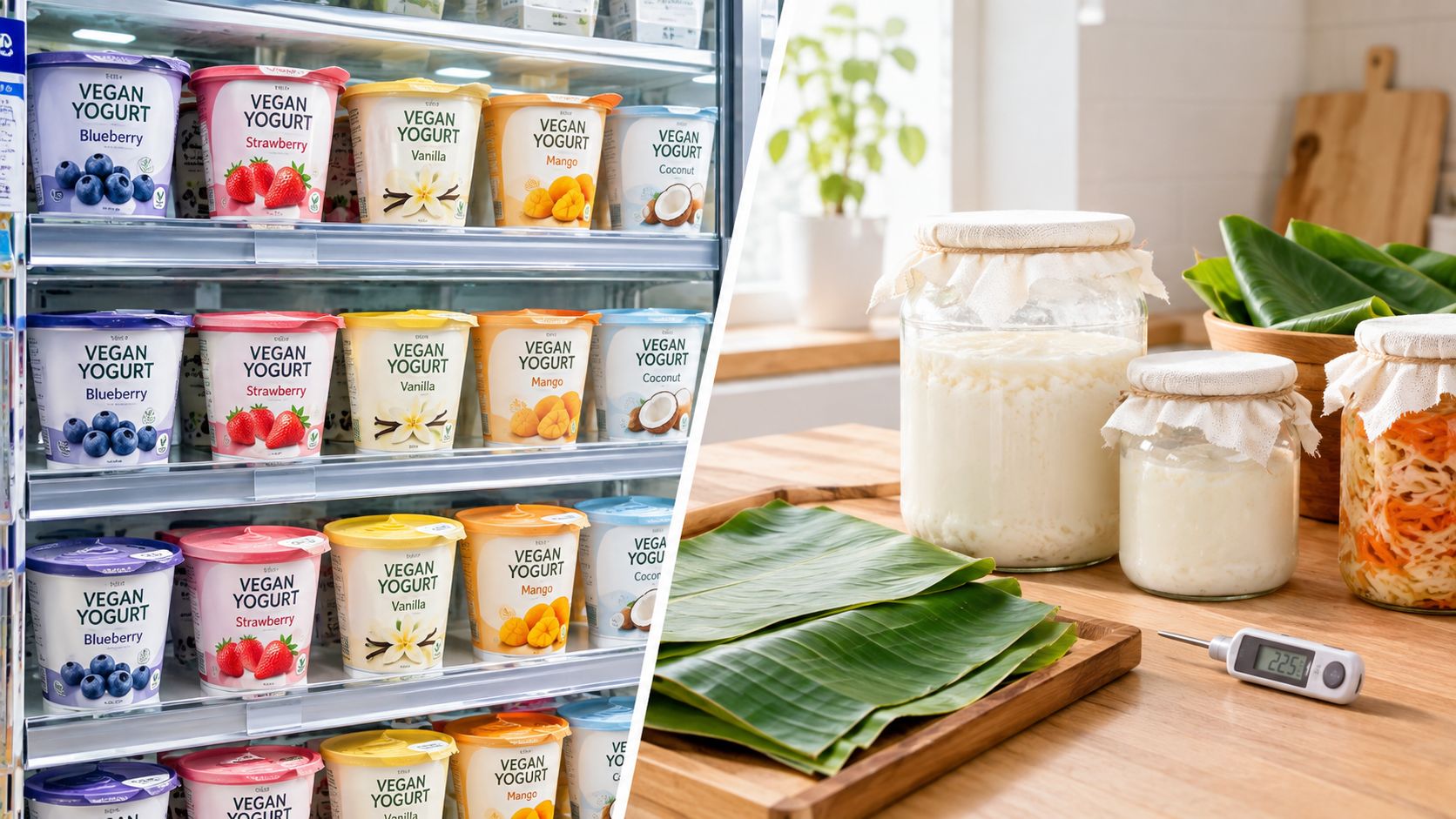
Store-bought vegan yogurt is the easy path. You grab it, chill it, eat it, done. The trade-off is that quality swings a lot, so the best tubs are the ones that make their culture story visible, especially if they list strains clearly and keep the product refrigerated.
Homemade yogurt gives you more control over the base and the culturing process. That control is appealing, but it doesn't magically solve viability, because starter choice, temperature, cleanliness, and time still affect the final culture count. If you've ever made a batch that turned out pleasantly tangy but inconsistent, you already know this dance.
The practical compromise is consistency
Store-bought works when you can verify the label. Homemade works when you enjoy the process and don't mind variation. The problem is that neither path guarantees your body gets the same dose every time, which is why many people pair food choices with a dependable daily digestive routine.
Good gut-health habits are boring in the best way, they repeat well.
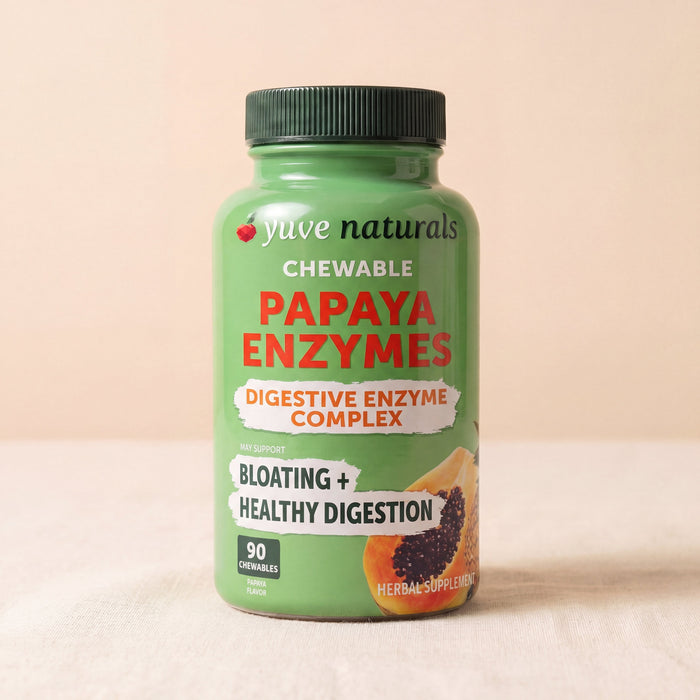
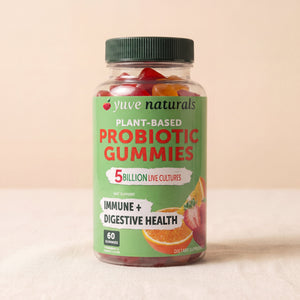
That's also why some readers keep a vegan probiotic supplement in the mix as a steady backup on days when yogurt doesn't happen, the brand changes, or the carton's label is too vague to trust. Food is still food, but reliability matters when you're trying to support digestion consistently.
If your gut is sensitive, consistency beats novelty every time. A predictable daily routine can be more helpful than bouncing between products that all look probiotic on the shelf but behave differently in real life.
Who Should Make Vegan Probiotic Yogurt a Staple
Vegans and vegetarians should pay close attention to the base, because soy and bean options can better support protein intake while still fitting a dairy-free pattern. Parents can use higher-protein options as more filling snacks, especially when they want something that feels a little more purposeful than a sweet cup of fruit-flavored air.
People focused on digestive comfort benefit most when they choose products with named strains and realistic culture claims. Eco-conscious shoppers get another upside too, because plant-based foods can fit a lower-animal-product lifestyle without giving up the yogurt ritual.
Gut health isn't a switch you flip, it's a pattern you build. The smartest version combines better food choices with dependable support, so you're not left guessing every time you open the fridge.
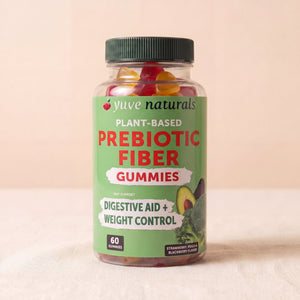
If you want a simpler way to support digestion without second-guessing every yogurt label, visit Yuve and explore the products built for plant-based gut support. You'll find practical options that fit real routines, so you can keep moving toward better digestion with less trial and error.