You've added more beans, switched to oats, and tried to eat for your gut. So why does your stomach feel tighter by evening instead of more comfortable?
Prebiotic fiber benefits are real, but they aren't automatic. The ingredient, amount, and your own digestive tolerance matter. Understanding those differences can help you build a plant-based routine that supports your gut without turning every meal into a bloating experiment.
What Prebiotic Fiber Is and Why It Matters
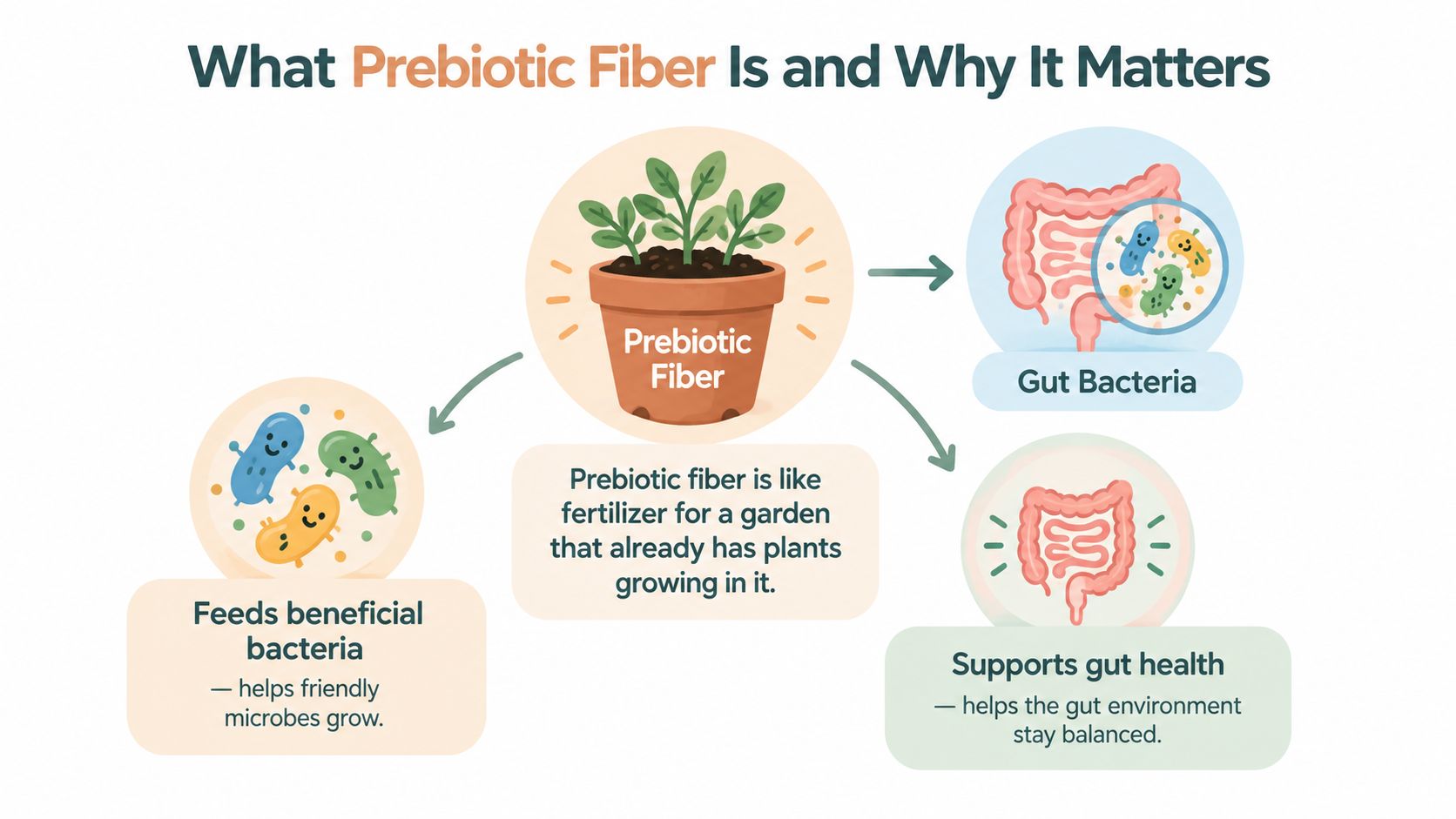
Think of prebiotic fiber as fertilizer for a garden that already has plants growing in it. Your gut bacteria are already there. A suitable prebiotic provides food that certain microbes can use, rather than adding new bacteria.
That's the simplest distinction between prebiotics and probiotics. Probiotics are live microbes you consume for a health benefit; prebiotics are substances that support microorganisms already present. The similar names make them easy to confuse, but they aren't interchangeable.
The garden comparison helps make that relationship visible.
What makes a fiber genuinely prebiotic
In 2017, the International Scientific Association for Probiotics and Prebiotics defined a prebiotic as “a substrate that is selectively utilized by host microorganisms conferring a health benefit,” according to its consensus statement on the definition and scope of prebiotics.
That definition has several important parts:
- Something you consume: In this context, it's a dietary substance that reaches microorganisms in your gut.
- Selective microbial use: Particular microorganisms can use it. Being undigested isn't enough.
- A demonstrated benefit: Researchers need evidence that the interaction benefits the person, not just evidence that bacteria changed.
For consumers, that last point matters most. A product can change the microbiome without necessarily improving comfort, bowel habits, or another meaningful health outcome.
Why ordinary fiber still matters
Prebiotic fiber is a subset of dietary fiber, not another name for all fiber. Other fibers can still have useful effects, including helping stool move through the bowel, without meeting the prebiotic definition.
I wouldn't dismiss a food because its fiber isn't labeled prebiotic. Nor would I assume a supplement is effective just because the packaging uses that word. The practical question is whether evidence supports the particular ingredient for the outcome you want.
Label-reading rule: Look beyond “prebiotic” to the named fiber, the amount provided, and the benefit supported by human research.
Think of the label as a starting point, not a verdict. A clear ingredient name gives you something concrete to evaluate. A broad promise about “microbiome balance” doesn't tell you whether the product has been studied for regularity, fullness, or digestive comfort.
How Prebiotic Fiber Feeds Your Gut Bacteria
The journey starts with what your body doesn't digest. Fibers such as inulin, resistant starch, pectin, gums, and fructooligosaccharides can reach the colon, where gut microbes break them down through fermentation, as explained in Harvard Health's guide to feeding your gut.
These ingredients show up in familiar foods, not just supplement containers.
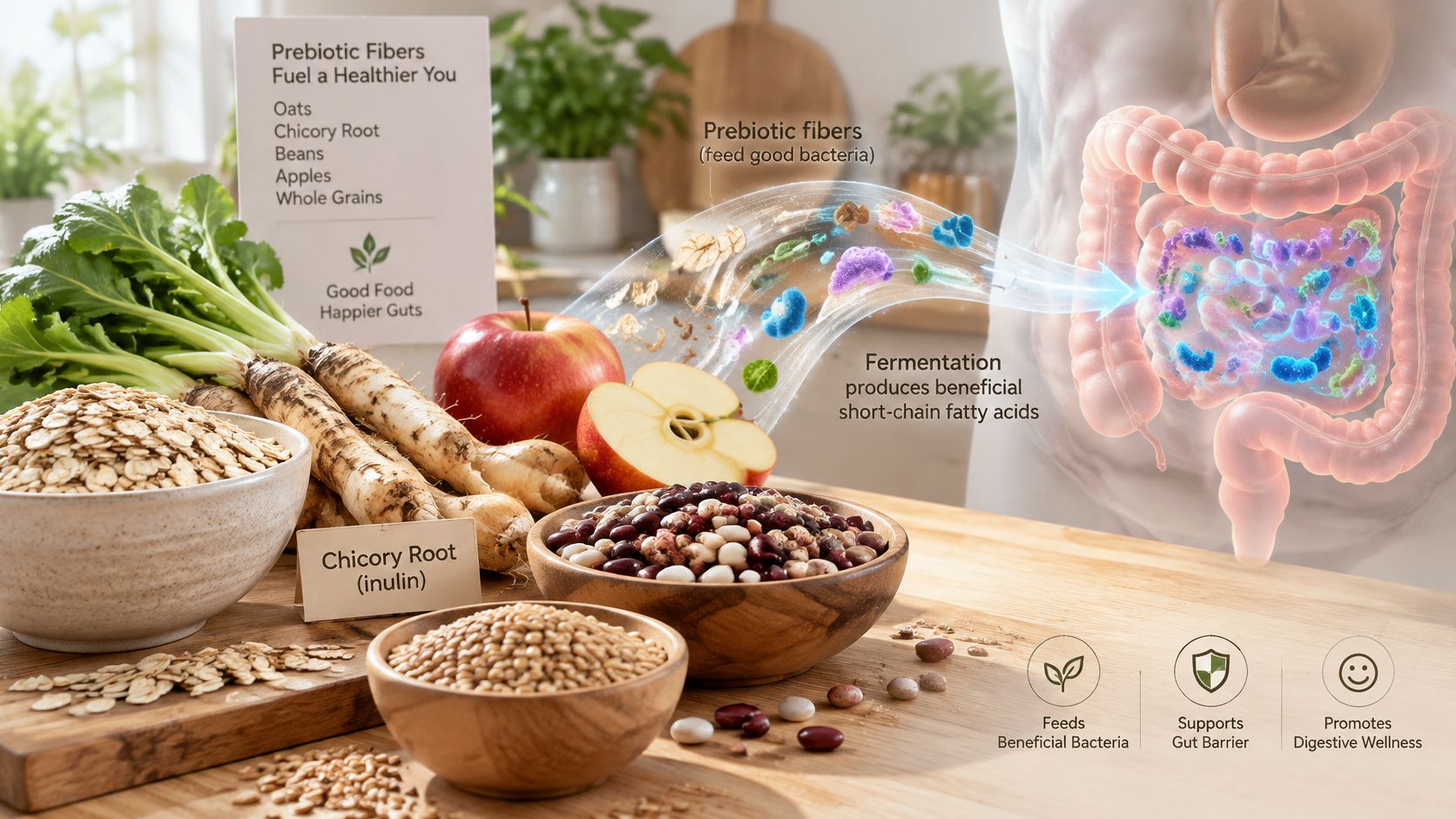
Imagine your colon as a busy kitchen. Microbes use the fiber that arrives as raw material, producing new compounds as they work. Among those compounds are short-chain fatty acids, often shortened to SCFAs.
What microbes make from fiber
Acetate, propionate, and butyrate are examples of SCFAs. They can support the cells lining the colon, influence immune signaling, and participate in metabolic regulation, although responses differ by fiber structure, dose, and individual microbiome, according to a review of fiber fermentation and short-chain fatty acids.
In everyday terms, your microbes transform something you can't fully digest into compounds your body can use. Some serve as an energy source for colon cells. Fermentation can also lower the colon's pH, potentially making the environment less favorable for certain harmful microorganisms.
The important limitation is that fermentable fibers don't all produce the same response. A named ingredient doesn't guarantee that everyone will produce more of every beneficial metabolite.
For another way to follow the process, this video offers a visual companion.
Why the same process can cause gas
Fermentation also produces gas. That means a process with potential benefits can create the very symptom you hoped to reduce. Frustrating? Absolutely. Contradictory? Not really.
- The useful output: Microbes produce compounds that can support the gut environment.
- The uncomfortable output: Gas can leave you feeling distended or bloated.
- The individual difference: Your response depends partly on which microbes are present and which fibers they can use.
That's why bloating isn't a reliable measure of whether a prebiotic is “working.” More gas doesn't prove a greater benefit, and no noticeable gas doesn't mean nothing happened.
The goal isn't to maximize fermentation at any cost. It's to find an intake that supports useful outcomes while remaining comfortable enough to sustain.
Gut Health, Immunity, and Energy Benefits Explained
When you're uncomfortable, “supports gut health” can sound frustratingly vague. A more useful question is: What might change, and how strong is the connection?
Harvard Health describes potential benefits of higher prebiotic intake that include improved intestinal calcium absorption, better blood-sugar control, support for normal immune function, and a lower risk of colorectal cancer in its overview of prebiotics and gut health. Those findings support a broader dietary approach, not a promise that a particular gummy or bowl of oats will deliver every outcome.
Digestive comfort and normal immune function
For digestion, supporting regular bowel movements is a reasonable aim. But regularity and comfort aren't identical. Someone can have more frequent bowel movements and still struggle with bloating, urgency, or pain.
That distinction is especially important when you're evaluating your own progress. Keep the outcome specific rather than asking whether your gut feels vaguely “healthier.”
- For bowel habits: Notice whether your usual pattern becomes easier to manage.
- For comfort: Pay attention to pressure, pain, and how you feel after meals.
- For immunity: Think support for normal function, not protection against every illness.
The immune connection involves interactions among microbes, their metabolites, and the gut lining. It's a relationship worth understanding, but it doesn't justify calling prebiotics an immunity shield. For a broader explanation, explore how gut health relates to the immune system.
What “energy support” can reasonably mean
Energy claims need extra care. Some fibers can influence how quickly carbohydrates are absorbed, which is relevant to blood-sugar regulation. That isn't the same as proving that a prebiotic supplement prevents an afternoon slump.
If you feel tired after lunch, don't assume your microbiome is the sole explanation or that more fiber is the complete answer. A blood-glucose outcome measured in a clinical trial and your day-to-day feeling of energy are different things.
A supportive nutrient isn't a guarantee of a noticeable feeling. Some benefits are measured clinically rather than felt immediately.
The most defensible picture is a connected one: suitable fibers may support bowel function, the gut environment, and aspects of metabolic and immune function. Your overall eating pattern matters more than expecting a single ingredient to cover everything.
That's encouraging rather than disappointing. You don't need a perfect food or a dramatic digestive transformation to make worthwhile dietary changes.
Realistic Expectations for Blood Sugar and Weight
If you add a prebiotic and expect the scale or glucose readings to shift quickly, the research may not match that hope. Effects depend on the fiber, the amount, the person, and the overall eating pattern. Prebiotic fiber can be one useful part of a diet, not a shortcut to weight loss or blood-sugar control.
A meta-analysis of 23 clinical trials found that diets providing at least 20 grams of fiber per 1,000 calories, compared with diets below 10 grams per 1,000 calories, reduced post-meal blood glucose by 13–21% in people with type 1 or type 2 diabetes, as summarized in the Linus Pauling Institute's dietary fiber review.
That result concerns high-fiber diets in a specific population. It does not show that every prebiotic supplement has the same effect.
What the weight studies actually found
In a randomized, controlled 12-week trial, participants taking fructooligosaccharides lost an average of 1.03 ± 0.43 kilograms, while the control group gained 0.45 ± 0.31 kilograms, according to a peer-reviewed review of prebiotics, appetite, and body weight.
The review also describes a randomized, double-blind trial of 10 healthy adults. Participants consumed 16 grams daily of fructan prebiotics or maltodextrin for two weeks. After FOS, breakfast energy intake was approximately 91% of the placebo condition, suggesting that participants ate less at the following meal.
These findings point to a possible effect on fullness and food intake. They do not establish reliable weight loss across different products, doses, or people.
How to interpret the results without the hype
Viscous fibers can slow stomach emptying and carbohydrate absorption. Metabolites made during fermentation may affect the body through other pathways. Viscosity and prebiotic activity are different properties, so one kind of fiber's effect cannot automatically be assigned to another.
- Blood-sugar evidence: A high-fiber dietary pattern may complement diabetes care.
- Appetite evidence: Certain prebiotic compounds may influence fullness or food intake.
- Weight expectations: Results from one trial do not predict what a different supplement will do.
For diabetes, keep prebiotic products in a supporting role. They do not replace medication, glucose monitoring, or a clinician's treatment plan.
For weight management, focus on whether your eating pattern feels satisfying, tolerable, and sustainable. If your results differ from a trial average, that does not mean you have failed.
Choosing Between Whole Foods and Supplements
Start with your routine, not the assumption that food and supplements are competing teams. Whole foods let you build variety into meals. A labeled supplement makes a particular ingredient and serving easier to track.
The best fit depends on what you're trying to solve. Someone who rarely eats legumes needs a different plan from someone whose plant-based meals already contain plenty of fiber but who wants to assess a specific ingredient.
Compare the choices that matter
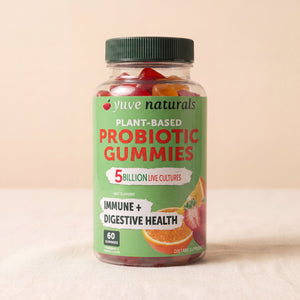
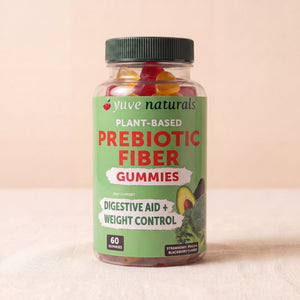
Yuve Vegan Prebiotic Fiber Gummies, containing chicory-root-derived inulin/FOS, are one supplement option to evaluate alongside food sources. Check the current label for the fiber amount and directions rather than assuming the product matches doses used in unrelated studies.
| Consideration | Whole foods | A targeted prebiotic supplement |
|---|---|---|
| Fiber variety | Different foods contribute different fibers | Provides the ingredient or blend listed |
| Dose tracking | Portions give an approximate intake | The label specifies the amount per serving |
| Daily routine | Requires meal planning or preparation | Can be easier to incorporate on busy days |
| Plant-based fit | Includes grains, legumes, and vegetables | Check ingredients and dietary labeling |
| Tolerance | Adjust the food and portion | Assess the specific fiber and serving |
A measured serving is useful for tracking, but precision isn't proof of effectiveness. You still need an appropriate ingredient, a suitable amount, and a response you can tolerate.
Common Whole-Food Prebiotic Sources
| Food Group | Examples |
|---|---|
| Grains | Oats and whole grains |
| Legumes | Beans, lentils, and peas |
| Allium vegetables | Leeks, onions, and garlic |
| Other vegetables | Asparagus, sweet potatoes, and corn |
These foods give you practical places to begin without building every meal around the same ingredient. The guide to foods that are high in prebiotics can help you turn the categories into shopping-list ideas.
If choosing dinner is the sticking point, Just Cook It's practical dinners with estimated fiber counts can help with meal planning. Treat recipe estimates as planning tools, not a personalized intake prescription.
Shopping shortcut: Choose a food you'll enjoy repeatedly or a clearly labeled ingredient you can assess. Don't buy a promise you can't measure.
Food provides a foundation; a targeted supplement can provide structure. Neither approach benefits from pushing past discomfort just to reach an arbitrary amount.
Starting Slowly and Knowing When to Pause
Suppose you decide to improve your diet all at once. Lunch becomes a large bean bowl, dinner includes extra onions and garlic, and by bedtime your waistband feels unforgiving.
That's an illustrative scenario, not a customer testimonial. It captures a common trap: changing several things together makes it hard to tell which food, portion, or combination caused trouble.
A sudden increase in prebiotic fiber can cause flatulence, bloating, diarrhea, or cramps, and people with gastrointestinal sensitivities should begin with small amounts, according to Harvard's guidance on the microbiome and diet.
Make changes you can interpret
Try a small portion of a food you want to include regularly. Keep the rest of your routine reasonably familiar while you observe your response, rather than adding a concentrated fiber product and several new foods together.
- Start small: Choose a modest portion instead of a dramatic increase.
- Change gradually: Increase only when your current intake feels manageable.
- Record the basics: Note the food or supplement, portion, bowel changes, and discomfort.
- Reduce when needed: Return to a previously comfortable amount if symptoms appear.
A slower approach isn't a lack of commitment. It gives you usable information.
IBS needs a more individualized approach
A review of prebiotics and IBS describes variable benefits and a comparison in which lower and higher doses both increased stool Bifidobacterium, yet the lower dose produced greater symptom improvement and the higher dose increased bloating in some participants.
That's an important distinction: more beneficial bacteria doesn't automatically mean fewer symptoms. Increasing fiber may improve bowel frequency without resolving overall IBS symptoms, and a prebiotic-heavy diet can be particularly difficult for people with diarrhea-predominant IBS.
For more detail on the uncomfortable side, read why prebiotics can cause gas. Fermentable inulin-type fibers and less-fermentable bulking fibers shouldn't be treated as interchangeable.
Persistent discomfort isn't proof of a detox. It's information worth taking seriously.
Pause escalation if pain persists, diarrhea continues, or symptoms clearly worsen. Discuss those changes with a healthcare professional rather than repeatedly pushing the dose higher.
You don't need to earn a healthy diet by tolerating pain. A workable plan respects your symptoms as well as your nutrition goals.
Adding Prebiotics to a Plant-Based Routine
A plant-based routine doesn't need a dramatic overhaul. Start with foods you already like, then decide where a small change would be easiest to maintain.
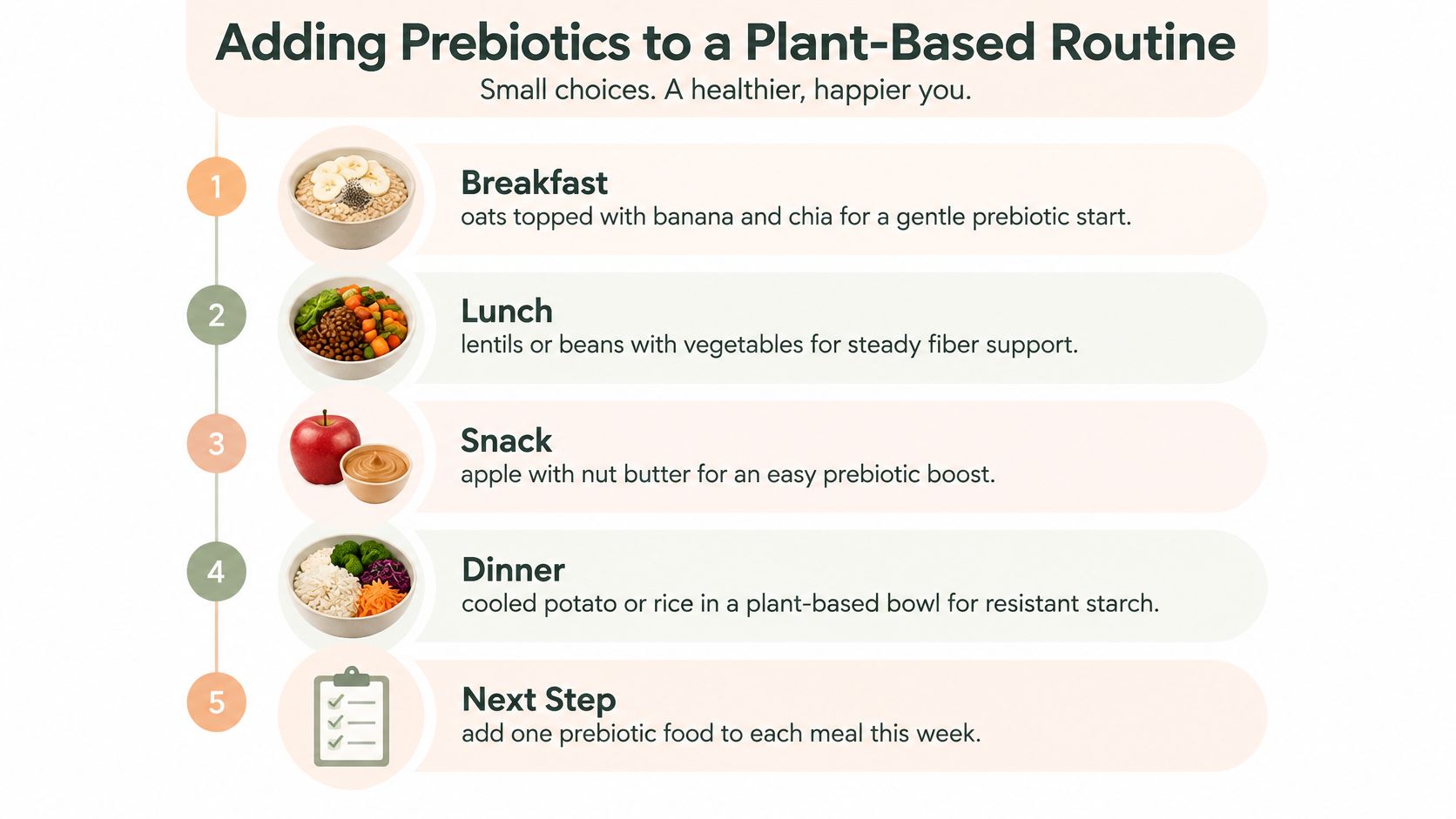
For example, breakfast could include oats. Lunch might include a comfortable portion of lentils or beans, while dinner could feature asparagus, leeks, or sweet potatoes. Think of these as meal possibilities, not a requirement to add several unfamiliar foods on the same day.
The visual below offers meal inspiration. Use it as a menu of possibilities, not an instruction to increase everything immediately.
Build around your actual meals
If you prefer a lower-carbohydrate vegetarian approach, low-carb vegetarian ideas from Recipe One may help you find meals that suit your preferences. Use meal plans for inspiration rather than assuming a dietary label guarantees digestive comfort.
If you choose a labeled prebiotic supplement, make it a deliberate, trackable part of the routine. Don't automatically add more on days when meals seem imperfect, and don't assume it replaces food variety.
My editorial perspective is simple: feeling worse shouldn't be the price of trying to eat well. I'd rather see you make a manageable change and learn from it than follow an ambitious plan you dread repeating.
Your practical checklist
- Start low: Choose a small portion of a familiar prebiotic-containing food.
- Increase slowly: Let comfort guide the pace instead of rushing toward a larger serving.
- Keep variety: Rotate suitable foods over time rather than relying on a single ingredient.
- Track symptoms: Look for changes in comfort and bowel habits, not just whether you feel gas.
- Get guidance: Discuss persistent pain or worsening symptoms with a clinician.
For children, or when digestive symptoms are already a concern, ask a qualified clinician about suitable food portions and supplements rather than adapting adult trial doses.
Prebiotic fiber is a specific tool, not a universal gut fix. Success might look less dramatic than marketing suggests: an enjoyable meal, a tolerable routine, and clearer knowledge of what works for you.
If you'd like to share your gut-health journey in the comments, describe the change you tried and what you noticed. Those everyday observations can make conversations about digestion more useful and less isolating.
Yuve offers plant-based supplements, including prebiotic options, for people building a more intentional gut-health routine. Visit Yuve to review the current ingredients and serving directions, then choose a starting approach that fits your diet and digestive tolerance.