By mid-afternoon, your waistband feels tighter, your brain feels foggy, and your digestion seems to have gone on strike. You may reach for coffee, search for bloating relief, or wonder whether probiotics alone can solve the problem.
The answer may involve something many people overlook: prebiotic fiber, the fuel that helps beneficial microbes already living in your gut. In this guide, we'll unpack the evidence behind prebiotic powder benefits, explain practical dosing, discuss the gas and bloating that can happen during adjustment, and show you how to evaluate a clean, vegan-friendly formula without getting lost in supplement jargon.
That Afternoon Slump and the Gut Feeling You Can't Shake
You finish lunch feeling full, but not satisfied. A few hours later, your stomach feels stretched, your energy drops, and your digestion still hasn't quite moved along. It's frustrating because generic advice such as “eat more fiber” or “try a probiotic” rarely explains which fiber, how much, or how long to stay consistent.
If poor sleep is also contributing to your afternoon fatigue, this productivity boost from sleep help offers useful context. Still, recurring bloating and irregular bowel habits deserve attention of their own. They can reflect how your gut microbes process food, fiber, and the byproducts of fermentation.
Many people discover prebiotic powders after trying probiotics. The distinction matters. Probiotics provide living microorganisms, while prebiotics provide the non-digestible fibers that selected gut microbes can use as fuel. Think of probiotics as adding seeds to a garden. Prebiotics help feed the garden you already have.
That doesn't mean every uncomfortable stomach needs a supplement, or that a powder replaces vegetables, legumes, whole grains, fruit, and other fiber-rich foods. It does mean a carefully chosen powder can make a targeted daily fiber habit easier, especially when your usual diet falls short.
The most useful approach is practical rather than dramatic. We'll look at what these powders do, what research says about dose and duration, how to reduce unwanted fermentation symptoms, and which label details deserve your attention.
What Prebiotic Powders Do for Your Body
A prebiotic is a non-digestible substrate selectively used by host microorganisms that confers a health benefit. In everyday terms, it is a fiber that reaches the colon largely intact, where selected microbes ferment it.
Researchers introduced the term “prebiotic” in 1995, after observing that inulin passed through the upper digestive tract and selectively stimulated bifidobacteria. The definition was refined in 2004, then updated through expert consensus in 2016. The PNAS consensus paper on prebiotics explains how this scientific definition developed.
How prebiotics and probiotics differ
Probiotics are living microorganisms you consume through certain foods or supplements. Prebiotics are the fuel those microorganisms can use. Short-chain fatty acids are among the compounds produced as that fuel is fermented in the colon.
Your digestive enzymes cannot break down some prebiotic fiber bonds. Gut microbes handle that work instead, fermenting the fibers and producing compounds such as acetate and other short-chain fatty acids. These compounds can support intestinal barrier function and influence communication between the gut, immune system, and other tissues.
A powder provides a measured way to add fibers such as inulin, fructo-oligosaccharides, galacto-oligosaccharides, or acacia fiber. That can make a consistent habit easier than changing every meal, while still complementing vegetables, legumes, whole grains, fruit, and other fiber-rich foods.
The practical question is how much to use and whether you can take it consistently. Research discussed in the next section examines a benchmark of 10 to 12 g per day for four or more weeks. Those findings make a clean, vegan-friendly powder with a clearly stated fiber dose worth considering, including Yuve's selection, rather than treating any powder as interchangeable.
For an accessible explanation of the mechanism, read Yuve's guide to what prebiotic fiber does. Persistent constipation or bowel symptoms deserve medical attention. A general overview of treatment options, including stem cell therapy for gut issues, is also available, though specialist care matters when symptoms are ongoing or severe.

Benefits Backed by Modern Research
Claims about “detoxing” lack scientific backing. The evidence instead points to measurable changes in microbial abundance, fermentation activity, stool consistency, and gut barrier function. Those outcomes help answer a practical question: what should you look for in a prebiotic powder?
Microbial support with a practical benchmark
In a 2022 human study, healthy adults who usually ate a low-fiber diet took 12 g per day of a prebiotic powder. The intervention increased beneficial bifidobacteria and raised levels of indolepropionate, a metabolite made by gut bacteria. The PubMed record for this study provides the clinical reference.
A powder can therefore do more than add an abstract amount of “fiber.” At a defined dose, it can change the gut environment and microbial activity in measurable ways. That benchmark also gives Yuve's clean, vegan-friendly powder selection a useful standard: a product should state its fiber source and dose clearly rather than treating every powder as interchangeable.
A related analysis of a diverse prebiotic fiber blend found that 12 g per day increased beneficial Bifidobacterium species and changed microbial gene counts linked with prebiotic use and acetate production. The participants were generally healthy adults with low-fiber diets. The detailed human study report explains how fiber fermentation connects with microbial metabolism.
Regularity and stool comfort
For many people, easier regularity is the most noticeable reason to try a prebiotic. A synthesis of randomized trials found that established prebiotics, including inulin-type fructans and galacto-oligosaccharides, produced the most consistent results at at least 5 to 8 g per day for at least 3 to 4 weeks. The outcomes included stool frequency, stool consistency, and intestinal barrier function. The review of randomized human trials provides the broader evidence context.
Chronic constipation may require a higher intake. A 2022 meta-analysis found that fiber supplementation worked more clearly when the dose exceeded 10 g per day and use continued for at least 4 weeks. Higher doses were associated with about 1.60 additional bowel movements per week, while lower doses did not show the same effect. The constipation fiber meta-analysis reports those findings.
Practical rule: If regularity is your goal, assess the routine over consistent weeks, not after one scoop.
Barrier and immune connections
Short-chain fatty acids help explain why researchers connect prebiotics with intestinal barrier function and immune modulation. The immune findings are less consistent than the bowel-habit results, with effects appearing more dependable in particular groups, including children and older adults.
A prebiotic powder can support a gut environment involved in immune communication. It should not be presented as a cure for infection, inflammation, or an immune disorder.
| Benefit | Mechanism | Study highlight | Everyday impact |
|---|---|---|---|
| Microbial support | Selected microbes ferment non-digestible fiber | 12 g per day increased bifidobacteria and indolepropionate in healthy adults with low-fiber diets | A targeted way to nourish beneficial microbes |
| Digestive regularity | Fermentation and increased fiber intake influence stool formation | Benefits were clearer above 10 g per day for at least 4 weeks in constipation research | More consistent bowel habits for some people |
| Barrier function | Short-chain fatty acids support the gut environment | Reviews identify intestinal barrier function among outcomes reported at established doses | A healthier foundation for digestion |
| Immune modulation | Microbial metabolites interact with immune signaling | Immune effects are documented but vary across populations | Supportive, not a replacement for medical care |
How Much to Take and When for the Best Results
The research points to a useful range, but your personal starting point may need to be lower. Clinical effects are most consistently reported around 5 to 8 g per day for at least 3 to 4 weeks, while studies of constipation and specific powders often use 10 to 12 g per day. The right amount depends on the fiber type, your usual diet, and how sensitive your digestion is.
A gentle ramp-up is usually kinder than jumping straight to a full serving:
- Start with a small amount. Use around 2 to 3 g per day while your gut gets familiar with the new substrate.
- Increase gradually. Add a little every few days only when the current amount feels comfortable.
- Work toward your intended range. Many adults may settle somewhere between 5 and 12 g per day, depending on the formula and goal.
- Split the serving if needed. Half with breakfast and half with dinner can feel easier than taking the entire amount at once.
- Track your response. Note stool consistency, frequency, bloating, and energy in your phone for a simple pattern check.
Timing doesn't need to be perfect. Breakfast, a morning smoothie, or another meal you never skip can turn the powder into a reliable habit. Consistency matters more than chasing a particular hour.

A short visual walkthrough can help you remember the progression:
Don't increase the dose because you feel impatient. If your current amount causes discomfort, stay there longer or step back.
The Side Effects Nobody Warned You About
Prebiotic fiber can cause gas, bloating, abdominal discomfort, or diarrhea, particularly when you take too much too quickly. That isn't a sign that the fiber has failed. It reflects fermentation, as microbes break down the fiber and produce short-chain fatty acids and gas. The added osmotic pressure can also draw water into the gut and stimulate movement.
Some people tolerate acacia fiber or partially hydrolyzed guar gum more comfortably than faster-fermenting fibers such as inulin or FOS. Responses vary, though, so the label and your own symptoms matter more than a generic ranking.
Try these adjustments:
- Reduce the amount: Return to the last comfortable dose.
- Take it with food: A meal may make the transition gentler.
- Drink fluids regularly: Fiber needs adequate fluid to move through the digestive tract.
- Avoid stacking supplements: Don't introduce several high-fiber products at the same time.
- Give your body time: Increase only after your current intake feels manageable.
For a plain-language explanation of this adjustment process, see whether prebiotics cause gas. Stop and contact a clinician if you experience severe pain, persistent diarrhea, or an allergic-type reaction. People with diagnosed digestive conditions, significant bowel changes, or complex medication routines should ask a healthcare professional before starting a supplement.
How to Spot a Quality Prebiotic Powder
A clean label doesn't guarantee that a powder will suit you, but it makes the product easier to evaluate. Start by identifying the actual prebiotic fiber and the amount per serving. Total powder weight isn't the same as prebiotic fiber content. A blend diluted with fillers may look substantial while delivering less of the ingredient you intended to buy.
Compare the main fiber types
| Fiber type | Common source | Fermentation speed | Tolerance | Best for |
|---|---|---|---|---|
| Inulin | Chicory root and some plants | Often faster | Can be more noticeable for sensitive users | People seeking a well-studied fermentable fiber |
| FOS | Plant-derived oligosaccharides | Relatively fast | May cause gas at higher intakes | Targeted microbial support |
| GOS | Often produced from lactose | Moderate and selective | Check dairy and allergen suitability | People looking for a selective oligosaccharide |
| Acacia fiber | Acacia tree gum | Generally gentler | Often chosen when tolerance is a priority | Gradual fiber routines |
These categories aren't interchangeable in how they feel. Someone who wants a concentrated fermentable fiber may prefer inulin or FOS, while a person who reacts strongly to rapid fermentation may look toward acacia or another gentler option.
Read beyond the front of the pouch
Look for:
- A clear ingredient list: Single-ingredient or minimally blended formulas are easier to assess.
- A stated fiber amount: Check how much prebiotic fiber appears per serving, not just how much powder.
- Transparent sourcing: Chicory root, agave, and acacia should be identified rather than hidden behind vague proprietary language.
- Quality testing: Seals such as USP, NSF, or Informed Choice can provide useful quality information when applicable.
- Fewer extras: Unnecessary sweeteners, flavors, added sugars, and fillers can make a simple product harder to evaluate.
- Values-based certifications: Non-GMO Project Verified and vegan labeling may matter if those standards guide your purchases.
- Allergen clarity: Some GOS products come from dairy, so check carefully if you avoid dairy.
If you're comparing several products, this guide on how to choose the right gut supplement can help you think through broader supplement criteria. Yuve's guide to reading supplement labels is another practical reference for checking serving information and ingredients.
Where Yuve Fits Into Your Daily Routine
The most useful prebiotic powder is one you can understand and take consistently. For a vegan shopper, that means checking the source, confirming the product's dietary suitability, and verifying that the label states the relevant fiber amount clearly.
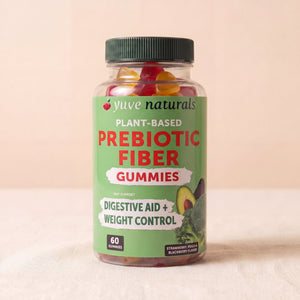
Yuve offers vegan, plant-based supplements, including Vegan Prebiotic Fiber Gummies and a Daily Digestion Bundle that combines prebiotic support with probiotics and herbal ingredients. The company describes its products as non-GMO, gluten-free, and gelatin-free. Review the current product label before buying, since formulas and certifications can change.
The routine itself can stay simple. Mix a suitable powder into a morning smoothie, stir it into a meal, or follow the directions for the product format you choose. Gummies may fit better for people who dislike mixing powders, while a measured powder can make it easier to adjust intake gradually.
I'm cautious about treating any supplement as a magic fix. The evidence supports a measured, consistent fiber habit, not a promise that one product will erase every digestive symptom. If you choose Yuve, use the same standards discussed above: inspect the ingredient list, confirm the serving details, start gently, and track how your body responds over several weeks.
That approach makes the product part of a proactive routine rather than a panic purchase after a difficult meal.
Your Quick-Start Checklist and Common Questions
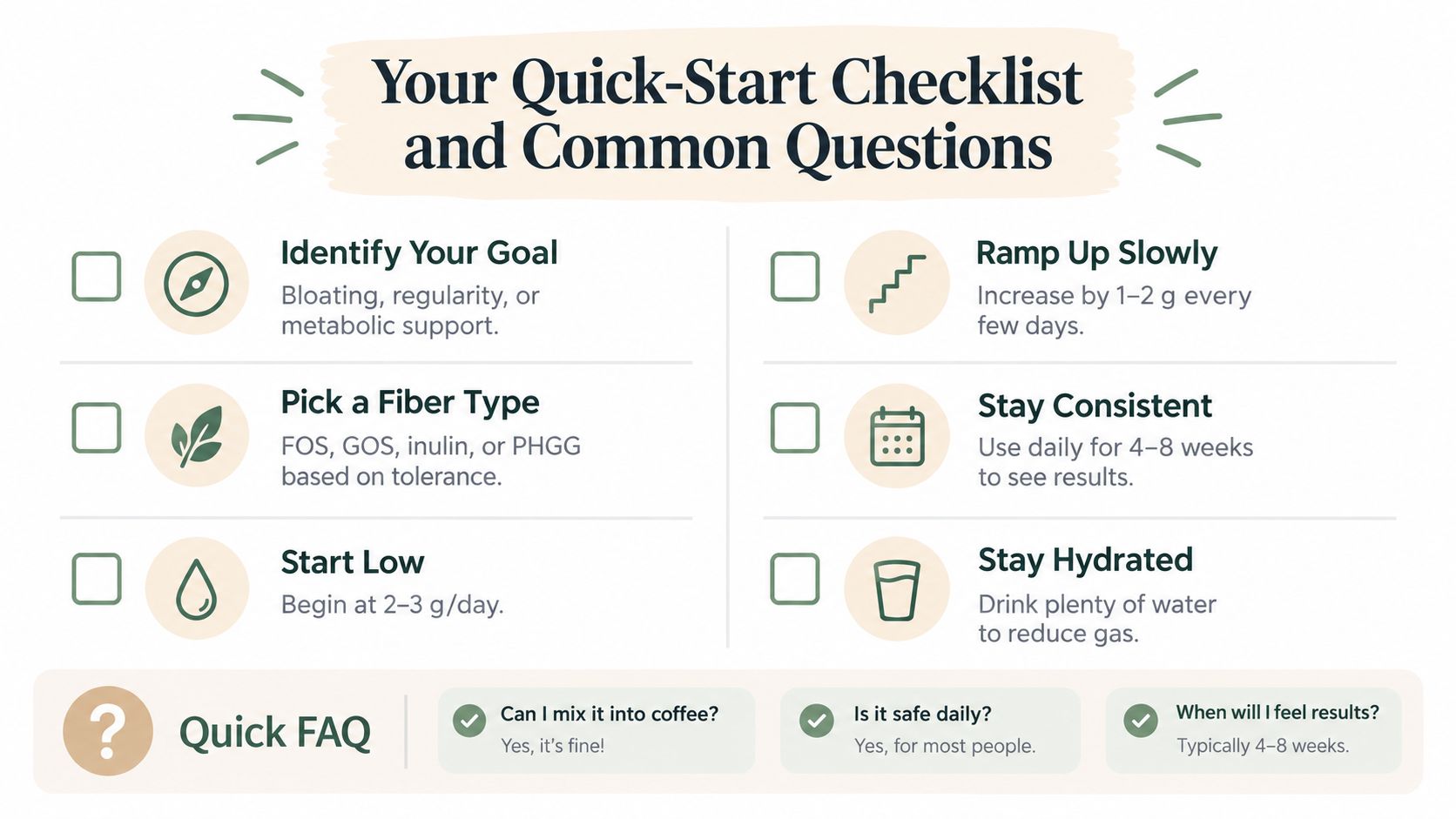
Use this checklist before you begin:
- Identify your goal: Decide whether you're focusing on bloating, regularity, or general gut support.
- Pick a fiber type: Compare inulin, FOS, GOS, and acacia based on tolerance and dietary needs.
- Start low: Begin around 2 to 3 g per day rather than rushing to a full serving.
- Ramp up slowly: Increase only when your current dose feels comfortable.
- Stay consistent: Give the routine at least 4 weeks when evaluating regularity.
- Stay hydrated: Drink fluids regularly and monitor how your digestion responds.
Frequently asked questions
Are prebiotics the same as probiotics?
No. Prebiotics are fibers that feed selected gut microbes. Probiotics are living microorganisms.
Can I take prebiotic fiber every day?
Many people use it daily, but tolerance varies. Follow the product directions and ask a clinician if you're pregnant, managing a digestive condition, or taking medication.
How quickly will I notice results?
Gas or bloating can appear during adjustment. Improvements in regularity and other outcomes generally require consistent use over several weeks.
Can prebiotic fiber interact with medication?
Fiber may affect how some medicines are absorbed or tolerated. Ask a pharmacist or clinician about spacing and suitability for your specific medications.
What if I feel worse?
Reduce or pause the product and seek medical advice for severe pain, persistent diarrhea, or allergic-type symptoms.
Share your own gut-health experience in the comments, especially what fiber type, serving size, and routine felt most manageable for you.
Yuve offers plant-based prebiotic options designed to fit practical gut-health routines, including Vegan Prebiotic Fiber Gummies and a Daily Digestion Bundle. Explore Yuve to review the current formulas, compare formats, and choose a measured starting point that supports your prebiotic fiber goals.