Ever feel like your stomach inflates like a balloon by afternoon, right when you still have hours left in the day? You're not alone. Fiber can support regularity and gut health, but adding the wrong type too quickly may bring the very gas and bloating you hoped to avoid.
A fiber supplement for gut health works best as a practical bridge, not a replacement for beans, vegetables, fruit, whole grains, nuts, and seeds. The right product, introduced slowly and matched to your goal, can make fiber easier to use consistently. This guide will help you understand fermentation, choose among fiber types, track your symptoms, and recognize when digestive discomfort needs medical attention.
Why Your Gut Needs More Than Just Good Intentions
You've probably heard the classic advice: eat more vegetables. It's good advice, but it can feel incomplete when your schedule is packed, meals are inconsistent, or your digestion already feels sensitive. You might start the day with good intentions, grab a rushed lunch, and reach the afternoon with tight jeans, a distended belly, and the uncomfortable question, “What did I eat?”
Fiber supplements can help close that practical gap. The U.S. Food and Drug Administration uses 28 grams per day as the Daily Value for fiber on a 2,000-calorie diet, and it recognizes fiber's relationship with bowel-movement frequency, blood glucose, cholesterol, and calorie intake in its labeling framework. That number is a population reference, not a prescription for every person, so your needs depend on factors such as calorie intake, age, sex, and dietary pattern. (FDA guidance on dietary fiber)
Food still matters. Legumes, whole grains, fruits, vegetables, nuts, and seeds provide fiber alongside vitamins, minerals, water, and naturally occurring plant compounds. A supplement can be useful when food alone doesn't fit your routine, but it shouldn't crowd nutritious foods off your plate.
A helpful mindset: Don't chase the biggest fiber dose. Find the smallest effective change your body can tolerate consistently.
Why the gap matters
A major evidence base published in The Lancet analyzed 185 prospective studies representing just under 135 million person-years, along with 58 randomized clinical trials involving 4,635 adults. Compared with the lowest intakes, the highest fiber intakes were associated with approximately 15 to 30% lower risks of all-cause mortality and major outcomes including cardiovascular disease, coronary heart disease, stroke, type 2 diabetes, and colorectal cancer. The strongest dose-response relationships generally occurred at 25 to 29 grams per day, with possible additional benefits above 30 grams. (The Lancet systematic reviews and meta-analyses31809-9/fulltext))
That research evaluates total fiber intake, not every commercial formula. For you, the takeaway is simple: adequate fiber matters, but the delivery method and your tolerance matter too. If you're building meals around plants, a supplement may provide a measured, repeatable addition instead of asking you to overhaul your entire diet overnight.
For food-first inspiration, explore this guide to optimize digestion with gut health foods. Use it to add variety gradually, then consider a targeted supplement when your daily pattern still leaves a gap.
The Science of Fermentation and Short-Chain Fatty Acids
Fiber doesn't all behave the same way once you swallow it. Some forms pass through the digestive tract with limited breakdown, while others reach the colon and become fuel for resident microbes. Think of your colon as a busy city and fiber as a delivery of different fuels. Each neighborhood of microbes prefers particular materials, and the city's response depends on what arrives, how much arrives, and how quickly the supply changes.
Microbes can metabolize non-digestible carbohydrates into short-chain fatty acids, often called SCFAs. These include acetate, propionate, and butyrate. SCFAs may influence the energy supply of the colon lining, intestinal signaling, and immune regulation. But this doesn't mean every fermentable fiber creates the same result in every person.

Fermentation is personal
A systematic review of adult interventions found that changes in SCFA concentrations were inconsistent and depended strongly on fiber dose, chemical structure, fermentability, study duration, and analytical method. Inulin was the most frequently studied fiber, but the evidence didn't establish a uniform SCFA increase across healthy adults. (Systematic review of fiber, the microbiome, and SCFAs)
That finding explains why your friend may thrive on a highly fermentable prebiotic while you feel puffy after the same product. Your baseline gut microbes, current diet, dose, and digestive sensitivity all shape the response. More fermentation isn't automatically better, and a change in microbiome composition doesn't guarantee a measurable health outcome.
You can think of fermentation like composting. A manageable amount of the right material can support a healthy process. Dumping a large amount of unfamiliar material into the system at once can create odor, gas, and discomfort while the system struggles to adapt.
Translating the science into daily choices
A product label should identify the specific fiber type rather than relying on broad phrases such as “microbiome support.” FDA-recognized physiological benefits for certain added fibers include increased bowel-movement frequency, a reduced post-meal blood-glucose rise, and lower blood cholesterol, but these effects are fiber-specific and should be connected to substantiated ingredient evidence.
Fermentation also appears in traditional food practices, although a fermented drink or herbal preparation isn't interchangeable with a fiber supplement. If you're curious about the broader process, this explanation of the fermentation process offers useful context. For a different example of a fermented preparation, you can read about fermented herbal oxymel, while remembering that fermentation method and nutritional purpose vary widely.
The practical lesson is reassuring: your response is information, not failure. Gas may mean the dose rose too quickly or the fiber is too fermentable for your current routine. It may be time to reduce the amount, change the fiber type, or pause and ask a clinician for guidance.
Matching Fiber Types to Your Specific Digestive Goals
Choosing a fiber supplement gets easier when you start with the outcome you want, rather than the ingredient trend of the moment. A person seeking softer, more regular stools may need a different approach from someone focused on satiety or a gentler prebiotic. Fiber categories overlap, but their dominant actions differ.
A goal-based comparison
| Fiber category | Primary action | Best for |
|---|---|---|
| Soluble fiber | Absorbs water and may form a viscous gel, slowing digestion and carbohydrate absorption | Stool consistency, regularity, satiety, and selected blood-glucose or cholesterol goals |
| Insoluble fiber | Adds stool bulk and can support intestinal transit | Bulking stool and helping food move through the digestive tract |
| Fermentable fiber | Provides substrate for resident gut microbes | Prebiotic support, when tolerated and matched to the person |
Psyllium is a soluble, gel-forming fiber with evidence for constipation. A review of 16 randomized controlled trials involving 1,251 people found that fiber supplementation increased the likelihood of treatment response by 48%, with a risk ratio of 1.48 and a 95% confidence interval of 1.17 to 1.88. The review supported psyllium doses above 10 grams per day for at least four weeks in chronic constipation management. (Review of dietary management for chronic constipation)
That doesn't mean you should begin at that amount. Clinical benefit over time and starting tolerance are different questions. If you're already distended, a lower starting amount may be more sensible.
Match the fiber to the person
A 2025 meta-analysis of 34 randomized trials involving 1,804 adults with overweight or obesity found that interventions ranged from 1.5 to 40 grams per day and produced different effects depending on fiber type. Overall benefits included modest reductions in HbA1c, fasting insulin, and insulin resistance, and the authors recommended considering both a person's gut microbiota and health goal when selecting fiber. (2025 meta-analysis in Nutrition Reviews)
A randomized trial involving 802 people with prediabetes also reported that baseline microbiome features predicted who gained glycemic benefits from a six-month fiber intervention. That's promising, but it isn't a reason to diagnose yourself from a supplement label. It's a reason to expect individual variation and change one fiber variable at a time.
For a closer look at products designed around microbial fuel, explore Yuve's guide to prebiotic fiber supplements. Keep your own goal at the center: constipation, stool bulk, fullness, or a gradual prebiotic experiment may call for different choices.
How to Introduce Fiber Without the Unwelcome Gas
You take a full serving of a new fiber supplement with breakfast, expecting better regularity. By afternoon, your stomach feels tight and noisy. Fiber bloat is a real possibility, particularly when fermentable fiber arrives faster than your gut can adapt. A meta-analysis found that flatulence, bloating, diarrhea, and abdominal discomfort occurred more often with fiber supplements than with placebo. (Meta-analysis of gastrointestinal symptoms with fiber supplements)
The issue is usually too much, too soon. Your gut microbes receive a sudden increase in fermentable material, much like a kitchen being asked to process a large delivery all at once. Fermentation can be useful, but the adjustment period differs from person to person.

Use a symptom-tracking titration schedule
There is no universal starting dose. Use a gradual schedule, and treat your symptoms as feedback rather than a test you need to pass:
- Days 1 to 7: Start with a small fraction of the label serving, preferably with a meal. Record stool comfort, urgency, gas, bloating, abdominal pain, the time taken, and your fluid intake.
- Days 8 to 14: If symptoms are mild or absent, make a small increase. If discomfort is noticeable, remain at the current amount until your stomach settles.
- Days 15 to 21: Continue only if the change remains comfortable. Splitting the amount between two meals may be easier than taking it all at once.
- Days 22 to 28: Compare the amount with your original goal. If regularity has improved and your stomach feels settled, increasing further may offer no clear benefit.
- After four weeks: Keep the lowest amount that supports your goal. If progress remains limited, discuss another fiber type with a healthcare professional.
Clinical guidance supports starting with a small amount, increasing gradually, and maintaining adequate fluid intake because rapid increases can produce gas, bloating, and cramping. (Clinical guidance on introducing fiber)
Treat water as part of the dose
Psyllium and glucomannan absorb fluid and expand, creating a thicker mixture that can help stool retain water. Dry powder, or powder mixed into only a small sip, can create a choking risk. Evidence reviews recommend taking these products with at least 8 ounces of water or another fluid. (Review of fiber supplements and constipation)
Mix the measured serving thoroughly in a full glass and drink it promptly, before it thickens. Continue drinking adequate fluids throughout the day. Anyone with swallowing difficulties or a history of intestinal narrowing should seek medical advice before using bulk-forming fiber.
Symptom log: Note the product, amount, time, meal, fluids, stool changes, gas, and pain. Several days of patterns usually provide more useful guidance than one uncomfortable afternoon.
Prescription medicines may need to be separated from fiber, so ask a pharmacist or clinician about timing. Avoid testing a new product immediately before intense exercise if urgency or cramping can interrupt your workout. For a plant-based option to discuss as part of a gradual routine, explore this guide to acacia fiber powder.
Why Clean and Vegan Formulations Matter for Your Gut
A sensitive digestive system doesn't need a complicated ingredient list. If you're trying to identify what causes bloating, a supplement packed with unnecessary sweeteners, fillers, gelatin, or hidden dietary triggers makes the experiment harder to interpret.
That doesn't mean every additive causes symptoms for every person. It means label transparency matters, especially when you're changing one variable at a time. A simple formula helps you understand whether the fiber itself is working for you.

What to look for on the label
Read the Supplement Facts panel and the other ingredients list together. Look for:
- Named fiber sources: The label should tell you whether the product contains psyllium, acacia, inulin, resistant starch, or another specific type.
- A disclosed amount: Total fiber is more useful than a vague “complex” or “blend” claim. Where possible, look for the amount of each meaningful fiber.
- Dietary fit: Vegan capsules, gelatin-free ingredients, gluten-free labeling, and non-GMO sourcing may matter if you follow those standards or have dietary restrictions.
- Simple supporting ingredients: A shorter list can make symptom tracking easier, particularly if you're prone to bloating.
- Realistic language: Be cautious when a product promises to “detox” your gut, repair every digestive problem, or guarantee a microbiome outcome.
Fiber also shouldn't replace food variety. Plant foods bring different fiber structures and other nutrients that a single supplement can't reproduce. A clean formula supports a food-first pattern; it doesn't make that pattern unnecessary.
Clean doesn't mean universally gentle
A vegan or gluten-free formula may fit your preferences, but it can still contain a fermentable fiber that causes gas when introduced too quickly. Conversely, a person may tolerate a particular fiber well even when another one causes discomfort. Purity and tolerability are related, but they aren't identical.
Your best test is a measured trial: choose a transparent product, start low, keep the rest of your routine steady, and track your response. If symptoms worsen, adjust the dose or stop and seek professional advice rather than forcing your way through pain.
A Founder's Journey to Bloat-Free Digestion with Yuve
Sam, Yuve's founder, knew the frustration of digestive discomfort firsthand. A sensitive stomach can turn a dinner with friends, a trip, or a workout into a calculation about what might happen afterward. That personal experience helped shape Yuve's interest in plant-based supplements for gut health, immunity, and energy.
Yuve's stated product standards include vegan, gluten-free, gelatin-free, and non-GMO options, alongside products such as probiotics, prebiotics, and herbal blends. These labels describe how a product is made or what it excludes. They do not predict how your individual gut will respond. Fermentation is personal. A fiber that feels comfortable for one person may create gas or pressure for another.
A practical place to start
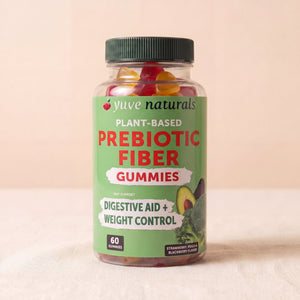
Yuve offers Vegan Prebiotic Fiber Gummies, positioned to support digestion, regularity, and beneficial gut bacteria. The gummy format may help people who dislike powders or need something portable. Before choosing it, check the listed fiber type, serving guidance, full ingredient list, and amount of fiber against your own goal.
Use a symptom-tracking trial rather than treating a gummy as consequence-free. Start with a small portion for several days and record bloating, gas, stool changes, urgency, and comfort. If your symptoms stay settled, increase gradually according to the label. If discomfort rises, hold the dose, return to the previous amount, or stop. This slow adjustment helps separate a poor match from a dose that moved too quickly for your gut to handle.
Sam's lesson: A supplement should make a healthy routine easier to follow, not pressure you to ignore your body's feedback.
Yuve also highlights sustainability and social responsibility, including support for families with autism and environmentally minded practices. Those values may influence a purchase, while digestive tolerance still deserves careful attention. Read the label, change one variable at a time, and seek medical guidance when symptoms are severe, persistent, or unusual.
A fiber supplement can become a modest daily tool. It cannot diagnose IBS, treat disease, or replace an individualized clinical plan. It can give you a measured way to learn whether a particular fiber supports regularity and comfort.
Your Daily Gut Health Checklist and Safety Triggers
A new fiber supplement for gut health can feel helpful one day and uncomfortable the next. Use a simple routine to learn your personal fermentation threshold rather than forcing a full serving.
- Start with less: Begin with a small amount and keep it steady for several days.
- Change one variable: Keep meals and other supplements as consistent as practical, so you can identify what affects your symptoms.
- Drink a full glass: Mix bulk-forming fiber in at least 8 ounces of fluid, drink it promptly, and continue drinking fluids through the day. (Fiber supplement safety review)
- Track patterns: Record the dose, timing, stool consistency, urgency, gas, bloating, cramping, and pain.
- Titrate by comfort: If symptoms remain settled, increase gradually according to the label. If bloating or discomfort rises, hold the dose or return to the last comfortable amount.
- Check medicine timing: Ask a pharmacist whether fiber could affect absorption or needs spacing.
- Protect exercise comfort: Avoid trying a larger dose before intense training if urgency is a concern.
Stop self-treatment and contact a healthcare professional for persistent pain, vomiting, blood in the stool, unexplained weight loss, severe constipation, or symptoms that are severe or worsening. Children, pregnant or breastfeeding people, and anyone with digestive disorders, swallowing difficulties, intestinal narrowing, or complex medical conditions should seek individualized advice first.
Yuve offers plant-based prebiotic fiber options, probiotics, and other gut-focused supplements. Visit Yuve to compare formats and ingredients, then choose a routine your body can sustain.